Automotive Mechatronics Technician Jobs In Germany
What Automotive Mechatronics Technicians Do in Germany
Automotive mechatronics technicians work at the intersection of mechanical engineering, vehicle electrics and electronic control systems. Their work focuses on keeping vehicles safe, functional and technically reliable. Depending on their professional background, their tasks include inspection, maintenance, repair, fault diagnosis and the replacement or adjustment of vehicle components.
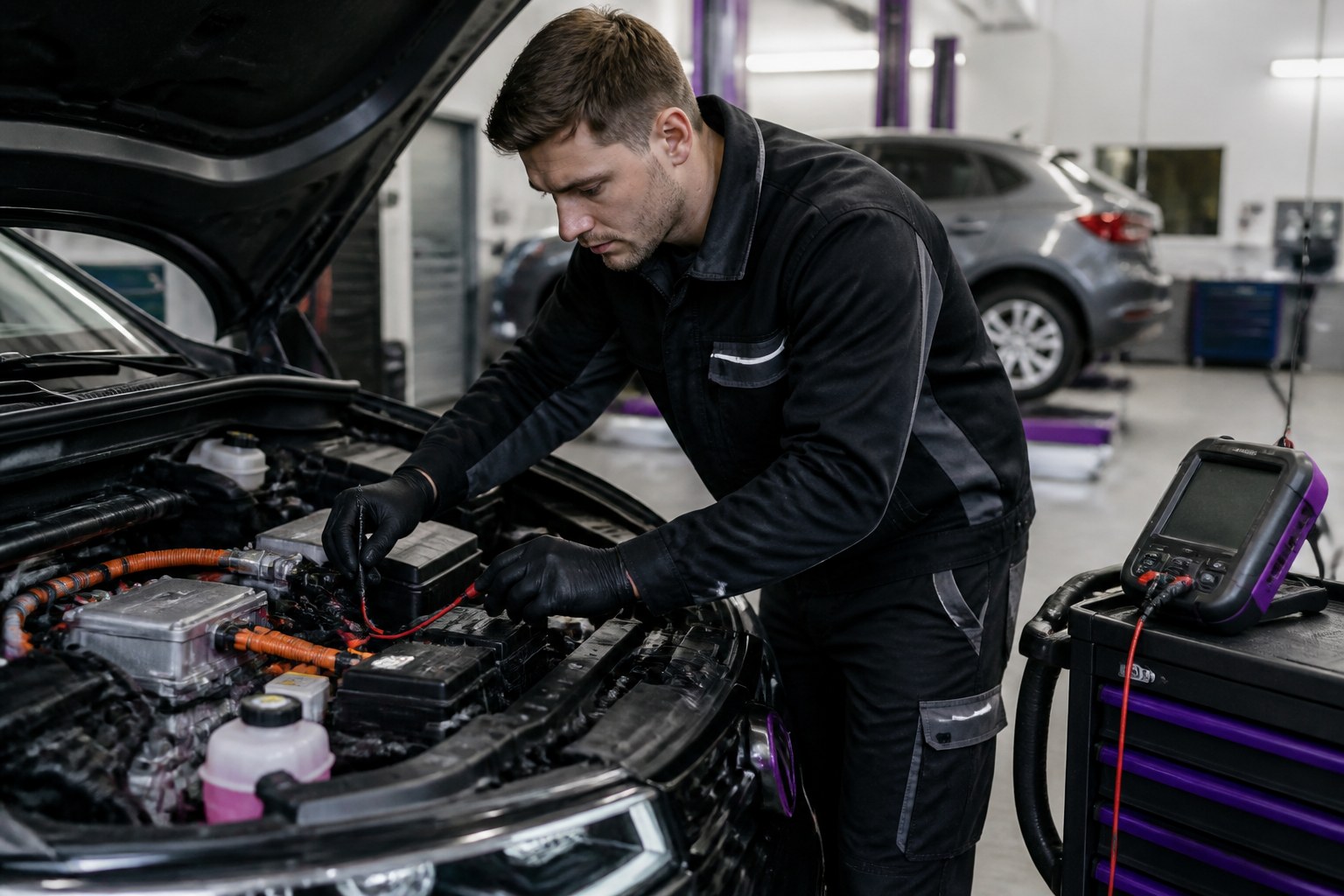
The profession involves both conventional mechanical systems and modern electronic technologies. Technicians inspect engines, braking systems, steering, suspension, transmissions and other mechanical assemblies. They also work with batteries, sensors, wiring, control units and vehicle communication systems. Diagnostic equipment helps identify faults that are not visible during a visual inspection.
Accurate troubleshooting is an important part of the job. A technician must interpret symptoms, test possible causes and choose suitable repair steps. Technical documentation, manufacturer information and workshop instructions support this process. The work therefore requires practical ability as well as careful technical reasoning.
The exact work environment varies across the automotive sector. Applicants should therefore present their actual experience clearly instead of describing tasks they have not performed. Candidates who are open to employment opportunities throughout Germany gain access to a wider range of professional environments within this occupational group.
Qualifications and Experience Employers Look For
A completed vocational qualification in automotive mechatronics, vehicle technology or a comparable technical field forms the foundation of a strong candidate profile. Relevant education should be documented with certificates, training records and clearly stated dates. Comparable technical education also needs to be explained so that its content and practical focus are understandable.
Practical experience with vehicles is highly relevant when a candidate profile is assessed. Useful experience includes vehicle maintenance, inspections, component replacement, repair work, fault finding and the use of diagnostic equipment. Applicants should identify the vehicle types, systems and assemblies they have worked on and describe their level of responsibility accurately.
A clear employment history makes professional experience easier to assess. For each relevant position, state the employer, job title, employment dates and main responsibilities. Include information about workshop work, service procedures, repair categories and technical tools where this information is available.
Candidates should distinguish between independent work, supervised work and team-based responsibilities. This distinction gives a more precise picture of practical experience. It also prevents the application from overstating qualifications or suggesting experience with systems that the applicant has not handled.
Professional reliability matters in technical vehicle work. Employers assess whether an applicant works carefully, follows safety procedures and documents completed tasks. These qualities should appear through specific descriptions of previous responsibilities rather than through unsupported general claims.
Technical Skills That Strengthen Your Profile
Knowledge of vehicle electrics and electronics strengthens an automotive mechatronics profile. Applicants should state whether they have worked with wiring, batteries, sensors, lighting systems, control units or other electrical components. The description should reflect real experience and should not list technologies merely because they are common in modern vehicles.
Mechanical knowledge remains equally important. Relevant areas include engines, transmissions, braking systems, steering, suspension and other vehicle assemblies. Candidates should explain whether their experience involved inspection, adjustment, replacement, repair or testing.
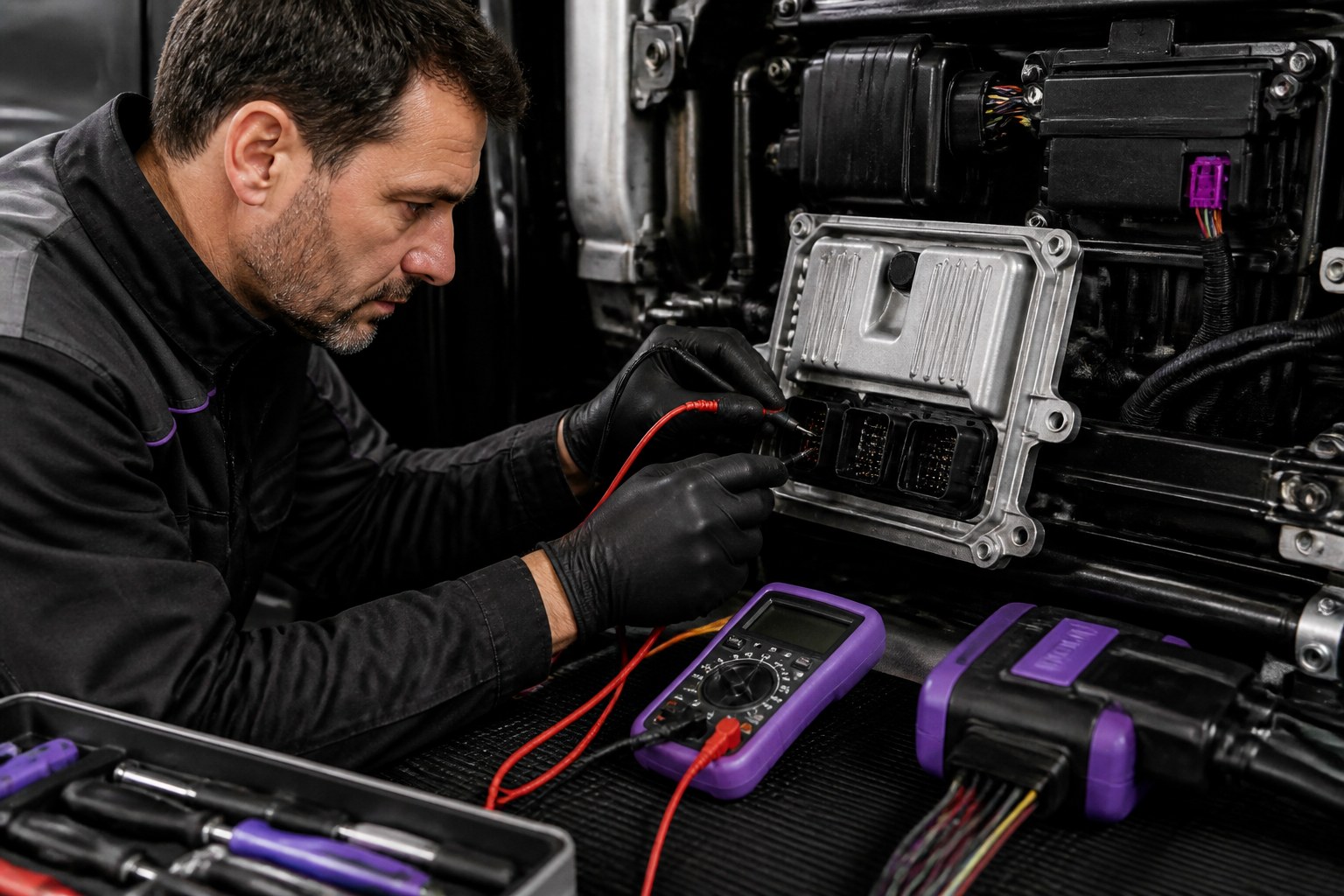
Diagnostic work requires a structured approach. A strong profile explains how the applicant identifies symptoms, performs tests, reads diagnostic information and checks whether a repair has resolved the fault. Experience with professional diagnostic equipment should be named where the equipment is known and the applicant has used it directly.
Technical documentation supports safe and consistent work. Experience with wiring diagrams, repair instructions, maintenance schedules, measurement values or workshop documentation is relevant. Applicants should explain how they use technical information rather than simply stating that they have technical knowledge.
Workshop safety is part of professional competence. Candidates should describe experience with safe tool use, protective equipment, vehicle lifting equipment and procedures for electrical or mechanical work when these activities form part of their background. Careful working methods are particularly important when repairs affect vehicle safety.
Automotive technology changes continuously. A candidate does not need to claim experience with every modern system. A more credible application identifies existing skills, names areas requiring further training and shows the ability to learn technical procedures accurately.
German Skills for Automotive Workshop Work
German is an important part of the candidate profile for automotive workshop work. Technicians need to understand safety instructions, technical terms, repair information and workplace communication. Misunderstanding a warning, measurement instruction or repair procedure creates practical risks in a workshop.
German also supports cooperation with colleagues and communication about completed work. A technician must explain a fault, report a repair step, discuss a technical issue and understand questions about vehicle condition. Customer-related information becomes relevant when the role includes contact with vehicle owners or service personnel.
Applicants should state their German skills honestly and describe how they use the language. A recognized Common European Framework of Reference for Languages level, such as A2, B1, B2 or C1, provides a structured way to document language knowledge when a certificate or assessment is available.
Language skills should appear consistently across the CV, certificates and other application documents. Candidates should separate German skills from other languages and avoid describing informal exposure as professional fluency. Technical vocabulary develops through training and workshop practice, so applicants should identify relevant automotive terms they understand and use.
German communication is not separate from technical competence. The ability to understand documentation and communicate about safety and repairs affects how effectively a technician performs practical work in a German-speaking environment.
Recognition of Foreign Automotive Qualifications
Automotive mechatronics is connected to vocational training in the dual education system. Dual-system training occupations are generally non-regulated professions. This means that formal German professional recognition is not automatically required in the same way as it is for a regulated profession.
This distinction does not remove the importance of qualification evidence. Certificates, training records and employment documents help assess whether an applicant has the technical background required for automotive work. Qualification evidence also remains relevant when residence or employment procedures require proof of professional training.
Recognition and immigration law are separate issues. A recognition decision does not by itself determine every residence or employment matter, and the absence of mandatory recognition for a non-regulated occupation does not mean that no documents are needed. Applicants must keep these topics separate when preparing their international application.
During an occupational recognition procedure, the responsible authority examines whether the foreign qualification corresponds to the relevant German reference occupation and whether substantial differences exist. A result may indicate full recognition, partial recognition or no recognition for a non-regulated profession. Where substantial differences exist, an adaptation qualification or another approved qualification measure addresses those differences in the applicable case.
Applicants should collect complete documents before beginning a formal procedure. Missing certificates, unclear training content or inconsistent employment information make the assessment of a foreign qualification more difficult. The responsible authority examines a recognition application within approximately three to four months once all required documents are complete.
Documents to Prepare Before Applying
A complete application starts with a structured CV. It should include personal details, vocational training, employment history, language skills and relevant technical abilities. Present employment periods in a clear order and avoid unexplained gaps where a short factual explanation is available.
Vocational certificates and training records provide evidence of the professional foundation. School records and other education documents also help explain the candidate's learning path. Include documents that show the content and level of automotive or technical training.
Employment references are useful when available. They should help confirm the position, employment period and responsibilities. If formal references do not exist, the CV should still describe employers, positions, dates and tasks precisely.
Language certificates should be included when available. State German and other language skills separately and use recognized CEFR levels where documented. Do not claim a certificate that has not been issued.
Foreign-language documents may require translation into German or English in the relevant procedure. Whether a certified or otherwise formal translation is required depends on the applicable process. Applicants should not assume that one translation rule applies to every document or procedure.
Keep the information consistent across all documents. The spelling of names, employment dates, training periods, job titles and technical responsibilities should match. Inconsistencies create avoidable questions during the assessment of an international candidate profile.
Working Conditions in Automotive Mechatronics
Automotive mechatronics is practical workshop work. Technicians work with vehicles, tools, testing equipment, replacement parts and technical documentation. The work includes standing, moving around vehicles, handling components and maintaining concentration during inspections and repairs.
The workshop environment combines mechanical activity with electrical and electronic testing. Depending on the professional setting, technicians inspect vehicles, perform maintenance, locate faults, repair systems and check the result. Safe working procedures are essential when using tools, lifting equipment, electrical testing equipment or components that affect vehicle safety.
Teamwork is part of many workshop processes. Technicians coordinate tasks, exchange information about faults and report completed work. Clear communication helps prevent duplicate work and ensures that unresolved technical issues are identified.
Contract details must be checked in the employment contract rather than assumed from the occupational title. A contract should state the parties, start date, possible fixed-term status, probationary period, workplace, duties, pay, working time, holidays and notice periods. Gross pay is different from net pay because taxes and social insurance contributions are deducted according to the individual's circumstances.
Applicants should also consider the practical consequences of moving to Germany. Rent, deposits, travel expenses and other living costs affect the amount that remains available after relocation. A realistic preparation plan therefore includes both professional documents and personal financial planning.
Automotive mechatronics training, comparable technical education, certificates and training records
Shows the technical foundation of your professional profile and supports assessment of your qualification
Workshop and repair experience
Vehicle types, systems handled, maintenance, inspections, repairs and level of responsibility
Creates a clear picture of your practical experience instead of relying on general job titles
Diagnostic and electrical skills
Fault finding, testing, vehicle electrics, electronics, control units and diagnostic equipment used
Demonstrates your ability to work with modern vehicle systems and structured troubleshooting
German language skills
Documented CEFR level, language certificate and practical technical communication experience
Shows your ability to understand safety information, technical instructions and workshop communication
Supporting documents
CV, certificates, school or training records, references where available and relevant translations
Allows your qualifications and employment history to be assessed consistently and efficiently
How to Present Your Automotive Experience
An initiative application should make your professional profile understandable without linking it to a single vacancy. Start with your automotive or technical qualification and place the most relevant practical experience near the beginning of the CV.
Identify the vehicle types and systems you have handled. Explain whether your work involved passenger vehicles, commercial vehicles, engines, braking systems, electrical systems, control units or other technical areas. Only include systems that reflect your actual experience.
Describe diagnostic and repair work with clear action words. State whether you inspected, measured, tested, adjusted, replaced, repaired or documented a component. Add the equipment or tools used when this information demonstrates practical competence.
Show your responsibility level. Explain whether you performed tasks independently, worked under supervision or supported a team. This gives the reader a realistic understanding of your experience and avoids vague statements such as “responsible for all repairs.”
List German and other language skills in a separate section. Add certificates or CEFR levels when documented. A short profile at the beginning of the CV may summarize your training, years of relevant experience and strongest technical areas without making unsupported claims.
The following preparation structure helps you check whether your application presents the essential parts of an automotive mechatronics profile:
Preparing to Work in Germany
Applicants from abroad need a complete professional profile for assessment. This includes evidence of training, a transparent employment history, technical skills, language information and supporting documents. A short CV without certificates or detailed responsibilities does not show the full value of practical automotive experience.
Candidates should prepare for separate checks relating to professional qualifications, employment and immigration. Recognition of a qualification and residence procedures are not the same process. The documents required for one procedure do not automatically settle the other.
Keep all information consistent. Training dates should correspond across certificates and the CV. Employment dates should match references and other records. Job titles should be translated accurately, while the original title may also be included where it helps explain the qualification.
Applicants must be open to employment opportunities throughout Germany. Limiting the application to one preferred city reduces flexibility and does not reflect the nationwide nature of the candidate application model. Openness to different regions supports a broader assessment of suitable employment environments.
Before relocating, organize original documents, translations where required and digital copies. Also prepare a clear explanation of your practical experience with vehicle systems. This makes professional discussions more efficient and helps clarify the relationship between foreign training and German occupational requirements.
Is This Career Path a Good Fit for You?
This career path fits applicants who enjoy practical technical work and who are comfortable combining mechanical tasks with electrical and electronic diagnosis. Review your own experience honestly before applying.
Ask yourself whether you have completed automotive or comparable technical training. Check whether you can provide certificates, training records or other evidence that explains your qualification. If your education is outside Germany, organize the documents that describe its content.
Consider your workshop experience in detail. Have you performed inspections, maintenance, repairs or fault finding? Which vehicle systems have you handled? Which tools and diagnostic devices have you used? Can you explain your responsibilities without relying on general statements?
Evaluate your German communication skills. Can you understand technical instructions, safety information and workshop discussions? Can you report a fault or explain completed work? Document your language level accurately and identify areas where further technical German practice is needed.
Finally, assess your readiness for international employment. Your documents should be complete, your professional history should be consistent and you should be open to jobs throughout Germany. These points provide a practical basis for an initiative application to East Talent.
Build a Complete Automotive Mechatronics Profile
A strong automotive mechatronics application combines documented vocational training, transparent practical experience and specific technical information. Vehicle systems, diagnostic work, electrical knowledge, mechanical repairs and safety procedures should be described accurately and at the correct level of responsibility.
German communication is an important part of readiness for workshop work. It supports the understanding of safety instructions, technical documentation and cooperation with colleagues. Language skills should appear clearly alongside certificates, employment history and other supporting documents.
Applicants from abroad should separate qualification recognition from immigration checks and prepare complete, consistent documentation for both relevant assessment processes. They should also remain open to employment opportunities throughout Germany rather than focusing on one location.
If your profile includes automotive training, practical workshop experience and clearly documented language and qualification evidence, prepare these materials for an initiative application. Apply for jobs in Germany through our application form.
Create your profile
Registration with East Talent
Four short steps. A CV is optional and can be provided in your native language.
Step 1 of 4Profession
East Talent
International recruitment with proprietary software
East Talent combines international recruitment with structured digital processes for handling candidate profiles, attracting employers and evaluating job opportunities.