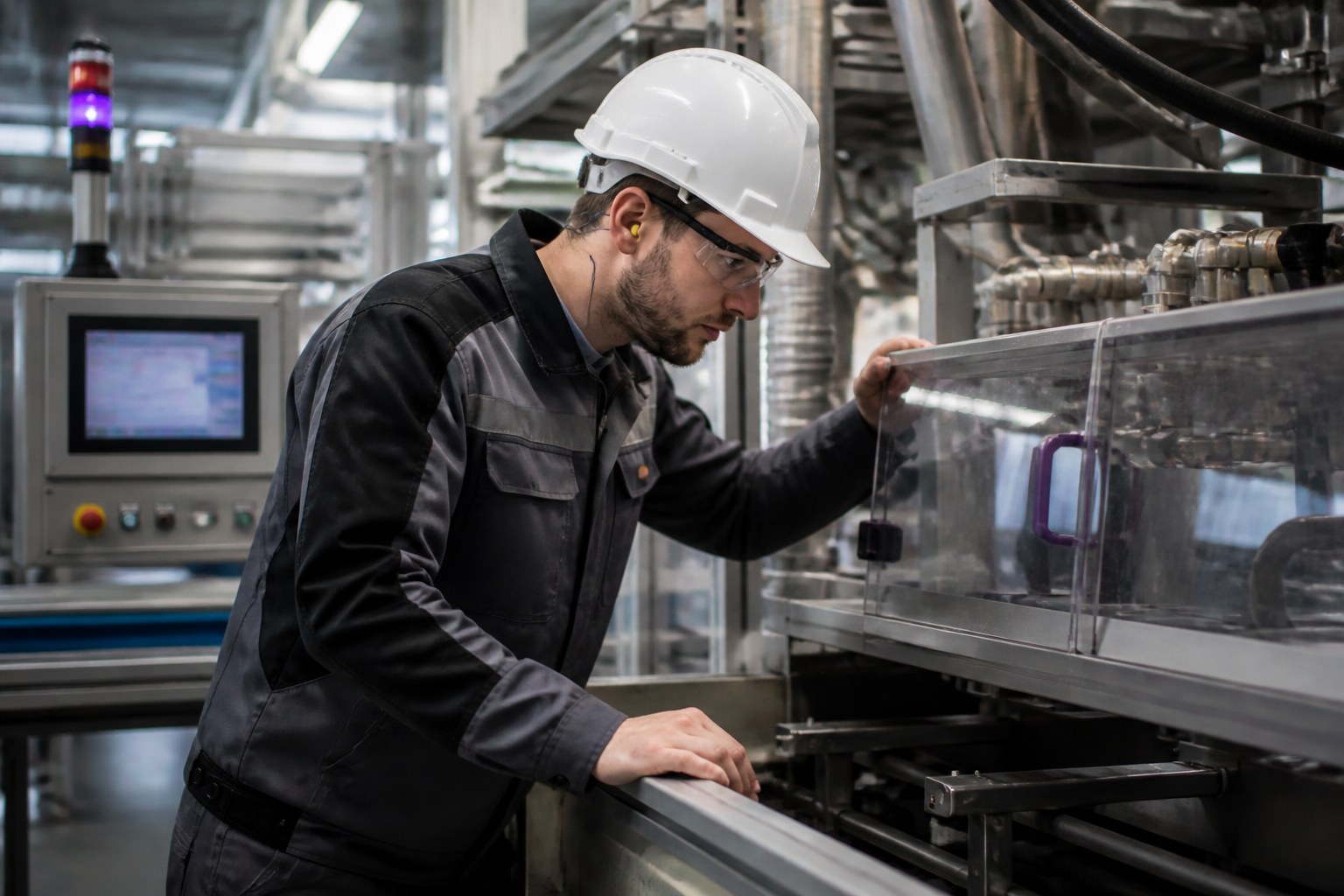
Machine and plant operators operate, monitor and control industrial production equipment. Their work focuses on keeping production processes stable, identifying irregularities and following operating instructions accurately. Depending on the production environment, operators work with automated or partly automated machinery, production lines, control panels and technical equipment.
Typical responsibilities include preparing machines for production, loading or positioning materials, starting and stopping equipment, checking operating parameters and observing the production process. Operators also record relevant information, report faults and respond to deviations according to established procedures. The exact equipment and production materials differ between occupational areas, so your application should describe the systems and processes you have actually handled.
Safe and consistent operation is central to this occupational group. A strong candidate profile demonstrates practical technical understanding, attention to detail and the ability to follow documented instructions rather than relying only on a general job title.
Typical Work Environment and Daily Responsibilities
Machine and plant operators work in industrial production areas where machinery, materials and quality-control processes are part of the daily routine. The environment requires concentration because operators monitor moving equipment, production outputs and control information at the same time. Protective workwear and safety equipment are used according to the conditions of the workplace.
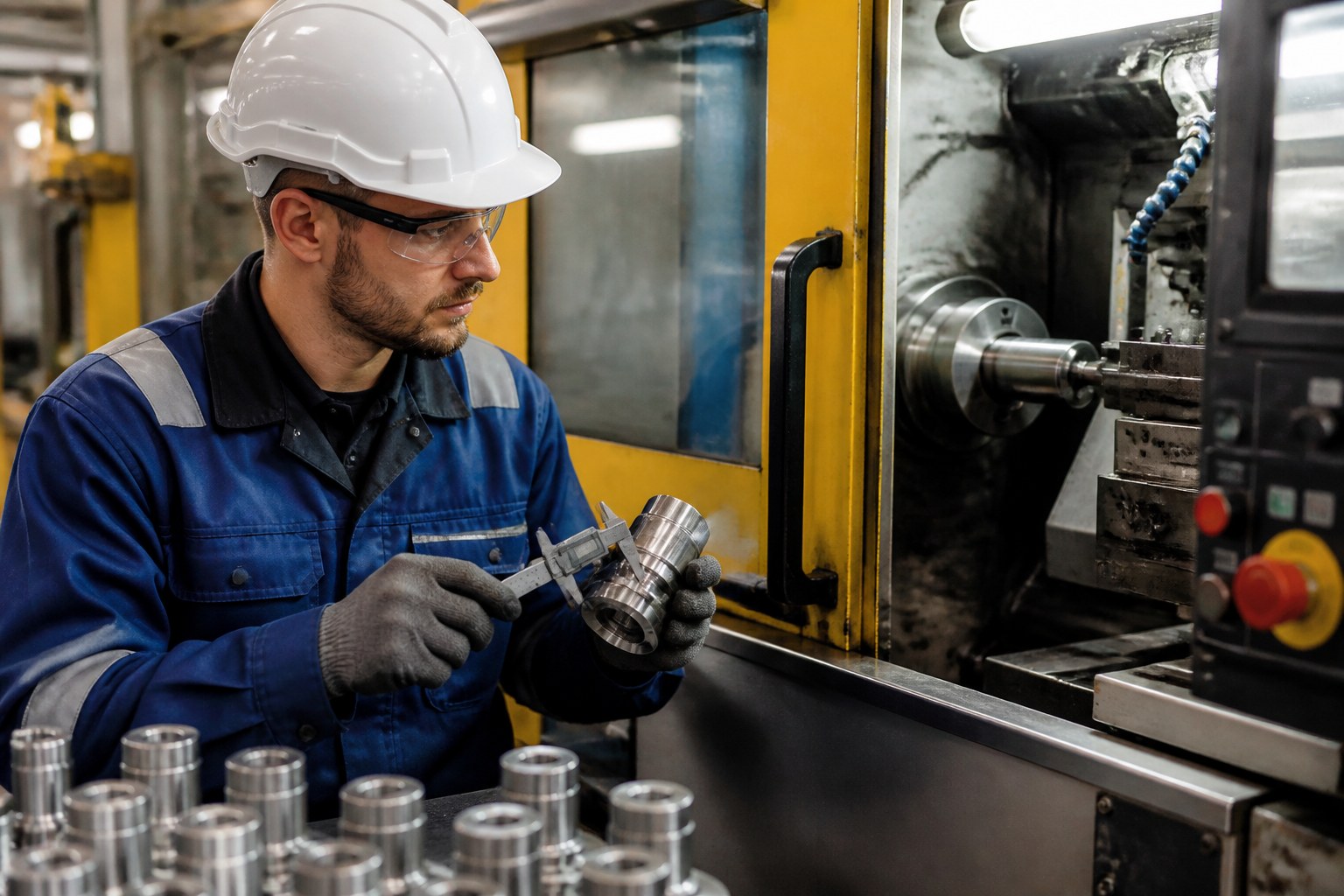
Daily responsibilities often combine machine operation with visual checks, process monitoring and communication with other production employees. Operators inspect manufactured components or materials, identify visible deviations and report problems to the responsible technical or production team. Cleaning work areas and carrying out basic routine tasks may also form part of the role where the operating process requires it.
Coordination with colleagues is important when production stages follow one another or when a machine problem affects the workflow. Working times and shift arrangements differ between employment relationships, so candidates should present their availability honestly without assuming a particular schedule.
The work environment demands reliability. Missing a process deviation, ignoring an instruction or failing to report a technical problem affects product quality and workplace safety. Employers therefore need a clear picture of the equipment, materials and responsibilities you have already managed.
Qualifications and Experience That Strengthen Your Profile
Your profile should distinguish formal qualifications from practical experience. Relevant information includes vocational training, technical education, industrial courses and documented experience operating production machinery. A formal qualification is valuable when it explains the technical foundation of your work, but practical experience also provides important evidence of your ability to operate equipment responsibly.
Describe the production environments in which you worked. Include the type of machines, production materials, products or components, operating tasks and quality checks you performed. If your work included maintenance support, tool changes, fault reporting or process documentation, state this clearly and factually.
Relevant experience from manufacturing, industrial production, process operation or technical production environments strengthens your profile when the tasks are explained precisely. Avoid presenting unrelated duties as machine-operation experience. A short, accurate description of your responsibilities is more useful than a long list of unsupported technical terms.
Certificates, vocational records and employment references support the information in your CV. Where a qualification has a foreign title, provide the original designation and explain the practical occupational content in clear English or German where possible.
Technical Knowledge and Safety Awareness
Machine and plant operator work requires the ability to understand operating instructions and apply them consistently. Your technical profile should show how you start, monitor and stop equipment, how you check operating conditions and how you respond when a process does not follow the expected pattern.
Relevant technical knowledge includes reading control information, recognizing unusual noise or movement, identifying visible defects and reporting machine irregularities. Depending on your experience, you may also have worked with measuring equipment, control instruments, production documentation or basic maintenance procedures. State which activities you performed yourself and which activities you supported.
Safety awareness is not an abstract qualification. It appears in specific working practices: observing protective procedures, using required personal protective equipment, keeping production areas orderly and stopping or reporting unsafe situations according to workplace instructions. Your application should explain the safety responsibilities you handled in previous roles.
Quality control also forms part of the technical profile. Explain whether you carried out visual inspections, measurements, sample checks or documentation of production results. Do not claim responsibility for a process unless your previous work records support the statement.
German Skills for Machine and Plant Operator Work
German skills form part of your candidate profile because machine and plant operators work with operating instructions, safety information, production documentation and workplace communication. Understanding technical directions supports safe machine operation and helps you report faults or quality issues accurately.
Your application should state your German level clearly. You may describe it using the Common European Framework of Reference for Languages, with levels such as A2, B1, B2 or C1 where applicable. If your practical communication skills differ between speaking, listening, reading and writing, explain that distinction instead of using one vague statement.
Technical vocabulary is particularly relevant. Candidates should build familiarity with terms connected to machinery, materials, production stages, defects, measurements, maintenance and safety procedures. Language learning before employment supports both workplace integration and accurate communication during production.
Do not present a language level that you cannot demonstrate. A precise description of your current skills gives East Talent a more reliable basis for assessing your occupational profile and discussing suitable employment opportunities.
Recognition of Foreign Qualifications
The legal classification of machine and plant operator work depends on the occupational reference and the individual circumstances. This occupational area should therefore be assessed individually rather than automatically described as either regulated or non-regulated.
Regulated professions are occupations in which professional practice or certain activities are legally protected. The required professional recognition or licence applies when the intended work falls within such a regulated profession. Non-regulated occupations are not protected in the same way. Formal German recognition is not automatically required for every non-regulated occupation, although qualification evidence still matters for employment and residence procedures.
In an official recognition procedure, the responsible authority examines whether a foreign qualification corresponds to a German reference occupation and whether substantial differences exist. The result depends on the documents and the occupational comparison. A recognition decision is not automatic simply because a candidate has worked with industrial machinery.
Candidates should collect complete qualification records and describe their practical experience in detail. If an authority identifies substantial differences, an adjustment qualification or another designated qualification measure may be relevant in the individual case. Recognition law and rules for working in Germany are separate areas and require separate assessment.
Documents to Prepare Before Applying
Prepare a clear CV that presents your professional history in a traceable order. Each relevant position should include the employer, job title, employment period and main tasks. Describe machine-operation responsibilities instead of using only broad labels such as production worker or factory employee.
Collect vocational certificates, school or technical education records and other documents that support your qualifications. Employment references are useful where they are available, particularly when they confirm machine operation, production monitoring, quality checks or technical responsibilities.
Add your German skills and other relevant language information to the CV. State language levels using recognized CEFR descriptions where appropriate. Also include practical technical skills, safety training and any documented experience with production systems or measuring equipment.
Foreign-language certificates may require translation into German or English for a particular procedure. Whether a certified or otherwise formalized translation is required depends on the relevant process. Do not assume that every document needs the same type of translation; organize the original documents and check the applicable requirements when a formal procedure is relevant.
Machine and Plant Operator Application Preparation
Application area
What to document
Why it matters for your profile
Technical experience
Machine types, production processes, materials, operating tasks and fault reporting
Shows the practical scope of your machine and plant operation background
Qualifications and certificates
Vocational training, technical education, certificates and qualification records
Supports your technical knowledge and helps assess foreign qualifications
German language skills
Current speaking, listening, reading and writing abilities, with a CEFR level where applicable
Shows your ability to understand instructions, safety information and workplace communication
Employment history
Employers, positions, dates and clearly described responsibilities
Makes your experience traceable and distinguishes actual machine operation from general production work
Supporting documents
Employment references, original certificates and relevant German or English translations
Provides evidence for your application and supports later assessment procedures where relevant
How to Present Machine Operation Experience
A strong application explains what you did, how you did it and which equipment you used. Begin with the machine or plant type and then describe your responsibilities. Examples include preparing equipment, monitoring production parameters, loading materials, checking components, reporting faults and documenting results.
Name production materials and products where this information is relevant and safe to disclose. Explain whether you worked with metal, plastics, food products, packaging materials or another production category only when this reflects your actual experience. The aim is to make your technical background understandable without overstating its scope.
Mention quality-control activities such as visual inspections, measurements, sample checks or recording deviations. Describe maintenance-related work carefully. There is a difference between performing maintenance independently, supporting a maintenance team and reporting a defect. Accurate distinctions improve the credibility of your profile.
Organize employment history chronologically and show the duration of each role when documented. If your responsibilities changed within one employer, separate the stages and explain the development. This structure helps reviewers understand the sequence of your technical experience and the level of responsibility you held.
Preparing for Employment Throughout Germany
When you apply through East Talent, you submit an initiative for employment in your occupational group rather than applying for a named vacancy or a specific employer. East Talent reviews information such as your qualifications, experience, German skills and relevant documents. Suitable candidates may later be introduced to companies in Germany.
This process requires openness to employment opportunities throughout Germany. Do not build your application around one assumed city, region or company. Present your technical profile broadly enough for suitable industrial environments in different parts of the country.
Your mobility information should be honest and specific. State whether you are prepared to relocate, whether you have restrictions that affect your availability and which employment conditions require clarification. Openness to jobs throughout Germany gives your occupational profile a wider practical context without creating a promise of placement.
A complete profile also reduces uncertainty during later discussions. Technical experience, language skills, documents and mobility information should all be consistent. Do not claim that an introduction or employment contract is guaranteed; the application is an initial step in the assessment of your professional background.
Employment Documents and Financial Information to Check
Once a specific employment relationship is presented, review the employment contract carefully. Important points include the contracting parties, start date, any fixed-term arrangement, probation period, work location, duties, pay, working time, vacation entitlement and notice periods.
The contract should make your duties understandable. For machine and plant operator work, check whether the described activities match the technical responsibilities discussed during the process. Clarify the working location and the production environment before accepting an employment relationship.
Pay is normally stated as a gross amount. Gross pay is not the same as the amount transferred to your bank account because taxes and social insurance contributions are deducted according to your individual circumstances. The net amount therefore cannot be calculated reliably from a gross figure alone without the relevant personal information.
Additional payments, premiums or supplements depend on the specific employment relationship and applicable rules. Review how these elements are described instead of treating them as guaranteed income. When assessing a move to Germany, also account for housing, deposits, transport and other living costs because these expenses affect the amount available after payment deductions and monthly spending.
A Practical Application Checklist
Start by documenting your machine-operation experience. List the machines, plants, materials, production processes and quality activities you handled. Separate independent responsibilities from tasks performed under supervision or as maintenance support.
Next, collect certificates, vocational records, employment references and other evidence of your technical background. Check that names, dates and job descriptions are consistent across your documents. Organize translations where they are relevant to the application or a later formal procedure.
Prepare a structured CV with employment history, training, technical skills and German language information. Use CEFR descriptions such as A2, B1, B2 or C1 when they accurately represent your language ability. Include safety knowledge and production documentation experience where these are supported by your background.
Finally, explain your availability and mobility clearly. Submit complete information through the application form and remain open to employment opportunities throughout Germany. Complete and accurate information gives East Talent a practical basis for assessing your occupational profile.
Next Step for Machine and Plant Operator Applicants
A strong application for machine and plant operator jobs in Germany combines practical production experience with clear documentation. Your profile should show the machines and processes you handled, the quality and safety responsibilities you carried out, the qualifications supporting your work and your current German skills.
Review your documents before submitting your application. Make sure your employment history is traceable, your technical claims are accurate and your mobility information reflects your actual situation. Openness to jobs throughout Germany is an important part of preparing for employment through East Talent.
If your experience is broad, focus on the responsibilities that best demonstrate safe and reliable machine operation. Specific information helps your professional profile stand out more effectively than a general occupational title.
Create your profile
Registration with East Talent
Four short steps. A CV is optional and can be provided in your native language.
Step 1 of 4Profession
East Talent
International recruitment with proprietary software
East Talent combines international recruitment with structured digital processes for handling candidate profiles, attracting employers and evaluating job opportunities.