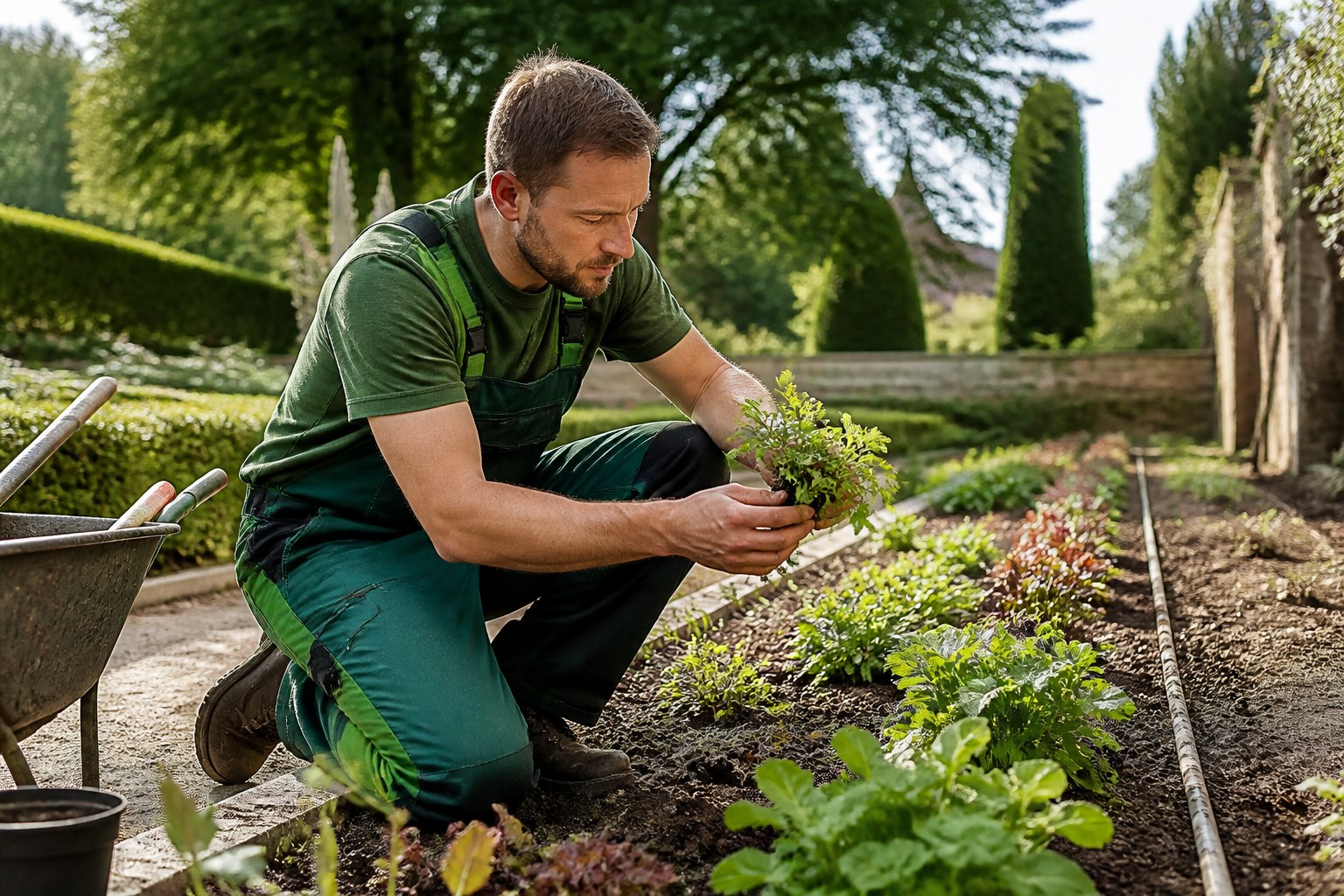
Gardener jobs in Germany are practical occupations that combine plant care, outdoor maintenance and physical work. Depending on the professional field, daily tasks include preparing soil, planting and caring for vegetation, pruning, removing weeds, maintaining beds and keeping outdoor areas in good condition. Gardening work takes place in changing weather conditions and requires careful handling of plants, tools and work materials.
The term gardener covers several areas of work. Applicants may have experience in horticulture, landscaping, nursery work, garden maintenance, municipal green-space care or related outdoor activities. The tasks performed in these areas differ, but all require reliable practical work and attention to the condition of plants and outdoor spaces.
A gardening position also involves following work instructions and coordinating tasks with other people. Planting plans, maintenance schedules, safety instructions and information about equipment need to be understood accurately. Applicants therefore benefit from presenting both their practical abilities and their reliability clearly.
Gardening work is not limited to decorative planting. It also includes maintaining paths, lawns, hedges, trees, beds and other outdoor areas. Experience with seasonal work is relevant because many horticultural tasks change during the year. A strong application explains which tasks the applicant performed, in which environment and with which level of responsibility.
Skills and Experience Relevant to Gardening Work
Practical experience is central to a gardener applicant’s profile. Employers and placement processes need a clear understanding of what the applicant has actually done. A general statement such as “I worked in gardening” provides little information. A stronger description identifies the plants, outdoor areas, maintenance tasks, tools and responsibilities involved.
Relevant horticultural knowledge includes recognising basic plant needs, preparing soil, planting correctly and maintaining vegetation. Experience with pruning, watering, lawn care, weed control or seasonal maintenance gives a clearer picture of the applicant’s practical profile. Applicants should describe their experience accurately and avoid claiming responsibility for tasks they did not perform.
Safe use of tools and equipment is another important part of outdoor work. Depending on previous experience, this may include hand tools, pruning equipment, mowing equipment or other machinery used in gardening and landscaping. The application should state the equipment used and the applicant’s level of experience. Specific certificates or formal training should be listed separately.
Physical reliability matters because gardening involves standing, walking, lifting, bending and working outdoors. Weather conditions and changing workloads form part of many horticultural environments. Applicants should describe relevant outdoor work honestly and explain how they maintained consistent performance during physically demanding tasks.
The ability to follow instructions is essential. Gardening work often involves a sequence of tasks, defined maintenance standards and safety-related information. German language knowledge supports this requirement, but practical communication also depends on listening carefully, asking questions when instructions are unclear and reporting problems promptly.
Qualifications and Recognition for Applicants
Applicants enter gardening work with different combinations of formal education, vocational training and practical experience. A horticultural qualification provides documented evidence of professional preparation, while work experience shows how the applicant applies knowledge in real outdoor environments. Both elements belong in the candidate profile when they are relevant.
The recognition question depends on the profession and its legal classification. Regulated professions require the relevant professional recognition or authorisation before the profession may be practised in Germany. Non-regulated professions are not protected in the same way, and work in such a profession is generally possible without formal German professional recognition. This does not automatically remove qualification requirements connected with residence or employment procedures.
Applicants should therefore avoid assuming that every gardening occupation follows the same recognition rules. The professional title, the actual duties and the legal classification determine which recognition questions matter. A qualification assessment also does not replace the need to provide evidence of work experience, language knowledge and identity.
Where an authority examines a foreign professional qualification, it compares that qualification with the relevant German reference profession and checks whether substantial differences exist. Depending on the case, the result may involve full recognition, partial recognition or no recognition for a non-regulated profession. Where substantial differences are identified, an adaptation qualification or another recognised measure addresses those differences in appropriate cases.
Prepare diplomas, vocational certificates, course records and relevant certificates in an organised form. Keep the original information accurate and consistent across your CV and documents. If documents are not in German or English, a translation may be useful or required in the relevant procedure. Whether certification or another formal translation format is required depends on that procedure.
German Language Knowledge for Gardener Applicants
German language knowledge forms part of a gardener applicant’s professional profile. Outdoor work involves instructions about plants, tools, work sequences and safety. Clear communication helps applicants understand what needs to be done, confirm priorities and respond when conditions change.
Language is also important when working with colleagues, supervisors, customers or members of the public. A gardener may need to report damaged equipment, identify a plant problem, explain completed work or ask for clarification. These situations require practical communication rather than memorised general phrases.
Applicants should describe their German skills honestly in the CV and application documents. When a recognised assessment is available, use the Common European Framework of Reference for Languages, such as A2, B1, B2 or C1. Do not claim a higher level than the evidence supports. A short explanation of practical language use also helps: for example, whether the applicant understands work instructions, communicates with colleagues or reads safety information.
No single language level applies to every gardening activity or professional context. The relevant language profile depends on the duties, communication requirements and procedure connected with the employment. East Talent assesses German knowledge as part of the candidate profile when considering applicants for gardening work in Germany.
Documents to Prepare Before Applying
A complete application starts with an accurate CV. Include contact details, employment history, education, vocational training, language skills and relevant abilities. Present information in a clear order so that the reader can identify the applicant’s gardening experience quickly.
Employment records should show the employer, position, period of employment and main tasks. Describe gardening duties with practical detail: plant care, soil preparation, pruning, lawn maintenance, landscaping, seasonal work, equipment use or responsibility for particular outdoor areas. If several employers are involved, keep the dates and job titles consistent throughout the documents.
Education and training records include school or vocational certificates, horticultural qualifications, equipment training and other relevant courses. Add certificates connected with safety or machinery only when they are genuine and relevant. Do not replace missing documents with unsupported claims.
Language information belongs in a separate CV section. State German and other relevant languages clearly, using CEFR levels when documented. If language learning is ongoing, describe the current situation accurately rather than presenting a future target as an existing qualification.
Foreign-language certificates may require translation into German or English depending on the procedure. A certified or otherwise formal translation is not a universal requirement, so applicants should organise translations according to the relevant process. Keep scans readable and use consistent file names when submitting digital documents.
A photograph is not a general requirement for an application. The essential priority is a complete, truthful and easy-to-read professional profile.
Gardener Applicant Profile: What to Prepare
Profile area
What to document
Why it matters for your application
Practical gardening experience
Plant care, soil preparation, pruning, lawn maintenance, landscaping, seasonal work and outdoor maintenance
Shows which gardening tasks and working environments you have handled in practice
Qualifications and certificates
Vocational training, horticultural education, equipment courses and relevant certificates
Provides evidence of formal preparation and technical knowledge
German language knowledge
Current language level, CEFR level where documented and practical communication abilities
Supports communication about instructions, teamwork and safety-related information
Employment and education history
Employers, positions, dates, duties, schools, qualifications and training periods
Makes your professional development traceable and supports document checks
How to Present Gardening Experience in Your CV
A gardening CV should connect each period of employment with specific tasks. Instead of writing “responsible for gardens,” explain whether the work involved planting, pruning, lawn care, irrigation, soil preparation, hedge maintenance, landscaping or general upkeep. This detail allows the reader to distinguish between different kinds of gardening experience.
Seasonal duties deserve particular attention. State whether you worked on spring planting, summer maintenance, autumn clearance, winter preparation or recurring seasonal programmes. Do not suggest that you performed a task throughout the year if your experience was limited to a specific period.
Equipment experience should also be precise. List the tools and machines you used, your responsibilities for basic care or cleaning and any formal training connected with them. Safe working practices are more credible when linked to real equipment and actual tasks.
If you worked in a team, explain your individual role. Mention whether you followed a supervisor’s plan, worked independently on assigned areas, coordinated with colleagues or communicated directly with customers. These details demonstrate reliability without exaggerating authority.
Use a reverse-chronological structure for employment history, with the most recent experience first. For every relevant role, include the employer, position, dates and a concise list of duties. The same information should match your certificates and any other documents. Consistency makes the professional history easier to verify.
Working Conditions to Understand Before Employment
Before accepting employment in Germany, applicants should understand the main terms of the employment relationship. Important information includes the contractual employer, start date, whether the contract is fixed-term, the probationary period, the work location, duties, working time, pay, holiday entitlement and notice periods.
The work location matters particularly for gardening occupations because the daily environment is usually outdoors and practical. Applicants should understand where the work takes place, how the workday begins, whether travel between outdoor sites forms part of the duties and which tools or materials are provided. These details belong to the employment arrangement and should be clear before work begins.
Pay is usually stated as gross pay. Gross pay is not the same as the amount transferred to the bank account. Taxes and social-security contributions are deducted according to the individual situation, leaving the net amount. Applicants should therefore distinguish carefully between the contractual gross amount and the expected net payment.
German social insurance includes health insurance, long-term care insurance, pension insurance, accident insurance and unemployment insurance. In a job subject to social insurance contributions, registration is generally handled through the employer. The exact deductions depend on the individual circumstances.
Working time must also be understood separately from the statutory maximum working day. Under the Working Time Act, daily working time is generally limited to eight hours on working days. It may be extended to ten hours when the average remains within the statutory limit over the specified reference period. This rule is not the same as the regular weekly hours agreed in the employment contract.
Holiday entitlement should be stated clearly. A contract or collective agreement may provide more holiday than the statutory minimum. Applicants should read the written terms carefully and keep a copy of the contract and any relevant workplace rules.
Preparing for Employment Across Germany
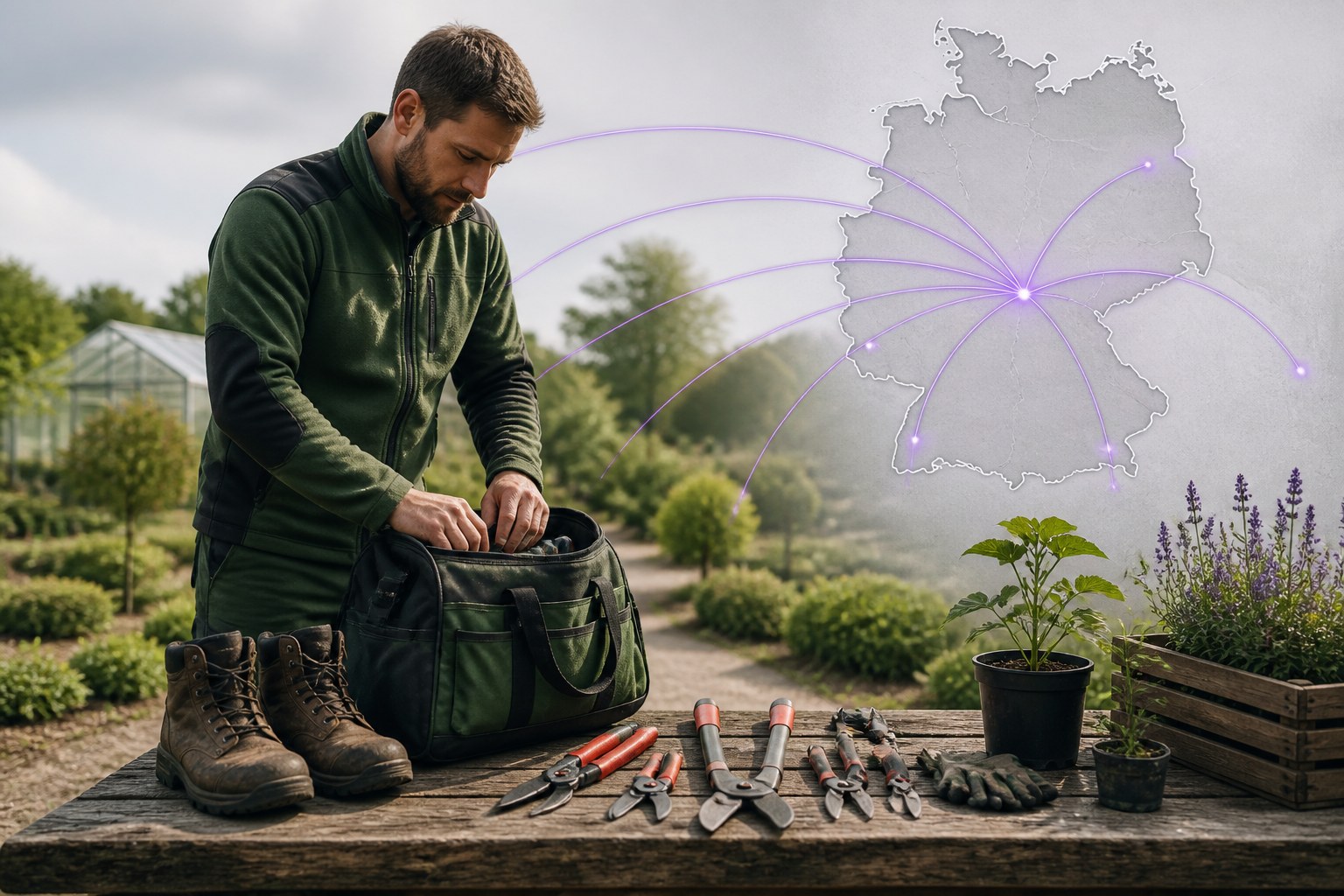
Applicants using East Talent’s candidate route apply for employment opportunities in their occupational group rather than for a named vacancy or a specific employer. The purpose of the application is to present a complete professional profile that supports consideration for suitable gardening opportunities in Germany.
Candidates must remain open to jobs throughout Germany. This nationwide mobility requirement is important because gardening work exists in different outdoor environments and employment settings. Applicants should state any genuine restrictions clearly, but they should not create the expectation that a particular city or region is guaranteed.
A complete profile helps the assessment focus on the applicant’s actual suitability. Include gardening experience, formal qualifications, equipment knowledge, German language information and all relevant documents. Explain the type of work you have performed instead of relying on a broad occupational label alone.
Applicants should also prepare for practical questions about outdoor work. Be ready to describe the plants and areas you maintained, the equipment you used, the way you followed instructions and the responsibilities you held. Clear answers support a realistic assessment of the professional profile.
East Talent may introduce suitable candidates to companies in Germany after reviewing relevant qualifications, experience, language knowledge and documents. This does not represent a promise of a particular employer, city, salary or employment condition. Those details belong to the employment relationship that is established later.
A Practical Checklist for Gardener Applicants
Start by recording every relevant gardening activity. Note the type of outdoor environment, the plants or areas involved, the tasks performed, the tools used and the level of responsibility. This information forms the basis of a precise CV.
Next, collect education and training records. Include vocational certificates, horticultural courses, machinery or equipment certificates and other documents that support your professional profile. Keep the information consistent with the dates and job titles in your employment history.
Document your German language knowledge using a CEFR level when evidence is available. Explain practical communication abilities honestly, particularly your understanding of instructions and safety information. Avoid presenting an intended future language level as your current level.
Review foreign-language documents and arrange translations where the relevant procedure requires them. Do not assume that one translation format applies to every process. Organise clear copies of your identity documents, qualifications, certificates and employment evidence.
Finally, check that your CV is readable, accurate and complete. Make sure your profile shows openness to employment opportunities throughout Germany. A precise description of gardening tasks, supported qualifications, documented language knowledge and organised documents gives the application a strong foundation.
Create your profile
Registration with East Talent
Four short steps. A CV is optional and can be provided in your native language.
Step 1 of 4Profession
East Talent
International recruitment with proprietary software
East Talent combines international recruitment with structured digital processes for handling candidate profiles, attracting employers and evaluating job opportunities.