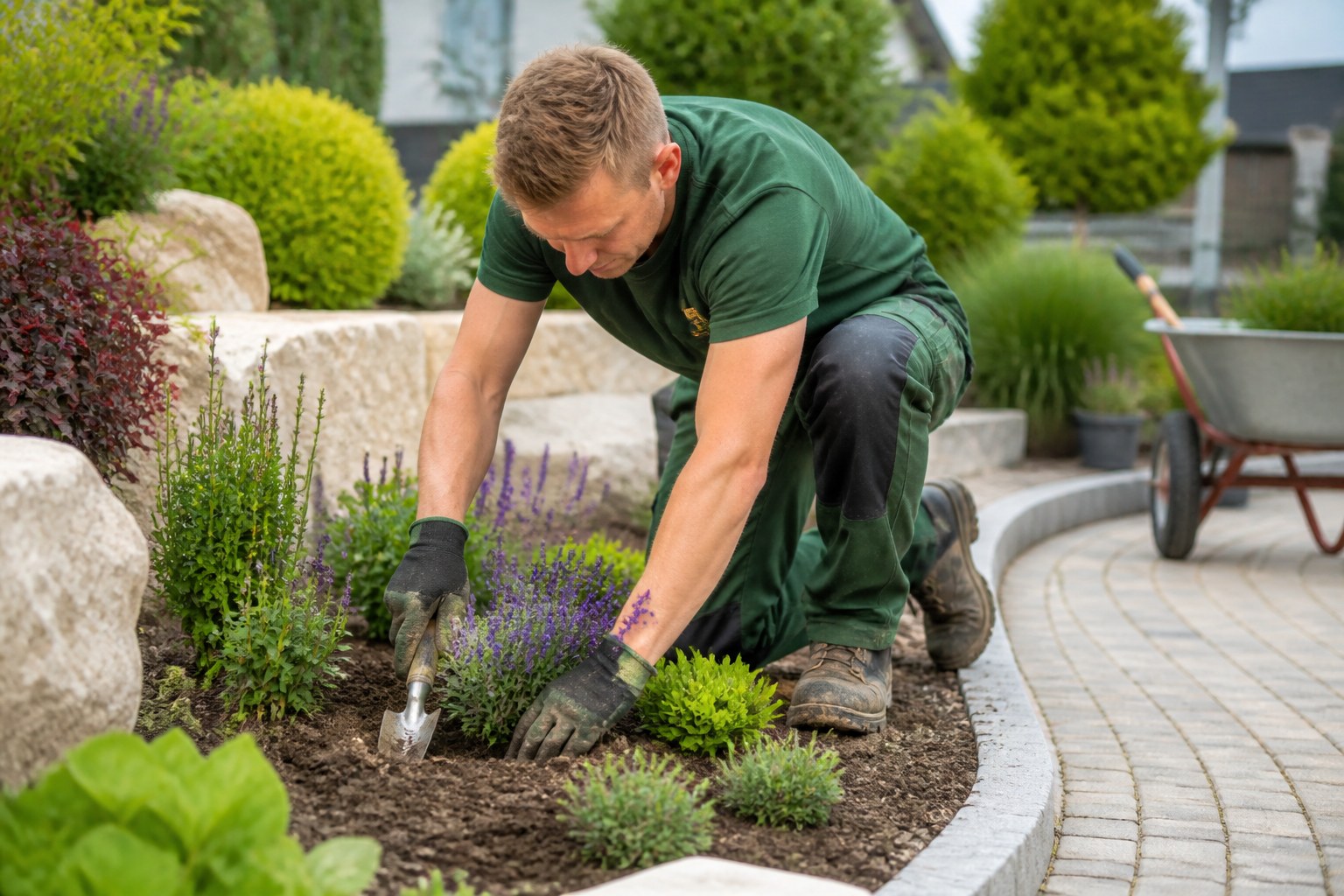
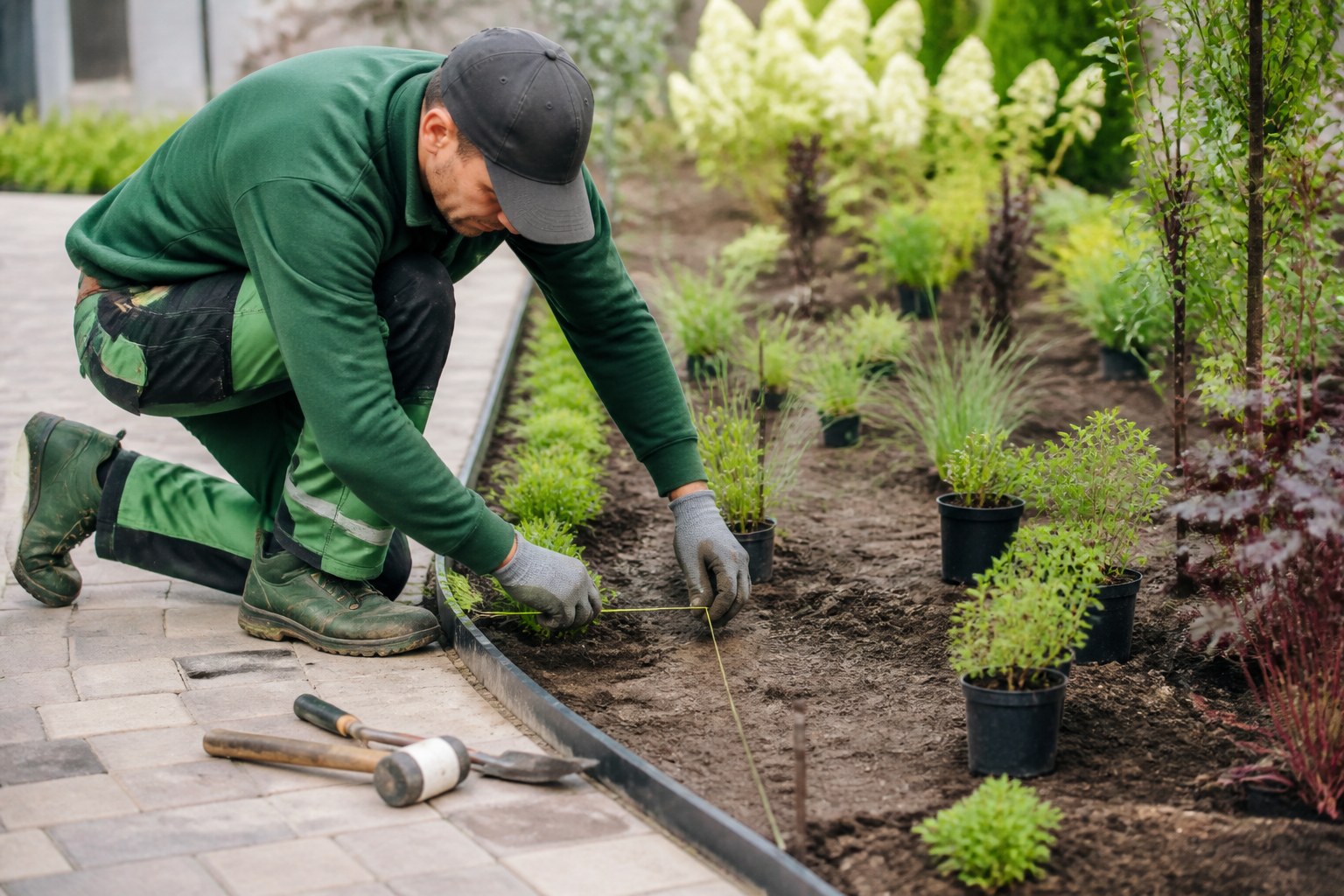
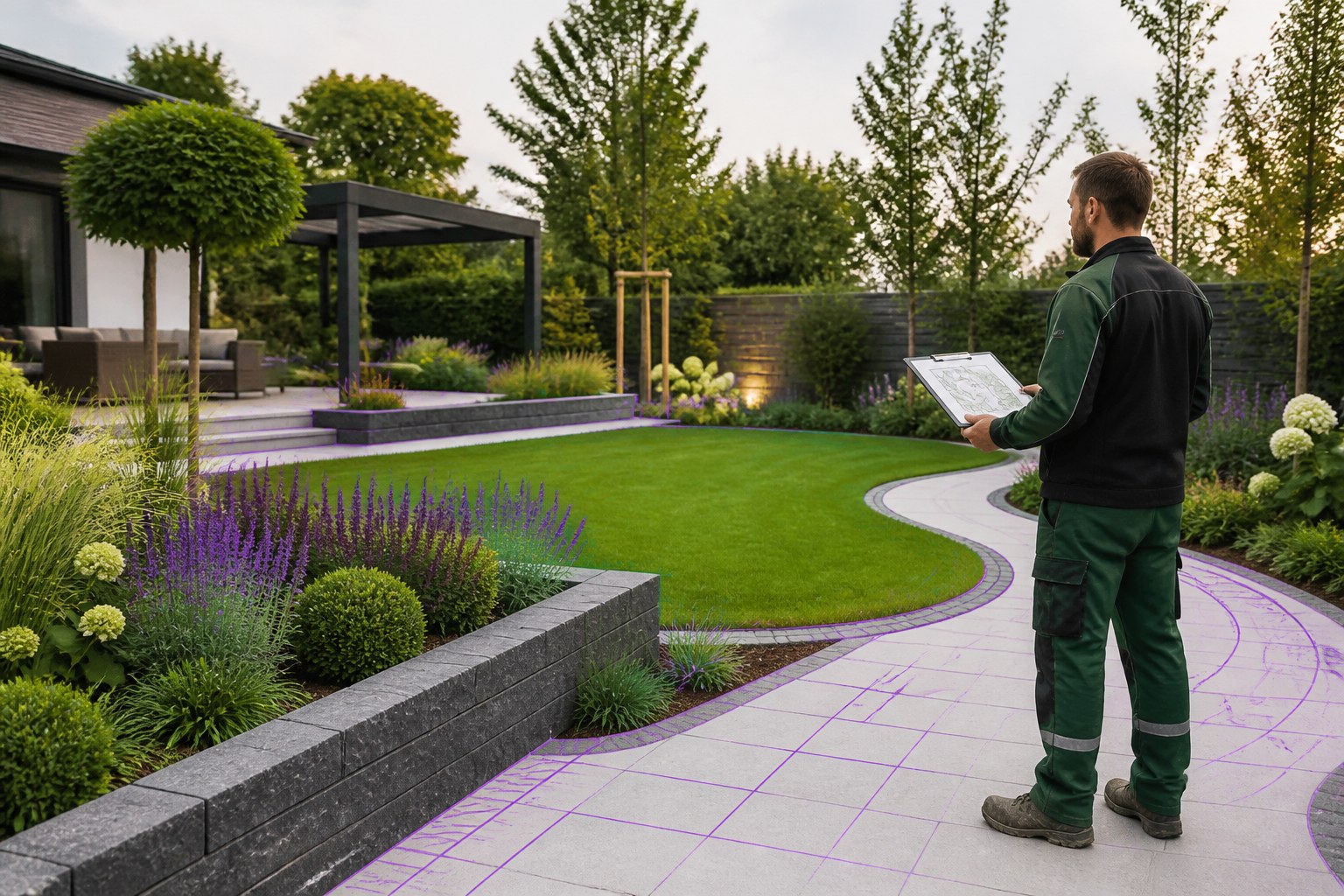
Landscape gardeners create, maintain and improve outdoor spaces. Their work combines practical construction, planting, care and the responsible use of tools and equipment. Tasks include preparing soil, planting trees, shrubs and flowers, maintaining lawns, pruning plants, installing edging and paving elements, and caring for completed green spaces.
The work takes place outdoors and involves changing weather, physical activity and coordination with colleagues. A landscape gardener must understand plants and soil while completing practical tasks accurately. Construction-related work includes preparing surfaces, laying paths and supporting garden structures, while maintenance keeps planted spaces healthy, safe and well maintained.
Your application should describe the tasks you have actually performed rather than presenting a general list of claims. Separate construction, planting and maintenance activities and explain whether your experience concerns private gardens, public green spaces or other outdoor areas. Do not add details that you cannot support.
The condition of the finished space reflects the quality of preparation. Incorrect planting depth, poorly prepared soil, uneven edging or incomplete maintenance affects the result. Your profile should therefore show both practical speed and attention to detail, supported by examples of your real work.
Skills and Experience Relevant to Landscape Gardening
A strong profile combines practical outdoor experience with plant knowledge and dependable work habits. Describe the types of green spaces you worked on, the materials you handled and the responsibilities you accepted. Experience with planting, lawn care, pruning, soil preparation, garden maintenance or outdoor construction gives your profile practical substance.
Safe use of hand tools, powered equipment and machinery is important. List equipment only when you can explain your experience accurately, including whether you used it independently, followed supervision or worked as part of a coordinated team. Physical reliability also matters because the work involves carrying materials, repeated movements and different working positions.
Plant knowledge strengthens your profile when described specifically. Name the planting, pruning or seasonal care you performed and explain whether you worked with established plants, new planting areas or lawns. Mention how you protected existing vegetation and kept work areas clean and usable.
Teamwork includes communicating about tasks, following instructions, coordinating work sequences and keeping tools and materials organized. Reliability also involves checking tools, reporting damaged equipment and informing colleagues when soil, weather or plant conditions require attention. A precise account of real experience is more useful than unsupported claims about expertise.
Qualifications and Recognition of Foreign Training
Collect evidence of vocational training, certificates and relevant practical experience before preparing your application. Include the qualification name, training institution, completion date and main subjects or practical areas. Describe training in plant care, horticulture, outdoor construction, machinery use or maintenance clearly.
Landscape gardening activities do not automatically have the same legal status as a regulated profession. The professional status and purpose of a recognition procedure must be assessed separately. Professional recognition and related to working in Germany requirements are different matters, and the absence of a formal recognition requirement does not automatically remove every qualification requirement connected with residence or employment.
If an official recognition procedure applies to your situation, the responsible authority compares your foreign qualification with the relevant German reference profession. The result depends on the documents submitted and the assessment of equivalence. Possible outcomes include full recognition, partial recognition or no recognition. Where substantial differences exist, an adjustment qualification or another permitted measure addresses them in relevant cases.
Your documents should make the content of your training understandable, not only its title. Course subjects, practical training records and employment evidence provide useful context. Keep names, dates and job descriptions consistent across your CV, certificates and employment records. Follow the responsible authority’s instructions, keep copies and respond to requests for additional information.
Why German Matters in Landscape Gardening
German is part of your professional profile because landscape gardening depends on clear communication. You need to understand instructions about planting, materials, measurements, equipment and work sequences. You also need to report when soil conditions, damaged plants, missing materials or safety risks affect a task.
Language knowledge supports safe cooperation with colleagues. It helps you understand warnings, ask precise questions and report problems before they affect people, tools or the finished work. German also helps you discuss the condition of green spaces and explain which work you have completed.
Present your language skills honestly. You may describe them using Common European Framework of Reference levels such as A2, B1, B2 or C1 when those levels accurately reflect your knowledge. Certificates are useful when available, but practical ability to understand and communicate at work also matters.
Continue language preparation alongside professional preparation. Learn vocabulary for plants, soil, tools, machinery, surfaces, measurements, weather conditions and safety instructions. Practise explaining which tools you used, which plants you cared for, how you prepared soil and which problems you solved.
Documents for Your Application
Prepare a clear curriculum vitae presenting your professional history in a logical order. Include contact details, education or vocational training, employment history, language skills and relevant practical abilities. For each position, name the employer, your position and the main duties you performed.
Add certificates, vocational qualifications and important school or higher education documents where they support your profile. Evidence of training in horticulture, landscape gardening, plant care, machinery operation or outdoor construction helps explain the foundation of your experience.
Foreign-language documents may require translation into German or English in some procedures. Whether a certified or another formal translation is required depends on the relevant procedure. Check this requirement before arranging a particular form of translation. An application photograph is not a general requirement; focus on accurate information, readable documents and a clear CV.
Use consistent dates, position names and employer details. If your professional title has no direct English or German equivalent, retain the original title and add a short explanation. List only tools, machinery, planting activities and construction tasks you have genuinely performed. Attach readable supporting documents in an orderly way.
Landscape Gardener Application Preparation
Preparation area
What to document
Why it matters for applicants
Practical experience
Outdoor tasks, planting, maintenance, soil preparation, paving or edging work, tools and machinery used
Shows the type and depth of work you have actually performed
Qualifications and certificates
Vocational training, certificates, training subjects and relevant employment evidence
Explains your professional foundation and supports assessment of your profile
Language and application documents
German language skills, clear CV, employment history, certificates and required translations
Supports workplace communication and allows your experience to be reviewed accurately
How to Present Your Practical Experience
Organize your experience around real activities instead of broad descriptions. Explain whether you prepared soil, planted or transplanted vegetation, maintained lawns, pruned trees or shrubs, installed paths and edging, repaired planted areas or cared for completed gardens.
Mention the equipment you used and the responsibility you held. Distinguish between assisting with machinery, operating equipment under supervision and using tools independently. Accurate detail gives your profile credibility and prevents misunderstandings about your experience.
Describe how you maintained work quality, including checking measurements, preparing surfaces, protecting existing plants, cleaning work areas and identifying defects. If you worked with a team, explain your role in coordinating tasks and completing work in the correct sequence.
Do not claim experience with machinery, plant species or construction methods you have not used. Instead, describe related experience and identify areas that are new to you. Examples such as restoring a lawn, completing a planted area or preparing a path make your contribution easier to assess when they reflect your actual work.
Working Conditions to Understand Before Employment
Before entering an employment relationship, read the employment contract carefully. It should address the contracting parties, start of employment, any fixed-term arrangement, probationary period, workplace, activity, remuneration, working time, holiday entitlement and termination rules.
The workplace and activity deserve particular attention in landscape gardening. Check how the duties are described, where the work is performed and whether the contract reflects the practical work discussed. Outdoor work, travel between work areas, equipment responsibilities and seasonal tasks should be understood from the applicable documents and workplace information.
Remuneration is normally stated as a gross amount. Gross pay is not the net amount transferred to your account because taxes and social insurance contributions are deducted according to your personal circumstances. Social insurance in Germany includes health, long-term care, pension, accident and unemployment insurance.
Contractual working time is not identical to the statutory maximum daily working time. Contract terms, collective agreements and company agreements may provide additional rules on pay, working time or holidays. Keep copies of documents you sign and clarify unfamiliar terms, including pay dates, working time records, probationary periods and fixed-term arrangements.
Be Open to Landscape Gardening Work Across Germany
Applicants using East Talent’s candidate pathway must be open to employment opportunities throughout Germany. Do not limit your profile to one preferred city or region if your objective is to increase the range of landscape gardening opportunities for which you are considered.
Geographic flexibility does not replace professional preparation. Your CV, certificates, language information and evidence of practical work still need to be complete and accurate. Explain which types of landscape gardening work you seek, which tasks you perform confidently and which areas you are prepared to develop.
Consider the practical consequences of relocation before applying. Housing, deposits, travel and everyday living costs affect the amount of money available after moving. Plan how you will transport important documents, maintain digital copies and manage communication during the preparation period. Travel distance and costs also affect your personal budget.
State your preferences honestly without presenting them as a geographic restriction. You may describe the outdoor work, team environment or task combination that suits your experience while remaining open to employment opportunities throughout Germany.
A Practical Preparation Checklist
Start by reviewing your practical experience. Write down the outdoor tasks you performed, the plants and materials you handled, the tools or machinery you used and the responsibility you carried. Separate activities completed independently from tasks performed under supervision.
Next, collect certificates, training records and employment evidence. Check that names, dates and positions are consistent across your documents. If an employment certificate is unavailable, prepare a clear explanation of your role and duties without inventing evidence.
Prepare your CV in English or German as appropriate for the application process and document your German language skills accurately. Organize translations where a relevant procedure requires them. Keep digital copies and readable scans of important documents, and record which documents still need clarification.
Finally, identify questions about professional recognition or related to working in Germany requirements and obtain information from responsible official sources. Before submission, check whether the CV explains your main tasks, certificates support your stated qualifications and language information is easy to find. Correct inconsistent dates, unexplained gaps and unclear job titles.
Starting Your Landscape Gardening Career in Germany
Landscape gardener jobs in Germany require more than general outdoor experience. Applicants need a credible account of practical work, organized qualifications and certificates, realistic language preparation and a clear understanding of employment documents.
Your profile should show what you have actually done: planting, maintenance, soil preparation, outdoor construction, equipment use, quality control and teamwork. Accurate information supports assessment of your background and prevents expectations that your experience does not support.
Remain open to opportunities throughout Germany and prepare your documents before submitting your profile to East Talent. A complete application gives your practical skills, qualifications and German language knowledge a clear professional context. Review the profile as your experience develops and add new training, equipment experience and completed tasks only when you can describe them accurately.
Starting work in a new country requires professional readiness and personal planning. Your documents explain your background, language preparation supports daily cooperation and understanding employment conditions helps you evaluate written terms. Apply now: Apply for jobs in Germany through our application form.
Create your profile
Registration with East Talent
Four short steps. A CV is optional and can be provided in your native language.
Step 1 of 4Profession
East Talent
International recruitment with proprietary software
East Talent combines international recruitment with structured digital processes for handling candidate profiles, attracting employers and evaluating job opportunities.