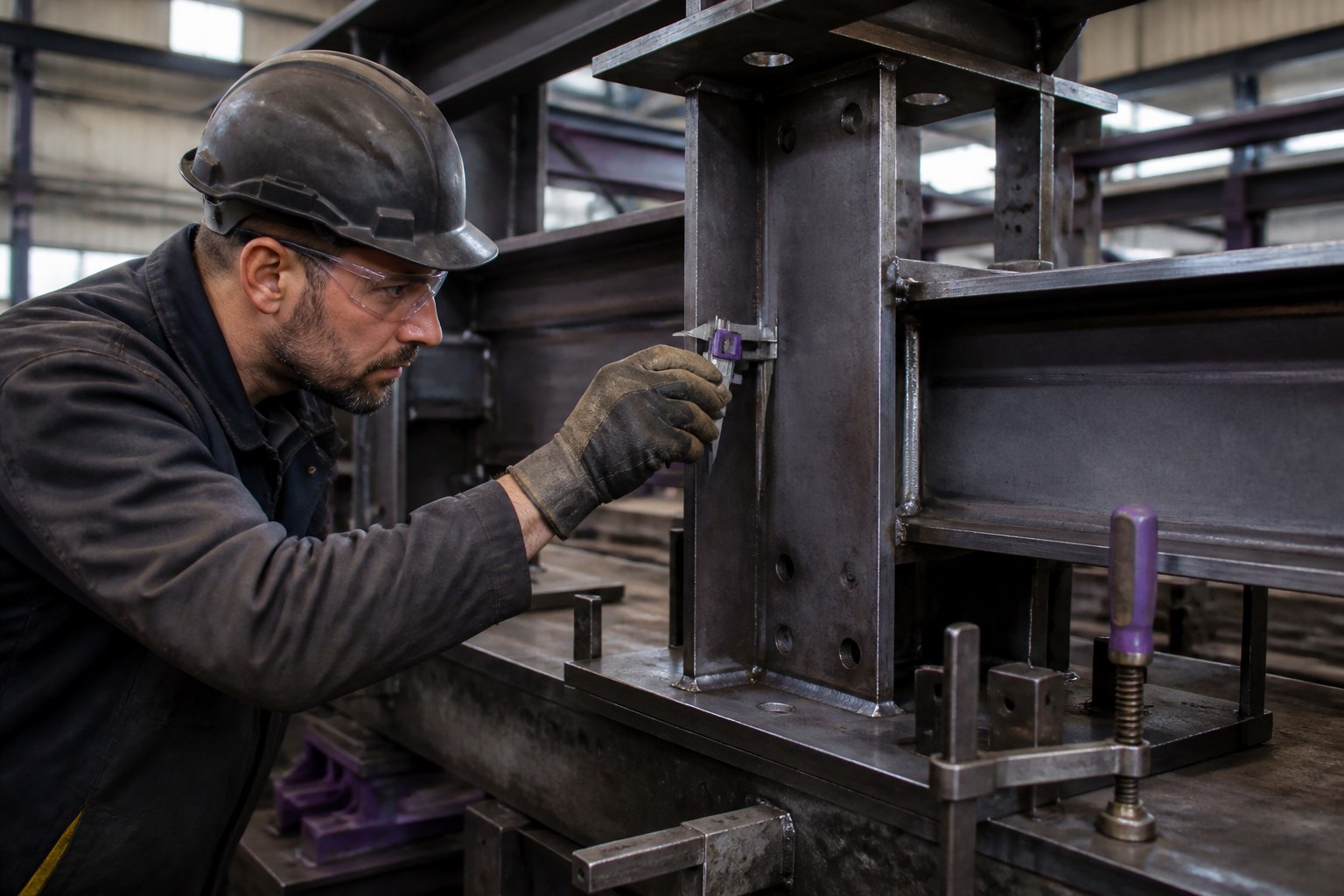
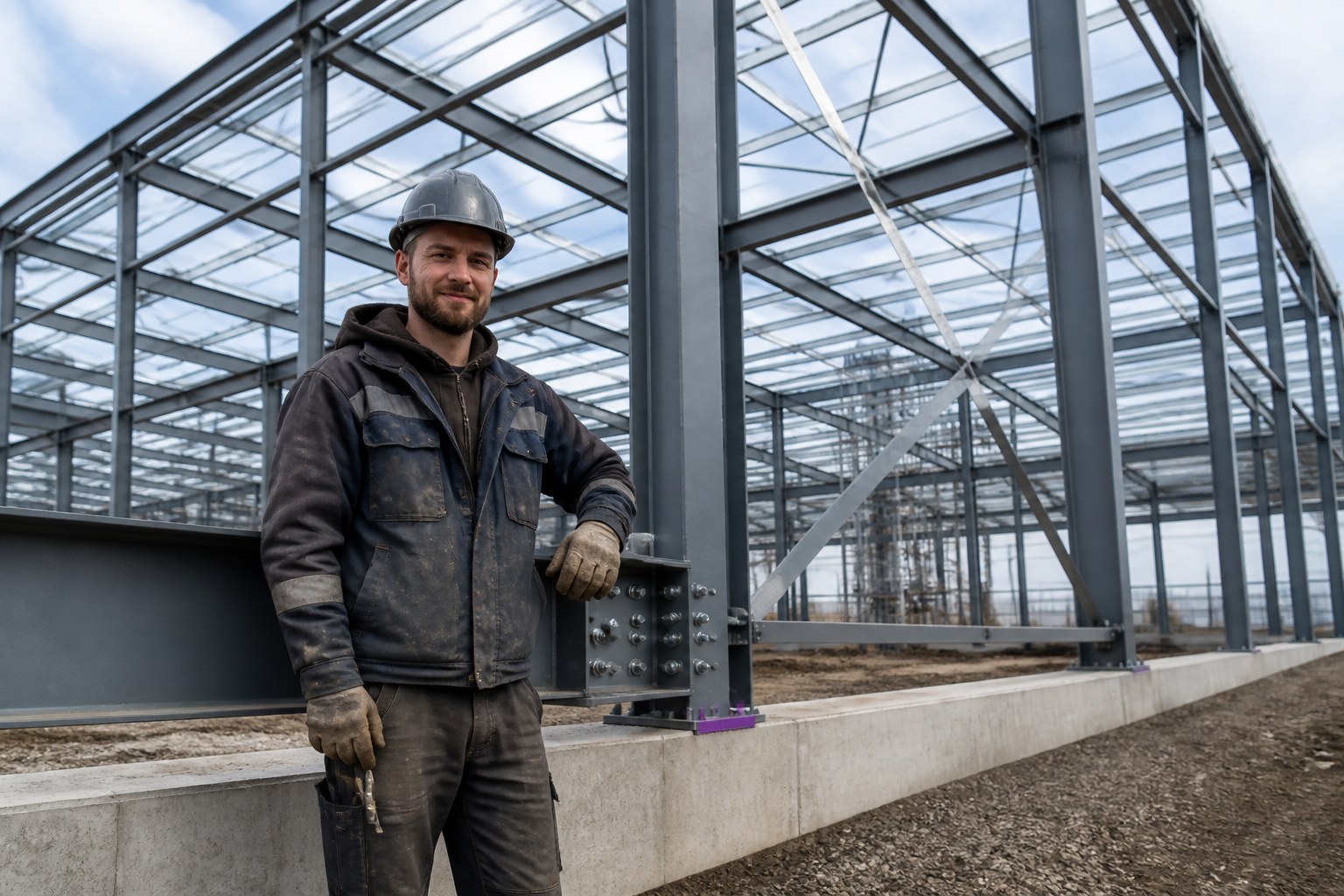
Structural steel fitters prepare, assemble, align and join steel components used in industrial and construction-related environments. Their work turns individual beams, sections, plates and other fabricated parts into stable steel structures according to technical information and practical measurements.
Typical responsibilities include checking components, positioning steel sections, marking connection points, using clamps and measuring equipment, and correcting alignment before permanent joining. The work requires accuracy because small deviations affect later assembly, structural fit and quality control.
A structural steel fitter also works with other skilled trades involved in fabrication, assembly and finishing. The exact workplace varies across Germany, so applicants should present experience from workshops, fabrication areas, construction sites or comparable industrial environments clearly and factually.
The work is practical and physically demanding. It combines manual handling, technical understanding, measurement and safety-conscious coordination. A strong application therefore explains what you actually fitted, how you prepared components and which responsibilities you carried during assembly.
Technical Skills and Qualifications Employers Review
The professional profile for structural steel fitter jobs in Germany centres on practical metalworking knowledge and documented experience. Candidate screening focuses on whether your previous work demonstrates reliable fitting, assembly and alignment skills rather than on the job title alone.
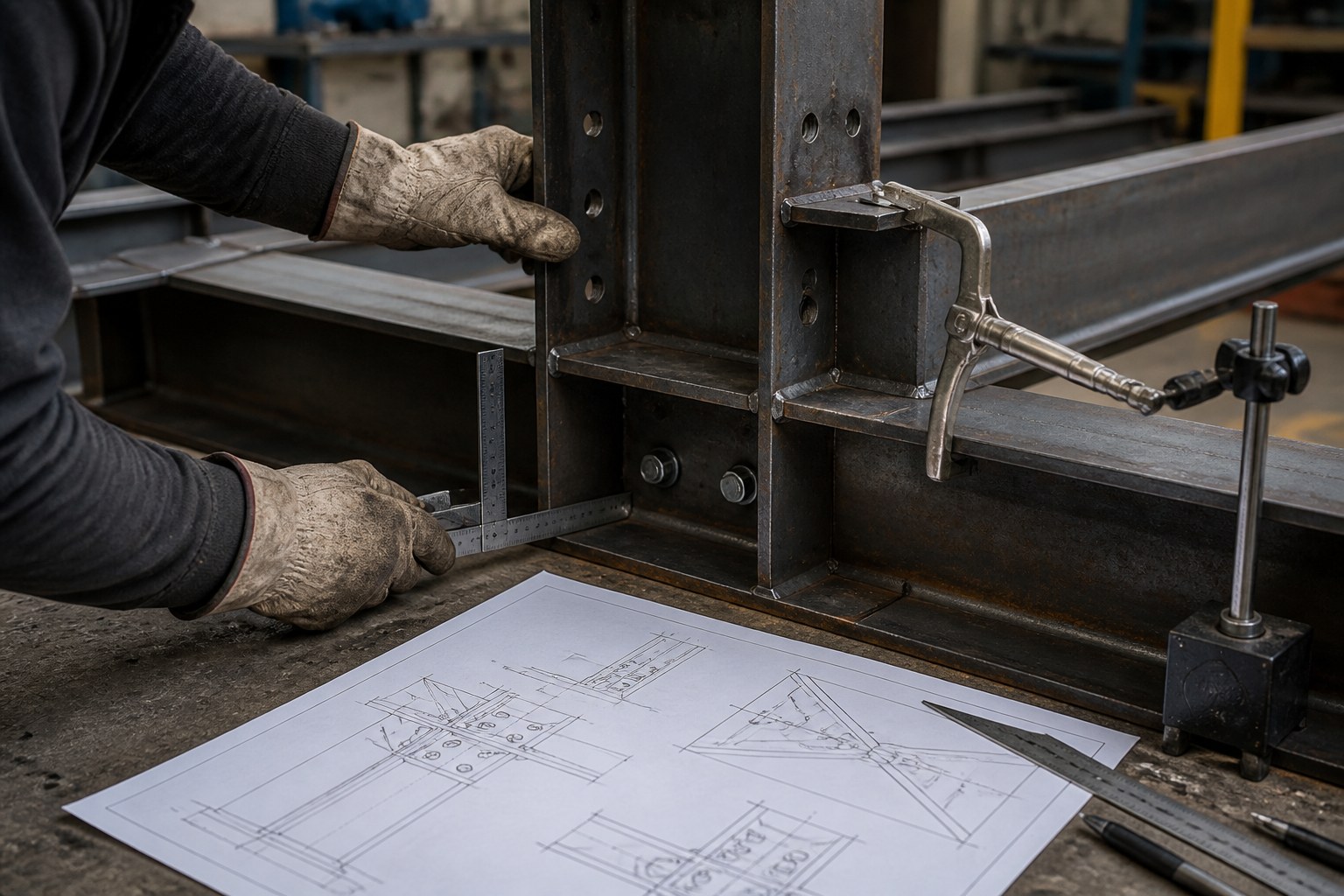
Technical drawing comprehension is important because drawings and other technical information guide dimensions, positions, connection points and assembly sequences. Your application should state whether you worked from fabrication drawings, assembly plans or related technical documentation.
Measurement is another central skill. Describe the measuring tools you used and the checks you performed before, during and after assembly. Experience with levels, squares, tape measures, gauges or other relevant equipment belongs in the skills section when it reflects your actual work.
Welding-related experience is relevant where it formed part of your previous responsibilities. Distinguish clearly between fitting work, preparation for welding and independent welding tasks. Do not claim a welding qualification or authorisation unless you hold supporting evidence.
Safety knowledge also forms part of the professional profile. Explain how you followed instructions, controlled work areas, used personal protective equipment and coordinated lifting, positioning or joining activities. Practical experience must remain verifiable through employment records, certificates or references where available.
Your Professional Experience Profile
A clear experience profile gives reviewers a reliable picture of your practical background. List each relevant position with the employer name, job title, employment period and main responsibilities. Then connect the description to structural steel fitting instead of using broad phrases such as “metalwork” or “industrial work” alone.
Describe the materials and components you handled, such as steel beams, profiles, plates, frames or fabricated sections, provided these details match your experience. Mention whether your work involved workshop fabrication, on-site assembly, repair, modification or final alignment.
Your profile should also identify the tools, machinery and equipment you used. Include measuring tools, clamps, cutting or preparation equipment and lifting or positioning equipment only where you operated them or worked directly with them. Specific descriptions make your experience easier to assess.
Quality and safety duties deserve their own attention. State whether you checked dimensions, inspected fit-up, reported deviations, followed work instructions or supported safe material movement. These details demonstrate responsibility without overstating your role.
Candidates must remain open to employment opportunities throughout Germany. Your professional profile should therefore focus on transferable skills and verified experience rather than on one preferred location or one type of workplace.
Recognition of Foreign Qualifications
Structural steel fitting generally relates to vocational metalworking and fabrication activities. Whether a foreign qualification requires formal recognition depends on the profession and the purpose for which the documents are being used. Regulated professions have legally protected professional activities and require the relevant recognition or professional authorisation.
Non-regulated professions are not protected in the same way. A person working in a non-regulated profession generally does not require formal German professional recognition in order to perform that occupation. This does not automatically remove qualification requirements connected with residence or employment procedures.
Recognition and related to working in Germany requirements are separate questions. A candidate may therefore need to clarify both whether recognition is relevant to the occupational profile and which qualification documents are needed for the intended employment route. Do not assume that an informal assessment replaces an official procedure.
If you begin an official recognition procedure, submit complete and accurate documents to the responsible authority. The authority compares the foreign qualification with the relevant German reference occupation and examines whether substantial differences exist. The possible result for a non-regulated profession includes full recognition, partial recognition or no recognition.
Where substantial differences exist, an adjustment qualification or another permitted qualification measure addresses those differences in the applicable case. Keep copies of certificates, translations and correspondence so that your professional history remains consistent throughout the application process.
Key takeaway
Structural steel fitter candidates strengthen their profile by presenting verifiable practical experience, technical abilities, language skills and complete qualification documents rather than relying only on a job title.
German Language Skills for the Candidate Profile
German language ability belongs in your candidate profile because structural steel fitting involves instructions, safety communication, technical coordination and reporting deviations. You need to understand relevant workplace information and communicate clearly with colleagues during preparation, alignment and assembly.
No single mandatory language level is stated here for every structural steel fitter profile. The relevant level depends on the duties, working environment and communication requirements connected with the employment opportunity. Your application must therefore state your actual level instead of leaving language ability unexplained.
Use recognised Common European Framework of Reference levels such as A2, B1, B2 or C1 when you have an assessed or documented level. If you have no certificate, describe your practical communication ability accurately and identify whether you understand instructions, discuss measurements and report safety or quality issues in German.
List other languages separately and distinguish conversational ability from technical workplace communication. Avoid vague claims such as “good German” without context. A precise description helps reviewers assess your readiness and identify areas for further language development.
Documents to Prepare Before Applying
Prepare a structured CV that presents your personal details, education, training, employment history, technical skills and language knowledge. Use clear dates and explain responsibilities for each relevant position. A reviewer should be able to follow your professional development without reconstructing missing periods.
Collect vocational certificates, school or higher education documents where relevant, training records and evidence of practical qualifications. Include documents connected with metalworking, fabrication, fitting, welding or workplace safety when they accurately represent your background.
Employment records should identify the employer, position, dates and main tasks. If available, supporting references or work certificates add evidence to the responsibilities described in your CV. Do not add equipment, materials or duties that do not appear in your actual experience.
Foreign-language certificates may require translation into German or English for a particular procedure. Whether a certified or otherwise formal translation is required depends on that procedure. Keep the original document and any translation together.
A passport or identity document may become relevant during later administrative steps, but only submit documents through the requested process and protect sensitive personal information. An application photograph is not a general requirement.
How to Present Structural Steel Fitting Experience
Present your experience in a way that allows a technical reviewer to understand the work immediately. Start each position with the type of activity, the components involved and your personal responsibility. For example, explain that you prepared and aligned steel sections for assembly rather than writing only “worked with steel.”
Describe the sequence of work where relevant: receiving or checking components, reading technical information, measuring and marking, positioning with clamps or other tools, checking alignment, preparing connections and supporting joining or finishing work. This structure shows how you contributed to the complete fitting process.
Name materials, tools and machinery precisely. Explain whether you used measuring equipment, hand tools, preparation equipment or positioning aids. If welding formed part of your work, state whether you prepared joints, carried out welding or supported another qualified worker.
Include quality and safety actions in measurable terms where the facts are available. Examples include checking dimensions, confirming alignment, following lifting instructions, using protective equipment and reporting defects. Do not invent production figures, project values or inspection results.
If you worked on several project types, separate them by environment and responsibility. Workshop fabrication, industrial assembly and construction-related installation demonstrate different working conditions, and a clear distinction helps reviewers understand the breadth of your experience.
Structural Steel Fitter Application Preparation
Preparation area
What to document
Why it matters for your application
Professional experience
Employers, positions, dates, projects and structural steel tasks
Shows the scope and continuity of your practical background
Technical skills
Drawings, measurements, fitting, alignment, tools and assembly methods
Connects your experience to the core work of structural steel fitting
Education and certificates
Vocational training, certificates and relevant safety or technical records
Supports the qualifications stated in your candidate profile
German language skills
CEFR level such as A2, B1, B2 or C1, plus practical communication ability
Clarifies your ability to understand instructions and coordinate work
Application documents
CV, employment evidence, certificates and relevant translations
Makes your professional history easier to verify and assess
Working Conditions and Contract Details to Understand
Before accepting employment, read the employment contract carefully. It should identify the contracting parties, the start date, any fixed term, the probation period, the workplace, the role, remuneration, working hours, holidays and notice periods.
For structural steel fitters, the workplace description matters because duties may take place in a fabrication area, an industrial environment or a construction-related setting. The contract and accompanying information should make the role and workplace understandable before employment begins.
Working hours in the contract are not identical to statutory maximum working-time rules. Review the agreed schedule, shifts, additional hours and applicable arrangements carefully. Safety instructions and coordination requirements also deserve attention in physically demanding steelwork.
Collective agreements and works agreements may add provisions concerning remuneration, working time or holidays. Ask for clarification when contract wording refers to such arrangements and keep the final documents for your records.
Remuneration should be understood together with deductions, working hours and other contractual terms. Do not evaluate an opportunity from a single figure without checking whether it is gross or net and which conditions apply.
Fact & Figure
About 3–4 months: when the required documents are complete, an official recognition procedure generally examines the submitted documents within this approximate period. For non-regulated professions, the procedure may result in full recognition, partial recognition or no recognition.
Brutto and Netto Pay: What Candidates Need to Know
Employment remuneration in Germany is typically stated as gross pay. Gross pay is the contractual amount before deductions. Taxes and social insurance contributions reduce the amount paid into your bank account, which is the net amount.
The difference between gross and net pay depends on personal tax and social insurance circumstances. A net amount therefore cannot be calculated reliably from a gross figure alone without the relevant personal information.
Social insurance includes health insurance, long-term care insurance, pension insurance, unemployment insurance and accident insurance. In a job subject to social insurance contributions, registration is generally handled through the employer.
When reviewing future employment information, separate the agreed gross remuneration from the expected payout. Also check whether supplements or bonuses form part of the arrangement, because their payment and amount depend on the employment relationship or applicable rules.
Living costs also affect the amount available after relocation. Rent, deposits, transport and other expenses reduce disposable income, so candidates should assess the complete financial situation rather than focusing only on the gross figure.
Applying Through East Talent
East Talent accepts initiative applications from candidates seeking employment in their occupational group in Germany. You do not apply at this stage for a specific vacancy or for a named employer.
Your profile is reviewed with attention to professional qualifications, practical experience, German language skills and the documents required for later employment processes. Suitable candidates may subsequently be introduced to companies in Germany whose requirements match the profile.
The application is therefore not tied to one location. Applicants must remain open to employment opportunities throughout Germany. State your professional preferences honestly, while recognising that geographic flexibility forms part of this application model.
A strong application gives East Talent enough reliable information to assess your background. Include your structural steel fitting experience, technical skills, certificates, language information and employment history rather than submitting a short job title without supporting detail.
An initiative application does not promise a specific employer, workplace, salary or outcome. It starts a profile assessment based on the information and documents you provide.
A Practical Preparation Checklist
First, verify your employment history. Check dates, employer names, job titles and task descriptions against your available documents. Resolve inconsistencies before submitting your profile.
Next, describe your technical experience in practical terms. Record the steel components, materials, drawings, measuring tools, assembly methods and safety responsibilities that reflect your actual work. Separate fitting, assembly and welding tasks instead of combining them into an unclear description.
Organise education and training certificates, employment evidence and relevant translations. Keep original documents and copies together, and identify documents that require clarification or further administrative review.
Record your German language ability using an appropriate CEFR level when documented. Add a short factual description of your workplace communication skills, especially your ability to understand instructions, coordinate assembly and report quality or safety issues.
Finally, clarify questions about recognition of your foreign qualification and prepare for mobility throughout Germany. Your application should present a complete, consistent candidate profile rather than depend on a single certificate or job title.
For Applicants
Submit a detailed CV, certificates, employment history and language information so your structural steel fitting profile is assessable. Because the initiative application is not tied to one vacancy or one location, remain open to employment opportunities throughout Germany and describe your professional preferences accurately.
Next Steps for Structural Steel Fitter Candidates
Structural steel fitter jobs in Germany require more than a familiar job title. Your application should show what you fitted, how you measured and aligned components, which tools and technical documents you used, and how you followed quality and safety requirements.
Prepare the evidence before applying: a structured CV, employment history, vocational documents, language information and relevant translations. Clarify recognition questions separately from related to working in Germany qualification questions, and avoid making assumptions about requirements that have not been assessed for your profile.
A complete and accurate application gives East Talent a reliable basis for reviewing your professional background. Keep your information current and remain open to employment opportunities throughout Germany.
Four short steps. A CV is optional and can be provided in your native language.
Step 1 of 4Profession
East Talent
International recruitment with proprietary software
East Talent combines international recruitment with structured digital processes for handling candidate profiles, attracting employers and evaluating job opportunities.