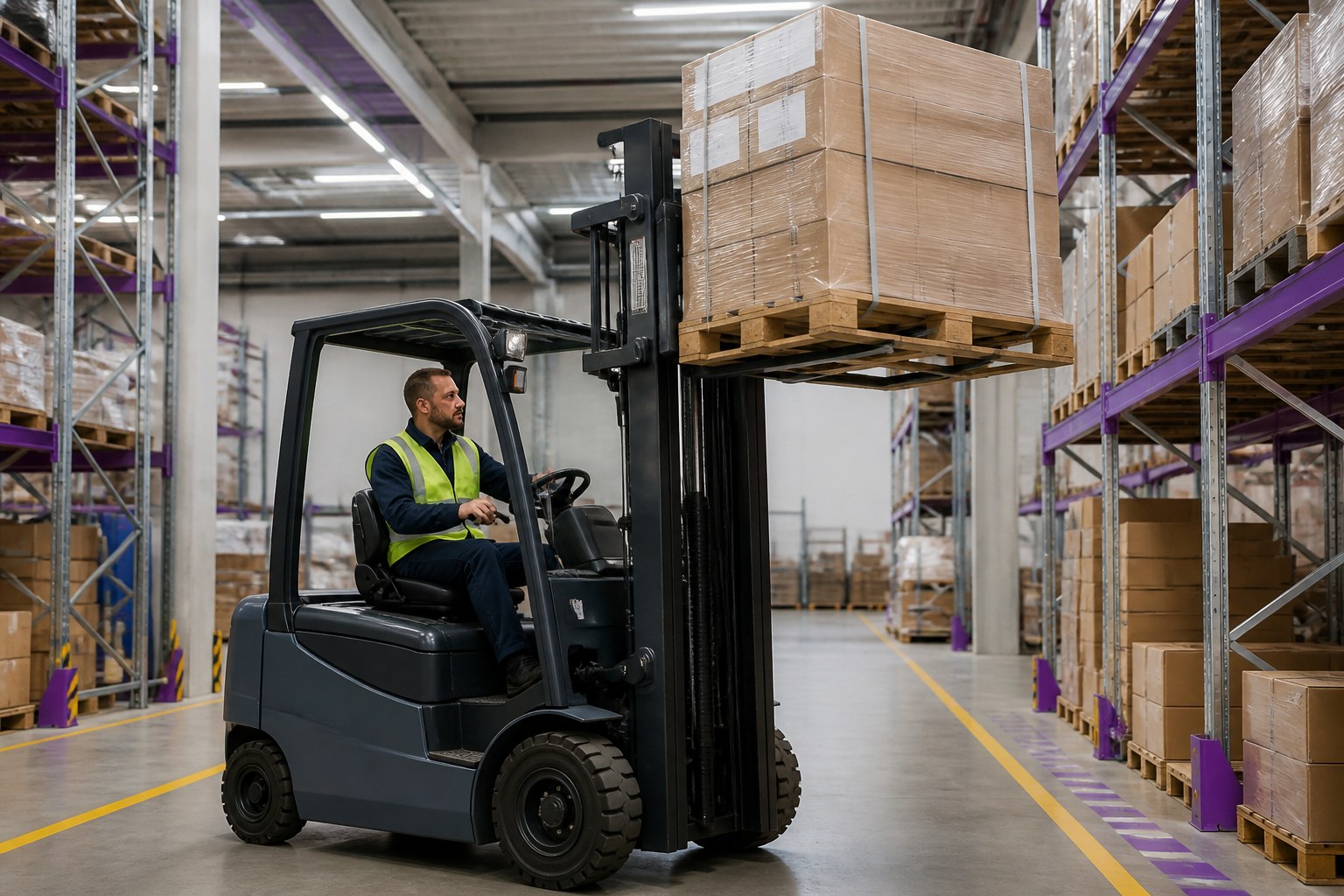
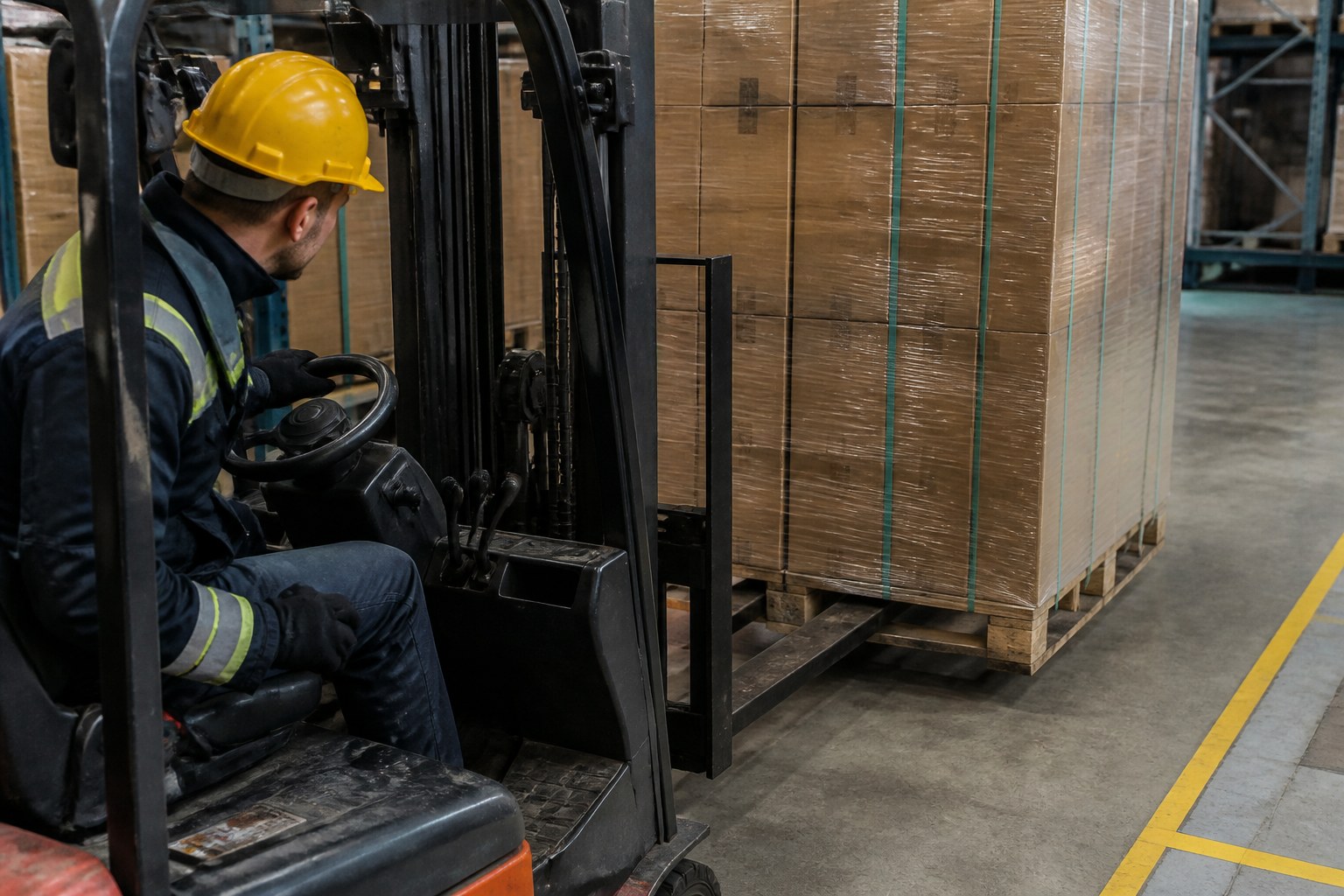
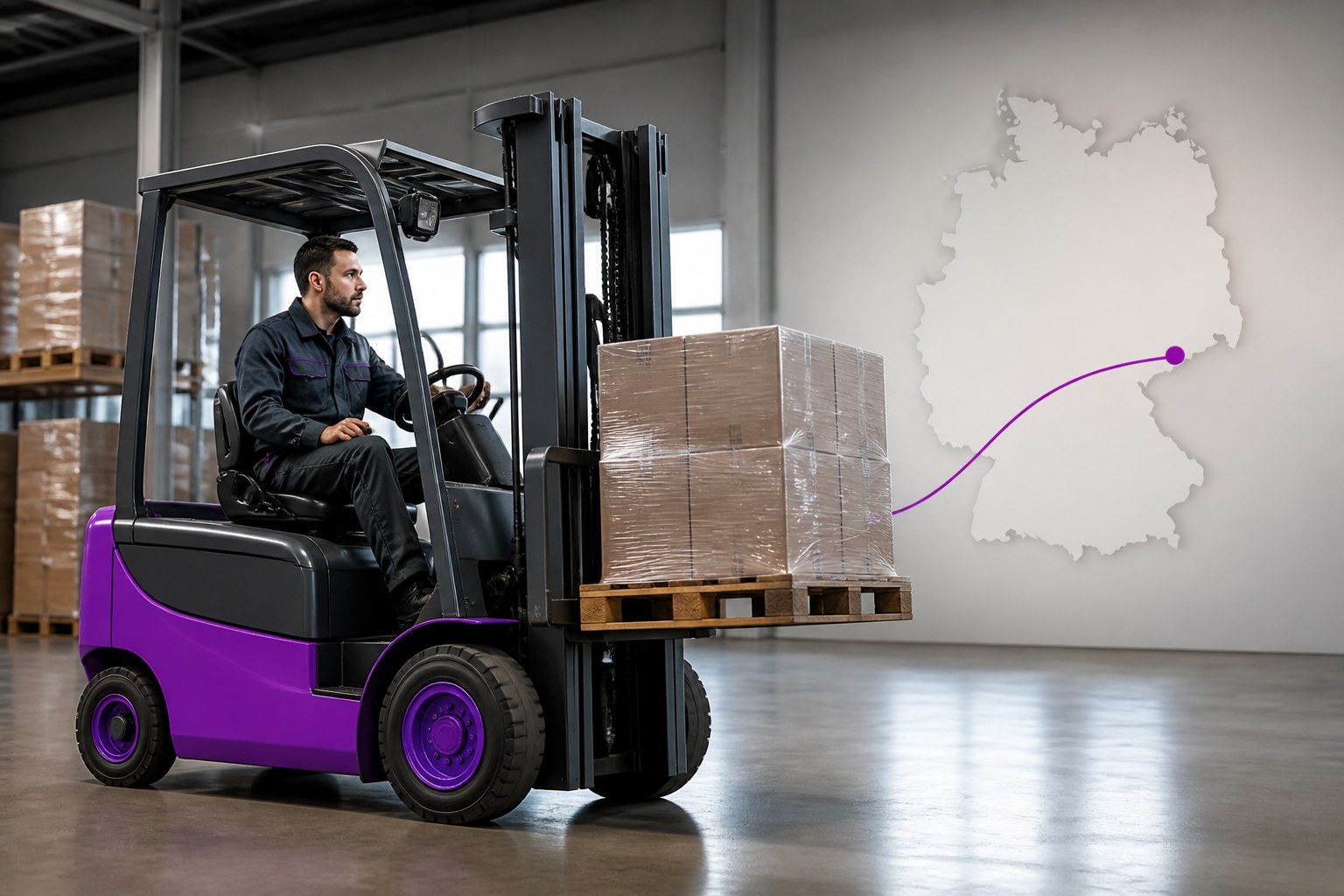
Forklift operators move, load, unload and position goods in industrial, warehouse and logistics environments. Their work supports the safe flow of materials between delivery areas, storage zones, production areas and dispatch operations.
The job requires more than driving a vehicle. You need to identify loads correctly, position the forks carefully, keep goods stable and watch people, vehicles, storage equipment and floor conditions around you.
Your candidate profile should explain the types of forklift work you have performed, the loads you have handled and the warehouse or logistics environments you know. Describe whether you worked with incoming deliveries, finished goods, raw materials, pallets, containers or other loads.
Forklift operators also support wider operations. Materials must reach the correct place at the required time so that storage, production, picking or dispatch activities continue without avoidable interruptions. Reliability and concentration are therefore important parts of the profession.
Typical Work Areas and Daily Responsibilities
Forklift operators work in warehouses, storage facilities, industrial sites and logistics operations. The work often involves repeated movement between marked areas, loading points and storage locations.
Daily responsibilities include checking the load, approaching pallets carefully, lifting and lowering goods, transporting materials and placing them in the correct location. You also need to maintain awareness of clearance, pedestrian routes, other vehicles and obstacles.
Coordination with colleagues in receiving, storage, production, picking and dispatch is important. Clear communication prevents incorrect movements and supports safe cooperation in busy working areas.
Some duties involve checking delivery areas, confirming storage locations or reporting visible damage and operating problems. Noise, restricted visibility, narrow aisles, changing floor conditions and simultaneous vehicle movements require disciplined attention. Explain these environments when they form part of your experience.
Qualifications and Experience That Strengthen Your Profile
For an initiative application, make your forklift experience easy to understand and verify. State how long you have worked with forklifts, which duties you performed and which workplaces you know.
Relevant experience includes loading and unloading, internal goods transport, pallet handling, storage work, dispatch support and coordination with warehouse or production teams. Experience with different loads and equipment gives reviewers a clearer picture of your practical abilities.
Training certificates, employer references and other work records support the information in your CV. Identify the training provider, subject and date or period. Name specific subjects such as safe forklift operation instead of using a vague description such as warehouse training.
List equipment separately and describe the tasks connected with it. Experience with one type of forklift does not automatically demonstrate experience with every type of material-handling equipment. Do not describe equipment, responsibilities or qualifications that you have not used or completed.
Forklift Safety and Practical Skills
Safe vehicle handling is central to forklift work. You need to assess whether a load is stable, keep the vehicle and load under control and adjust movement to the environment. Attention to people, equipment and storage structures is part of every movement.
Practical skills include approaching pallets correctly, positioning the forks, checking clearance and placing loads without unnecessary impact. Follow workplace instructions, use designated routes and respond carefully to changing warehouse or industrial conditions.
Your profile should show consistent safe behaviour during routine movements and busy loading, unloading and storage activities. Mention responsibilities involving load control, warehouse traffic, storage procedures or cooperation with other teams when those tasks formed part of your work.
Safe practice also includes reporting unstable goods, blocked routes, damaged pallets or equipment problems. Describe your actual responsibilities precisely rather than making broad claims about being careful.
German Language Skills for Forklift Operators
German is an important part of your candidate profile because forklift work involves safety instructions, operating procedures and direct coordination with colleagues. You need to understand workplace communication and report changes involving goods, routes or working conditions.
There is no single language level stated here as a universal requirement for every forklift operator. Present your actual ability honestly, including completed courses, certificates and your practical ability to understand instructions or communicate at work.
Use a recognized level such as A2, B1, B2 or C1 when you have an appropriate assessment or certificate. Also explain whether you used German during warehouse coordination, safety briefings or daily team communication.
Focus further learning on vocabulary for loads, storage locations, movement instructions, safety, equipment and communication with supervisors and colleagues. Distinguish between reading, listening, speaking and writing, and avoid describing basic familiarity as fluent communication.
Recognition and Proof of Your Professional Background
Forklift operation does not automatically receive one universal recognition decision for every candidate. Recognition depends on the profession, qualification and responsible procedure. Forklift work must be distinguished from regulated professions whose practice is legally protected.
For non-regulated professions, formal German recognition is not required in the same way as authorization for a regulated profession. This does not automatically remove the need to provide qualification documents for an employment or residence procedure. Recognition and immigration requirements are separate questions.
Certificates, training records and employment references remain valuable even where no universal recognition decision applies. Keep documents describing the content of your training, including practical instruction, safety topics and equipment covered.
If documents are in another language, organize clear copies and check whether a German or English translation is appropriate for the relevant procedure. Dates and personal details should match across certificates, references and your CV. Prepare an explanation for abbreviations, name variations or incomplete dates.
Documents to Prepare for an Initiative Application
Prepare a structured CV with your personal details, education, work experience, language skills and relevant technical abilities. Collect certificates relating to forklift operation, warehouse work, occupational safety or other relevant training.
Include employment references when available. A useful reference identifies the employer, your position, the period of employment and the duties you performed. Education records are also relevant when they document vocational training or another qualification connected with logistics, warehousing or industrial work.
Include language certificates and evidence of German learning where available. If documents are not in German or English, organize information about their contents and check translation requirements for the procedure concerned.
Use consistent file names and keep a list of submitted documents. Readable scans should show all pages, dates, signatures and relevant stamps. Your documents should support the experience described in the CV; explain missing evidence accurately rather than concealing it.
Forklift Operator Application Preparation
Application area
What to prepare
Useful candidate evidence
Professional experience
Forklift operation, loading, unloading, storage and internal goods movement
CV with employers, positions, dates and clearly described duties
Forklift and safety skills
Load stability, careful movement, clearance awareness and compliance with instructions
Training records, certificates and references describing practical responsibilities
German language skills
Information about courses, certificates and workplace communication ability
Language certificate or accurate description of practical German use
Application documents
CV, certificates, references, education records and relevant translations
Readable copies with consistent names, dates and employment information
Mobility within Germany
Readiness to consider employment opportunities throughout Germany
A clear mobility statement in the initiative application
How to Present Forklift Experience in Your CV
Write each employment entry with the employer, position, start and end dates and a concise description of your duties. Do not rely on a job title alone. Explain what you actually did in the workplace.
Mention loading and unloading, internal transport, pallet handling, storage, dispatch support and warehouse coordination when these tasks formed part of your work. Add safety-related responsibilities where relevant.
Describe equipment experience precisely. State the types of forklifts or other material-handling equipment you used only when you have direct experience with them. Use consistent dates and ensure that your CV corresponds with certificates and references.
Use short bullet points for recurring tasks and longer explanations for responsibilities that distinguish your experience, such as special loads, restricted storage areas or coordination with receiving and dispatch teams. Place German skills and certificates where reviewers can find them easily.
Working Conditions to Understand Before Moving
Forklift work is practical and physically active. It involves warehouse or industrial environments, repeated vehicle movements and close attention to loads, routes and surrounding operations. The environment depends on the employer and the goods handled.
Before accepting employment, obtain clear information about the workplace, duties, working time and operational environment. Understand shift arrangements, the balance between driving and other warehouse tasks and the physical demands of the role.
If you move to Germany, consider accommodation, rent, deposits, transport and other living costs. These expenses affect the amount remaining after relocation. Gross pay is not the amount received in your bank account because taxes and social insurance contributions are deducted according to your individual situation.
Clarify whether the work involves indoor storage, outdoor loading areas or both. Temperature, weather exposure, noise and operating-surface conditions affect daily work. Prepare for accommodation, transport, work clothing and everyday expenses alongside the written employment conditions.
Employment Documents and Pay Information
Read the employment contract carefully before starting. It should identify the contracting parties, start date, any fixed term, probationary period, workplace, duties, working time, remuneration, leave and termination rules.
Check whether remuneration is stated as gross or net. In Germany, remuneration is typically stated as a gross amount. Taxes and social insurance contributions are deducted from gross pay, and the resulting net amount depends on personal circumstances.
Additional payments such as supplements or bonuses depend on the employment relationship and applicable arrangements. Collective agreements or works agreements may also contain provisions concerning remuneration, working time or leave.
Check that the written duties correspond with the work discussed during hiring. If the contract includes loading, picking, packing or other warehouse tasks beyond forklift operation, clarify the balance before signing. Keep the contract, payslips and written explanations together.
Being Open to Jobs Throughout Germany
Candidates applying through East Talent apply initiatively for employment in their professional group rather than for a named vacancy or specific employer. Suitable candidates may later be presented to appropriate companies in Germany.
Your profile must therefore remain open to employment opportunities throughout Germany. Limiting your application to one city or region reduces the range of opportunities considered for your professional background.
State your mobility clearly and prepare for different warehouse, industrial and logistics environments. One opportunity may focus on loading and unloading, while another includes storage, internal transport or cooperation with production teams. Describe your preferred duties and willingness to adapt.
If you have practical limits concerning transport, accommodation or the working environment, describe them honestly during the application process. Openness to opportunities throughout Germany does not require you to misrepresent your circumstances.
A Practical Preparation Checklist
Record your forklift experience in detail. List employers, positions, employment periods, duties, equipment used and responsibilities connected with safety or warehouse coordination.
Collect certificates, training records, references, education documents and language evidence. Check that names, dates and job descriptions are consistent across your CV and supporting documents.
Prepare a professional CV in English or German and present your German skills honestly. Where relevant, organize translations of foreign-language documents and verify whether a procedure requires a formalized translation.
Confirm that you are prepared for employment opportunities throughout Germany and the practical realities of warehouse or industrial work. Before submitting, check employment dates, contact details and scan quality. Remove unsupported claims and correct inconsistent job titles.
Review forklift experience, safety responsibilities, German communication, supporting documents, mobility and expectations about warehouse work. This creates a consistent profile for qualification review and later presentation to suitable companies.
Apply for Forklift Operator Jobs in Germany
A strong application presents practical experience, safe working habits, German communication skills and reliable documentation. It does not refer to a particular vacancy or named employer because the initial application is for employment in your professional group.
Before submitting your details, check your CV, certificates, references and language information. Explain your forklift duties clearly and remain open to suitable employment opportunities throughout Germany.
Make sure your application reflects the work you have actually performed. A precise account of equipment, loads, warehouse environments and safety responsibilities provides a stronger basis for reviewing your profile than general statements about being hardworking or flexible.
Keep copies of the information you submit and remain ready to clarify dates, certificates, language skills or previous duties. Clear communication during the review helps establish an accurate picture of your professional background.
Four short steps. A CV is optional and can be provided in your native language.
Step 1 of 4Profession
East Talent
International recruitment with proprietary software
East Talent combines international recruitment with structured digital processes for handling candidate profiles, attracting employers and evaluating job opportunities.