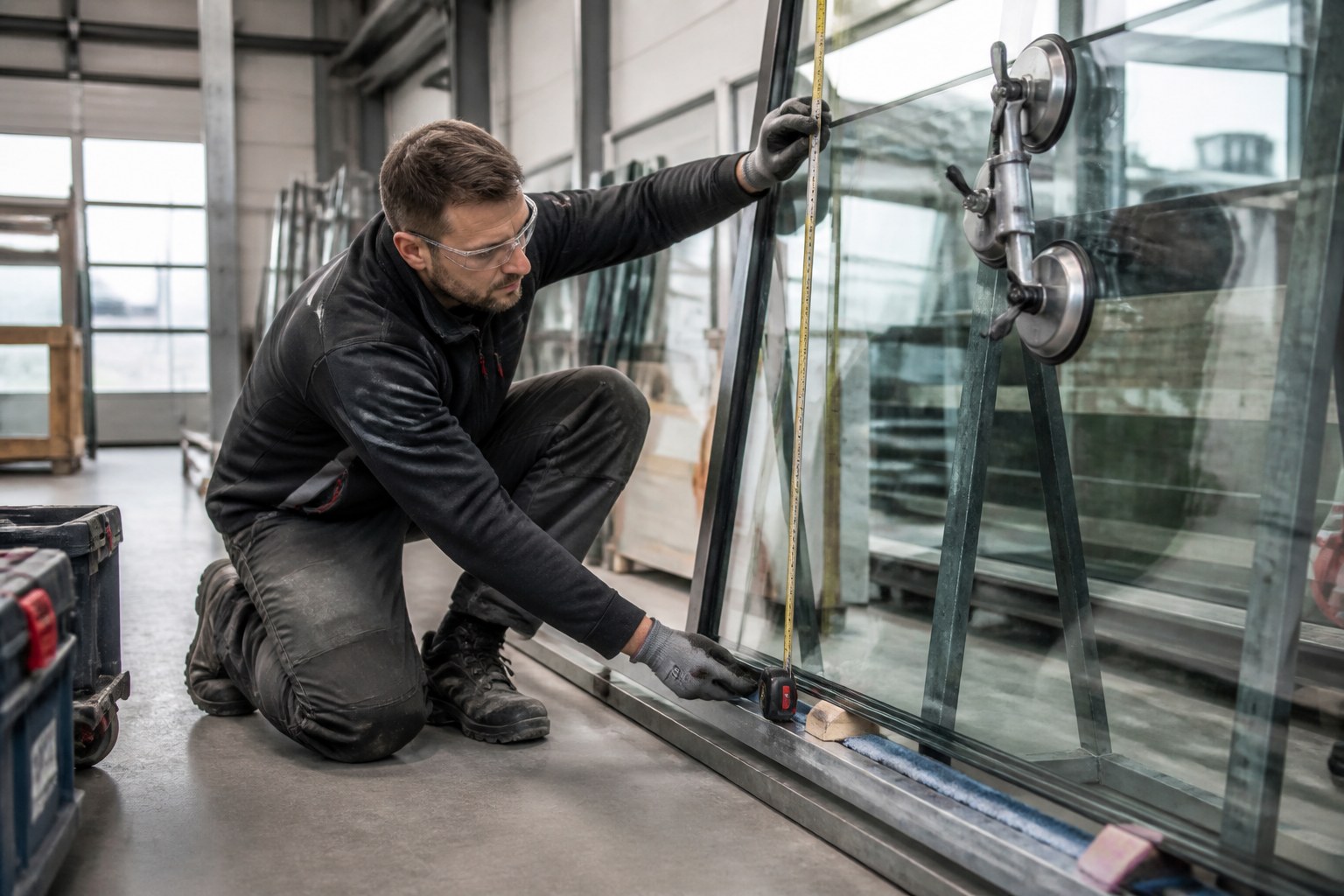
Glaziers work with glass elements in workshops, construction sites, buildings and renovation projects. Their work includes handling, measuring, fitting, installing, maintaining and repairing glass components. Duties depend on the professional setting, materials and project type. Your application should explain which glass elements, frames, fittings and installation tasks match your actual background.
Glass requires careful handling, accurate measurement and controlled execution. Describe whether your experience covered preparation, transport within the work area, installation, adjustment, maintenance or repair. State which tasks you performed independently, which you completed as part of a team and which equipment or techniques you used under supervision.
Glazier work also involves coordination with other trades and adherence to workplace instructions. Explain how you received instructions, checked dimensions, prepared materials and reported problems where these activities formed part of your previous work. Technical information, measurements and safety-related communication are part of organised practical work.
Applicants looking for glazier jobs in Germany should prepare for employment opportunities throughout Germany. East Talent’s candidate pathway is an initiative application for the professional group, not an application for a named vacancy or specific employer. The starting point is your qualification, experience, German skills and documents. Suitable opportunities are assessed after this profile has been reviewed.
Which Qualifications and Skills Matter
Relevant vocational training is an important part of a glazier profile. Certificates, trade-school records and other qualification documents show the formal basis of your preparation. State the qualification name, training period and main technical subjects where this information is available. If your training combined classroom instruction with practical work, describe both parts.
Practical experience shows what you are ready to do at work. Identify the materials, tools, components and tasks you handled. Instead of writing only that you worked as a glazier, describe responsibilities such as preparing glass elements, taking measurements, fitting framed components, installing products or completing repairs when these tasks reflect your experience. Include the length and continuity of your employment.
Technical understanding supports safe and reliable work. Relevant skills include reading measurements and technical information, recognising material requirements, using tools carefully and checking installation results. Do not claim experience with equipment, techniques or materials that you have not used. Distinguish established skills from areas you are still learning.
Careful execution matters because inaccurate measurements or unsuitable handling affect the material and finished installation. Include examples of quality checks, alignment, fitting, sealing, adjustment or repair only when they accurately describe your responsibilities. Teamwork and reliability also belong in the profile: explain your role in preparing work areas, checking materials, following instructions and completing tasks in the agreed order.
Documented qualifications and practical experience are separate parts of your profile. A certificate demonstrates formal education, while employment records, references and task descriptions show how you applied your knowledge. Provide both when available. Incomplete formal documents do not replace qualification evidence, but a clear employment history and credible references help explain your professional background.
Why German Skills Support Your Application
German supports communication in the workplace. Glaziers need to understand instructions and coordinate work involving measurements, materials, tools and installation steps. Language skills also support clear reporting when a material, component or working condition requires attention.
Safety-related communication is especially important in practical environments. You need to understand instructions concerning protective workwear, handling procedures, restricted areas and task sequences. You also need to understand corrections and follow-up instructions when conditions change.
Describe your German knowledge honestly and identify the situations in which you use German, such as workplace communication, vocational learning or everyday coordination. Mention whether you understand spoken instructions, written technical information and basic work-related conversations. This gives more useful information than listing a language level without practical context.
When available, document your language level using a recognised Common European Framework of Reference for Languages description, such as A2, B1, B2 or C1. Do not present a level that you have not assessed or achieved. If you are still learning German, include your current level and learning activities without presenting them as completed ability.
Focus vocabulary preparation on tools, dimensions, materials, protective equipment and installation steps. Practise receiving instructions, confirming measurements, asking for clarification, describing damage and reporting completed work. A strong application combines language information with qualifications, practical experience, technical skills and available documents.
How to Prepare Your Qualification Documents
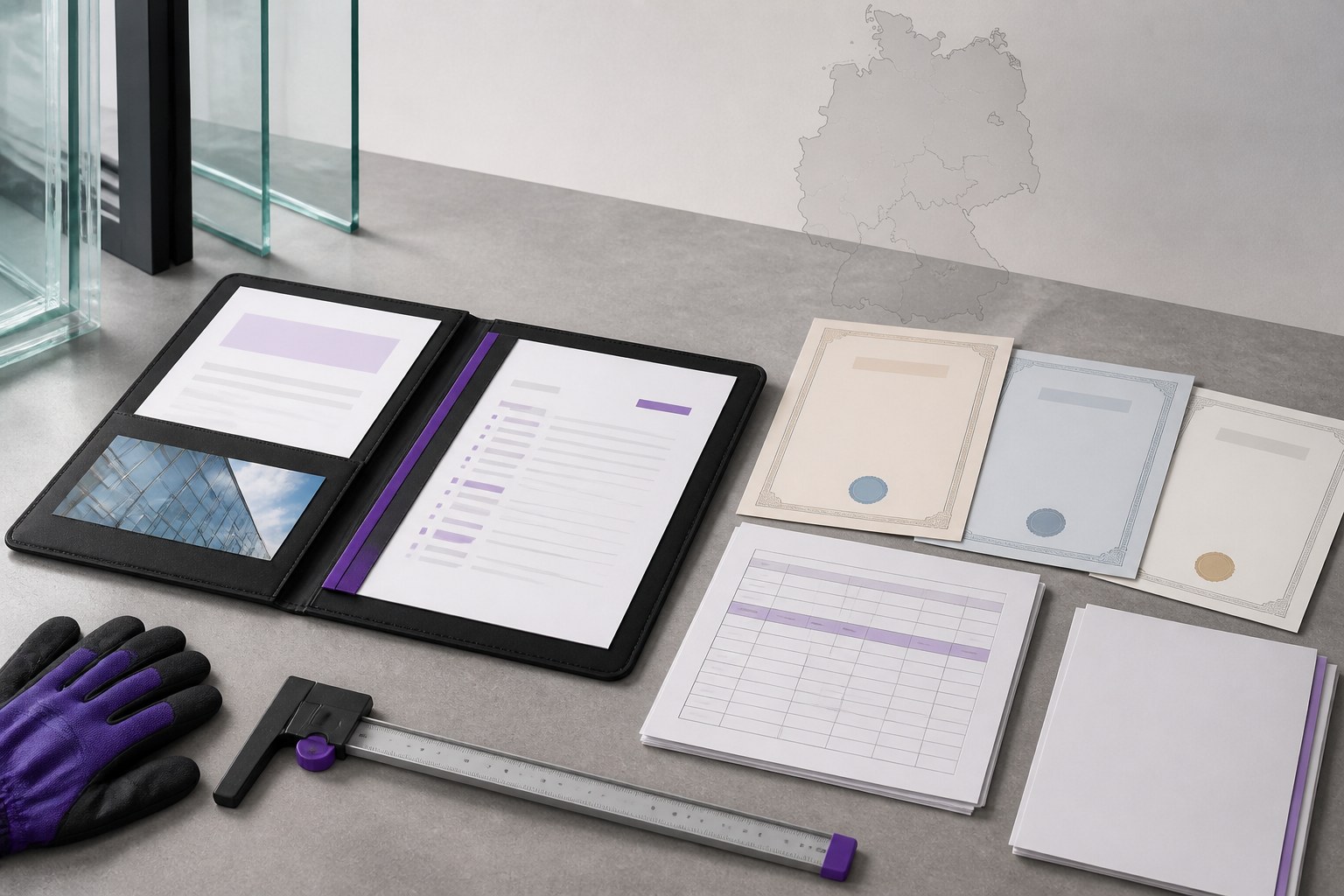
Collect your vocational certificates, training records, school or higher-education documents where relevant, employment references and other evidence of practical experience. Keep documents in a clear order, use consistent file names, scan them clearly and retain the originals for later checks.
Recognition depends on the profession and procedure. Regulated professions require the recognition or professional authorisation prescribed for that profession. Non-regulated professions are not subject to the same professional recognition rules. A person may generally work in a non-regulated profession without formal German professional recognition, but related to working in Germany qualification requirements are assessed separately.
The classification of a profession must therefore be checked separately from residence matters. Do not assume that the absence of professional recognition requirements removes every qualification-related condition connected with residence or employment. Your documents still need to present your training and experience clearly.
If documents are not in German or English, organise suitable translations when the relevant procedure requires them. Whether a certified or otherwise formalised translation is needed depends on the procedure. Keep the original with the translation and check that names, dates, qualification titles and employer details are consistent.
An authority assesses whether a foreign qualification corresponds to a German reference profession and whether substantial differences exist. Where such differences are identified, an adaptation qualification or another prescribed measure addresses them in the relevant cases. Keep records of additional training, supervised work and technical specialisation because they show the development of your profile.
Use one consistent spelling of your name, record employment periods accurately and explain relevant gaps. Do not alter documents to make them appear more comparable. A transparent file allows qualifications, experience and further learning to be assessed as connected parts of your professional history.
What to Include in Your Application Profile
Your application profile should give a clear account of your professional background. Include personal details, education, qualifications, employment history, technical skills, German knowledge and important certificates. Present information in reverse chronological order where this makes your development easier to follow. Use clear headings and avoid unexplained abbreviations.
A useful CV identifies each position, employer, employment period and main responsibilities. For glazier work, explain the practical tasks rather than using only job titles. Relevant details include the type of glass-related work, installation or repair experience, tools and materials used, measurement responsibilities and cooperation with other trades. Include the scale and context of the work where they clarify your responsibility.
Certificates and references support the statements in your CV. Employment references should show the role, period and responsibilities clearly. If a document confirms a technical skill, place it where it connects easily with the relevant experience. Dates in your CV and supporting documents should not contradict each other.
Typical application documents include a CV and certificates. A cover or motivation letter is appropriate where the application process calls for one. A professional photograph is not a general requirement. Keep the application factual and consistent. Describe only equipment, materials and procedures that you know from actual work.
State your German knowledge, available qualification documents and experience with the tasks you are prepared to perform. If a qualification is still being assessed or documents are missing, describe the status accurately.
East Talent reviews initiative applications for professional groups. You are not applying at this stage for a named vacancy or specific employer. Explain the work you are qualified and prepared to perform, and show that you are open to suitable employment opportunities throughout Germany.
Glazier Application Preparation Checklist
Application area
What to prepare
How it supports your profile
Qualifications and certificates
Vocational certificates, training records and relevant education documents
Shows the formal basis of your professional preparation
Practical experience
Employers, positions, periods, glazier duties, materials, tools and installation or repair tasks
Makes your actual technical experience traceable
German language skills
Current German level, CEFR description when available and examples of workplace communication
Shows your ability to understand instructions and coordinate practical work
Supporting documents
Employment references, important certificates, originals and relevant translations
Provides evidence for the information in your application profile
Working Conditions to Clarify Before Starting
Before starting employment, understand the main terms in the employment contract. These include the contracting parties, start date, any fixed-term arrangement, workplace, duties, remuneration, working time, holiday entitlement and notice periods. Keep a copy of the final contract and compare its terms with the information discussed before employment begins.
The workplace and duties deserve particular attention in practical trades. Make sure the contract corresponds with the type of glazier work discussed and with your preparation. Practical work may involve workshops, construction sites, renovation locations or other work areas, and the contract should provide a clear basis for understanding your role.
Pay is normally stated as a gross amount. Taxes and social-insurance contributions are deducted according to your individual circumstances, so the net amount does not equal the agreed gross amount. Use the gross figure as the contractual reference and do not calculate your personal budget from gross pay alone.
Additional payments such as supplements or bonuses depend on the employment relationship and applicable rules. Collective or works agreements may contain additional provisions concerning remuneration, working time or holidays. Ask for unclear terms to be explained in writing before relying on them for financial planning.
German working-time law sets limits for daily working time, but these limits are not identical to the regular weekly working time agreed in an employment contract. Read provisions on schedules, breaks, additional hours and travel connected with practical assignments carefully.
Relocation planning belongs to the practical review of employment terms. Rent, deposits, transport and other living expenses affect the amount available after moving to Germany. Build your budget from expected net income and actual accommodation and travel costs rather than gross salary alone.
Be Open to Glazier Work Throughout Germany
Applicants using East Talent’s candidate pathway must be open to employment opportunities throughout Germany. Limiting your profile to one preferred city or region restricts the opportunities matching your experience and availability. Germany-wide openness is therefore part of preparing your candidate profile.
This openness does not mean ignoring practical considerations. Consider relocation, accommodation, transport, personal commitments and the distance between a possible workplace and your future home. Rent, deposits, travel costs and other living expenses affect the amount available after relocation. Also consider transporting personal belongings and arranging initial accommodation.
State your willingness to work throughout Germany clearly. If you have practical limits, describe them accurately rather than presenting unrestricted mobility and changing your position later. Honest information supports a suitable assessment of your profile. A transparent statement about family responsibilities, transport access or relocation timing is more useful than an unclear promise.
Mobility also requires preparation for different working environments. Glazier work may take place in a workshop, on a building site or during renovation work. State your experience with particular environments separately from your willingness to relocate.
No specific city or employer is guaranteed through an initiative application. The relevant starting point is your qualification, experience, language ability, documents and openness to suitable employment opportunities across Germany.
A Practical Preparation Checklist for Applicants
Begin with an accurate description of your glazier experience. List the duties you performed, materials and components handled, tools used and installation, maintenance or repair work in your background. Separate regular responsibilities from occasional tasks and identify whether you worked independently, under instruction or within a team.
Collect qualification evidence next. Put vocational certificates, training records, employment references and other relevant documents into a structured folder. Check that names, dates and job titles are consistent across your CV and supporting records. Make a list of missing documents so you know which parts of your history still require evidence.
Prepare language information separately. State your German level using a CEFR description when available and explain where you use German in professional or everyday situations. Focus learning on vocabulary for measurements, tools, materials, protective equipment and reporting problems.
Organise translations where relevant. The required format depends on the procedure, so distinguish between an ordinary translation and one with additional formal requirements. Keep the original and translation available, and review names, dates and qualification titles against the original.
Review the technical content of your CV before submitting it. Remove unsupported claims, explain unfamiliar terms and connect every important task with a period of employment or training. A short, accurate description of real experience is stronger than a long list of general abilities.
Finally, review your mobility statement. Your profile should show qualifications or relevant practical experience, technical skills, German knowledge and available documents. It should also make clear that you are open to employment opportunities throughout Germany.
Submit an initiative application for the glazier professional group rather than an application for a named vacancy or employer. Include your qualifications, practical experience, German skills and available documents, and remain open to suitable employment opportunities throughout Germany. A precise application gives East Talent the information required to review your profile and consider your background for suitable companies in Germany.
Create your profile
Registration with East Talent
Four short steps. A CV is optional and can be provided in your native language.
Step 1 of 4Profession
East Talent
International recruitment with proprietary software
East Talent combines international recruitment with structured digital processes for handling candidate profiles, attracting employers and evaluating job opportunities.