Hvac And Sanitary Systems Mechanic Jobs In Germany
What HVAC and Sanitary Mechanics Do in Germany
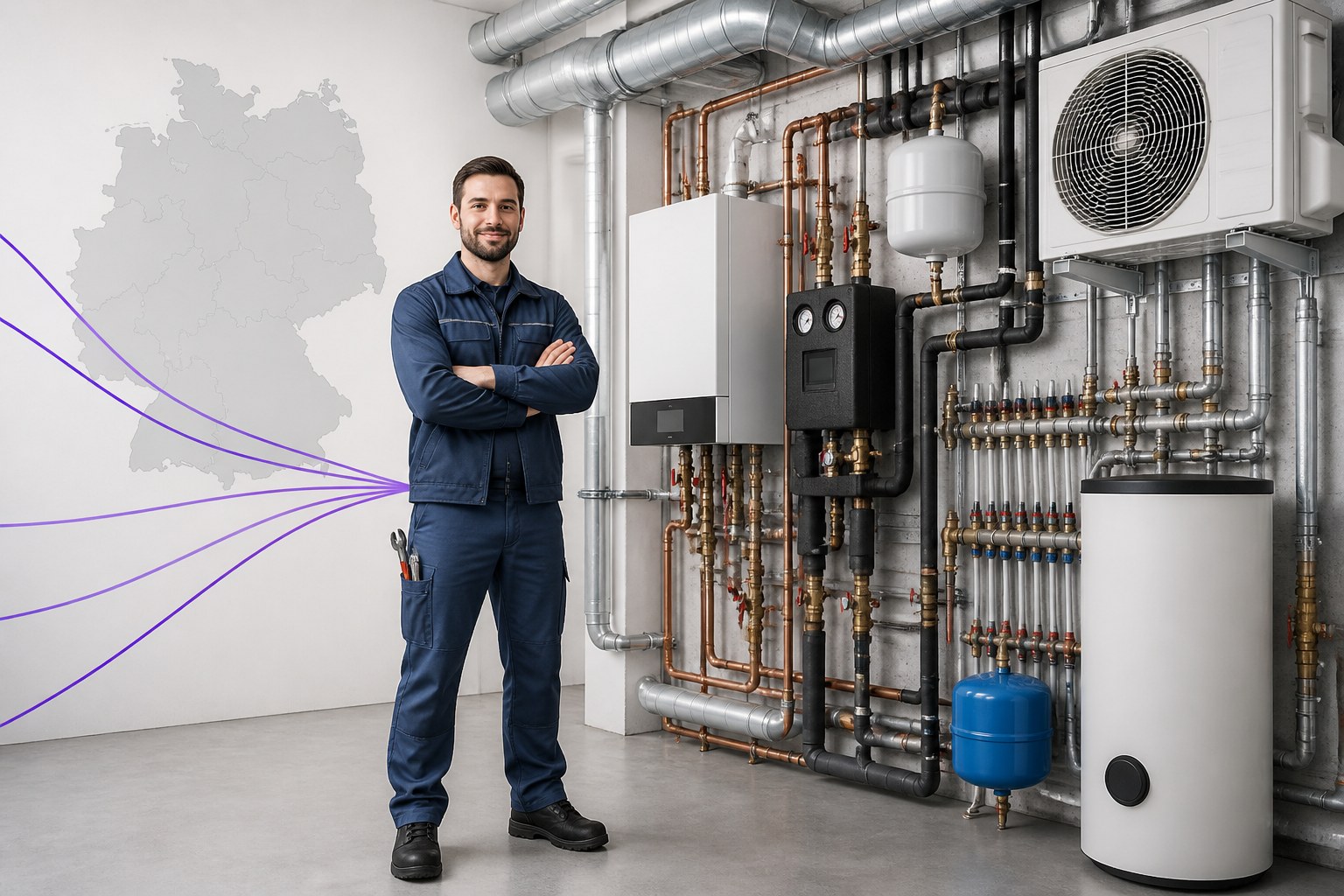
HVAC and sanitary mechanics work on technical building systems that provide heating, ventilation, air conditioning, water supply and sanitary services. Their work combines installation, commissioning, maintenance, inspection and repair. Depending on the employment context, a mechanic may work on new installations, renovation projects, technical plant rooms, residential buildings, commercial properties or industrial facilities.
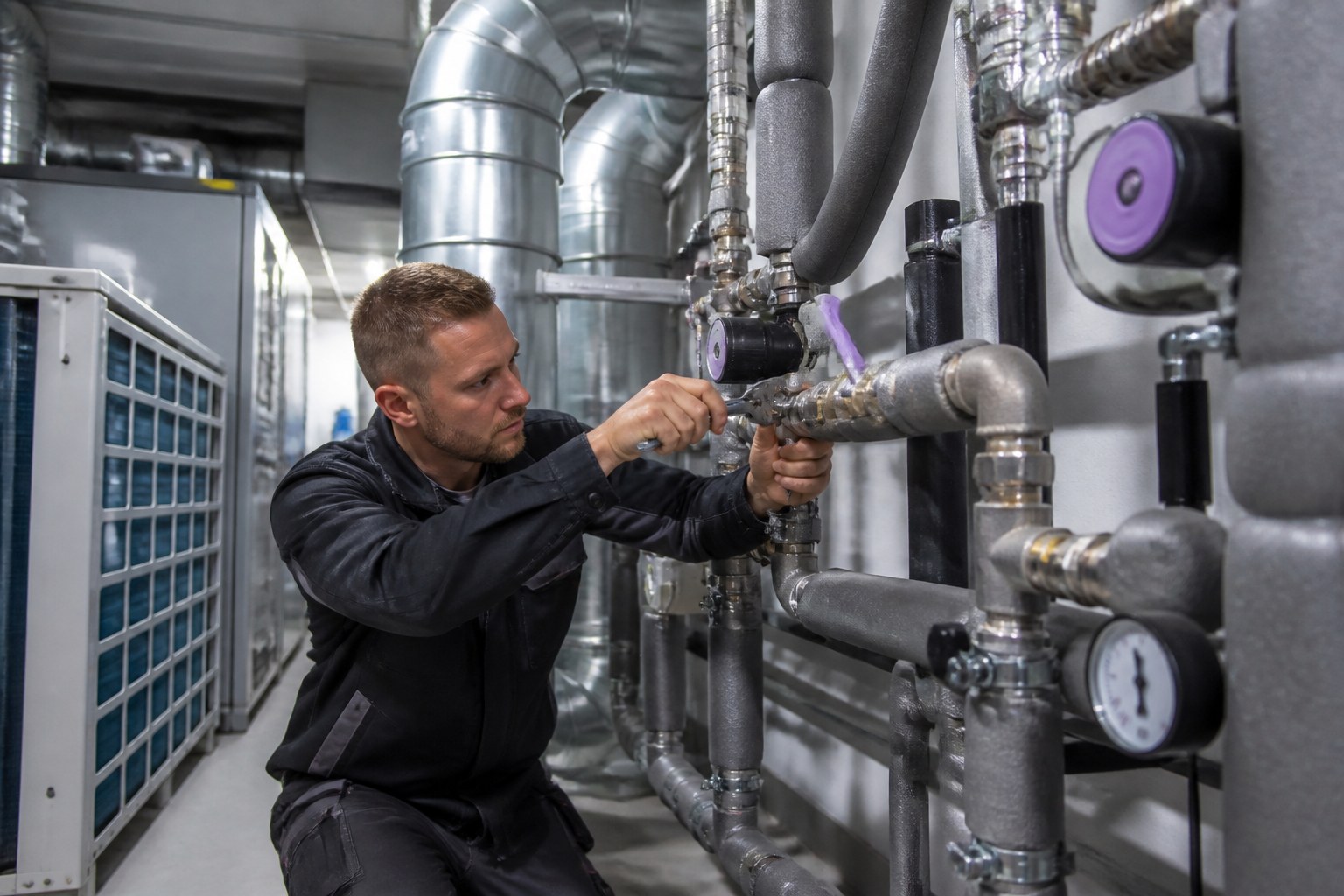
Typical tasks include installing pipes, connecting heating and water systems, fitting valves and sanitary components, assembling ventilation ducts and checking air-conditioning equipment. Mechanics also identify faults, replace defective components and test whether a system operates safely and correctly. Accurate measurements and careful workmanship are essential because incorrectly installed connections affect system performance, energy use and building safety.
The occupational group includes practical work with tools, technical components and building-services systems. Work takes place at different locations throughout Germany, so candidates need to understand that the professional environment is not limited to one fixed type of building or one local market. Openness to employment opportunities throughout Germany is part of the candidate profile.
The exact combination of heating, ventilation, air-conditioning, plumbing and sanitary duties depends on the employment context. Candidates therefore benefit from describing the systems they have actually worked with instead of presenting themselves only with a broad occupational title.
Qualifications and Practical Skills
A strong candidate profile starts with relevant technical training, vocational education or comparable practical experience in HVAC, sanitary, plumbing or building-services work. The available evidence should show what the candidate learned, which systems were covered and how the qualification relates to the intended occupational group in Germany.
Practical competence is particularly relevant in the following areas:
Installation work includes preparing work areas, reading technical drawings, measuring and cutting materials, assembling pipework and connecting system components. Candidates should describe whether they worked with heating circuits, water supply, wastewater, ventilation ducts, air-conditioning units or sanitary installations.
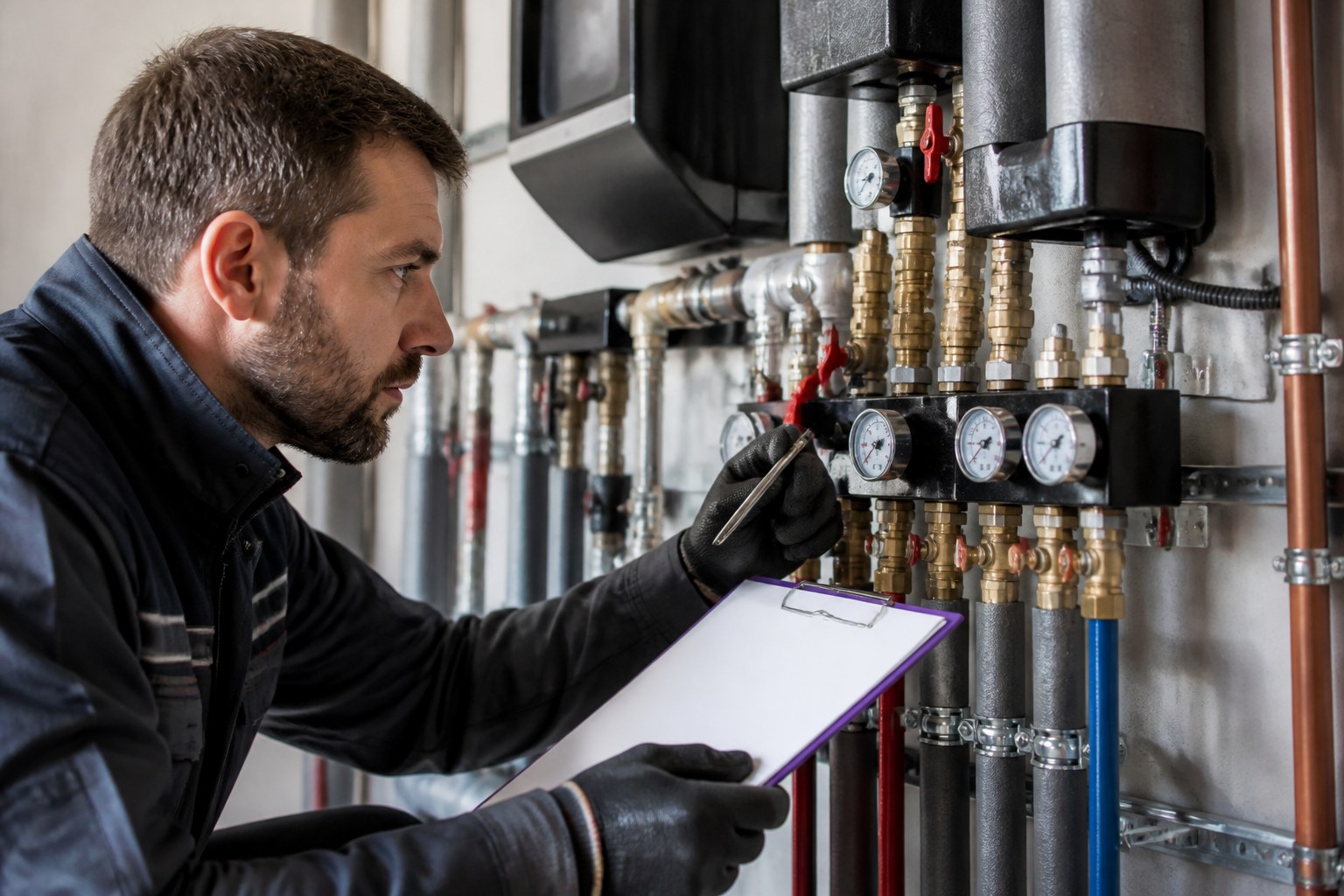
Maintenance and troubleshooting require systematic inspection. Mechanics check pressure, temperatures, connections, valves, controls and visible signs of damage. They identify the likely cause of a fault, carry out suitable repairs and test the system after the work. Experience with preventive maintenance is also valuable because it shows that the candidate understands reliability rather than only emergency repair.
Technical drawings and documentation support safe and accurate work. Candidates should be familiar with interpreting plans, installation diagrams, measurements and component information relevant to their professional experience. Work documentation should record completed tasks, technical findings, replaced parts and test results in a clear manner.
Safety procedures are part of professional practice. HVAC and sanitary work involves tools, pipes, electrical components, pressurised systems, refrigerant-related equipment in some contexts and construction-site environments. Candidates should present the safety procedures they followed in previous work and describe any responsibility they had for checking installations before commissioning.
No universal list of additional certificates applies to every HVAC and sanitary mechanic. Candidates should therefore provide the certificates and technical qualifications they actually hold rather than claiming credentials that do not match their experience.
Experience That Strengthens Your Candidate Profile
Professional experience becomes more useful for assessment when it is specific and verifiable. A CV that only states “HVAC mechanic” gives less information than a structured description of the systems, tasks and responsibilities handled during each period of employment.
Describe the type of work performed, such as installing heating pipes, fitting radiators, connecting water and wastewater systems, assembling ventilation components, servicing air-conditioning equipment or repairing sanitary installations. Include the building or project context where this information is relevant, for example residential construction, commercial facilities, industrial sites or maintenance operations.
Your employment history should identify the employer, position, dates and main responsibilities. Work references, employment certificates and other evidence strengthen the description because they help establish the scope and duration of your practical experience. Where possible, distinguish between independent work, supervised work and coordination with other trades.
Candidates should also explain the tools, materials and systems they used. Examples include pipe connections, valves, pumps, gauges, control elements, ventilation ducts, insulation materials and testing equipment. The description must reflect actual experience rather than a general list copied from a professional profile.
Experience with fault finding deserves particular attention. Explain the symptoms you investigated, the measurements you took, the components you checked and the repair or adjustment completed. This information shows practical reasoning and helps assess whether your experience fits installation, service, maintenance or repair-focused work.
If your experience includes technical documentation, commissioning checks, maintenance records or cooperation with electricians, builders and other trades, include these details. They demonstrate that you understand the coordination required on building-services projects.
German Skills for Technical Work
German is relevant to HVAC and sanitary work because technical instructions, safety information, work coordination and documentation require clear communication. Mechanics need to understand instructions about installation sequences, system checks, restricted work areas and safe handling procedures. They also need to communicate technical findings to colleagues and supervisors.
Language ability is part of your candidate profile rather than a condition taken from an invented vacancy. Present your current German knowledge honestly and distinguish between general conversation, workplace communication and technical vocabulary. If you also speak English or another relevant language, include that information in your CV.
When applicable, document language knowledge using recognised Common European Framework of Reference levels such as A2, B1, B2 or C1. A certificate provides clearer information than an unsupported statement such as “good German”. If your language learning is ongoing, state the current level and the type of technical communication you already manage.
Technical vocabulary deserves focused preparation. Useful areas include tools, pipework, valves, pressure, temperature, ventilation, air flow, heating circuits, water supply, wastewater, maintenance and safety instructions. Understanding these terms supports both daily cooperation and accurate documentation.
Communication also includes asking precise questions when a plan, instruction or technical condition is unclear. A candidate who documents language skills together with practical experience gives a more complete picture of readiness for work in Germany.
HVAC and Sanitary Mechanic Application Preparation
Application area
What to prepare
Why it matters for candidates
Professional qualification
Vocational certificate, diploma or other evidence of relevant HVAC, sanitary, plumbing or building-services training
Shows the technical foundation of your occupational profile and supports professional assessment
Makes your actual skills and experience clear instead of relying only on a general job title
Language and communication
Current German knowledge, recognised reference level where applicable and experience with technical instructions or workplace communication
Shows how you understand safety information, coordinate work and document technical tasks
Supporting documents
CV, certificates, employment references, technical qualifications and translations where required for a particular procedure
Allows a more complete review of your qualifications, experience and readiness for further checks
Recognition and Proof of Your Qualification
Professional recognition and residence or employment requirements are separate issues. Recognition concerns the comparison of a foreign professional qualification with a German reference occupation. Residence and employment rules concern whether a person meets the requirements for working and staying in Germany. One assessment does not automatically settle the other.
HVAC and sanitary mechanic occupations often relate to vocational training and practical building-services work. Non-regulated occupations are not legally protected in the same way as regulated occupations. In a non-regulated occupation, working without formal German professional recognition is fundamentally different from working in a regulated profession that requires professional authorisation.
This distinction does not remove the importance of qualification evidence. Certificates, vocational diplomas, employment references and detailed work records support professional assessment. Qualification documents also remain relevant when separate residence or employment procedures require proof of education or professional experience.
During a recognition procedure, the responsible authority examines whether the foreign qualification corresponds to the German reference occupation and whether substantial differences exist. Possible results for non-regulated occupations include full recognition, partial recognition or no recognition. Where substantial differences exist, an adaptation qualification or another suitable qualification measure addresses the missing areas in accordance with the applicable procedure.
Prepare certificates and references in a complete, orderly format. Documents issued in another language may require translation into German or English for a specific procedure. Whether a certified or otherwise formalised translation is required depends on the procedure, so candidates should not assume that one translation standard applies to every case.
Keep original documents and clear scans available. A consistent spelling of your name, complete dates and matching information across your CV, certificates and employment evidence reduce avoidable questions during assessment.
Documents for an Application Through East Talent
East Talent accepts initiative applications from candidates seeking employment opportunities in their occupational group in Germany. You do not apply at this stage for one specific advertised position or a named employer. The application presents your professional profile so suitable employment opportunities can be assessed later.
Prepare a clear CV containing your contact details, education, vocational qualifications, employment history, technical skills and language knowledge. Present each relevant job with the employer, position, dates and responsibilities. Explain whether your work focused on installation, maintenance, service, repair or several of these areas.
Include education certificates, vocational diplomas, employment evidence and relevant technical qualifications. Add recognition documents if a procedure has already taken place, but do not describe recognition as completed when the process is still pending. If translations are available, label them clearly and keep the original document information visible.
Your application should also identify the systems and components you have handled. Mention heating, ventilation, air-conditioning, plumbing, water, wastewater and sanitary work only where the description reflects real experience. This detail supports a more accurate professional assessment than a general occupational label.
State your German level and explain how you use German in technical situations. Information about reading instructions, speaking with colleagues or documenting maintenance work gives more practical context than a language level alone.
Because East Talent assesses candidates for employment opportunities in the occupational group rather than one specific position, your profile should remain broad enough to reflect your transferable skills. At the same time, it should be precise enough to show the work you are qualified and experienced to perform.
Working Conditions to Understand in Germany
Before starting employment, candidates need clear information about the employment relationship. An employment contract should address the parties, start date, any fixed term, probationary period, work location, duties, remuneration, working time, holidays and notice periods. The exact terms belong to the future employment relationship and must not be assumed in advance.
HVAC and sanitary mechanics often work in changing technical environments. The working location may involve construction sites, plant rooms, buildings under renovation, service locations or maintenance areas. The duties, equipment and coordination requirements differ between these contexts, so candidates should understand the actual work setting before accepting an employment contract.
German employment conditions distinguish between gross and net pay. Gross pay is the agreed amount before deductions. Taxes and social insurance contributions reduce the amount paid out, and the net amount depends on the individual tax and social insurance situation. Candidates should therefore never treat a gross figure as the amount that will reach their bank account.
The German social insurance system includes health insurance, long-term care insurance, pension insurance, accident insurance and unemployment insurance. For employment subject to social insurance contributions, registration generally takes place through the employer. The precise deductions depend on the individual situation.
Working time must also be understood in context. Statutory limits are not the same as the regular weekly hours agreed in an employment contract. Overtime arrangements, shift work, travel between work locations and on-call duties require clear contractual or workplace information.
Paid holiday is another important contract topic. The statutory minimum entitlement is supplemented when an employment contract or collective agreement provides more favourable terms. Candidates should review the holiday entitlement, probationary period and notice periods together with the other contract details.
Preparing for HVAC Work Across Germany
Candidates applying through East Talent must be open to employment opportunities throughout Germany. The professional assessment is not limited to a preferred city or region. Geographic flexibility gives your profile a broader basis for consideration and reflects the fact that HVAC and sanitary work exists in different building, maintenance and installation environments across the country.
Start by organising your vocational certificates, employment references and technical documents. Check that names, dates and job titles are consistent. Prepare readable scans and identify documents that require translation for a particular procedure.
Next, write a practical CV. Describe your systems experience, installation tasks, maintenance work, troubleshooting responsibilities, tools and documentation duties. Include the duration of each relevant employment period and explain any significant gaps in the work history.
Present German skills clearly and continue improving technical communication. Prepare to discuss safety instructions, system components, fault reports and daily coordination in a professional setting.
Remain ready for additional checks concerning professional recognition, employment requirements and immigration procedures. These areas are assessed separately, and the documents required for one process do not automatically replace documents required for another.
A complete profile combines technical evidence with realistic mobility. Candidates who organise their qualifications, document their experience accurately and remain open to jobs throughout Germany are better prepared for the next stage of professional assessment.
Create your profile
Registration with East Talent
Four short steps. A CV is optional and can be provided in your native language.
Step 1 of 4Profession
East Talent
International recruitment with proprietary software
East Talent combines international recruitment with structured digital processes for handling candidate profiles, attracting employers and evaluating job opportunities.