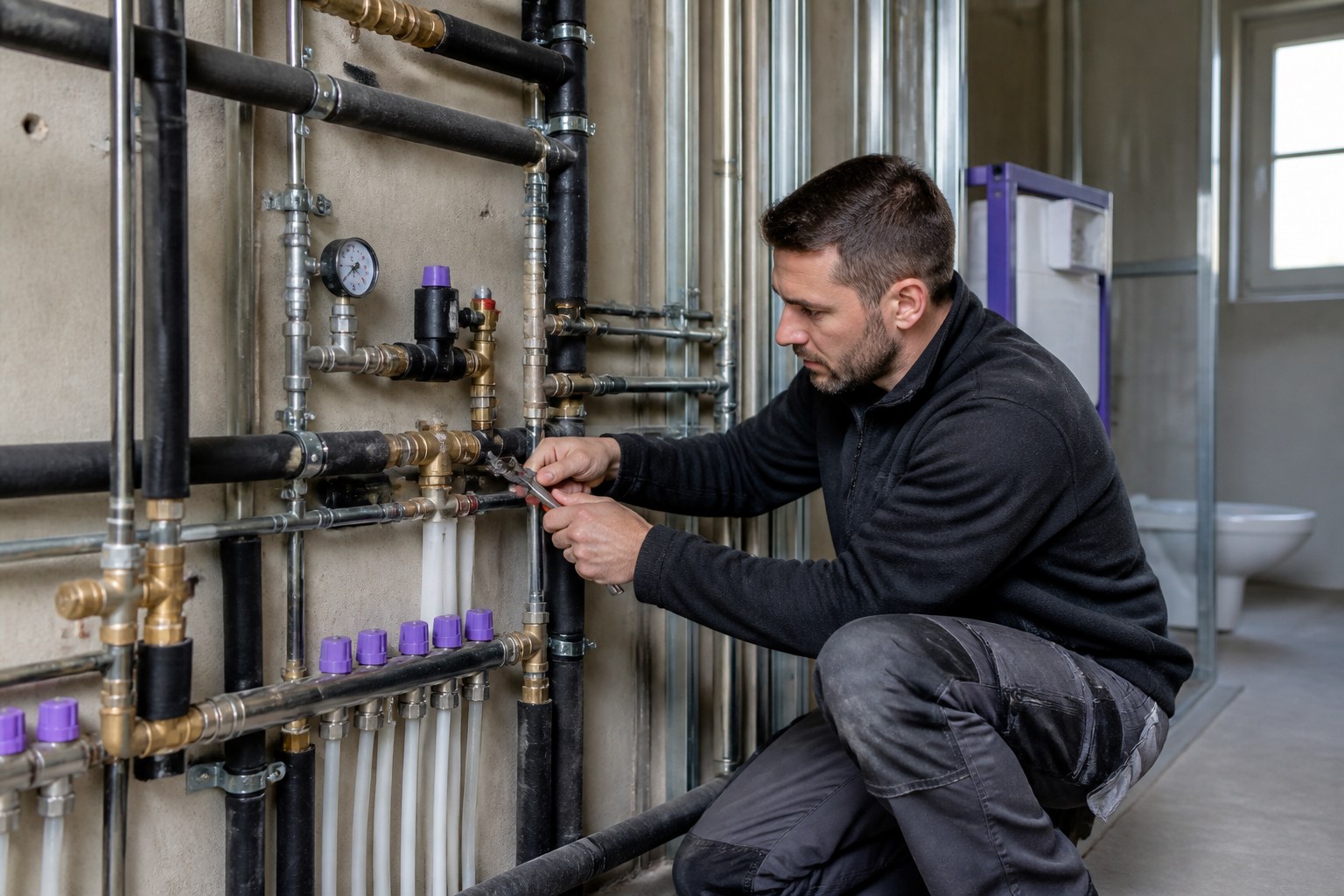
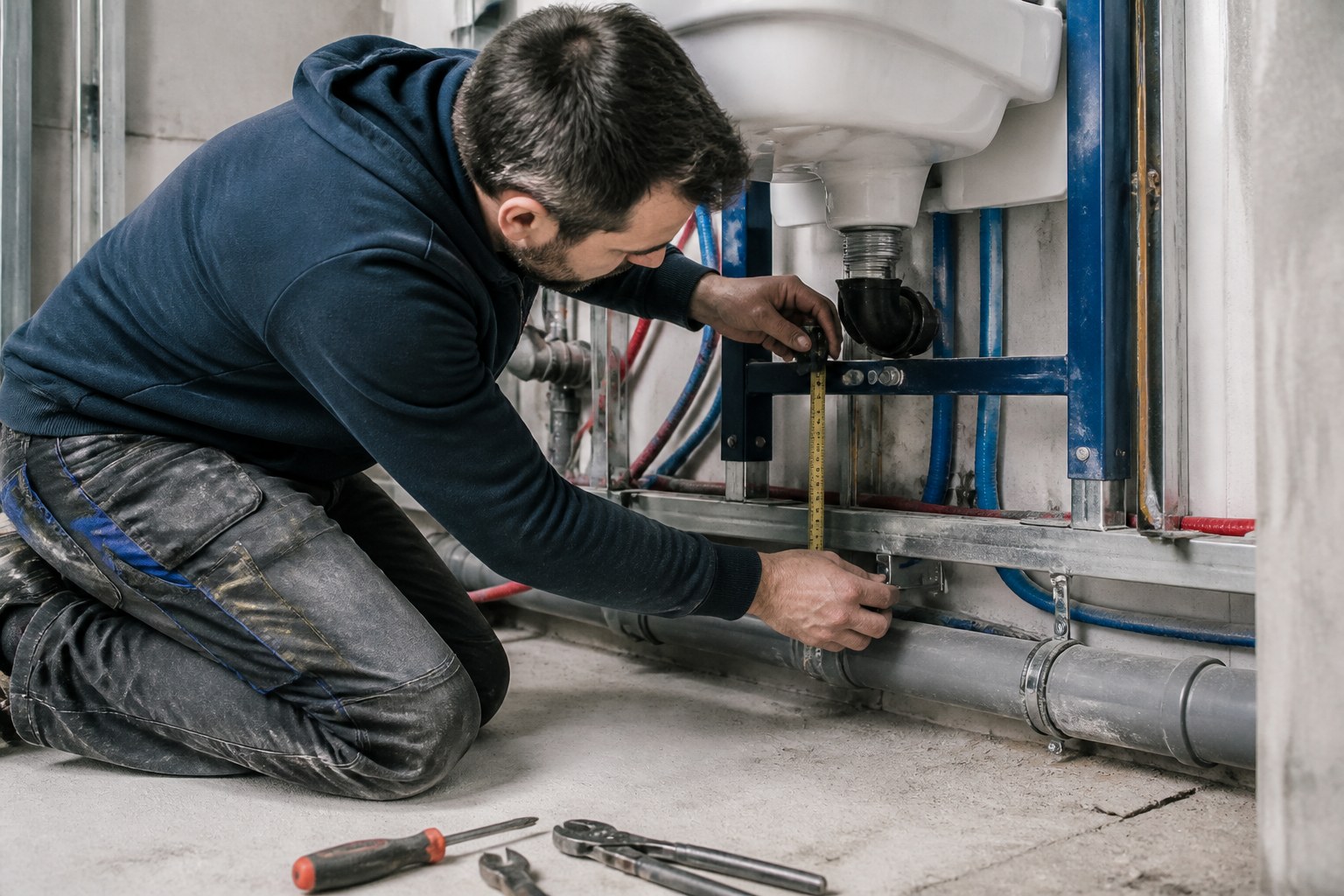
Sanitary installer work focuses on installing, connecting, maintaining and repairing pipework, fittings and sanitary systems in buildings. Depending on your background, your experience may include water supply systems, drainage, bathroom installations, heating-related connections or technical building services. Your application should describe the work you actually performed rather than relying on a general job title.
A strong profile explains the installations you handled, the materials and tools you used, the environments in which you worked and the responsibility you held. Residential construction, commercial buildings, renovation projects and maintenance work involve different practical conditions. Describe these conditions accurately so your experience is understood across employment opportunities throughout Germany.
Technical reliability and safe working practices are central to the profession. Connect your training and employment history with specific responsibilities, such as measuring and aligning pipework, connecting fittings, identifying faults, testing connections or completing final checks. Include only tasks that reflect your actual experience.
Experience on construction sites involves coordination, changing work conditions and cooperation with other trades. Maintenance work involves diagnosing faults in existing buildings, where access, documentation and communication with occupants matter. Explain the working conditions that shaped your experience.
Which Qualifications and Experience Matter
Vocational training in sanitary installation, plumbing, heating, building services or a closely related field provides an important foundation. Present the official name of your qualification, the training period and the main technical subjects covered. The relevance of your qualification depends on its content and on the practical work you completed.
Describe how long you worked in the profession, which systems you encountered and whether your experience covered new construction, renovation, maintenance or fault repair. Relevant technical knowledge includes correct tool use, accurate measurement, installation procedures, troubleshooting and safety practices. Do not claim expertise in systems or activities you have not performed.
Additional knowledge of technical drawings, welding, sealing, ventilation-related connections or heating systems belongs in your profile when it reflects real training or employment. State whether the knowledge comes from formal education, an additional course or practical work. Also explain whether you worked independently, in a team or under supervision, and whether you prepared materials, coordinated steps or checked installations.
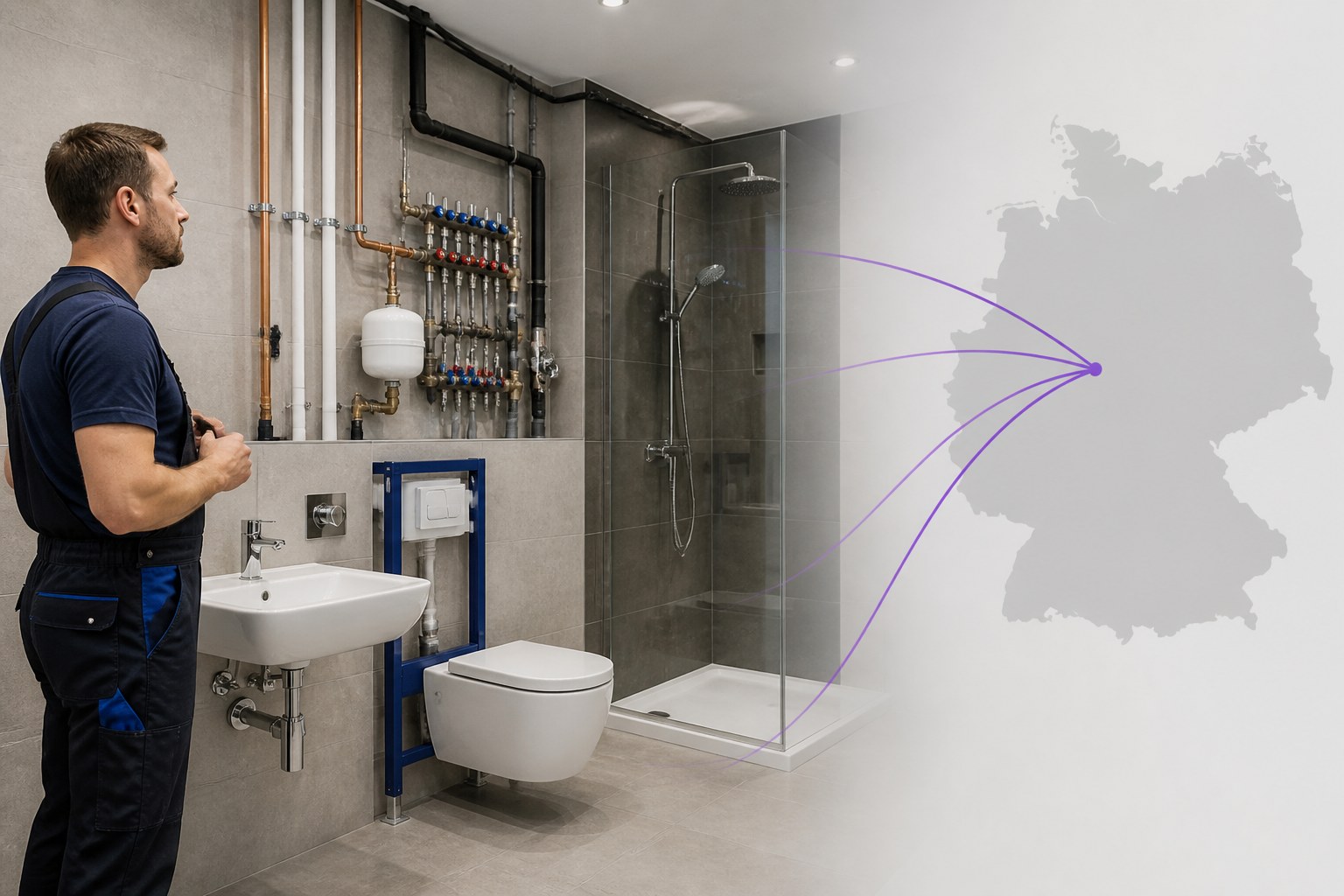
Your profile is assessed for employment opportunities throughout Germany. Remaining open to different locations gives your documented qualification and experience a wider context. Focus your application on professional suitability rather than one preferred city.
Preparing Your Qualification Documents
Collect your vocational certificate, training records and relevant school or technical education documents before applying. Include evidence of additional courses in plumbing, sanitary systems, heating, welding, occupational safety or technical equipment when it is available and relevant.
Support your employment history with documents showing where you worked, your position and the period of employment. Employment references, certificates or other evidence strengthen the connection between your stated experience and your professional record. The available evidence differs between candidates, so do not present one document as universally mandatory.
Organise files with consistent names and dates. Check that names, employment periods and qualification details match across your CV and certificates. If documents are incomplete, explain the situation accurately instead of filling gaps with assumptions. Keep original files safely and scan certificates and employment evidence in readable quality.
Foreign-language certificates require a German or English translation when the relevant application or recognition procedure requires it. Whether certification is required depends on that procedure. Keep an inventory showing each document’s title, issuing institution, date and language, and retain local occupational titles while explaining the practical duties in your CV.
Recognition of Foreign Qualifications
Recognition and residence questions are separate issues. A profession is regulated when access to the profession or specific activities is legally protected. Non-regulated professions are not protected in the same way. Many vocational occupations belong to the non-regulated area, but the classification and requirements for a particular activity still need careful review.
For a non-regulated occupation, professional recognition is not required in the same way as licensing for a regulated occupation. This does not automatically remove qualification requirements connected with residence or employment. Those questions must be examined separately for your personal situation.
During recognition, the responsible authority compares your foreign qualification with the relevant German reference profession. The outcome reflects the documents and qualification content submitted. Possible outcomes for non-regulated professions include full recognition, partial recognition or no recognition. Where substantial differences exist, an adjustment qualification or another recognised measure addresses them when such a measure is available.
Complete documents matter because the authority assesses submitted evidence, not an informal description of your abilities. Certificates, training content, practical records and translations should support one another. Respond carefully to requests for additional information, keep copies of everything submitted and describe recognition status accurately. Recognition does not replace practical experience, German communication skills or a clear application.
German Skills for Sanitary Installation Work
German belongs in your candidate profile because sanitary installation depends on accurate communication. You need to understand technical instructions, discuss work progress, clarify measurements and report problems. Safety information and instructions about tools, materials and site conditions also require reliable communication.
Daily cooperation involves supervisors, other trades, customers and building occupants. German skills support coordination when several activities take place in one building. They help you explain completed work, ask focused questions and understand changes during installation or repair tasks.
Describe your actual level using the Common European Framework of Reference, such as A2, B1, B2 or C1, when that level reflects your ability. Do not claim a level you have not achieved. Technical knowledge and language ability serve different purposes: practical experience does not replace understanding safety information, and German does not replace vocational training.
Practise vocabulary for tools, pipe sizes, fittings, valves, seals, measurements, defects and work stages. Prepare phrases for confirming instructions, reporting a leak, asking for clarification and explaining that a connection has been tested. A certificate provides orientation, but describe your actual listening and speaking ability, including any difference between reading and speaking.
Vocational certificates, training records and relevant technical education
Shows the formal foundation of your sanitary installation profile
Practical experience
Employment periods, positions, installation duties, systems and tools used
Connects your professional claims with real work experience
German language skills
Your actual language level and workplace communication abilities
Supports understanding of technical instructions, safety information and daily cooperation
Application documents
Structured CV, certificates, employment evidence and relevant translations
Creates a consistent basis for assessing your qualification and experience
Application Documents for Candidates
Prepare a structured CV with your contact details, vocational education, employment history, technical skills and language knowledge. For each relevant position, include the period, role, working environment and actual duties. Useful details include the pipework and fittings handled, installation environments, maintenance responsibilities, tools and technical systems used.
Certificates should support the education and training in your CV. Add employment references or other evidence of practical work where available. If a document covers only part of your experience, label it accurately rather than implying that it proves a wider range of work.
A cover letter or motivation letter helps explain your interest in working in Germany, professional focus and readiness to work throughout Germany. Keep it specific to your background. A short account of your strongest installation experience is more useful than general statements about being hardworking.
Use translations when the receiving procedure requires them or when a document must be assessed by another party. Check your telephone number, email address and name spelling before submitting. A sanitary installer with renovation experience should describe that focus, while a maintenance specialist should explain fault diagnosis and repair work.
Understanding Employment Conditions in Germany
Before accepting employment, read the contract carefully. It should identify the contracting parties and address the start date, any fixed term, probationary period, workplace, duties, pay, working time, leave and notice periods. These points define important parts of the working relationship and should match the information communicated to you.
Pay is normally stated as gross pay. Taxes and social-security contributions are deducted according to your personal circumstances, so the net amount paid into your account is not identical to the agreed gross amount. Health, long-term care, pension, unemployment and accident insurance form part of the German social-security system in situations covered by the relevant rules.
Additional payments depend on the employment relationship and applicable arrangements. A collective agreement or works agreement may contain provisions on pay, working time or leave. Review these details before making financial plans. Rent, a deposit, travel and everyday living costs also affect the amount available after net pay is received.
Pay attention to whether the duties mainly involve installation, maintenance, renovation, repair or a combination. Construction and renovation involve changing sites, materials and access conditions, while maintenance involves existing buildings and contact with occupants or customers. Keep a copy of the contract and obtain an explanation before making a binding decision if a provision is unclear.
Mobility and Preparation for Work Across Germany
Applicants for sanitary installer jobs in Germany must remain open to employment opportunities throughout Germany. Do not build your application around one city or region. Different parts of the country offer different construction, maintenance and building-services environments, and geographic flexibility supports a broader assessment of your profile.
Keep identification, qualification records and employment evidence organised. Make sure your CV explains your practical experience in a way that remains understandable outside your local market. Describe the actual systems, materials and responsibilities behind local job titles, and ensure translations preserve the meaning of your original documents.
Continue developing German while preparing. Practise vocabulary connected with tools, pipework, measurements, fittings, materials, safety instructions and cooperation with other trades. Describe previous work aloud so you are ready to discuss it clearly during the application process.
Prepare a short introduction covering your qualification, years of experience, strongest technical tasks and current German skills. Keep digital copies available and maintain reliable telephone and email contact. State whether your strongest background is installation, renovation, maintenance, troubleshooting or a combination of these areas.
A Practical Application Checklist
Before applying, check that your CV gives a complete and consistent account of your training and work history. Include positions, employment periods, main duties and technical skills. Compare every date with certificates and employment evidence, check institution and employer names, and correct unexplained inconsistencies.
Collect vocational certificates, school or technical records and evidence of employment. Arrange German or English translations where they are relevant to the procedure, and keep original files available. Describe your German skills honestly and use a recognised framework level when you have reliable evidence for it.
Prepare a short explanation of how you communicate about technical work, safety information and cooperation on a work site. Confirm that you are open to employment opportunities throughout Germany. East Talent receives applications from candidates seeking employment in their professional group, not applications for a named vacancy or employer.
Use the checklist to identify available documents, relevant translations and areas of experience needing clearer descriptions. Submit a profile that reflects your actual qualifications and professional direction. If new training records, language certificates or employment references become available, keep them in your records and communicate them when they materially improve the assessment.
Apply for Sanitary Installer Jobs in Germany
Sanitary installer jobs in Germany require a clear professional profile. Present your vocational training, practical installation experience, technical responsibilities, German skills and supporting documents in a structured way. Recognition questions and related to working in Germany requirements are separate matters, so prepare the relevant information without assuming a particular outcome.
East Talent applicants apply for employment in their professional group rather than for a named vacancy or specific employer. Be prepared to discuss your experience and remain open to opportunities throughout Germany. A precise application gives your professional background a clear basis for further assessment.
Review your documents before submitting them and describe only work you have actually performed. A complete account of your qualification, employment history, technical skills and German communication ability supports a realistic assessment.
Four short steps. A CV is optional and can be provided in your native language.
Step 1 of 4Profession
East Talent
International recruitment with proprietary software
East Talent combines international recruitment with structured digital processes for handling candidate profiles, attracting employers and evaluating job opportunities.