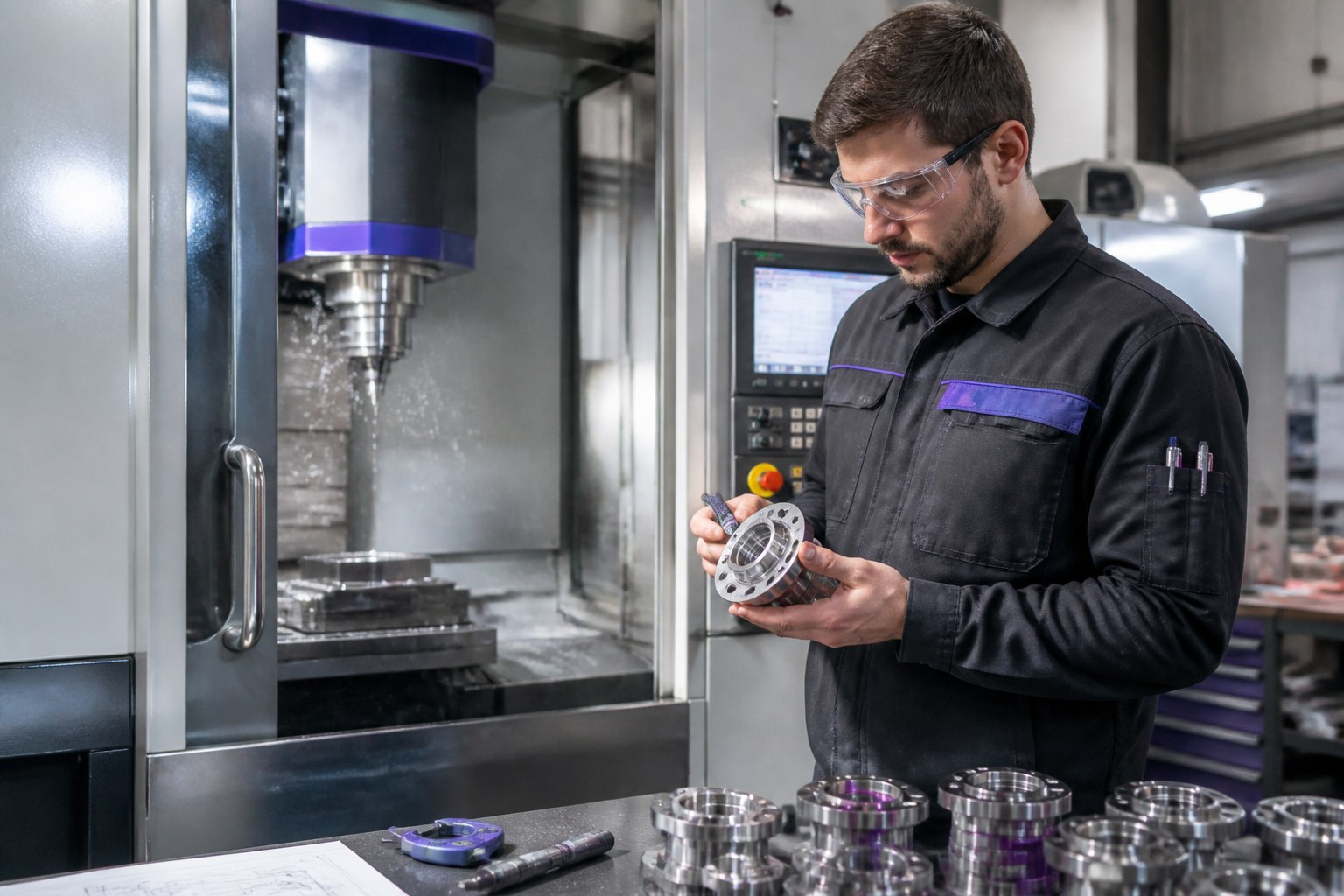
CNC machine operators set up, operate and monitor computer-controlled production equipment. Their work focuses on producing metal or other components accurately and repeatedly according to technical specifications. Typical activities include preparing materials, loading workpieces, selecting or checking tools, starting production cycles and observing the machining process.
During production, operators monitor machine performance and inspect components for visible defects or dimensional deviations. They follow technical instructions, workplace safety rules and quality procedures. Depending on the workplace and the candidate’s level of responsibility, the role also includes changing tools, correcting basic settings, recording production information and reporting faults to the responsible technical team.
Practical machine operation is distinct from broader technical authority. Programming complex machining processes, designing production methods, repairing advanced equipment or approving technical changes requires additional knowledge and responsibility. Candidates should therefore describe the tasks they actually performed instead of presenting every CNC-related activity as part of their own experience.
The daily work combines preparation, observation and documentation. Before a production cycle begins, the operator checks whether the correct material, workholding arrangement, tools and program are available for the assigned process. During the cycle, attention remains focused on machine sounds, tool condition, coolant or cutting-fluid use, chip formation and the quality of the components leaving the machine. These observations help identify irregularities before they affect a larger batch.
CNC operators also contribute to an orderly production flow. They keep work areas organised, separate accepted and rejected components, record relevant production information and communicate issues to the next responsible person. This work requires concentration over repeated cycles because a small setup or measurement error affects several components when it remains unnoticed. Your application should show how you handled this responsibility in previous workplaces.
Skills and Qualifications That Strengthen Your Profile
A strong candidate profile combines practical machining experience with evidence of technical understanding. Relevant backgrounds include vocational training or comparable practical experience in CNC machining, metalworking, machining technology or industrial mechanics. The appropriate background depends on the candidate’s actual training, work history and responsibilities.
Production experience is important because CNC work requires consistent processes, careful preparation and reliable attention to detail. Your profile should show which production environments you know, which materials you processed and whether you worked with individual components, small batches or repeated production processes.
Technical drawing knowledge, measuring equipment and quality-focused work strengthen an application. Candidates should also mention experience with material handling, tooling, workpiece positioning and basic process monitoring. Do not claim experience with a machine, control system or software package unless you have used it in practice.
Employers and reviewing teams need to understand the difference between exposure to a process and independent responsibility for it. If you supported a qualified operator during setup, describe that support accurately. If you independently prepared machines, changed tools or corrected basic offsets, state those responsibilities clearly. Specific descriptions create a more reliable picture than a broad job title alone.
Training records are useful when they explain what you learned and how the training relates to your practical work. Include relevant instruction in machining, industrial production, technical drawing, measurement, tooling or workplace safety. Practical experience remains important, so connect each certificate with the tasks you performed after completing the training.
CNC Knowledge, Quality Control and Workplace Safety
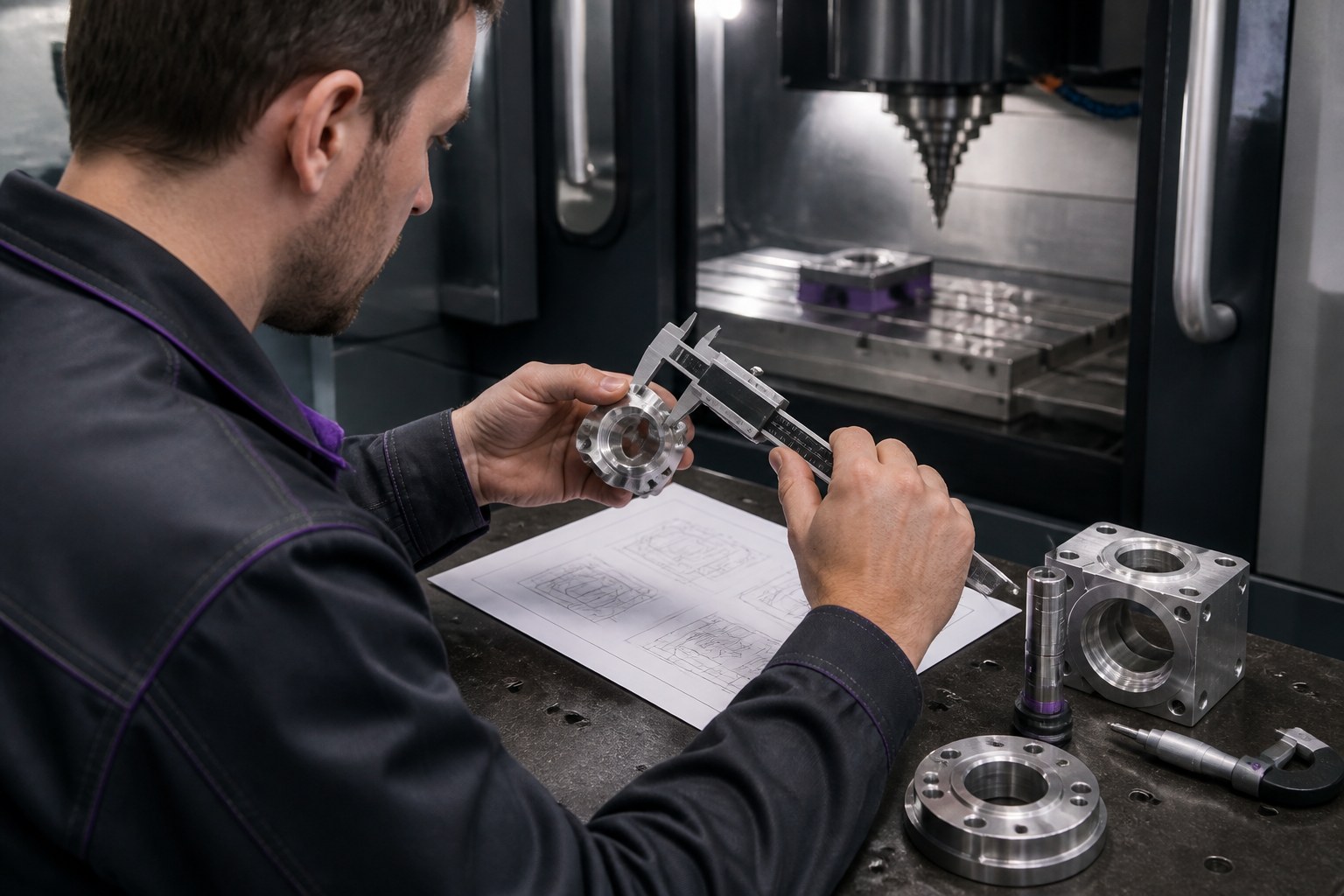
CNC machine operators work at the intersection of digital control and practical production. You should be able to explain how you read technical drawings, identify important dimensions and use measuring tools to check whether a finished component meets its specifications.
Relevant measuring equipment includes tools such as calipers or micrometers where these formed part of your previous work. Your application should clarify how you detected deviations, monitored tolerances and responded to tool wear or changes in component quality. A precise description is more useful than a general statement that you have “quality experience.”
Safety awareness is equally important. CNC work involves industrial machinery, rotating tools, metal components, cutting fluids and production areas with defined procedures. Describe the safety instructions you followed, the protective equipment you used and the way you handled abnormal machine conditions or production faults.
Reliable and repeatable work is central to this occupation. Employers need operators who follow documented processes, notice irregularities early and communicate technical problems clearly. Your profile should connect practical actions with results such as stable production quality, accurate measurements and orderly work processes.
Quality control begins before the first finished component is measured. Correct workpiece positioning, secure clamping, tool selection and a careful check of the first component support consistent results throughout the production cycle. If your previous role included first-piece inspection or regular in-process checks, explain the sequence you followed and the people to whom you reported the results.
Safety descriptions should remain practical rather than generic. State whether you worked with machine guards, lockout or shutdown procedures, protective eyewear, hearing protection, safety footwear or other workplace instructions that actually applied to your duties. Do not list equipment that you never used. Honest detail gives reviewers a clearer basis for assessing your readiness for industrial work in Germany.
German Language Skills and Communication at Work
German language ability forms part of your candidate profile for CNC work because communication takes place around machines, technical instructions and safety procedures. You need to understand relevant information, recognise technical terms and communicate observations about quality, tooling, materials or machine conditions.
Language is also relevant to shift handovers, production documentation and coordination with colleagues, supervisors, maintenance staff and quality personnel. The required communication ability depends on the actual work context and the duties you perform. This article does not assign one universal German language level to every CNC machine operator.
Document your language skills clearly. Use recognised level descriptions where available and distinguish German from other languages. If you have learned technical vocabulary, completed language training or used German in a practical work environment, explain this accurately without overstating your ability.
Technical communication involves more than everyday conversation. Operators need to understand dimensions, process instructions, warnings, machine messages and changes to production information. They also need to report when a component is outside tolerance, a tool is worn or a machine behaves unusually. These situations require clear communication because an incomplete report affects quality, safety and the work of other teams.
If your German is still developing, organise your learning around workplace situations. Study vocabulary for measurements, materials, tools, machine parts, faults and safety instructions. Keep certificates or course records with your other application documents, but present practical communication experience separately so that reviewers understand both your formal learning and your actual use of German.
What to Prepare Before Applying for CNC Work
Prepare your application as a professional record of your actual CNC experience. Start with a structured CV that lists your training, employment history, positions, dates and concrete tasks. A reviewer should understand the development of your experience without having to reconstruct it from vague descriptions.
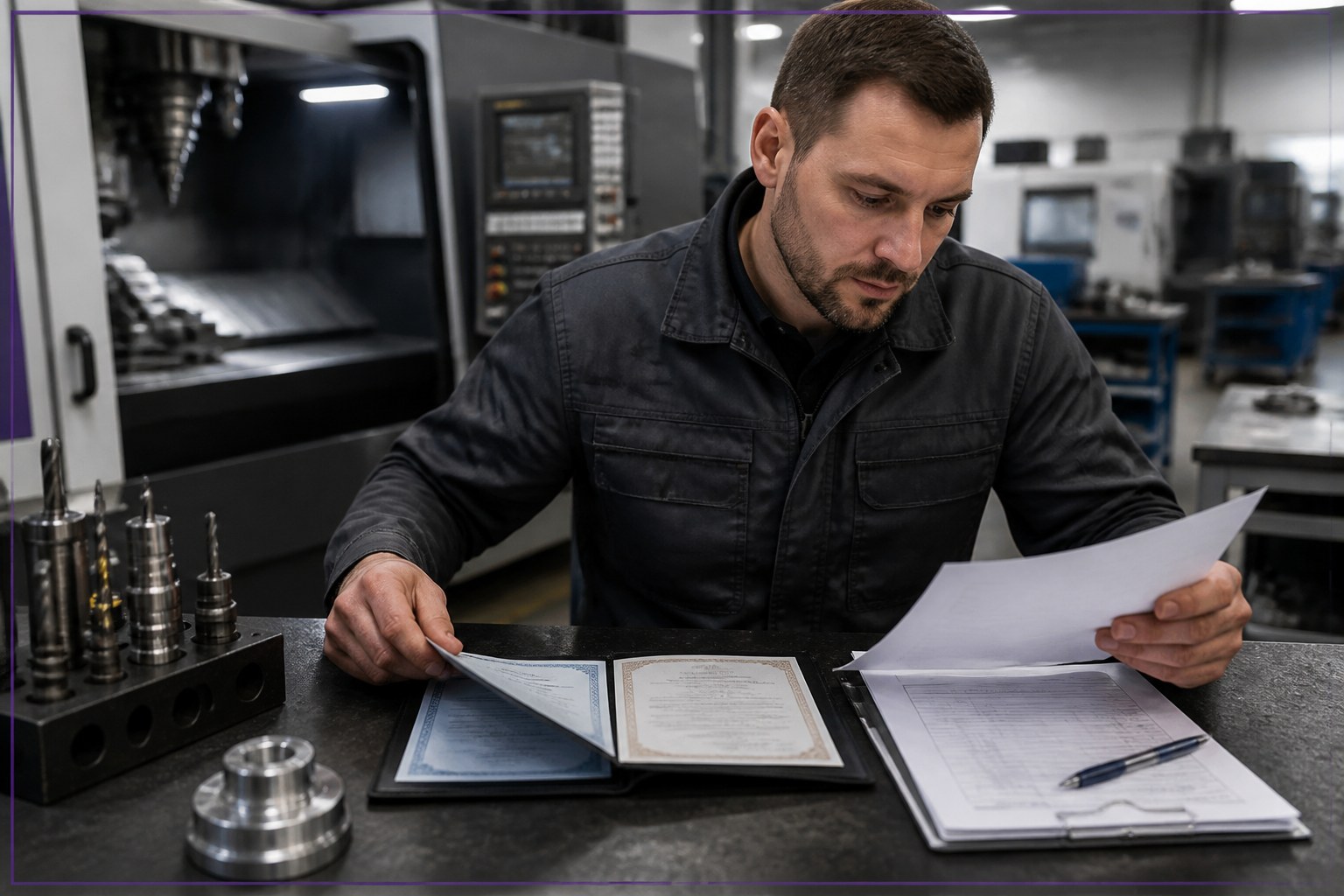
Collect vocational certificates, educational documents, employment references and relevant technical training records. Your documents should support the qualifications and experience described in your CV. If documents are not available, explain the situation rather than replacing them with unsupported claims.
Record the technical details of your previous work. Include machine types and control systems only when you used them yourself. Also list the materials you processed, component types, measuring equipment, technical drawings, tooling tasks, quality checks and safety-related duties that genuinely belong to your experience.
Language information should appear in a clear part of the CV. Relevant certificates or training records should be added when available. A concise, factual profile gives reviewers a better basis for assessing your suitability for CNC-related employment in Germany.
Check the consistency of your documents before submitting them. Job titles, employment dates and descriptions of responsibility should not contradict one another across the CV, certificates and references. If a reference uses a different job title from the one you use in your CV, add a short explanation of the actual function instead of silently changing the wording.
Prepare translations or explanatory information only where the relevant procedure requires them. Do not assume that every document needs the same treatment. Keep original documents available, use clear file names and organise digital copies in a logical order. Good document organisation reduces confusion when your qualifications and experience are reviewed.
Demonstrates precision, process awareness and safe work in an industrial environment
German language skills
Language level information, certificates and relevant technical communication experience
Shows how you understand instructions, safety information and workplace coordination
Application documents
Structured CV, certificates, employment references, technical training records and experience evidence
Provides documented support for the information in your candidate profile
Recognition of Foreign Qualifications
CNC machine operator work generally relates to a non-regulated vocational field. In a non-regulated occupation, formal German professional recognition is not required in the same way as for a regulated profession. This distinction concerns professional recognition and does not automatically remove the need to provide qualification evidence or satisfy separate requirements for working in Germany.
Recognition may still help document the comparability of an overseas vocational qualification. The competent authority examines whether the foreign qualification corresponds to the relevant German reference occupation and whether substantial differences exist. The result depends on the documents and the authority’s assessment.
When all required documents are complete, the competent authority generally examines the qualification within about three to four months. Possible results for non-regulated occupations include full recognition, partial recognition or no recognition. Where substantial differences exist, an adaptation qualification or another specified measure addresses those differences in cases where this route applies.
Candidates should keep recognition, employment and residence matters separate. A decision about professional equivalence does not itself describe every condition connected with employment or residence in Germany. Prepare complete documents and obtain information from the responsible official source for your individual situation.
The quality of the submitted evidence affects how clearly the authority can assess your professional history. Certificates should identify the training completed, while work references should describe the tasks, duration and level of responsibility. Where training documents do not fully explain your practical experience, detailed employment evidence provides important additional context.
Keep copies of applications, certificates, translations and official correspondence. If the authority requests further information, respond with documents that address the request directly. Recognition is a qualification assessment, not a replacement for an accurate CV. Your application should present the same professional history throughout the recognition process and the East Talent candidate review.
Documents for an Initial Candidate Application
For an initiative application, prepare a clear CV, vocational and educational certificates, employment references or other evidence of practical experience, language information and relevant technical certificates. Documents should be readable, consistent with the information in your CV and arranged so that your professional history is easy to follow.
East Talent does not present your profile for one preselected vacancy at this stage. Your information is reviewed for suitable CNC-related employment opportunities in Germany. This means that your documents should communicate your broader professional profile rather than being written for one named employer or one specific job.
Applicants must remain open to employment opportunities throughout Germany. Nationwide mobility is part of the candidate profile because suitable CNC-related opportunities are not limited to one preferred city or region.
A CV normally includes personal details, work experience, education, language skills and relevant abilities. Describe each position with the employer, job title, dates and main responsibilities. Important school, vocational or higher-education certificates may form part of the application documents. Translation requirements depend on the relevant procedure, so do not assume that one translation format applies in every case.
Your document set should also make your technical level easy to identify. A short skills section may list machine categories, control systems, materials, measuring tools, setup duties and quality tasks. Follow this list with evidence in the employment history. A skills list without supporting work details gives reviewers less information than a concise description connected to a specific position.
Use a professional email address and check every file for readability before uploading it. Scanned certificates should show all relevant pages, while the CV should remain easy to read on a screen. If you have several years of experience, prioritise the most relevant information without deleting important training or earlier roles that explain your professional development.
Working Conditions and Contract Points to Review
Before accepting a future CNC position, review the employment contract carefully. Important information includes the contracting parties, start date, any fixed-term arrangement, probationary period, workplace, duties, remuneration, working time, leave and notice periods.
Remuneration is normally stated as gross pay. The amount paid out as net pay differs because taxes and social-security contributions are deducted according to the individual situation. Do not treat a gross figure as the amount that will reach your bank account.
Collective agreements and works agreements may add provisions concerning pay, working time, leave or other employment conditions. Additional payments such as premiums or supplements depend on the specific employment relationship and applicable rules. Review these details in the actual contract before making a final decision.
CNC work also requires attention to the practical working environment. Ask for clear information about the workplace, duties, shift arrangements and responsibilities before accepting an offer. These details affect your daily routine and should match the experience presented in your candidate profile.
Shift work deserves particular attention because it affects transport, rest periods, family arrangements and daily planning. Clarify how shifts are organised, whether night or weekend work forms part of the role and how additional payments are described. Do not rely on informal explanations when the contract or accompanying documents contain the relevant terms.
The workplace also affects the practical value of the remuneration. Housing costs, deposits, transport and other living expenses influence the amount that remains available after relocation. Review the complete financial and practical situation before making a final decision, rather than comparing gross pay alone.
How to Present CNC Experience Clearly
Present your experience in a structured way that allows reviewers to assess your practical level. Begin with the machine types and control systems you actually used. Explain whether your responsibilities involved machine setup, workpiece positioning, tool changes, basic corrections, process monitoring or reporting technical problems.
Describe the materials and components you worked with, such as the categories of metal or other production materials relevant to your history. Add the measuring methods and equipment you used, the quality checks you performed and the way you documented or reported deviations.
Maintenance-related activities should be described precisely. Distinguish routine cleaning, tool replacement or basic operator checks from repairs and technical maintenance performed by qualified maintenance personnel. This distinction shows that you understand the limits of your responsibility.
Include shift experience, safety responsibilities and cooperation with quality or maintenance teams where these activities formed part of your work. Evidence-based descriptions help reviewers understand your practical competence more clearly than broad claims such as “experienced CNC specialist.”
Use action-based descriptions in your CV. For example, state that you prepared workpieces, checked first components with a micrometer, replaced worn tools or recorded dimensional results when those tasks were part of your work. This approach shows what you did without exaggerating your level of independence.
Mention the scale and rhythm of production where it helps explain your experience. Individual components, small batches and repeated production require different forms of preparation and monitoring. Also explain whether you worked from technical drawings, setup sheets, digital instructions or verbal instructions. These details help reviewers place your experience in a realistic production context.
Applying Through East Talent
Applicants submit an initiative profile for CNC-related employment in Germany rather than applying for one named employer or one specific vacancy. East Talent reviews professional qualifications, practical experience, German skills and the documents required for the candidate profile.
Suitable profiles may later be introduced to matching companies in Germany. This process depends on the information and evidence in your application, so accurate details about machines, controls, materials, quality work and safety responsibilities are essential.
Remain open to employment opportunities throughout Germany. A nationwide profile gives your professional experience a broader basis for consideration and avoids limiting the review to one preferred location.
Before submitting your profile, check that your CV, certificates and employment evidence tell the same professional story. Highlight the CNC tasks you performed independently, identify areas in which you worked under supervision and describe your German communication skills accurately. This preparation helps the review focus on your real qualifications rather than unclear or unsupported claims.
Keep your documents available after submitting the application. Additional clarification about a certificate, a machine type, an employment period or a recognition document requires consistent information. Update East Talent if your German skills, technical training or work experience changes, so that your candidate profile remains current.
Four short steps. A CV is optional and can be provided in your native language.
Step 1 of 4Profession
East Talent
International recruitment with proprietary software
East Talent combines international recruitment with structured digital processes for handling candidate profiles, attracting employers and evaluating job opportunities.