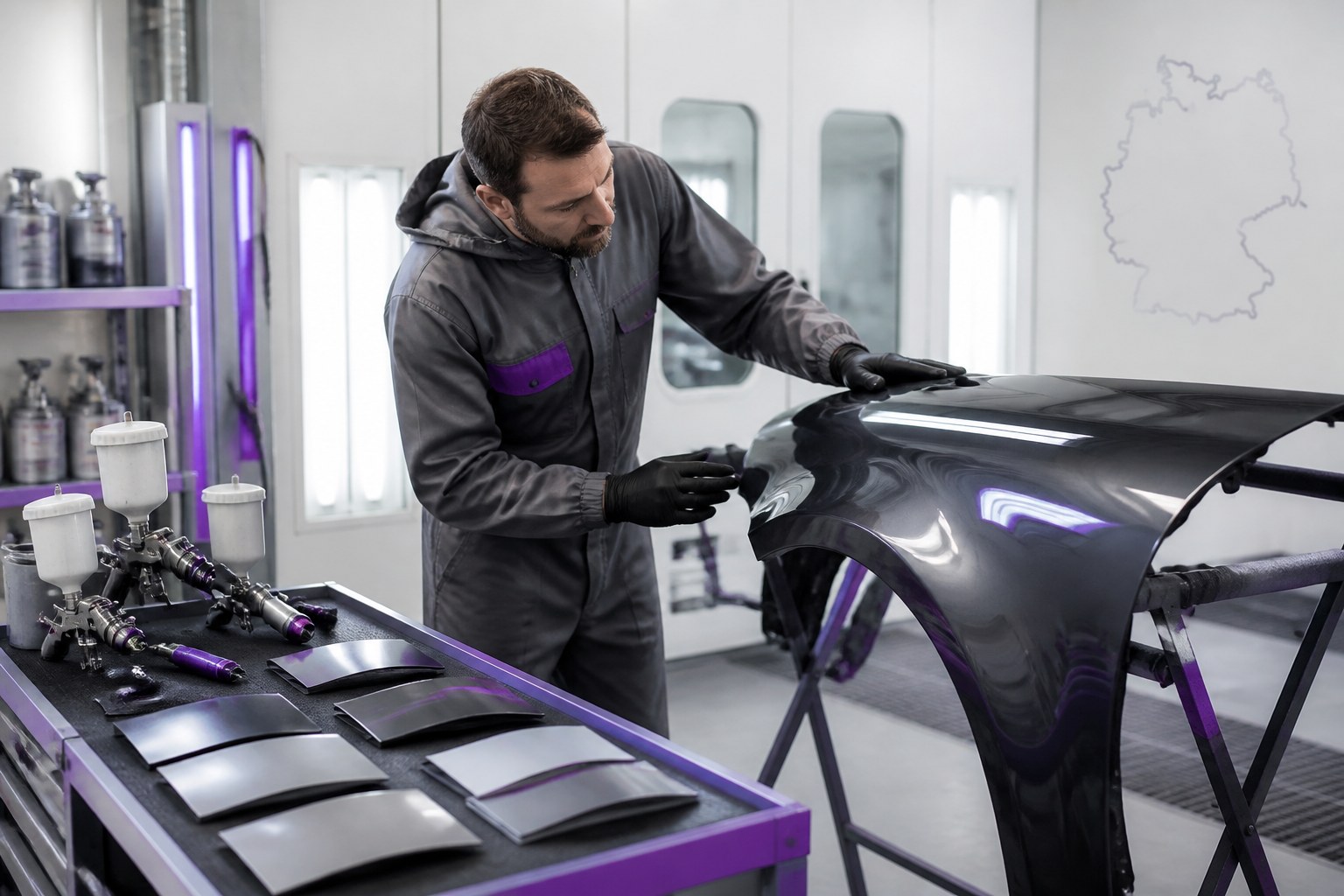
Automotive painters restore and protect vehicle surfaces. Their work begins with inspecting the vehicle and identifying damage, uneven surfaces, corrosion, old coatings or other defects. Careful preparation determines the quality of the finished result.
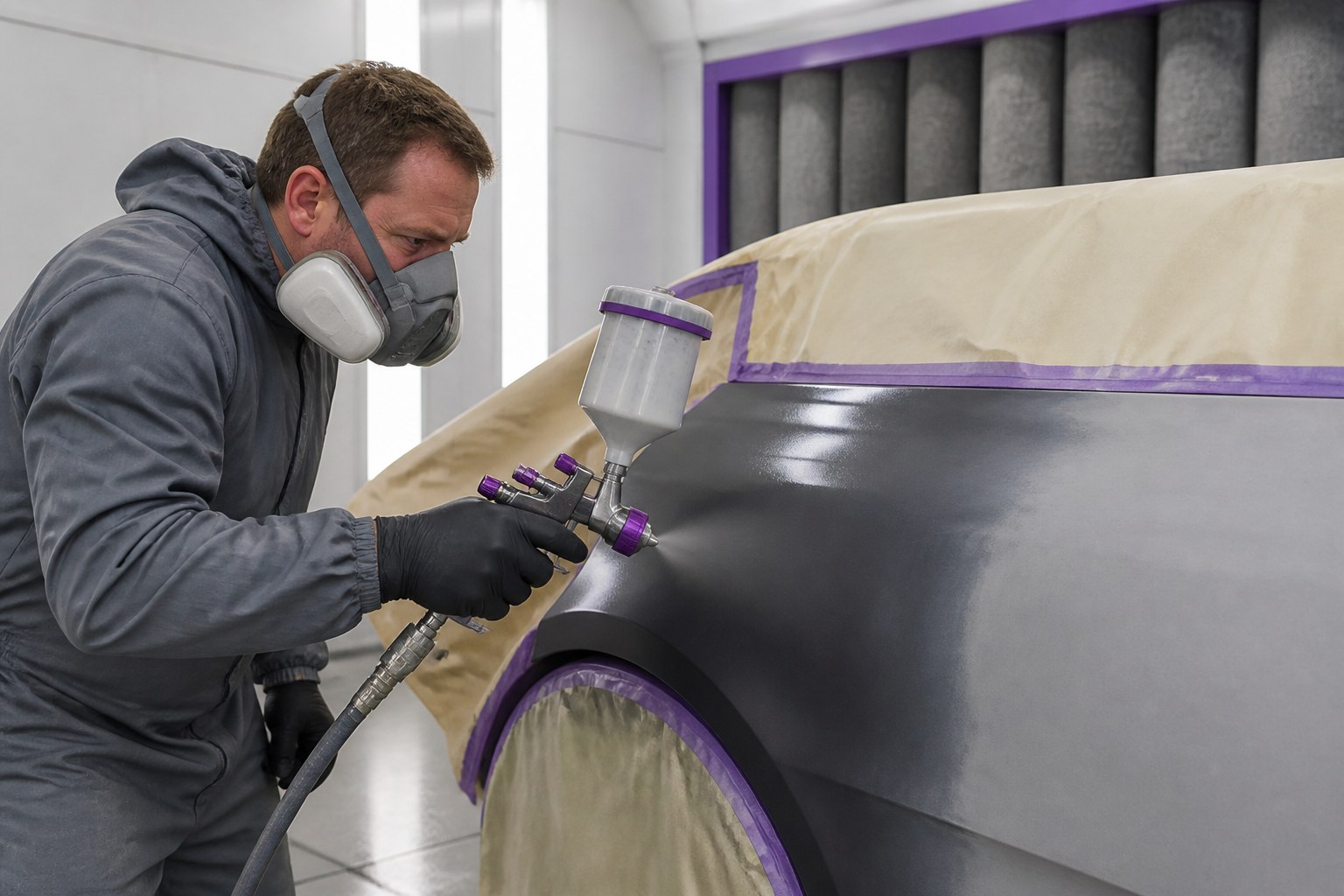
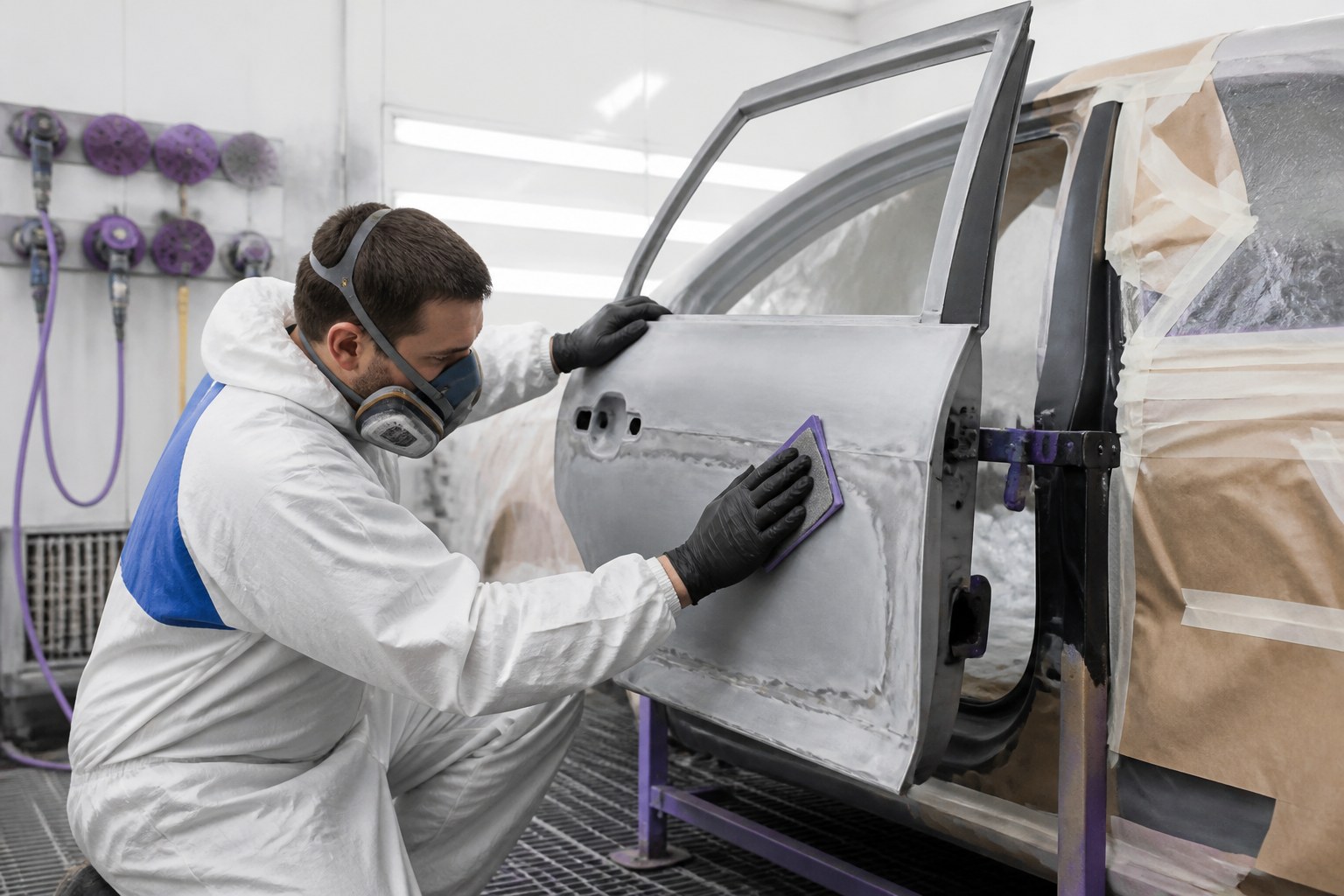
Typical tasks include cleaning and degreasing panels, removing damaged coating, sanding surfaces, filling imperfections, masking areas that must remain unpainted and preparing metal or previously painted parts. Automotive painters then apply primers, base coats, clear coats or other coating materials according to the relevant refinishing process.
The work also includes checking colour coverage, surface smoothness, gloss and transitions between repaired and undamaged areas. A finished panel must meet a consistent visual and technical standard. Candidates therefore need to present more than general workshop experience: their profile should show practical experience with vehicle preparation, refinishing and quality control.
Automotive painting takes place in a technical workshop environment. Protective clothing, respiratory protection, extraction systems, clean work areas and careful handling of materials form part of professional practice. Applicants should describe the processes they have used and the responsibilities they have handled instead of listing only a job title.
Which Qualifications and Experience Matter
A relevant vocational qualification provides a strong foundation for automotive painter employment. Comparable practical preparation and documented experience also matter when a candidate presents a professional profile for consideration. The important point is to make the relationship between training, workshop experience and actual refinishing work clear.
Relevant experience includes preparing vehicle bodies, repairing or refinishing painted surfaces, applying coating systems and inspecting the result. Experience with different repair situations gives a clearer picture of professional ability than a broad statement such as “worked in a car workshop.”
Candidates should explain the type of work they performed, the level of responsibility they held and the processes they used. Evidence includes training certificates, employment records, reference documents, photographs of completed work where appropriate and a precise description of previous duties.
There is no single fixed profile that describes every automotive painter. Professional preparation, practical experience, careful working methods and demonstrable quality form the central elements of a credible application. Present these elements consistently across the CV, certificates and professional history.
Skills Used in Automotive Refinishing
Surface preparation requires patience and technical accuracy. Automotive painters identify defects before coating work begins, select suitable preparation steps and create a stable surface for the next stage. Poor preparation remains visible in the finished coating, so this part of the process deserves specific attention in your professional profile.
Practical skills include working with metal and painted surfaces, sanding and filling, masking, applying primers and coatings, and controlling the appearance of repaired areas. Candidates should state which activities they performed themselves and which responsibilities belonged to other workshop roles.
Clean working methods are equally important. Dust, residue, incorrect preparation or uncontrolled material handling affects the final appearance. A candidate who explains how they maintained a clean work area and followed workshop procedures presents a more complete picture of their professional standards.
Safety also forms part of the occupation. Applicants should describe their experience with protective equipment, ventilation or extraction systems, material instructions and workplace safety procedures where this experience exists. Precision, consistency and responsible handling strengthen an automotive painter profile.
German Language Skills for Automotive Painter Applicants
German is part of your candidate profile because automotive painting involves continuous communication at the workplace. You need to understand instructions about preparation, materials, work sequences, quality checks and safety procedures. You also need to describe defects, clarify task details and report completed work.
Language skills therefore matter beyond everyday conversation. Technical terms for surfaces, coatings, tools, protective equipment and workshop procedures support accurate work. Clear communication reduces misunderstandings when several people contribute to vehicle preparation and refinishing.
Describe your German skills honestly in your CV. You may use a recognised Common European Framework of Reference description such as A2, B1, B2 or C1 when that classification reflects your knowledge. Also explain practical use, for example whether you have worked with German-speaking colleagues or understood technical instructions in German.
Do not separate language information from your professional evidence. A clear description of both your technical experience and your communication ability gives a more useful basis for assessing your occupational profile.
Recognition of Foreign Qualifications
Recognition of a foreign qualification and related to working in Germany requirements are separate matters. The recognition process examines whether an overseas professional qualification is equivalent to the relevant German reference occupation or whether substantial differences exist. This assessment belongs to the competent authority.
The result depends on the documents submitted and on the individual qualification history. For non-regulated occupations, possible results include full recognition, partial recognition or no recognition. Where substantial differences exist, an adjustment qualification or another recognised qualification measure addresses those differences in cases where this route applies.
Automotive painter work should not be presented as automatically covered by one universal recognition outcome. Candidates should identify the relevant reference occupation and obtain information for their own qualification. The recognition status does not by itself determine every related to working in Germany requirement.
Complete documentation supports the assessment. Certificates, records of training content, evidence of professional experience and translations where required help the competent authority understand your background. Whether a translation must be certified or formally prepared depends on the procedure.
Documents to Prepare for Your Application
Prepare a clear CV that presents your training, work experience, language skills and relevant technical abilities. Your employment history should identify employers, positions, periods of employment and the tasks you performed. Short, precise descriptions are more useful than unexplained job titles.
Organise vocational certificates, school or higher-education records where relevant, employment references and other professional documents. If your automotive painting experience comes from practical training rather than a formal qualification, explain that route clearly and support it with employment evidence.
Foreign-language certificates may require translation into German or English, depending on the procedure. Do not assume that every document needs a certified translation. Check the requirements of the relevant process before ordering formal translations.
Keep the information consistent. Dates, job titles, employers and responsibilities should match across your CV and supporting documents. A complete file helps reviewers understand your qualification and experience without reconstructing your professional history from incomplete information.
How to Present Automotive Painting Experience
Describe your experience through actual work steps. Instead of writing only “automotive painter,” explain whether you prepared damaged panels, removed old coatings, repaired imperfections, masked vehicle areas, applied primers or checked finished surfaces.
Mention the responsibilities you handled independently and the work completed together with other workshop professionals. This distinction shows the scope of your experience without overstating it. If you worked on particular vehicle components or repair situations, name them accurately.
Quality-related evidence is especially valuable. Explain how you checked colour coverage, surface smoothness, gloss, transitions and visible defects. If you used a defined workshop process or followed documented safety instructions, include that information in a concise form.
Avoid unsupported claims such as “expert in all coating systems.” A reliable application connects every statement to training, work history or a clearly described practical activity. Accuracy protects your credibility and makes later discussions about your profile more productive.
Automotive Painter Application Preparation
Preparation area
What to document
Why it matters for your application
Professional qualification
Vocational training or comparable practical preparation, supported by certificates or other records
Shows the foundation of your automotive refinishing knowledge and supports assessment of your professional profile
Automotive painting experience
Vehicle preparation, sanding, filling, masking, coating, refinishing and quality-control tasks
Makes your practical responsibilities and level of experience clear
German language skills
Your language information, including a CEFR description where accurate and relevant workplace communication experience
Shows your ability to understand instructions, safety information and technical discussions
Application documents
CV, training certificates, education records, employment evidence and translations where required by the procedure
Allows your qualifications, dates and professional history to be reviewed consistently
Working Conditions to Understand Before Employment
Before entering employment in Germany, understand the main terms of the employment contract. The document should identify the contracting parties, the start date, any fixed term, the probationary period, the workplace, the duties, pay, working time, vacation entitlement and notice periods.
Pay is normally stated as a gross amount. Net pay is the amount remaining after the applicable taxes and social insurance contributions. The two amounts are not identical, and the personal net amount depends on individual tax and social-insurance circumstances.
Additional payments such as premiums or supplements depend on the employment relationship and applicable rules. Collective agreements or works agreements may contain additional provisions on pay, working time or vacation. Read the terms carefully and request clarification about points that are unclear.
The workplace and duties deserve particular attention for automotive painters. Confirm which refinishing activities form part of the role, how working time is organised and which safety procedures apply. These details affect your daily work and should be understood before employment begins.
Working Time, Vacation and Social Insurance
German statutory rules provide a framework for working time and paid vacation. The statutory minimum vacation for a five-day working week is 20 working days per calendar year. An employment contract or collective agreement may provide a higher entitlement.
The statutory working-time rule generally limits daily working time to eight hours. An extension to as many as ten hours is possible within the documented averaging arrangement, provided the average remains within the statutory limit over the relevant period. This statutory maximum is not the same as the regular weekly hours agreed in an employment contract.
Taxes and social insurance contributions reduce the gross amount before payment of the net amount. Social insurance includes health, long-term care, pension, accident and unemployment insurance. For socially insured employment, registration with social insurance is generally handled through the employer.
Your actual net payment depends on your personal circumstances. Do not calculate it by simply subtracting a fixed percentage from a gross amount. Review the contractual gross pay and the relevant deductions separately.
Be Open to Automotive Painter Jobs Throughout Germany
The East Talent candidate route is designed for applicants who present themselves proactively for employment in their occupational group. You do not apply for a named vacancy or a named employer at this stage. Your professional profile is reviewed for suitable employment opportunities in Germany.
This approach requires openness to opportunities throughout Germany. Do not limit your profile to one preferred city or region if you want your qualifications and experience to be considered across the available market. State your professional strengths clearly and discuss practical mobility in an honest way.
Flexibility does not mean presenting an inaccurate profile. Your training, refinishing experience, German skills and preferred working conditions still need to be documented precisely. A broad geographic perspective and a specific professional profile work together.
Automotive painters should therefore prepare for employment in their occupational group rather than for one imagined workplace. Your application should explain what you do well, which processes you know and which documents support your background.
A Practical Preparation Checklist
Start by recording your professional history in chronological order. Include training, employers, positions, dates and the automotive painting tasks you performed. Separate preparation, coating, refinishing and quality-control activities so that your practical experience is easy to understand.
Next, organise certificates and supporting documents. Check that names, dates and qualification details are consistent. Add evidence of relevant work experience and prepare translations when the individual procedure requires them.
Describe your German skills accurately and connect them to workplace communication. Mention technical instructions, safety communication and cooperation with colleagues when those elements reflect your actual experience.
Consider whether information about recognition is relevant to your individual qualification. Recognition and related to working in Germany requirements are separate subjects, so do not assume that one decision answers every legal question. Obtain case-specific information where necessary.
Finally, review your CV for precision and remain open to employment opportunities throughout Germany. A complete automotive painter profile gives a clearer basis for consideration than a short application containing only a job title and a general statement of interest.
Apply for Automotive Painter Jobs in Germany
If automotive refinishing is your professional field, prepare your application around documented skills and practical experience. Present your training, vehicle preparation work, coating experience, quality checks, German skills and supporting documents in a consistent profile.
Applicants who are open to employment opportunities throughout Germany receive a broader basis for consideration within their occupational group. The application should not refer to a specific vacancy or employer. It should explain what you bring as an automotive painter and which evidence supports your professional background.
Four short steps. A CV is optional and can be provided in your native language.
Step 1 of 4Profession
East Talent
International recruitment with proprietary software
East Talent combines international recruitment with structured digital processes for handling candidate profiles, attracting employers and evaluating job opportunities.