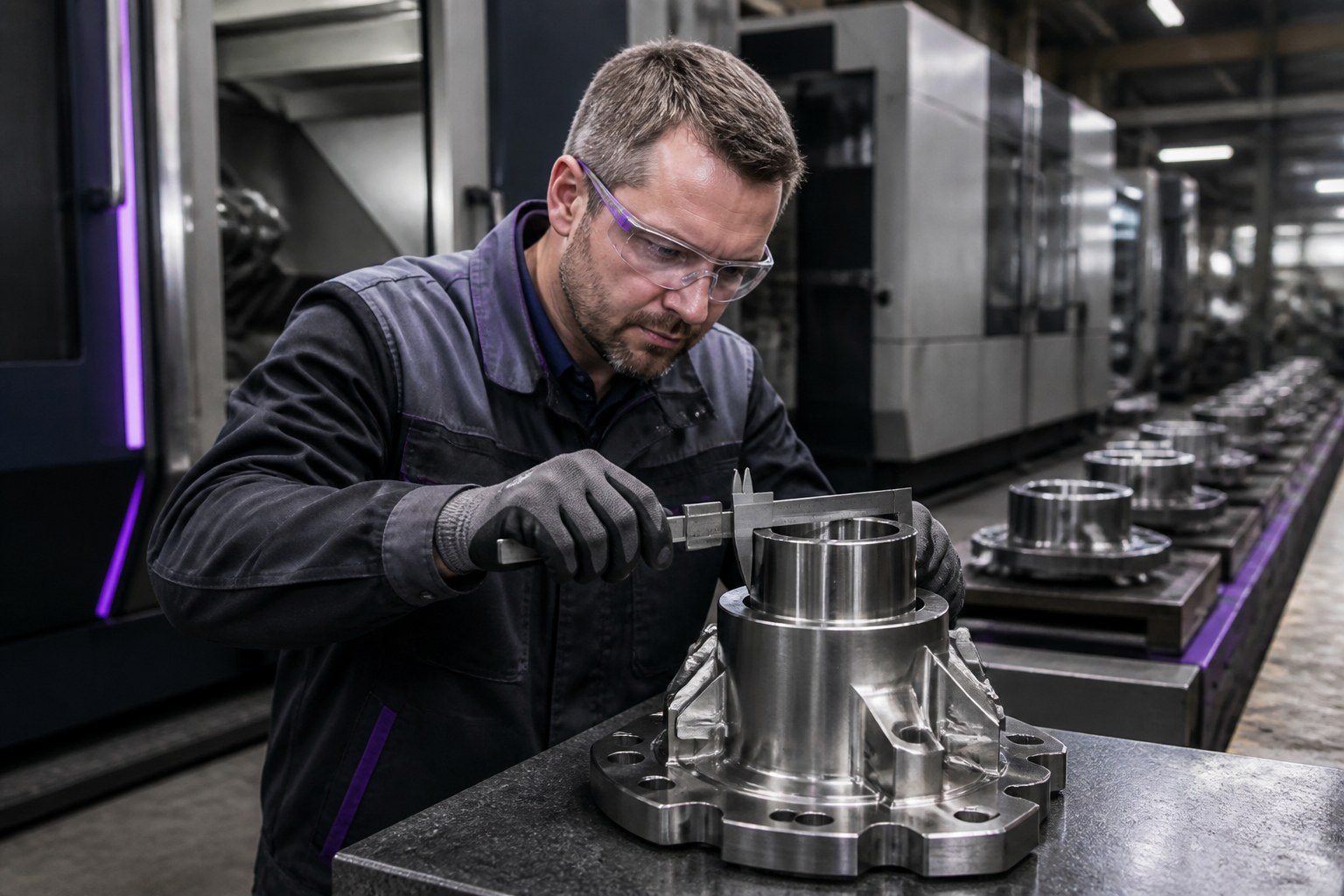
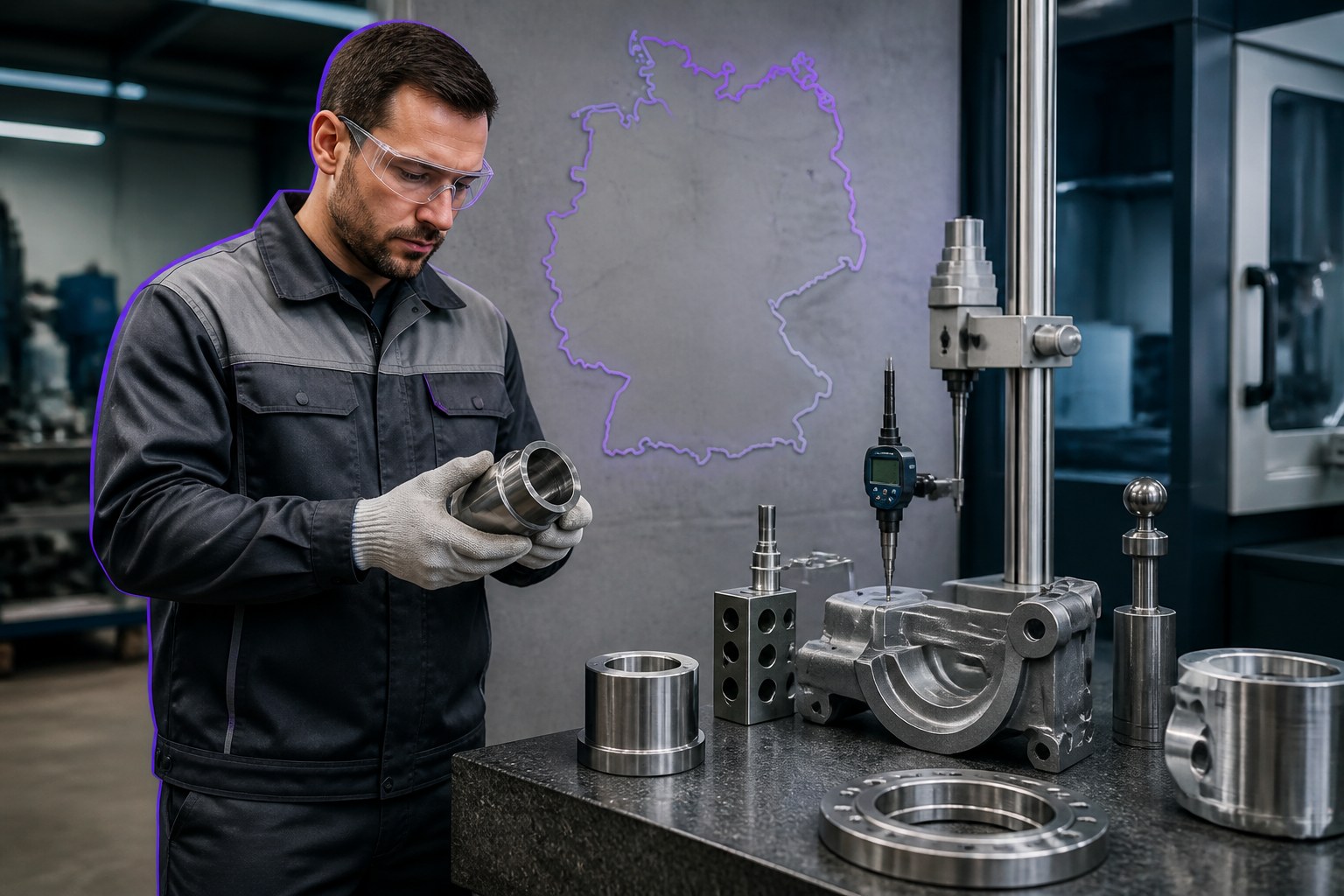
Metal quality inspectors examine components, parts and finished products to identify deviations from the required technical condition. Their work connects production, technical documentation and quality assurance. The purpose is to establish whether metal parts meet the information available for the production process and whether defects require further action.
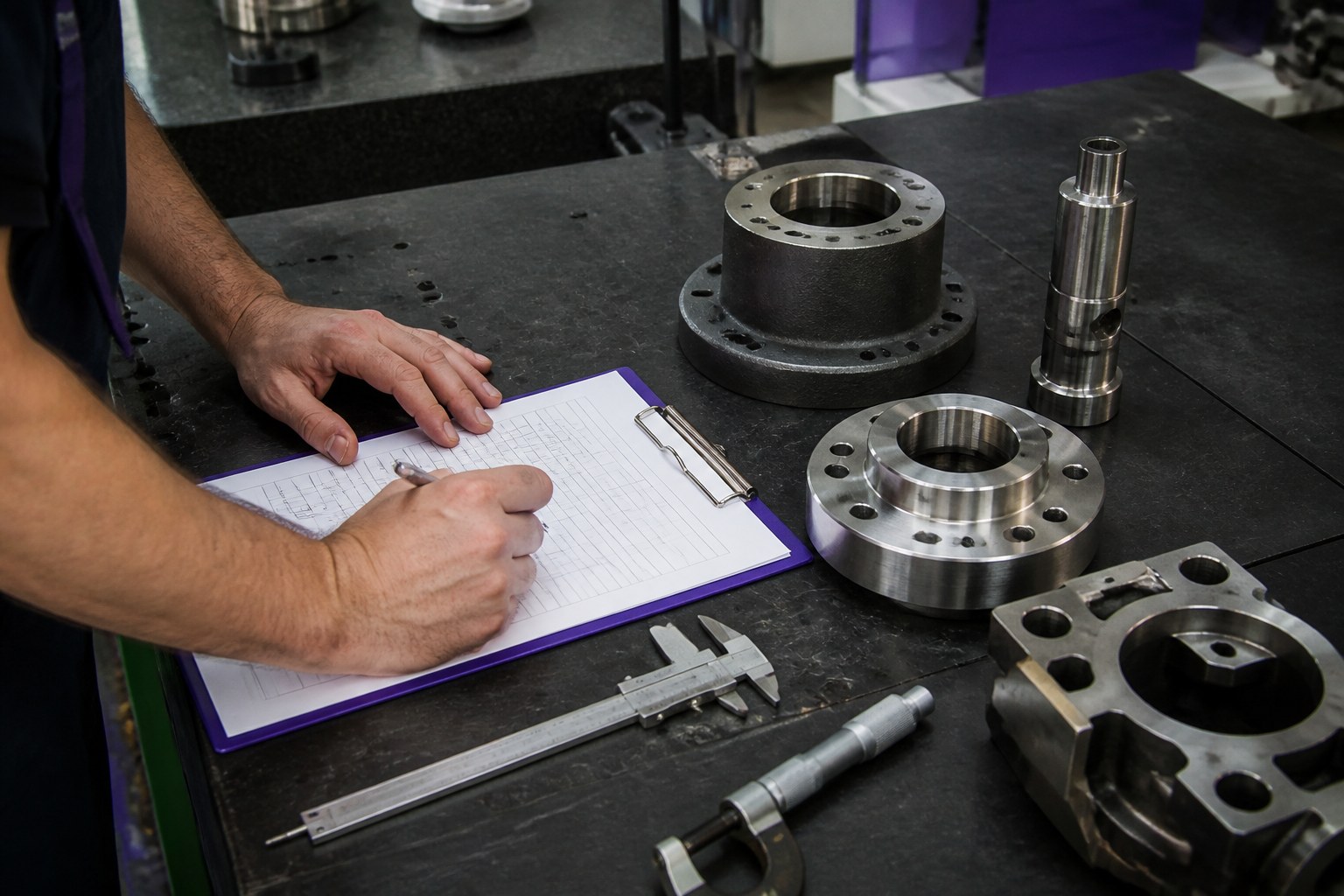
Typical responsibilities include visual inspection, checking dimensions, identifying surface defects and documenting inspection results. Depending on the candidate’s background and work environment, the role also involves comparing components with drawings, specifications or other production information. A quality inspector records findings accurately instead of relying on general impressions.
Inspection work begins with understanding what must be checked and which information defines an acceptable result. This information may relate to dimensions, visible condition, workmanship or production specifications. The inspector then performs the relevant checks, separates observations from assumptions and records the result in a traceable form.
When a deviation appears, the inspector communicates the finding to the relevant production or technical team. Clear reporting helps distinguish a minor issue from a problem that requires correction, additional inspection or a decision about the component. The exact inspection equipment, measurement methods and documentation system depend on the professional background and intended workplace.
Applicants with experience in metalworking, machining, fabrication, production control or industrial quality work should explain how their previous duties relate to inspection. The strongest profile is not defined by a job title alone. It is defined by reliable technical observation, precise documentation and responsible handling of quality-related information.
Your description should also show the type of products and components you know. Metal sheets, machined parts, welded assemblies and other manufactured components involve different inspection situations. Naming the production environment, the inspected items and the way results were recorded gives a clearer picture than using the general phrase “quality control” without explanation.
Core Qualifications and Professional Experience
Metal quality inspector applicants need a credible technical foundation. Relevant backgrounds include metalworking, mechanical production, machining, fabrication, industrial manufacturing and quality-focused production work. The appropriate qualification depends on the candidate’s education, practical experience and the type of inspection work previously performed.
Your CV should show the connection between your training and your inspection experience. State the occupational title, employer, period of employment and main responsibilities for each relevant position. Describe the parts, products or production processes you worked with without overstating your responsibilities.
Experience with accurate checking, technical documentation and production-related problem reporting strengthens the profile. Employers assessing a candidate’s professional background need to understand whether the applicant worked directly with components and production information or only performed general manual tasks.
Describe progression where it exists. For example, explain whether your work developed from production activities into checking, whether you became responsible for recording results or whether you supported the investigation of repeated defects. Such details connect practical experience with the responsibilities associated with quality inspection.
A mandatory certificate or university degree is not established for every metal quality inspector position. For this reason, applicants should present all relevant evidence rather than relying on one formal qualification. Training certificates, employment records, references and clearly described practical experience together provide a more complete professional profile.
The title used in your home country may not correspond exactly to the terminology used in Germany. The substance of your work therefore matters. Explain the tasks you actually performed, the level of responsibility you held and the technical information you used. Accurate detail supports the review of your qualification more effectively than a translated job title alone.
Technical Skills That Strengthen Your Profile
Accuracy is central to metal quality inspection. You need to observe components carefully, compare results with available technical information and distinguish acceptable conditions from visible or measurable deviations. A reliable inspector works systematically and records findings in a way that another person can understand.
Relevant abilities include visual checking, dimensional verification, recognition of material or production deviations and structured recording of results. If you have used measuring equipment, describe the equipment and the type of checking involved. Do not list tools that you have not used in practice.
Where technical drawings, specifications or production records formed part of your work, mention this clearly. The important point is not to create an impressive list of technical terms, but to show how you used information to decide what required inspection and how you documented the outcome.
Technical communication is equally important. Inspection findings must be passed to production or technical colleagues in a clear and factual form. Explain in your application how you reported defects, documented measurements, handled repeated deviations or supported corrective work.
The exact tools and methods depend on your professional background and the intended work environment. Applicants should therefore separate confirmed experience from general technical familiarity. A precise description of what you inspected and how you documented it gives your profile more value than a long list of unsupported technical terms.
Include examples of your working method without disclosing confidential information. State how you maintained consistency, checked results or escalated an unclear finding. This demonstrates professional judgement while keeping the focus on skills that transfer across different industrial environments.
German Skills and Workplace Communication
German language ability forms part of your candidate profile for metal quality inspector work. Inspection depends on understanding technical information, workplace instructions and communication about deviations. Language skills also affect the accuracy of written records and the clarity of discussions with production and technical teams.
State your German skills honestly and describe how you use German in technical situations. Relevant examples include reading work instructions, understanding information about components, recording findings, explaining a defect and discussing an inspection result with colleagues.
Do not claim a language level that you have not achieved. If you hold a language certificate, include the level and certificate details in your application. If your practical German experience is stronger than your formal documentation, describe the situations in which you use German at work.
Technical vocabulary deserves particular attention. Words relating to dimensions, surfaces, defects, tolerances, materials and corrective action appear in inspection communication. A candidate who explains how they learned and used this vocabulary gives a more useful picture of workplace readiness than a language level listed without context.
English or another language may support communication in some workplaces, but your application should make your German ability easy to assess. Technical accuracy and language clarity belong together because an incorrectly understood instruction affects both inspection results and production communication.
Language preparation should continue alongside professional preparation. Review technical terms used in your previous work and practise explaining an inspection result in clear German. This improves your ability to describe experience during professional discussions and to understand information connected with future duties.
Recognition of Foreign Qualifications
The legal classification of the occupation matters when you prepare your documents. Regulated professions require the relevant professional recognition or licence for professional practice. Many non-regulated occupations do not require formal German professional recognition for the work itself. Metal quality inspection is assessed through the candidate’s actual professional profile, and the exact classification depends on the qualification and intended activities.
The absence of a formal recognition requirement for a non-regulated occupation does not remove the importance of qualification evidence. related to working in Germany requirements and candidate assessment involve separate questions. You should therefore keep certificates, employment evidence and other documents that demonstrate your technical preparation.
A competent authority assesses submitted documents and compares a foreign qualification with the relevant German reference profession. The assessment considers whether the qualification is equivalent and whether substantial differences exist. The result is not guaranteed in advance. Depending on the case, the outcome involves full recognition, partial recognition or no recognition, and additional qualification measures address substantial differences in some situations.
Recognition review is a document-based process, so consistency matters. Names, dates, occupational titles and training periods should correspond across your CV, certificates and employment records. Differences require an explanation rather than an assumption that the reviewing authority will resolve them without supporting information.
Recognition is separate from the assessment of your suitability for metal quality inspector work. Prepare both your professional documents and a clear explanation of your practical inspection experience.
Keep original documents and accurate copies available. Where documents are incomplete, identify the gap early and collect alternative evidence of training or employment when such evidence exists. Do not present an unverified equivalence as an established result; describe your qualification factually and allow the responsible assessment to determine the outcome.
Documents to Prepare for Your Application
An initiative application should present your professional profile clearly because you are applying for employment in your occupational group rather than for a named vacancy. Prepare a structured CV with your personal details, education, employment history, language skills and relevant technical abilities.
Your work history should show each employer, position, period and main responsibility. For metal quality inspection, describe the components or products you checked, the type of inspection you performed, the way you recorded results and the teams with which you communicated.
Include education and training certificates, employment references or other evidence of experience, language information and relevant technical documents. Certificates related to metalworking, manufacturing, quality assurance or inspection deserve clear placement in the application.
Documents in another language may require translation in a specific procedure. Whether a certified or otherwise formalised translation is necessary depends on that procedure. Do not assume that every document requires certification, but prepare accurate translations when the responsible process requires them.
A strong application does not hide gaps or simplify complex experience. It explains the professional path in a way that allows the qualification, practical skills and German communication ability to be reviewed together.
Organise the files so that the most relevant information is easy to locate. Use consistent file names, check that scanned pages are readable and avoid submitting documents that contradict the information in your CV. If a document is unavailable, explain its status briefly and provide the available evidence instead of leaving an unexplained gap.
Your application should also distinguish evidence from self-assessment. A certificate proves completed training, an employment record supports work history and your written description explains the practical content of that work. These forms of information complement one another and create a more reliable candidate profile.
Applicant Preparation Overview for Metal Quality Inspector Work
Preparation area
What to present
Why it matters
Professional background
Technical inspection experience, metalworking knowledge, previous positions and documented responsibilities
Helps assess whether your experience matches metal quality inspection work
Technical abilities
Accuracy, component checking, deviation recognition, result recording and use of relevant technical information
Shows your ability to perform quality-focused tasks responsibly
Application documents
CV, certificates, employment evidence, language information and relevant supporting documents
Allows your qualification and experience to be reviewed clearly
German communication
An honest description of your German skills and experience with technical workplace communication
Supports communication about instructions, findings and quality issues
Mobility
Clear openness to employment opportunities throughout Germany
Matches the nationwide candidate focus and avoids restricting consideration to one location
Working Conditions and Professional Expectations
Metal quality inspection is precise and responsible work. You inspect physical components, handle technical information and document findings that affect production decisions. Concentration, consistency and attention to detail are therefore important professional expectations.
The work also involves cooperation with production or technical teams. An inspector must communicate deviations without changing or concealing the result. Professional reporting separates observed facts from assumptions and gives colleagues a reliable basis for further action.
Inspection duties involve repeated checking and sustained attention. The value of the work depends on consistent standards across components, shifts and production situations. A candidate should therefore describe methods used to maintain concentration, repeat measurements or verify an unusual result when those methods belong to their previous experience.
Attention to workplace safety and quality procedures belongs to the role. Follow the instructions and procedures that apply in the work environment and use equipment responsibly. The exact equipment, protective measures and inspection process depend on the intended workplace and your assigned duties.
Contractual details are established in the eventual employment relationship. A contract should identify matters such as the parties, start date, possible fixed term, probationary period, work location, duties, remuneration, working time, holiday entitlement and notice periods. Gross pay is different from net pay because taxes and social insurance contributions affect the amount paid out.
The physical environment also depends on the assigned duties. Inspection takes place in connection with manufactured metal components and production information, so applicants should be prepared to discuss their experience with industrial routines, protective equipment and cooperation with operational teams. Present only conditions you have actually experienced and avoid assuming that every workplace uses the same process.
How to Prepare for Opportunities Across Germany
East Talent’s candidate model is based on an initiative application for employment in your professional group. You do not apply at this stage for a specific vacancy or named employer. East Talent reviews your professional qualification, experience, German skills and relevant documents. Suitable profiles may later be introduced to appropriate companies in Germany.
This model requires openness to employment opportunities throughout Germany. Restricting your application to one city or region limits the range of opportunities for which your profile is considered. State your mobility clearly and avoid presenting a location preference as an absolute condition unless it is essential for your personal circumstances.
Your preparation should therefore focus on professional fit rather than on one employer. Explain the inspection tasks you have performed, the metalworking environment you know, the technical information you can interpret and the type of quality documentation you have produced.
A complete profile makes later professional discussions more efficient. It also gives you a clearer basis for evaluating duties, location, working time and other contractual details when an employment relationship is discussed.
Nationwide openness does not replace professional preferences, but it requires you to distinguish preferences from essential restrictions. If family responsibilities, health considerations or other circumstances affect mobility, state them accurately. A clear explanation supports realistic consideration of your profile.
Use the same professional description across your CV, application form and later discussions. Consistency makes it easier to assess your qualifications and prevents an isolated preference for a location from overshadowing your experience in metal inspection.
A Practical Checklist Before You Apply
Before submitting your application, check that your work history is accurate and easy to follow. Each relevant position should include the employer, job title, period of employment and responsibilities. Highlight direct inspection experience instead of describing only general production work.
Review your technical description. Mention component checking, dimensional verification, visual inspection, deviation recognition, documentation and communication only where these activities reflect your actual experience. Add information about relevant measuring equipment or technical documents when you have used them.
Prepare qualification certificates, employment evidence, language information and translations where a specific procedure requires them. Make sure names, dates and job titles are consistent across the CV and supporting documents.
Check whether your CV explains the products and production processes you know. A reviewer needs to distinguish experience with metal components from unrelated manual work. Include the type of parts, the inspection purpose and the records you produced whenever this information is available.
Finally, confirm that you are open to employment opportunities throughout Germany. Your application concerns your professional group, not a specific vacancy or employer, so nationwide mobility forms part of a complete candidate profile.
Before sending the application, remove unsupported claims and check every technical term. A shorter description based on real experience is more credible than an extensive list of equipment, standards or methods that you did not use. Keep a copy of the submitted documents so that you can refer to the same information in later discussions.
Next Steps for Applicants
Review your professional profile before applying: metalworking knowledge, inspection experience, technical accuracy, documentation skills, German communication and qualification evidence should form a consistent picture. Remove unsupported claims and explain practical experience in clear language.
Prepare one complete application package with your CV, certificates, employment evidence, language information and relevant technical documents. Keep copies of translations and make the responsibilities in each previous position easy to understand.
Use the preparation overview to identify missing information. If your CV names inspection work but does not explain the inspected components, add that detail. If you list German skills without a workplace example, describe how you read instructions, documented results or discussed deviations.
Four short steps. A CV is optional and can be provided in your native language.
Step 1 of 4Profession
East Talent
International recruitment with proprietary software
East Talent combines international recruitment with structured digital processes for handling candidate profiles, attracting employers and evaluating job opportunities.