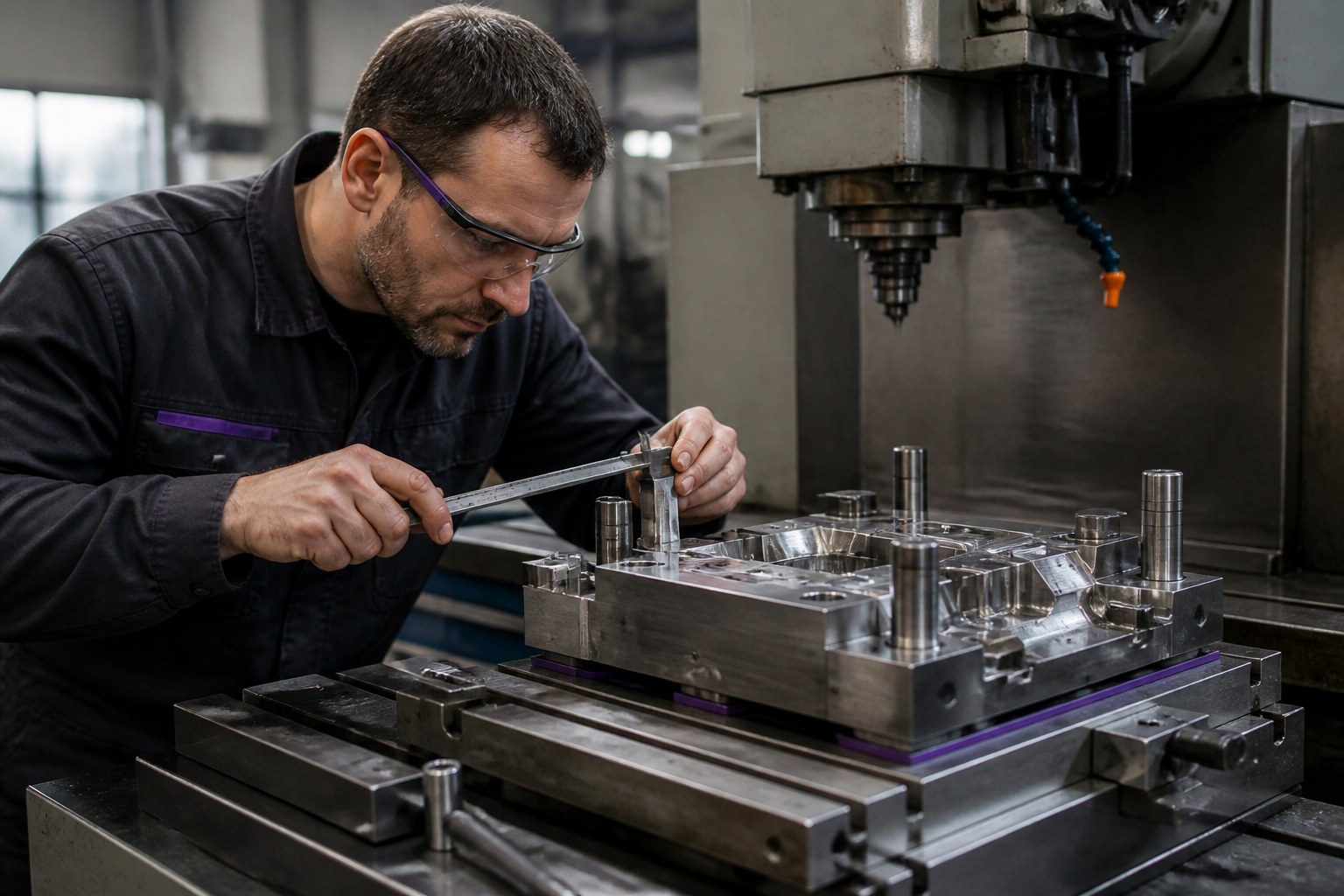
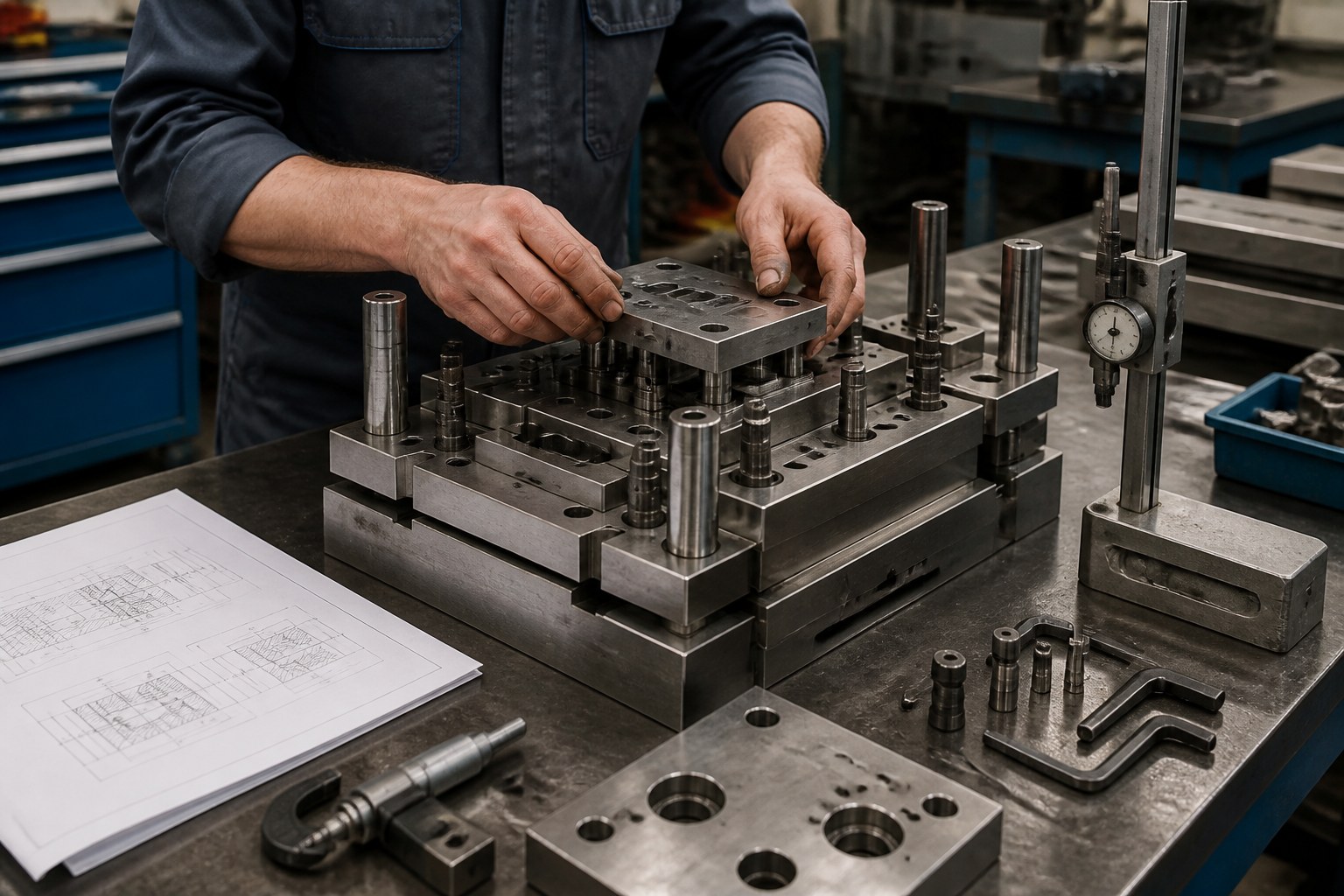
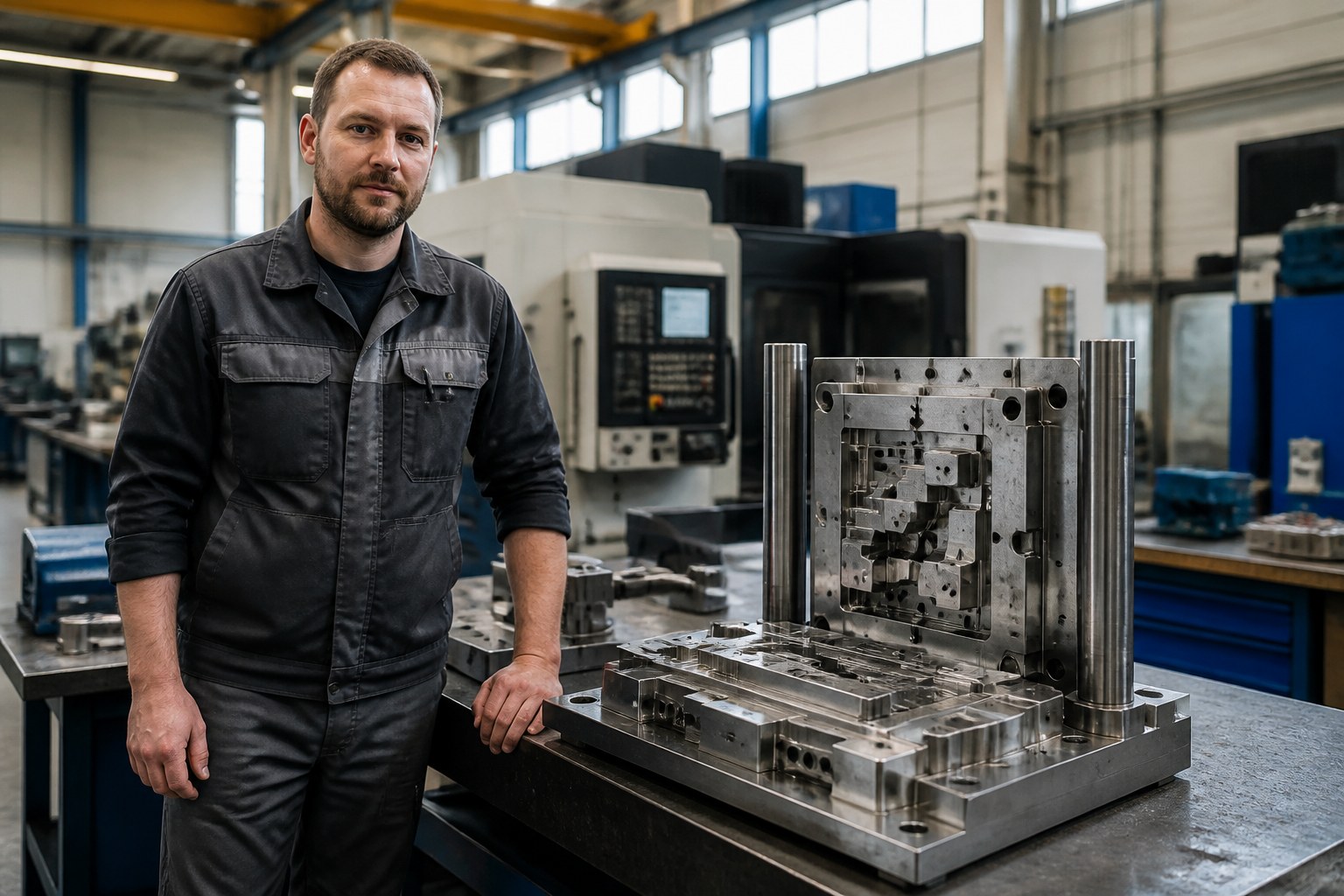
Toolmakers produce, assemble, adjust and maintain precision tools used in industrial manufacturing. Their work includes moulds, dies, fixtures, jigs and other components that guide or shape production processes. Accuracy, repeatability and careful inspection are central parts of the occupation.
Depending on the professional environment, toolmakers work with metal components, machining equipment and technical drawings. Typical activities include preparing materials, machining individual parts, fitting components, checking dimensions and correcting defects. Toolmakers also identify wear, damage or dimensional deviations and support maintenance when tools no longer meet the required quality.
Mould and die work requires particular attention to fit, surface quality and functional interaction between several components. Assembly often involves adjusting parts until the complete tool operates correctly. This work combines manual precision with machine-based production and requires a disciplined approach to measurement and quality control.
Toolmakers work closely with other technical teams in production. Clear communication about dimensions, defects, changes and work instructions helps prevent errors. A candidate profile therefore includes more than the ability to operate machinery: it also demonstrates careful technical judgment and reliable documentation of completed work.
Qualifications Relevant to Toolmaker Applications
A completed vocational qualification in toolmaking provides a strong foundation for applications. Comparable preparation in industrial mechanics, machining or another closely related technical field is also relevant when it is supported by practical experience. The important point is that your training and experience demonstrate competence in precision-oriented industrial work.
Your application should make the professional background easy to understand. State the qualification, training institution, completion date and main technical content. If your education followed a different national system, include the official name of the qualification and explain the practical skills covered.
Documented work experience strengthens your profile. List employers, positions, employment periods and core responsibilities. Describe the tools, moulds, dies, machines, materials or production processes you handled. Precise descriptions are more useful than broad statements such as “worked in manufacturing.”
Technical drawings, measuring methods, machine operation and precision fitting are important areas of preparation. Experience with inspection routines, dimensional checks and defect identification shows that you understand the quality requirements of toolmaking. Training records, employment references and other evidence should support the information in your CV.
Formal recognition and professional suitability are separate questions. A qualification document explains your training, while your employment record shows how you applied that training in practice. Present both elements clearly so that your professional profile is understandable before any further assessment takes place.
Technical Skills That Strengthen Your Profile
Toolmaker applications become stronger when they describe practical abilities in specific terms. Reading technical drawings is important because drawings communicate dimensions, tolerances, shapes and assembly relationships. Explain the types of drawings you have used and the way you applied them during machining or fitting.
Measuring equipment is another important part of the profile. Mention the instruments and methods you have used for dimensional inspection, provided they accurately reflect your experience. The purpose is not to list equipment for its own sake, but to show that you checked work systematically and recognized deviations.
Experience with conventional or computer-controlled machinery is relevant. Describe the machine functions you performed, such as preparation, setup, machining, adjustment or inspection. Do not present a machine type, software package or certificate as mandatory unless it genuinely forms part of your own background and the relevant professional process requires it.
Assembly and adjustment skills matter particularly in mould and die work. Explain how you fitted multi-part tools, corrected alignment problems or prepared components for reliable operation. Experience identifying defects also deserves attention: state whether you found dimensional errors, surface problems, wear or other issues during production or maintenance.
Quality-oriented work requires consistency. Employers and technical teams need toolmakers who follow instructions, record relevant results and protect the accuracy of the finished tool. Your CV and supporting documents should therefore connect each claimed skill with a real task, process or period of employment.
German Language Skills for Toolmaker Work
German is an important part of your candidate profile for toolmaker work in Germany. Toolmakers use technical instructions, safety information, quality requirements and workplace communication during daily production activities. Understanding this information supports accurate and safe work.
Your language profile should state the languages you speak and describe your German skills honestly. If you hold a language certificate, include the level and certificate details. The Common European Framework of Reference provides familiar categories such as A2, B1, B2 and C1 for describing language ability, but a fixed level is not established here as a universal requirement for every toolmaking opportunity.
Practical communication matters alongside formal certificates. Explain whether you have used German in technical training, industrial work or safety-related situations. Listening to instructions, asking precise questions and reporting a defect are all relevant workplace abilities.
Continue improving technical vocabulary before applying. Terms for dimensions, tolerances, materials, machine functions, tools, defects and safety procedures help you understand production communication more quickly. Your language development should complement, not replace, documented technical experience.
Recognition of Foreign Toolmaking Qualifications
Toolmaking is generally treated differently from a legally regulated profession. Regulated professions are legally protected, and professional practice requires the relevant recognition or professional licence. Non-regulated vocational professions are not protected in the same way, and work in such a profession does not automatically require formal German professional recognition.
This distinction does not settle every related to working in Germany qualification question. Requirements connected with residence and employment are separate from the question of whether the profession itself is regulated. Candidates must therefore keep professional recognition and immigration-related qualification requirements as two different subjects.
During an occupational recognition procedure, the responsible authority examines whether the foreign qualification corresponds to a German reference occupation and whether substantial differences exist. The result is not automatic. For a non-regulated profession, the outcome may be full recognition, partial recognition or no recognition.
Where substantial differences are identified, an adjustment qualification or another suitable qualification measure addresses those differences in the relevant circumstances. The responsible authority assesses the documents and the professional content submitted. Complete documentation makes the assessment more efficient and gives the authority a clearer basis for its decision.
Prepare qualification certificates, detailed training information and evidence of professional experience before beginning a procedure. Keep copies of all documents and ensure that names, dates and translations are consistent across your application materials.
Toolmaker Application Preparation Overview
Application area
What to prepare
Why it matters for your profile
Vocational qualification
Certificates and a clear description of training content in toolmaking, industrial mechanics, machining or a related field
Shows the technical foundation behind your application
Work experience
Employers, positions, dates, tasks and evidence such as references
Connects your skills with precision-oriented toolmaking work
German language skills
Language levels, certificates where available and practical technical communication experience
Shows your ability to understand instructions and communicate in production
Supporting documents
Education records, translated certificates where relevant and recognition documents if available
Provides evidence for application and qualification assessment
Documents to Prepare for Your Application
An initiative application for toolmaker employment should present a complete and readable professional profile. Start with a structured CV that shows your personal details, education, work experience, language skills and relevant technical abilities. Use clear dates and explain employment periods without unexplained gaps where additional information is useful.
Prepare vocational certificates and other evidence of technical education. Important school, college or university documents also belong in your file when they explain your professional preparation. If your qualification has already been assessed or recognized, include the available decision or supporting document.
Employment references and other evidence of experience help verify your practical background. These documents should support the positions and responsibilities stated in your CV. Where formal references are unavailable, organize other reliable evidence of employment and describe your duties precisely.
Include language evidence where available and relevant. State the language, level and certificate details in the CV, and distinguish certified knowledge from practical communication experience. Foreign-language certificates may require translation into German or English depending on the procedure. Whether a certified or otherwise formal translation is required depends on the specific process, so do not assume that one translation format applies everywhere.
A short professional summary at the beginning of the CV helps readers understand your profile quickly. Mention your qualification, years or periods of relevant experience, main toolmaking activities, technical strengths and German language skills. Avoid unsupported claims and do not add certificates, machines or responsibilities that you have not actually used.
Working Conditions to Review Before Employment
Before accepting employment in Germany, review the main terms of the employment contract carefully. The contract should identify the parties, the start date, any fixed-term status, the probationary period, the workplace, the duties, the pay, working time, holiday entitlement and notice periods.
The workplace and duties deserve particular attention for toolmakers. Confirm that the described work matches your technical profile, especially where the role includes machining, mould and die assembly, maintenance, inspection or quality-related tasks. A clear description helps you understand how your experience fits the planned work.
Pay is normally stated as a gross amount. Gross pay is not the same as the amount transferred to your bank account. Taxes and social insurance contributions are deducted according to your personal circumstances, and the remaining net amount is lower than the agreed gross amount.
Social insurance in Germany includes health, long-term care, pension, accident and unemployment insurance. In social-insurance-covered employment, registration is generally handled through the employer. The precise deductions depend on the individual employment and personal situation.
Working time and holiday entitlement also affect the employment conditions. The statutory minimum holiday is 24 working days under a six-day week, which corresponds to 20 working days under a five-day week. A contract or collective agreement provides a higher entitlement where applicable. The statutory daily working-time rules do not automatically equal the regular weekly hours stated in a contract.
Read the contract before signing and ask for clarification about unfamiliar terms. Pay attention to overtime arrangements, shift work, allowances, temporary status, the location of the workplace and the duties attached to the toolmaking position. These details determine your actual working conditions.
Applying for Toolmaker Jobs Across Germany
East Talent’s candidate application is an initiative application for employment opportunities in the toolmaking field. You are not applying for one named vacancy or one specific employer at this stage. Your profile is assessed according to your qualification, experience, German skills and supporting documents before suitable companies in Germany are considered.
Remain open to suitable employment opportunities throughout Germany. Limiting your application to one preferred location reduces the range of opportunities that match your technical background. Geographic flexibility is particularly relevant when your skills fit specialist production environments in different parts of the country.
Present your professional history in a way that supports a clear assessment. For every relevant position, state the employer, job title, dates and main tasks. Add the machinery, machining processes, materials, measuring methods and tool types you actually used. Explain whether your work focused on production, assembly, maintenance, repair, inspection or several of these areas.
Your application should also show the connection between training and practical work. Put vocational qualifications near the education section, then demonstrate how the qualification was used in employment. Add German language skills and other languages in a separate, easy-to-find section.
Before submitting documents, check that names, dates and job titles are consistent. Use a professional file format, readable headings and concise descriptions. An English CV provides useful information when English is the appropriate application language; German documents and German technical terminology support communication in the German working environment.
Avoid presenting yourself as a general factory worker when your experience is specifically related to toolmaking. Precision machining, mould and die work, technical drawing, measurement, fitting and quality control distinguish your profile. A focused application makes these qualifications easier to evaluate.
A Practical Preparation Checklist
Begin by defining your professional profile. Identify the toolmaking activities that represent your strongest experience, such as precision machining, mould and die work, tool assembly, maintenance, measurement or defect identification. This profile guides the way you organize your documents and describe your experience.
Next, collect evidence of training and employment. Gather vocational certificates, education records, references and other documents that confirm your qualifications. Compare the dates and job titles in these documents with the information in your CV.
Prepare a clear CV in English or German as appropriate. Include employers, positions, dates, responsibilities, technical processes, machinery, language skills and relevant qualifications. Write task descriptions that show what you did rather than relying on general labels.
Organize translations where they are relevant to the procedure. Keep the original certificates together with the translated versions and record which document each translation represents. Do not assume that every document requires the same form of translation or certification.
Document your German skills honestly and continue building technical vocabulary. Prepare to discuss technical drawings, measuring methods, production quality, safety information and toolmaking tasks in a workplace context.
Finally, review employment terms carefully before employment begins. Check the parties to the contract, start date, workplace, duties, gross pay, working time, holiday entitlement, fixed-term status, probationary period and notice periods. Keep your geographic options open across Germany so that your application reflects the full range of suitable opportunities.
Four short steps. A CV is optional and can be provided in your native language.
Step 1 of 4Profession
East Talent
International recruitment with proprietary software
East Talent combines international recruitment with structured digital processes for handling candidate profiles, attracting employers and evaluating job opportunities.