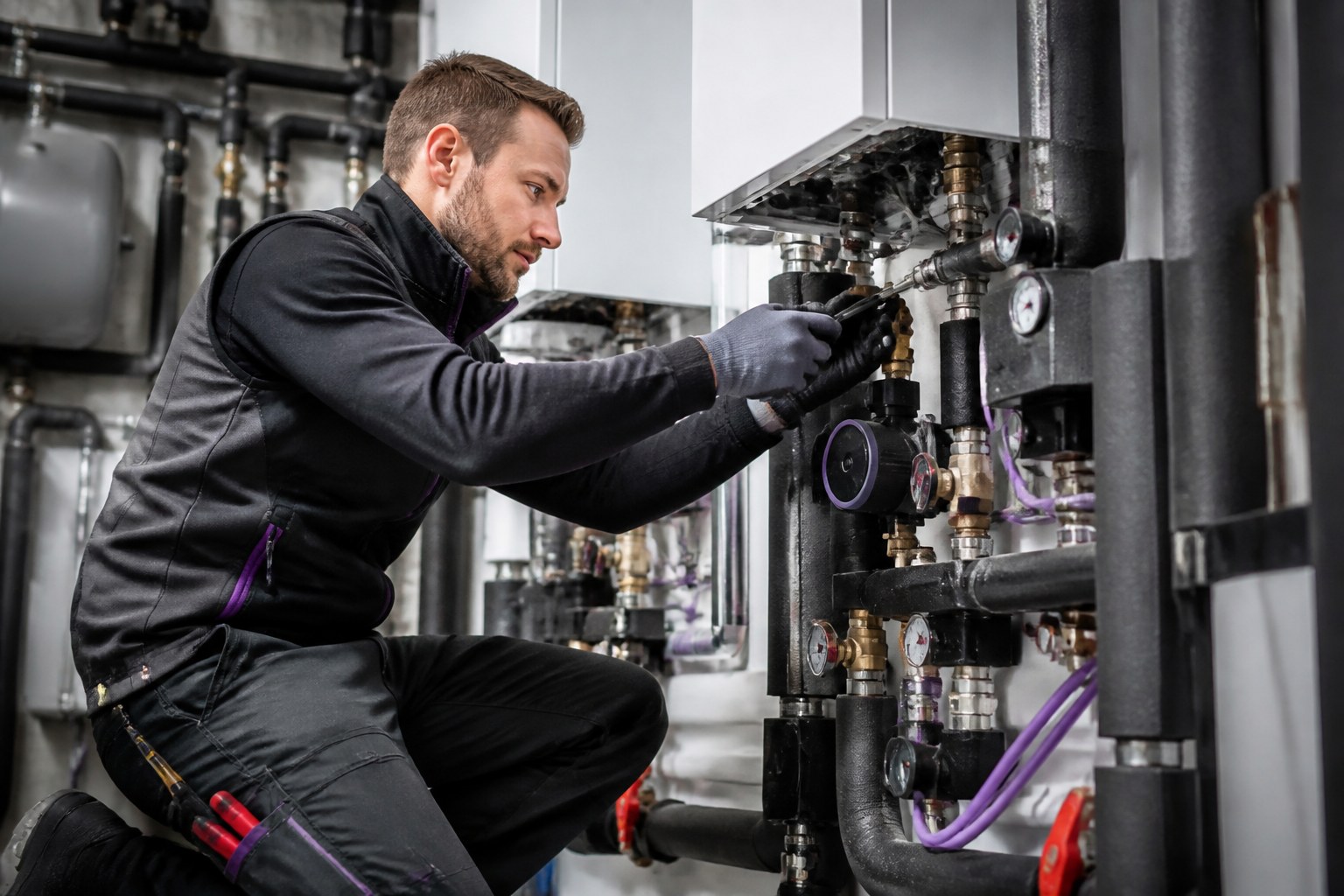
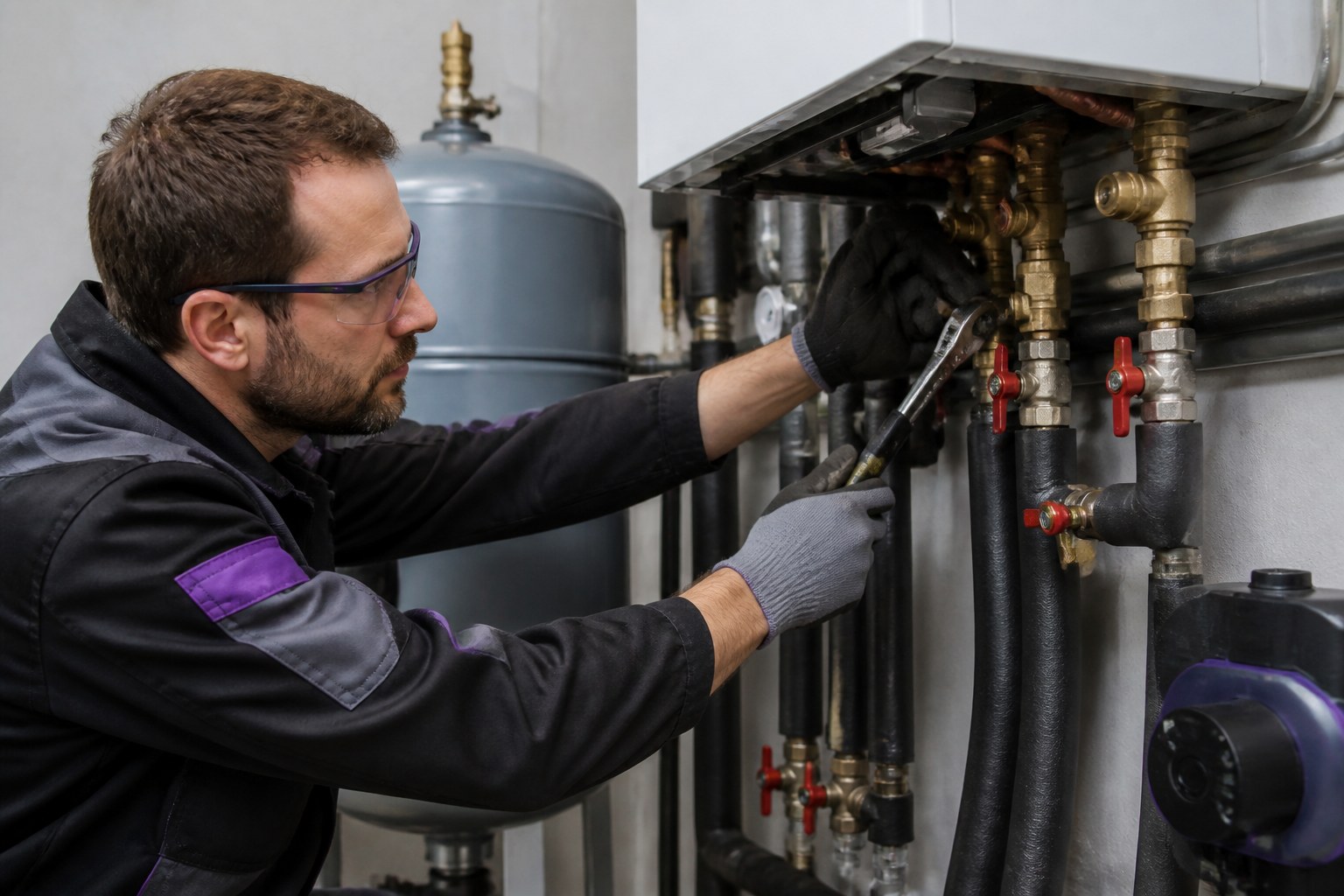
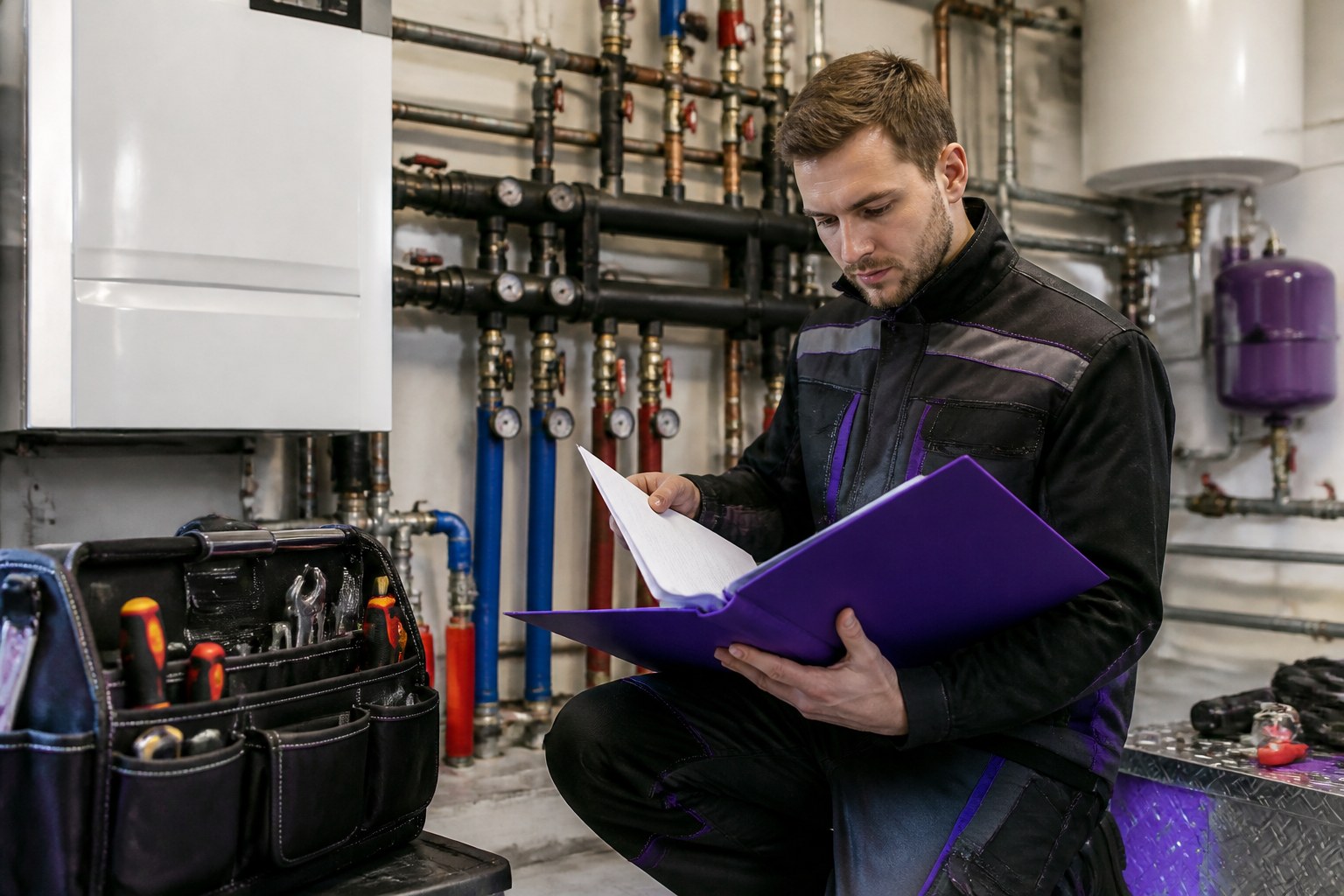
Heating installers work with the systems that provide heat and hot water in residential, commercial and technical buildings. Their work includes installing heating units, connecting pipes and fittings, checking valves and controls, maintaining equipment and repairing faults. Depending on the working environment, the role also involves inspecting existing installations and replacing worn or damaged components.
The work combines practical construction skills with technical understanding. A heating installer reads technical information, measures and connects components, uses professional tools and checks whether a system operates safely and correctly. Careful preparation matters because an incorrect connection affects system performance, safety and later maintenance.
Heating installation also requires coordination with other technical trades. Installers work around building structures, electrical components, water connections and ventilation systems. The ability to follow a planned work sequence helps prevent damaged components, unnecessary delays and repeated work. Clean preparation, accurate measurements and orderly storage of materials support both safety and efficiency.
Applicants interested in heating installer jobs in Germany should present themselves as qualified technical workers rather than as general construction labourers. Your profile should show the heating systems and installation tasks you have handled, the type of maintenance or repair work you have completed and the environments in which you have worked.
Your description should distinguish between work you performed independently and work completed under supervision. This distinction makes your practical level easier to understand. Mention whether your experience involved new installations, modernisation of existing systems, scheduled maintenance, emergency repairs or technical inspections.
East Talent's candidate process concerns employment in your professional group, not a named vacancy or a specific city. You therefore need to remain open to opportunities throughout Germany. Your technical background, experience, German skills and documents form the basis for assessing your profile and identifying suitable employment possibilities.
Skills and Experience Relevant to Heating Installer Jobs
A strong heating installer profile normally starts with completed vocational training or a comparable practical qualification. The relevant background depends on the training system in your country and the work you have actually performed. Certificates should be accompanied by a clear description of your professional responsibilities so that your technical level is understandable.
Hands-on experience with heating installation and maintenance is particularly relevant. Describe the systems, components and tasks you know instead of using only a broad job title. Useful details include installing heating units, connecting and insulating pipes, fitting valves, checking controls, carrying out maintenance and locating faults in existing systems.
Technical understanding supports every part of the work. Heating installers need to follow installation plans and technical instructions, understand how components work together and identify irregular operation. Fault diagnosis requires a structured approach: observing the problem, checking relevant components, determining the likely cause and carrying out or documenting the required repair.
Careful work is essential in a technical installation environment. Measurements, connections, sealing, insulation and system checks must be performed accurately. Applicants should also explain how they follow workplace safety requirements, use protective equipment and keep the working area organised.
Experience with tools and materials gives additional information about your professional level. State which tools you used for measuring, cutting, fastening, sealing, testing or adjustment when this information is accurate. Also describe your experience with different pipe materials, fittings, insulation methods or control components without claiming knowledge that your work history does not support.
Your profile becomes more useful when it separates installation, maintenance and repair experience. State the equipment and materials you handled, the size or type of projects where this information is available and the responsibilities you performed personally. Do not claim qualifications or technical authorisations that you do not hold.
A clear account of difficult tasks strengthens the description of your experience. For example, explain how you located a fault, replaced a component, tested a connection or documented a maintenance result. These details show practical judgement more effectively than a list of general qualities such as reliability or technical interest.
How Foreign Qualifications Are Assessed
Heating installation work must be considered within the distinction between regulated and non-regulated professions. A regulated profession is legally protected and requires the relevant professional recognition or licence for the activity. Non-regulated professions are not protected in the same way. The available facts do not classify every heating installer role under one uniform legal category, so applicants should not assume that one recognition rule applies to every position or activity.
Where recognition of a foreign qualification is pursued, the responsible authority compares the qualification with a corresponding German reference profession. The assessment examines whether the training is equivalent or whether substantial differences exist. The result for a non-regulated profession may be full recognition, partial recognition or no recognition.
The comparison focuses on the content and level of training rather than on the job title alone. Training duration, subjects covered, practical elements and documented professional experience help the responsible authority understand the qualification. A precise description of the systems and tasks you handled gives the authority more useful information than a broad statement that you worked in building services.
If substantial differences are identified, an adaptation qualification or another recognised qualification measure addresses those differences in the relevant cases. For regulated professions, additional requirements for professional access may apply. Recognition and employment-related requirements are separate matters: a recognition result does not by itself establish every condition for employment or residence in Germany.
Complete documentation is important for the assessment. Training certificates, examination records, evidence of professional experience and other requested documents help the responsible authority understand your qualification. If documents are incomplete, the authority may need further information before it can assess the professional background.
Applicants should therefore prepare a consistent record of training and employment. Use the same job titles, dates and descriptions across your CV, certificates and application information. If a qualification document is not in German or English, a translation may be relevant to the procedure. Whether a certified or otherwise formal translation is required depends on the specific procedure and must not be assumed universally.
Keep copies of submitted documents and record which versions were translated. If your name appears differently on certificates and identity documents, explain the difference with appropriate supporting information. Consistency reduces confusion during the review and helps ensure that your professional history is understood as one continuous profile.
German Skills for Heating Installation Work
German skills are part of your candidate profile because heating installation involves technical instructions, workplace communication and safety information. You need to understand what colleagues and supervisors communicate about installation steps, materials, system faults and work sequences. Communication with customers also requires clear explanations of work carried out, maintenance findings and practical next steps.
Written communication matters as well. Heating installers may need to record completed tasks, maintenance observations, identified faults or materials used. Accurate documentation helps other workers understand the condition of a system and supports orderly follow-up work.
Applicants should state their German skills honestly and document them using the Common European Framework of Reference for Languages where a level is available, such as A2, B1, B2 or C1. Do not present an invented mandatory language level for the occupational group. The useful information is your actual ability to understand technical communication, speak about work, read relevant information and document tasks.
Language preparation should focus on the vocabulary of heating installation. This includes names for pipes, fittings, valves, tools, heating units, controls, measurements, faults and safety instructions. Combining general German study with technical terminology makes your professional experience easier to assess and supports communication in a German workplace.
Listening practice is particularly important for practical work. You should understand short instructions given in a workshop, plant room or building site and recognise warnings connected with tools, hot surfaces, pressure, materials and unfinished connections. Speaking practice should cover how you describe a fault, request a component, report completed work and ask for clarification.
Do not describe language skills only with a certificate. Explain what you can do in a professional setting. A candidate who lists a language level and also describes technical communication abilities provides a more useful picture of workplace readiness.
Documents to Prepare Before Applying
A complete application profile gives a clear view of your technical background. Prepare a structured CV that lists your personal details, education, employment history, language skills and relevant technical abilities. Your employment history should identify employers, positions, dates and responsibilities rather than presenting only a sequence of job titles.
Describe heating-related duties in specific terms. State whether you installed, connected, tested, maintained or repaired systems. Include the types of components and tools you used when this information is accurate. If you performed fault diagnosis, explain the systems or faults you handled. This detail helps distinguish heating installation experience from general plumbing, construction or maintenance work.
Prepare vocational certificates, examination records and relevant school or higher-education documents where they support your professional profile. Technical certificates and records of additional training also belong in the application when they relate to heating systems, maintenance, safety or another relevant technical activity.
Language evidence should be included where available. List your German level clearly and add certificates or other evidence when you possess them. Documents in another language may require translation into German or English for a particular application or recognition procedure. Certified translation is not a universal requirement, so confirm the requirement of the procedure concerned rather than assuming it.
An application photo is not a general obligation. Focus on accurate professional information, readable documents and a consistent account of your training and experience. Keep digital copies of important documents and check that names, dates and job responsibilities match throughout the profile.
Use clear file names and readable scans when submitting documents digitally. Certificates should be complete, and pages belonging to the same document should remain together. If a document is unavailable, state that fact instead of replacing it with an unsupported claim. A transparent profile is easier to assess than a file containing unexplained gaps or inconsistent information.
Prepare a short professional summary for the beginning of your CV. It should identify your training, years or areas of experience where accurately documented, main heating tasks and German-language information. The summary should describe your real background rather than promise skills that are not supported by your certificates or employment history.
Vocational certificate or comparable practical qualification, with supporting training records where available
Shows the foundation of your technical background and supports any relevant qualification assessment
Work experience
Employers, positions, dates and clearly described heating installation, maintenance or repair duties
Allows your practical experience to be assessed instead of relying only on a job title
Technical skills and duties
Systems, pipes, fittings, valves, controls, tools, fault diagnosis and safety-related tasks you have handled
Shows the type and depth of heating work you are prepared to perform
German language skills
Your actual German level, preferably expressed with a CEFR level such as A2, B1, B2 or C1 where available
Helps assess your ability to understand instructions, communicate at work and document tasks
Supporting documents
Certificates, relevant school or higher-education records, technical certificates and translations where relevant
Creates a consistent evidence base for reviewing your professional profile and documents
What to Check in a German Employment Contract
Before accepting employment, read the written contract carefully. It should identify the contracting parties and state when the employment begins. It should also show whether the contract is fixed-term, whether a probationary period applies, where the work takes place and which duties are included.
The contract should provide information about gross pay, working time, holiday entitlement and notice periods. Gross pay is the amount agreed before deductions. Net pay is the amount remaining after taxes and social-security contributions are deducted according to your personal circumstances. These figures are not identical, and the net amount cannot be calculated reliably from gross pay alone without the relevant personal information.
Check whether additional payments, allowances or bonuses are included and under which rules they are paid. Their availability and amount depend on the employment relationship and applicable arrangements. Collective agreements or works agreements may also contain provisions affecting pay, working time or holidays.
The work location deserves particular attention because applicants must be open to employment opportunities throughout Germany. A contract should make the location and duties understandable before you make a decision. Ask for clarification when the description does not explain the technical responsibilities, working schedule or reporting arrangements.
Heating installation often involves travel to different buildings, work in technical rooms and coordination with other trades. Clarify how travel between work locations is handled, which equipment is provided and how working time is recorded. These details affect your daily routine and the practical value of the employment conditions.
Review the contract as a whole rather than focusing only on the advertised gross amount. Working time, travel requirements, deductions, holiday arrangements, duties and notice provisions all affect the practical value of an employment offer. Keep a copy of the final document and ensure that the version you sign contains the terms you have reviewed.
Applying for Heating Installer Work in Germany
East Talent accepts initiative applications from candidates seeking employment in their professional group in Germany. You are not applying for a named vacancy or for a specific employer at this stage. The application presents your heating installer profile so that your suitability for relevant employment opportunities can be assessed.
East Talent reviews professional qualifications, practical experience, German skills and the documents required for the assessment. A clear profile allows the review to focus on the work you are prepared to perform: heating installation, system connections, maintenance, repair and technical fault diagnosis.
Suitable candidates may then be presented to companies in Germany. This process does not promise a placement, a particular employer, a specific city or a defined employment condition. Your application should therefore communicate your professional strengths accurately while keeping your expectations realistic.
Openness to employment throughout Germany is an important part of the application. Limiting your profile to one preferred location restricts the range of opportunities considered. State your technical preferences where relevant, but remain prepared to discuss employment possibilities in different parts of Germany.
Before submitting your application, check that your CV, certificates, employment history and language information form one consistent profile. Explain gaps or changes in employment where necessary and avoid broad claims that your documents do not support. The quality of your information affects how clearly your professional background can be assessed.
Use the application to explain the work environment in which you are most experienced. Mention residential systems, commercial buildings, technical plant rooms, maintenance teams or installation projects when these descriptions are accurate. This information helps distinguish different types of practical experience without tying your profile to one particular employer.
Keep your contact details current after submitting the application. If your German level, employment history or qualification documents change, update the information so that the assessment is based on your most complete professional profile.
Apply now
Start by documenting your heating installation experience in practical terms. List your training, employers, positions, installation and maintenance duties, technical skills, safety experience and German language information. Add certificates and relevant translations when they support the application or are required for a particular procedure.
Review your profile for consistency before submitting it. Dates, job titles, duties and qualifications should match across your CV and supporting documents. A complete profile gives East Talent a reliable basis for assessing your background and considering you for suitable employment opportunities in Germany.
The application concerns your professional group rather than a specific vacancy or employer. Remain open to jobs throughout Germany and understand that the application does not guarantee a placement, location or employment contract.
Four short steps. A CV is optional and can be provided in your native language.
Step 1 of 4Profession
East Talent
International recruitment with proprietary software
East Talent combines international recruitment with structured digital processes for handling candidate profiles, attracting employers and evaluating job opportunities.