Reinforced concrete workers combine steel reinforcement with concrete to create structural elements for buildings and other construction projects. Their work requires practical construction experience, careful execution and the ability to follow technical instructions accurately.
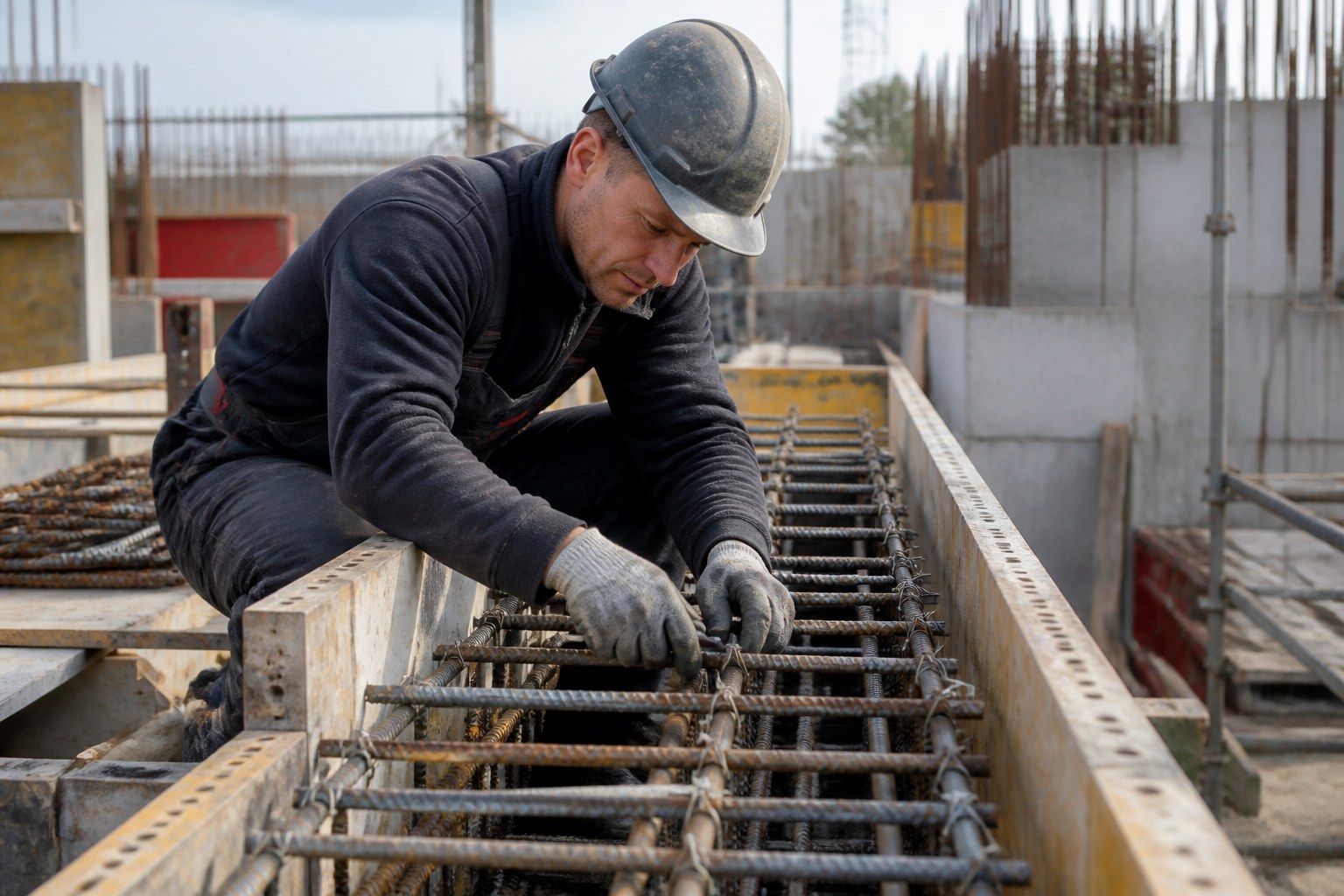
Typical tasks include measuring, cutting, positioning and tying reinforcement bars before concrete is placed. Workers also inspect the arrangement of steel, secure reinforcement against movement and prepare the area for the next construction stage. Depending on their experience, they also assemble or adjust formwork-related elements and check that dimensions and positioning match the technical instructions.
Concrete placement requires coordination with other workers. Reinforced concrete workers help prepare the structure, guide the placement process and observe whether the concrete reaches the intended areas. After placement, they check visible aspects of the finished structural element and report irregularities to the responsible team members.
Your application should describe the work you actually performed rather than relying only on a general job title. Information about reinforcement, formwork, concrete placement, measuring, tools and site responsibilities gives a clearer picture of your professional profile.
Typical Work Environment and Physical Demands
Reinforced concrete work takes place in active construction environments. Work areas change as a project progresses, and outdoor activities expose workers to changing weather conditions. The working environment includes steel bars, formwork, concrete, lifting operations and several teams working in the same area.
The profession involves physical activity, manual work and frequent movement around the construction site. Carrying, positioning and securing materials require reliable coordination and attention to body position. The work also demands accuracy because incorrectly positioned reinforcement affects the structural preparation for concrete.
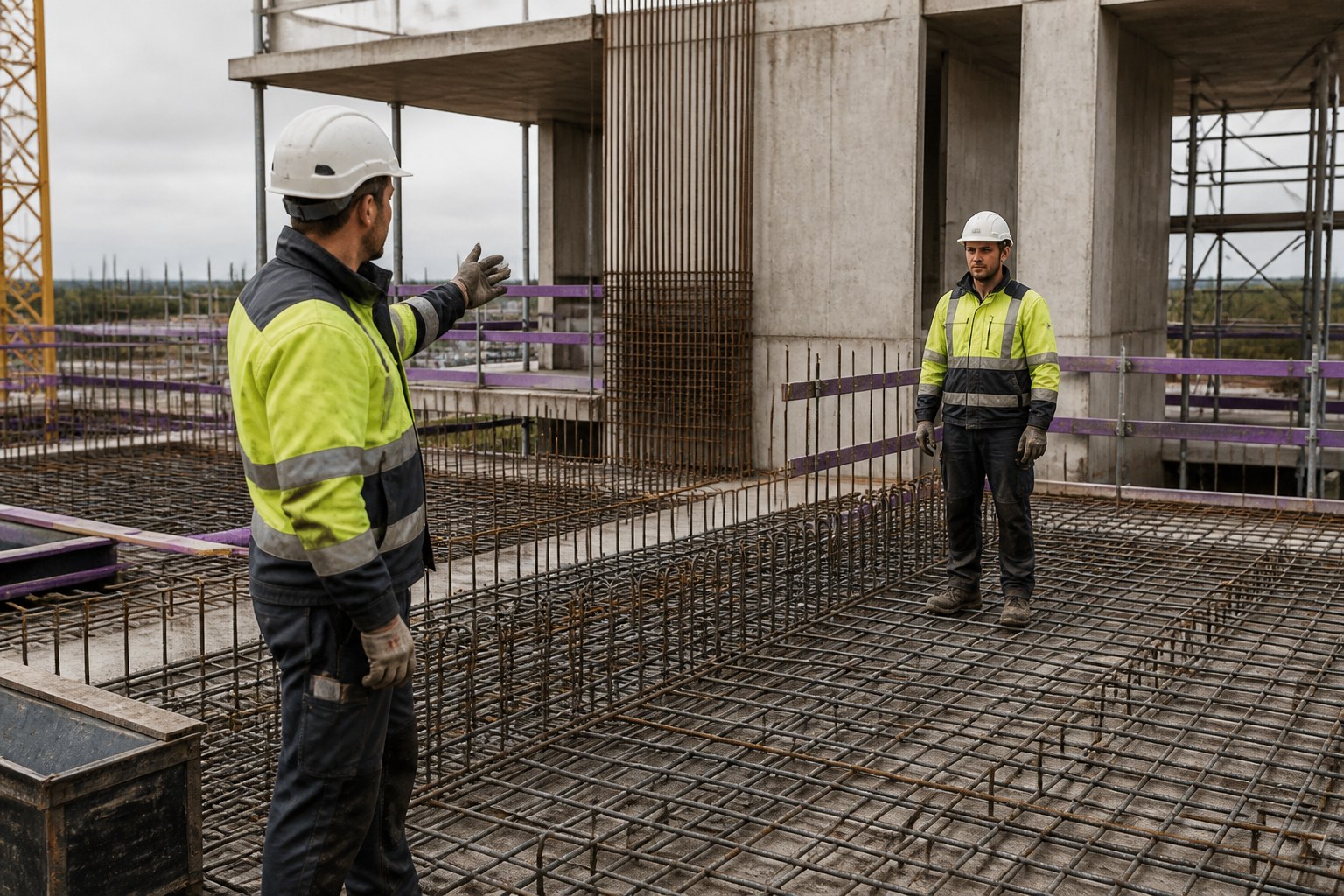
Teamwork is essential. Workers communicate with colleagues who prepare formwork, place concrete, operate equipment or supervise construction activities. Instructions must be understood and followed without confusion. Safety awareness remains important when working near materials, machinery, edges, temporary structures and other construction operations.
Applicants should present themselves as dependable construction workers who combine physical resilience with precision. Speed alone does not describe the professional standard required for reinforced concrete work. Careful measuring, secure fastening and orderly work methods are equally important.
Qualifications and Experience for Reinforced Concrete Work
The relevant candidate profile combines practical construction experience, technical understanding and documented employment history. Experience with reinforcement and concrete work provides the central basis for consideration in this occupational group. Experience with formwork-related activities, structural construction or other closely related tasks adds useful context.
Formal vocational education is relevant when you have completed construction training or hold a qualification connected with concrete, structural construction or another related field. Practical experience remains important when presenting your profile, particularly when your formal qualification has a different name in your home country.
Your professional description should explain the construction activities you performed, the materials you handled and the level of responsibility you held. State whether you worked from technical instructions, measured reinforcement independently, coordinated tasks with other workers or checked completed preparation before concrete placement.
Reliable manual skills include accurate measuring, cutting and tying of reinforcement, careful handling of tools and orderly preparation of the work area. Technical instructions must be followed consistently. If your experience includes safety training, equipment training or documented construction qualifications, include those details in your application.
Do not replace missing evidence with exaggerated claims. A precise description of your actual experience provides a stronger basis for professional assessment than a broad title without supporting information.
Candidate Requirements at a Glance
Applicants for reinforced concrete worker jobs in Germany should prepare a profile that presents practical experience, technical tasks, safety awareness, communication skills and supporting documents together. The profile is assessed for employment opportunities within this occupational group across Germany, not for one named position.
The following overview helps you identify information that deserves attention before you apply. It does not create an additional legal requirement or replace an individual assessment of your qualifications and documents.
German Skills and Communication on Construction Sites
German language information forms part of your candidate profile because construction work depends on clear communication. Workers need to understand instructions about reinforcement, formwork, concrete placement, measurements, work sequences and safety procedures. They also need to communicate questions, changes and visible problems to colleagues.
There is no single language level stated here for every reinforced concrete worker. Your actual language ability should be described honestly. If you have completed a language course or hold a certificate, record the level using the Common European Framework of Reference for Languages, such as A2, B1, B2 or C1.
Technical vocabulary deserves particular attention. Learning terms for reinforcement bars, formwork, concrete, measurements, tools, protective equipment and site instructions helps you participate more effectively in daily work. Language preparation does not replace practical experience, but communication difficulties create risks when instructions are misunderstood.
If your German is still developing, state your current level and explain any relevant work experience in multilingual construction teams. English language information may also be included where it reflects your actual skills, but your profile should clearly show your German knowledge.
Recognition of Foreign Qualifications
Whether formal recognition is required depends on the profession and the legal context. Regulated professions require the relevant professional recognition or licence before the protected professional activity is performed. Non-regulated professions are not protected in the same way, and employment in such a profession is generally possible without formal German professional recognition.
This distinction does not automatically remove every qualification requirement connected with residence or employment. Recognition rules and requirements for working in Germany are separate issues and must be assessed in their relevant legal context.
In a recognition procedure, the responsible authority compares the submitted foreign qualification with the relevant German reference qualification. The authority examines the documents and determines whether the qualifications correspond or whether substantial differences exist. Depending on the result, the procedure may identify full recognition, partial recognition or no recognition for a non-regulated profession.
Where substantial differences are identified, an adjustment qualification or another specified qualification measure addresses those differences in the relevant circumstances. Applicants should therefore collect complete and consistent evidence of training, work history and professional tasks before beginning any formal process.
Documents to Prepare for Your Application
Prepare an English or German CV that presents your personal details, professional history, education and language skills in a clear order. Your employment history should identify each employer, your position, the period of employment and the main duties you performed.
Collect certificates, vocational training records, school or college documents and other evidence connected with construction work. Employment references are useful where they are available and accurately confirm your role and tasks. Proof of language skills also belongs in the profile when you have completed a course or examination.
Identity documents and further documents required for the relevant employment or administrative process should be organized separately. Not every document is mandatory in every situation, and the required form of translations depends on the procedure. Foreign-language certificates may require translation into German or English; whether a certified or otherwise formal translation is needed depends on the relevant process.
Use consistent dates and job titles throughout your CV and supporting documents. If dates overlap, a period is missing or an employer name appears in different forms, explain the situation rather than leaving contradictory information. Complete and understandable documents make your professional experience easier to assess.
Employers, positions, dates and construction responsibilities
Shows the duration and continuity of your practical background
Technical tasks
Reinforcement, measuring, tying, formwork-related work and concrete activities
Connects your experience with the core work of the occupational group
Certificates and training
Construction qualifications, safety training and relevant technical records
Provides supporting evidence for your professional profile
Language skills
German level, certificates where available and relevant technical vocabulary
Shows your ability to understand instructions and communicate on site
Employment history
Clear job titles, accurate dates and traceable task descriptions
Helps reviewers assess your experience consistently
Availability and mobility
Your readiness for employment opportunities throughout Germany
Ensures that your profile reflects your actual geographical flexibility
How to Present Reinforced Concrete Experience
A strong application explains what you did on the construction site. Instead of writing only “construction worker,” describe the activities that define your reinforced concrete experience. Examples include preparing and tying reinforcement, positioning steel according to measurements, securing bars before concrete placement, working with formwork-related elements and assisting with concrete operations.
Name the tools and working methods you actually used. Relevant details include measuring equipment, cutting and tying methods, hand tools and procedures for checking the position or stability of reinforcement. Do not list tools that you have never used simply because they are common in the profession.
Explain your level of responsibility. State whether you performed tasks under direct instruction, worked independently within an assigned area, supported a team leader or checked preparation before the next construction stage. Include the type and continuity of your experience, with accurate employment periods and a clear description of the projects or structural work involved.
Safety and technical training should be recorded separately from general work experience. Include relevant certificates or instruction where documented. Your profile should remain factual and traceable: precise evidence is more useful than broad claims about being an expert in every area of construction.
Employment Conditions to Check Before Starting Work
Before starting employment, read the written contract carefully. It should identify the contracting parties and address the start date, any fixed term, the probationary period, workplace, duties, remuneration, working time, leave and notice periods.
Pay close attention to the difference between gross and net pay. Gross pay is the agreed amount before applicable deductions. Taxes and social-security contributions reduce the amount paid to you, so the net amount received in your bank account is not identical to the gross amount stated in the contract.
The contract should also make your duties understandable. For reinforced concrete work, compare the written description with the work you discussed during the application process. Clarify questions about the workplace, daily responsibilities, working time and any additional contractual payments before signing.
The actual employment conditions depend on the employment relationship and applicable rules. Do not rely on an informal promise when an important point concerns your pay, workplace, working time, leave or notice period. Keep a copy of the signed documents for your records.
Prepare for Jobs Throughout Germany
Applicants must be open to employment opportunities throughout Germany. East Talent does not present this application as an application for one named employer, one construction project or one preferred city. Your professional profile is considered for suitable opportunities within the occupational group across the country.
Geographical flexibility supports consideration for more opportunities because construction projects and employment needs exist in different parts of Germany. Before applying, think through your practical readiness to relocate, travel to a workplace or live away from your current home.
Do not describe a location as guaranteed. Instead, record your actual mobility clearly and honestly. If you have conditions that affect relocation, explain them during the appropriate application process so that your profile remains accurate.
A Practical Checklist Before You Apply
First, check that your construction experience is documented with employers, positions, dates and specific tasks. Next, organize certificates, training records, employment references and language evidence. Review your CV for consistent dates and precise descriptions of reinforcement, concrete, formwork and safety-related work.
Prepare translations where they are relevant to the process, but do not assume that every document requires a certified translation. Keep original documents available and present translated versions together with the corresponding source document when appropriate.
Record your German skills honestly and identify the technical vocabulary that you still need to improve. Construction communication depends on understanding instructions and reporting problems clearly, so language preparation belongs alongside technical preparation.
Finally, review your openness to employment throughout Germany. A complete profile combines documented experience, understandable communication, organized evidence and realistic mobility. Apply with information that accurately represents the work you are prepared and qualified to perform.
Apply now: Apply for jobs in Germany through our application form.
Create your profile
Registration with East Talent
Four short steps. A CV is optional and can be provided in your native language.
Step 1 of 4Profession
East Talent
International recruitment with proprietary software
East Talent combines international recruitment with structured digital processes for handling candidate profiles, attracting employers and evaluating job opportunities.