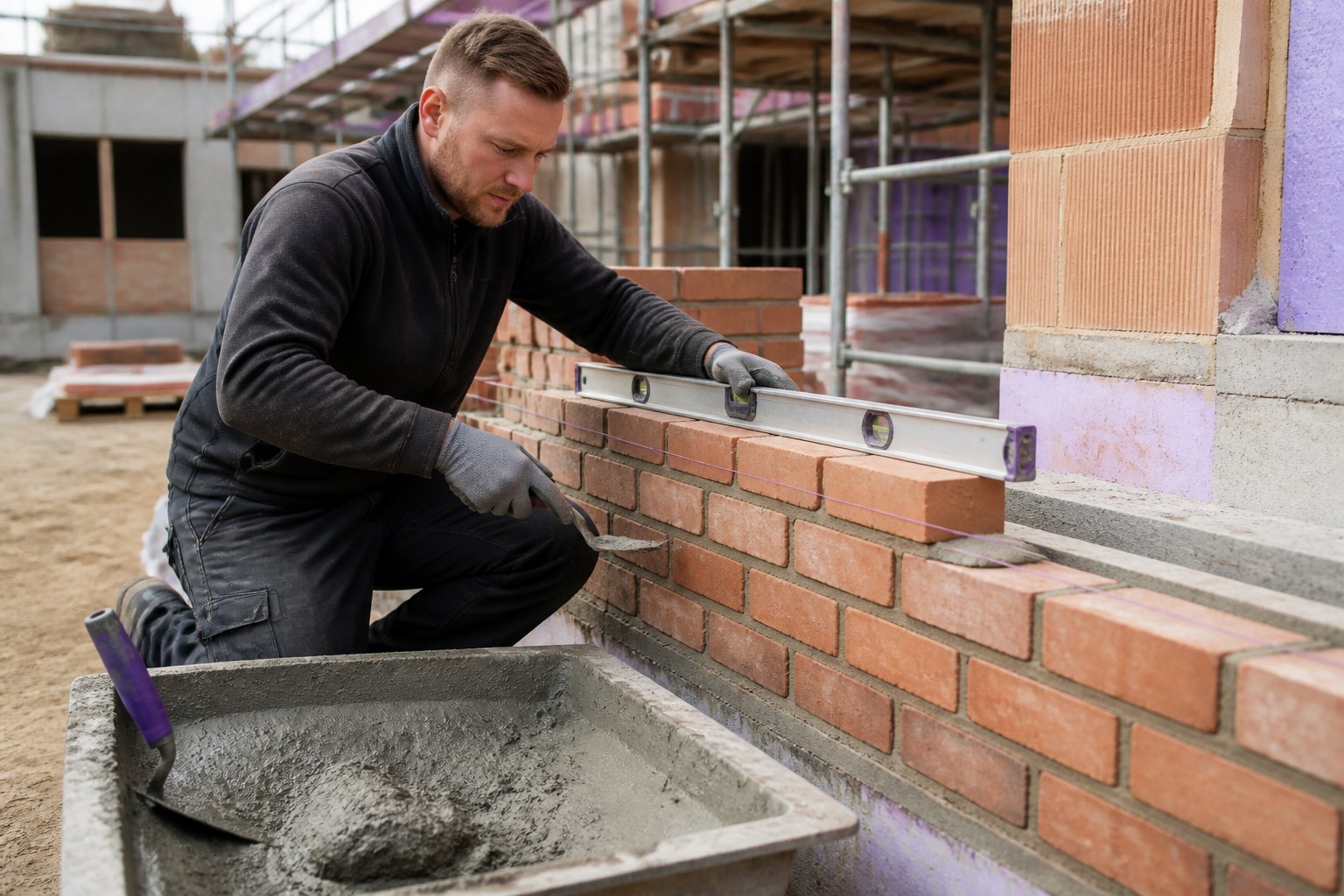
Bricklayers construct, extend and repair walls and other masonry structures. Their work includes preparing mortar, positioning bricks or blocks, checking dimensions and completing surfaces accurately. Depending on the project, they work with clay bricks, concrete blocks and other masonry products.
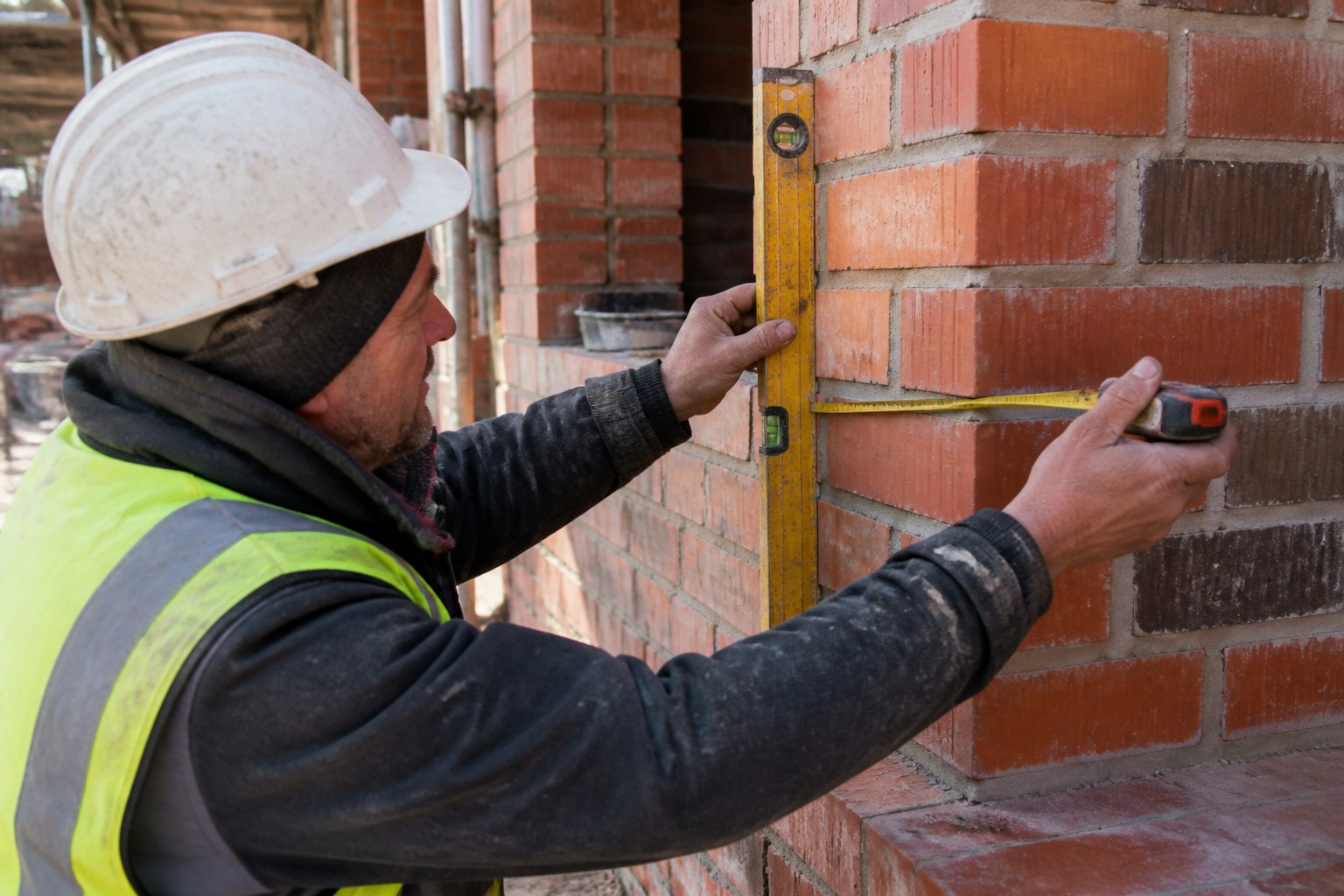
The work starts with understanding construction plans and the sequence of activities. Bricklayers measure distances, check levels and align each course of masonry. Accuracy matters because uneven walls, incorrect dimensions or poorly finished joints affect insulation, plastering, installation work and connected structures.
Bricklayers also repair existing masonry, remove damaged sections and rebuild parts of structures. They use hand tools, measuring equipment and construction machinery safely. Construction sites involve changing conditions, outdoor work and coordination with other trades. Tasks also include preparing surfaces, creating openings, forming corners and matching planned dimensions.
Applicants should approach employment in Germany with nationwide mobility. East Talent does not offer applications for one named vacancy or one guaranteed location. Candidates apply for opportunities in their professional group and need to remain open to suitable employment throughout Germany. The assessment focuses on qualifications, experience, language skills and documents rather than one selected city.
Qualifications and Practical Experience
A vocational background in bricklaying, masonry or a related construction occupation gives your profile a clear foundation. Training records, certificates and a precise description of your practical work explain the level and scope of your experience. If your qualification has a different title in your home country, describe the training content instead of relying only on a direct translation.
Practical experience remains central to a bricklayer profile. Show which masonry tasks you performed, which materials you handled and which construction work you completed. Describe your responsibilities rather than listing only job titles, and distinguish independent work from tasks completed under supervision.
Relevant skills include laying bricks and blocks, preparing and applying mortar, measuring wall lines, checking vertical and horizontal alignment, forming joints and following technical plans. State experience with repairs, insulation-related masonry work or other construction activities when applicable. Include the type of work, such as residential construction, commercial structures, extensions or restoration, when you have reliable information.
Your profile becomes stronger when experience is documented with employers, positions, dates and tasks. If you worked on several projects, explain the main project types and your personal contribution. Do not claim qualifications or responsibilities that your records do not support. Dates in your CV, certificates, references and other documents should be consistent.
A useful professional summary connects training with actual site work. Explain how your training prepared you for setting out walls, preparing mortar and checking alignment, then show where you used those skills. This gives reviewers a clearer basis than a broad statement such as “experienced construction worker.”
Skills That Matter in Bricklaying Work
Precision is one of the most important professional qualities in masonry. Bricklayers must maintain consistent courses, accurate corners, correct dimensions and clean joints. Measuring tools and visual checks support this work, while reliable results depend on concentration and disciplined methods. Small deviations accumulate across a wall, so checking is necessary throughout construction.
Physical stamina matters because bricklaying involves lifting, carrying, bending, kneeling and standing for extended periods. Construction work also takes place outdoors and under changing site conditions. Applicants should present their experience realistically and understand the physical character of the occupation.
Safe working practices are part of professional performance. Use tools correctly, follow site instructions, wear required protective equipment and keep work areas safe for colleagues. Construction work requires attention to hazards, materials, access routes and the sequence of activities.
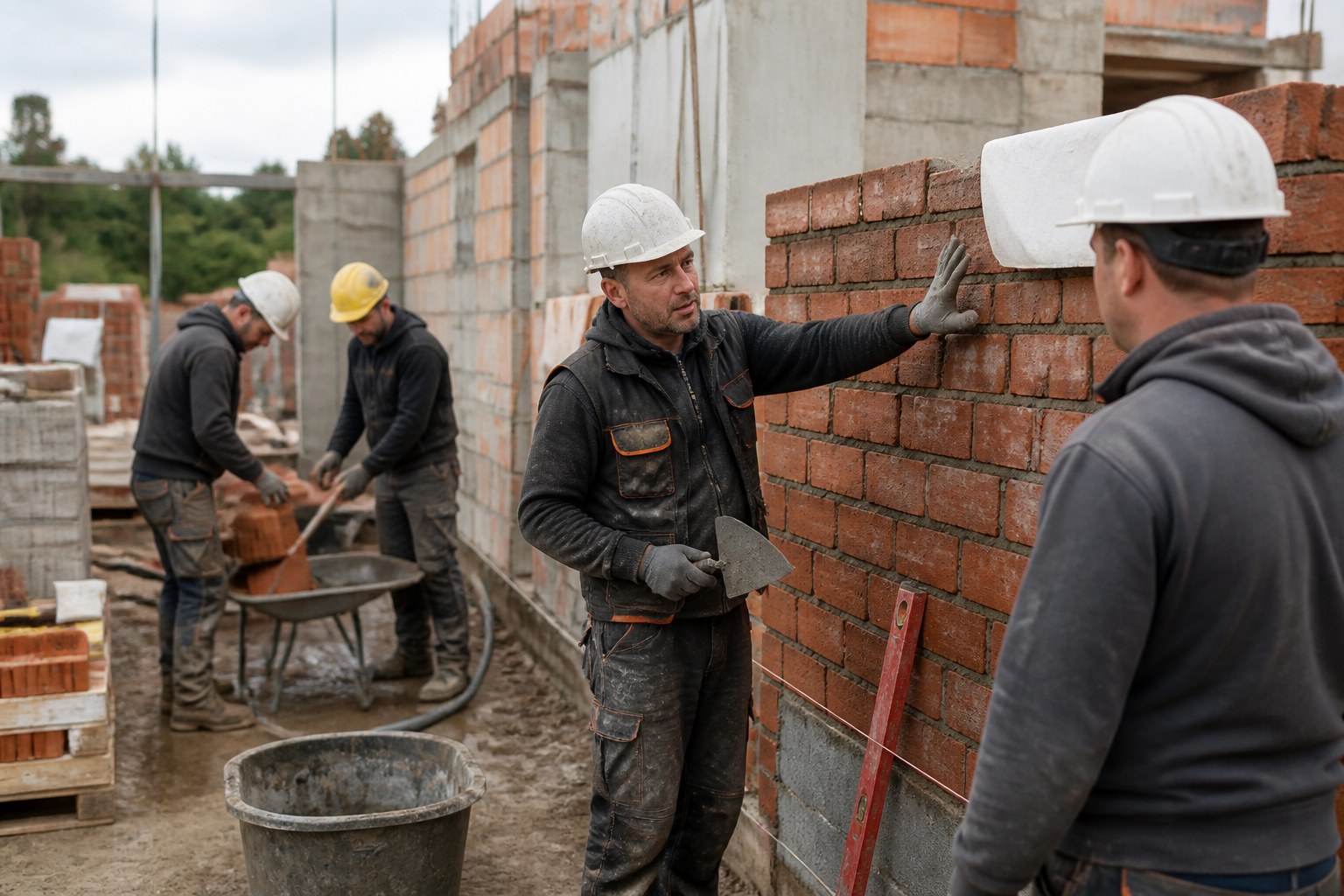
Teamwork is equally important. Bricklayers coordinate with supervisors and other construction workers about measurements, material deliveries and the next stage of work. Reliable attendance, careful execution and clear communication support cooperation when a sequence changes, a material is missing or a measurement requires clarification.
Building projects use different materials, tools and methods. Identify the methods you know and distinguish familiar tasks from tasks you have only observed. Accurate information gives a reliable picture of your suitability for future professional opportunities.
Bricklayer Requirements at a Glance
Use the following overview to assess the information you should demonstrate and document in an initiative application. It does not represent one specific vacancy; it describes information relevant to a bricklayer candidate profile.
The table also helps identify gaps before submission. A task description is more useful when it names materials, tools, construction activities and your level of responsibility. Where you do not possess a particular document, explain the situation accurately instead of making an unsupported claim.
German Skills for Bricklayers
German communication is relevant on construction sites because instructions, safety information and coordination often take place in German. You need to understand information about measurements, work sequences, materials, access routes and site procedures, including the language used while preparing work areas and receiving materials.
Language skills also support daily teamwork. A bricklayer must communicate when a wall section is ready, materials are missing, dimensions need clarification or a safety issue requires attention. Listening is as important as speaking because instructions are often given while work is underway and conditions change quickly.
There is no unsupported universal German level for every bricklayer candidate profile. Present your actual knowledge clearly and use a recognised description such as A2, B1, B2 or C1 when accurate. Explain whether you used German or another language to follow technical instructions, coordinate tasks or discuss safety matters in previous work.
Continue language learning alongside technical preparation. Focus on construction vocabulary, measurements, tools, materials, safety instructions and ordinary workplace communication. This connects language knowledge with tasks you already understand in practice.
Do not overstate your German skills in a CV or interview. Professional communication includes understanding instructions, asking precise questions and reporting problems. Keep evidence of language courses or certificates with your other documents when such evidence exists.
Bricklayer Application Preparation Checklist
Area
What to demonstrate
What to prepare
Professional background
Relevant vocational training or a clearly documented construction background
Training certificates, vocational records and an accurate professional summary
Technical masonry skills
Bricklaying, blockwork, mortar work, measuring, alignment and plan interpretation
A task-based description of materials, tools, construction work and responsibilities
German communication
Understanding of instructions, safety information, measurements and teamwork
An honest language description, including a CEFR level such as A2, B1, B2 or C1 when accurate
Qualification evidence
A clear explanation of completed training and recognition status where relevant
Certificates, training records and recognition documents or status information
Work experience
Reliable evidence of previous bricklaying activities and responsibilities
Employer names, positions, dates, tasks and available references or other evidence
Recognition of Foreign Qualifications
Recognition depends on the legal status of the occupation and the purpose of the assessment. Regulated professions require the relevant recognition or licence before the regulated activity is performed. Many vocational occupations are non-regulated, and bricklaying belongs to the wider group of vocational construction occupations rather than being automatically treated as regulated.
For a non-regulated occupation, formal German recognition is not automatically required for every employment situation. Qualification documents remain important when your professional profile is prepared and when evidence is needed for related to working in Germany procedures. They also help reviewers understand the content and level of your training.
The responsible authority compares the foreign qualification with the relevant German reference occupation. A complete application may result in full recognition, partial recognition or no recognition. Where substantial differences exist, an adjustment qualification or another recognised measure addresses them in the applicable case. The result depends on the submitted documents, training content and assessment.
Prepare documents carefully before submitting a recognition application. The responsible authority reviews complete documents within about three to four months. Missing information or an incomplete file affects progress, so documents should be consistent, readable and accurately translated where the procedure requires translation. Keep copies of everything submitted.
Describe your recognition status honestly. If the process has not started, state that. If documents have been submitted, identify the stage reached and retain confirmation. If a decision has been issued, provide it together with information about identified differences or required measures.
Documents for Your Application
An initiative application for bricklayer employment should present your background clearly and verifiably. Start with a structured CV showing personal details, education, training, work experience, language knowledge and relevant technical abilities. Use clear dates and a consistent job history.
Describe each relevant position with the employer, job title, dates and main tasks. For bricklaying work, include masonry materials, wall construction, mortar, measurements, technical plans, repairs, tools and site responsibilities when these details reflect your experience. Mention new construction, extensions, repairs or other project types when relevant and documented.
Prepare certificates, vocational training records and other qualification documents supporting your profile. Include evidence of work experience when available. School or higher education documents are relevant when they explain your background or form part of a recognition or application procedure. Work references, employment confirmations and project records connect your experience with identifiable employment periods.
State your German knowledge clearly. You may use CEFR levels such as A2, B1, B2 or C1 when accurate. Do not overstate communication skills, particularly for safety instructions and technical coordination. If you attended a course without receiving a certificate, describe it accurately rather than presenting it as a certified level.
Documents issued in another language may require translation into German or English in an individual procedure. Whether a certified or formal translation is required depends on that procedure. Keep originals and translations organised, use clear file names and check that scans are complete and readable.
Before submission, compare names, dates, job titles and qualification names across the CV and supporting documents. Explain differences caused by transliteration or official document formats.
What to Consider Before Working in Germany
Bricklaying is practical construction work rather than office-based employment. Physical effort, outdoor conditions, changing weather, lifting and repetitive movements form part of the occupation. Work also involves early starts, active building sites and coordination with several trades. Clothing, footwear, tools and working methods must suit a site environment.
Safety responsibilities belong to everyone on a construction site. Follow instructions, use protective equipment correctly, handle tools carefully and report unclear or unsafe situations. Never treat a language difficulty as a reason to ignore an instruction; ask for clarification when a safety or technical point is unclear.
Mobility is an important part of your candidate profile. Applicants through East Talent must be open to suitable employment throughout Germany rather than limiting their application to one preferred city or region. Discuss personal relocation considerations honestly before a suitable employment opportunity is evaluated.
Before accepting employment, read the contract carefully. It should identify the contracting parties, start date, any fixed-term arrangement, workplace, duties, pay, working time, leave and notice conditions. It may also refer to collective or workplace agreements. Ask for clarification about terms you do not understand and keep a signed copy.
Pay is normally stated as gross pay. Taxes and social insurance contributions affect net pay, which depends on personal circumstances. Do not assess an opportunity from gross pay alone. Housing, deposits, travel and everyday living costs affect the amount available after relocation.
Relocation requires preparation beyond the workplace. Organise important documents, plan travel to work and consider communication during the first weeks. Financial planning should account for initial housing costs, transport and everyday expenses.
How to Prepare a Strong Bricklayer Profile
Begin by collecting your documents: CV, training certificates, work references or other evidence of experience and information about your German skills. Check that names, dates and job titles are consistent. Create a document list showing which items are complete, require translation or are still missing.
Describe your masonry experience in practical terms. State whether your work involved brick walls, blockwork, repairs, mortar preparation, measurements, technical plans, joints or finishing tasks. Explain the tools and materials used, distinguish independent work from supervised tasks and include the type of site when it clarifies your responsibility.
Review the technical information in your profile. Mention measuring and alignment work, safe tool use, construction sequences and coordination with other workers when these are part of your experience. Avoid long tool lists without explaining their purpose. A clear description gives a better picture than “construction worker.”
Add your German knowledge and explain communication experience honestly. Include your recognition status if you have started or completed a procedure. If recognition is not complete, state that accurately and include supporting evidence where available.
Finally, check your mobility. An initiative application is not an application for one named employer or specific vacancy. Suitable opportunities exist in different parts of Germany, so remain open to employment throughout the country. Consider the practical consequences of relocation, including travel, housing and the distance between accommodation and work.
Before sending the application, read the profile as a reviewer would. Make your occupation, experience and language information easy to identify. Remove unsupported claims, correct inconsistencies and ensure important statements are backed by documents or a precise description of your work.
Start Your Application for Bricklayer Jobs in Germany
A strong bricklayer profile combines verified practical experience, relevant qualifications, accurate technical information and reliable workplace communication. Your documents should show what you have built, which materials and tools you used, how you worked safely and how you coordinated with others.
Prepare your CV and supporting documents carefully, state your German knowledge honestly and explain your recognition status where relevant. Be ready for the physical and outdoor character of construction work and remain open to suitable opportunities throughout Germany.
Review every document before submission and keep copies of certificates, translations and recognition records. Clear information is more valuable than exaggerated claims or a generic description of construction experience.
Four short steps. A CV is optional and can be provided in your native language.
Step 1 of 4Profession
East Talent
International recruitment with proprietary software
East Talent combines international recruitment with structured digital processes for handling candidate profiles, attracting employers and evaluating job opportunities.