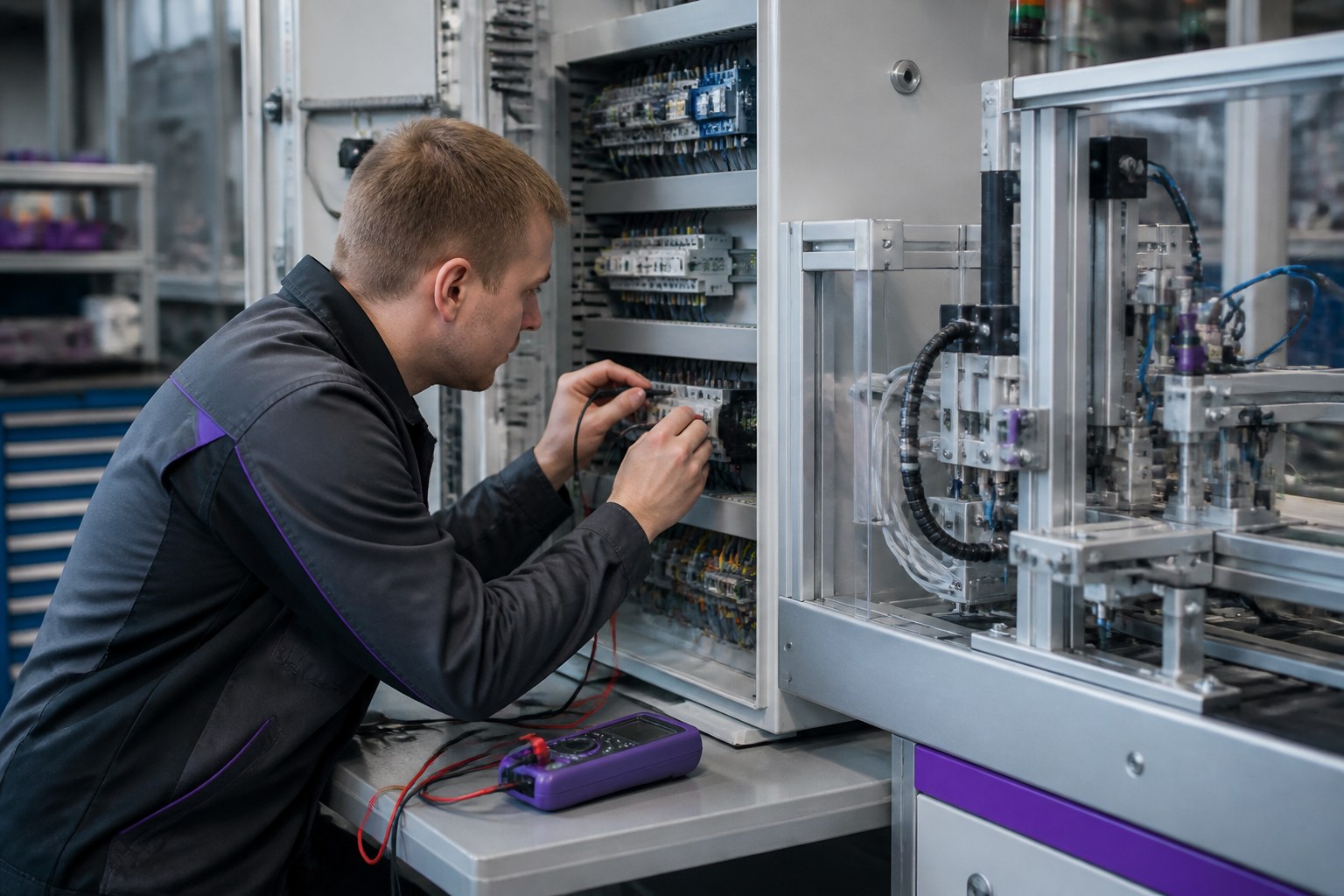
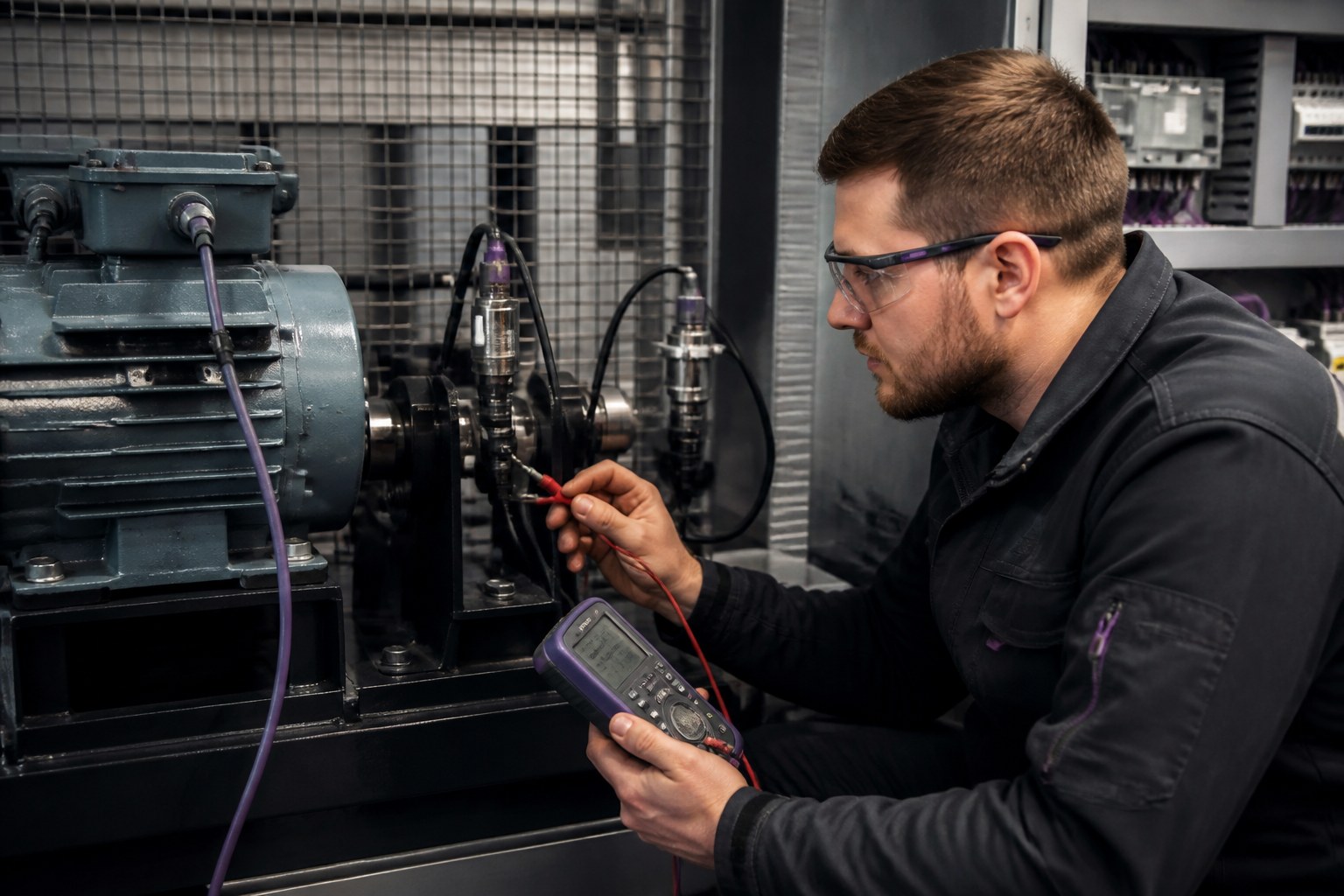
Mechatronics technicians work at the connection between mechanical systems, electrical components, electronics and control technology. Their work involves assembling, commissioning, maintaining and repairing machines and technical systems. The exact working environment depends on the type of industrial equipment and the employer, but the profession consistently requires an understanding of how mechanical and electrical parts interact.
Typical tasks include installing components, connecting cables, checking sensors, testing motors and examining control systems. Mechatronics technicians also identify faults, replace defective parts and document technical work. Industrial maintenance often requires technicians to respond systematically when a machine stops, produces an incorrect result or shows an electrical or mechanical fault.
The work is practical and technical rather than purely theoretical. A technician needs to understand drawings, wiring diagrams, operating instructions and maintenance documentation. Safe working practices are essential when working with moving machinery, electrical equipment, tools and industrial systems.
Applicants should describe the equipment, systems and tasks they have handled. A precise explanation of previous technical work gives a clearer picture of professional experience than a general job title alone.
Qualifications and Practical Experience
A completed vocational qualification in mechatronics, industrial electronics, electrical engineering, mechanical engineering or a closely related technical field provides an important foundation for employment as a mechatronics technician in Germany. The relevance of a qualification depends on its content, level and relationship to the practical work performed.
Your application should show what you learned during vocational training and how you applied that knowledge in practice. Useful details include electrical installations, mechanical assembly, control technology, maintenance, commissioning, testing procedures and fault diagnosis. Certificates should be accompanied by a clear description of the technical subjects covered.
Practical experience strengthens the profile when it is presented in a structured way. State the type of machines or systems involved, your responsibilities, the tools and measuring equipment used, and the nature of the maintenance or repair work. Experience with industrial production equipment, automated systems, motors, sensors, control cabinets or programmable control systems is relevant when it is supported by accurate employment evidence.
Applicants with experience from another technical occupation should explain the overlap with mechatronics work. Relevant mechanical, electrical and automation experience provides useful context for qualification review, even when the previous job title differs from the German occupational title.
Skills That Strengthen Your Candidate Profile
A strong mechatronics technician profile combines practical ability with systematic technical analysis. Troubleshooting starts with observing symptoms, checking possible causes and testing components in a logical sequence. Applicants should explain how they locate faults instead of simply stating that they have repair experience.
Important technical skills include reading circuit diagrams, mechanical drawings and technical instructions. Electrical and mechanical work often needs to be coordinated because a fault in one part of a system affects other components. Experience with sensors, motors, actuators, wiring, control cabinets, pneumatic or hydraulic components and measurement equipment is relevant when it forms part of the applicant’s actual background.
Maintenance experience should distinguish between preventive maintenance, inspection, repair and emergency fault response. Employers need reliable technical information, and candidates benefit from showing that they understand the difference between restoring operation quickly and identifying the underlying cause of a recurring fault.
Safety awareness is part of professional technical work. Your profile should reflect careful handling of equipment, attention to operating instructions and a disciplined approach to electrical and mechanical hazards. Do not claim experience with systems, tools or controls that you have not actually used.
Documentation also matters. Maintenance records, test results, repair descriptions and commissioning notes demonstrate that you can communicate technical information and maintain traceable work processes.
German Language Skills for Technical Work
German language ability forms part of your candidate profile because mechatronics work involves coordination, instructions and technical information. You need to understand workplace communication, safety instructions, machine documentation and discussions about faults or maintenance priorities.
Language skills also affect how clearly you report a technical problem. A technician who describes a fault, explains a repair and records a test result accurately supports safe and efficient cooperation with colleagues. This is especially important when several people work on the same machine or production system.
List your German language skills honestly in your CV. You may use the Common European Framework of Reference levels, such as A2, B1, B2 or C1, where they accurately describe your ability. Also distinguish general German from technical vocabulary and practical communication experience.
If your German is still developing, technical preparation remains useful. Learn the terminology for tools, components, measurements, maintenance activities, warnings and common machine conditions. Language information should be consistent with your actual ability to understand and communicate at work.
Recognition of Foreign Qualifications
Mechatronics technician training belongs to the vocational training area associated with Germany’s dual education system. Dual-system training occupations are among the occupations that are not regulated in the same way as legally protected professions. This distinction matters because working in a non-regulated occupation does not automatically require formal German professional recognition for the occupation itself.
Recognition and requirements for working in Germany are separate issues. The fact that an occupation is non-regulated does not automatically remove the need to provide qualification documents or meet requirements connected with a residence status. These matters require separate assessment based on the applicant’s situation.
During a recognition procedure, the responsible authority compares the foreign professional qualification with the relevant German reference occupation. The assessment considers the submitted documents and identifies whether substantial differences exist. Possible results for a non-regulated occupation include full recognition, partial recognition or no recognition.
Where substantial differences are identified, an adaptation qualification or another suitable qualification measure addresses the missing content in cases where such a route is available. Complete and consistent documents support the assessment. Applicants should therefore keep certificates, transcripts, employment evidence and translations organised before submitting them.
Recognition does not replace practical experience. The assessment of a qualification and the evaluation of your professional history are related but distinct parts of a candidate profile.
Certificates, relevant subjects and training details
Shows the technical foundation of your professional profile and supports qualification review
Technical work experience
Employers, positions, dates, equipment and responsibilities
Demonstrates how you have applied mechanical, electrical or control-technology knowledge
Language skills
German level and relevant technical communication experience
Explains your ability to understand instructions, documentation and workplace coordination
Supporting documents
CV, employment evidence, technical records and relevant references
Makes your experience clearer and helps keep the application complete and consistent
Documents to Prepare for Your Application
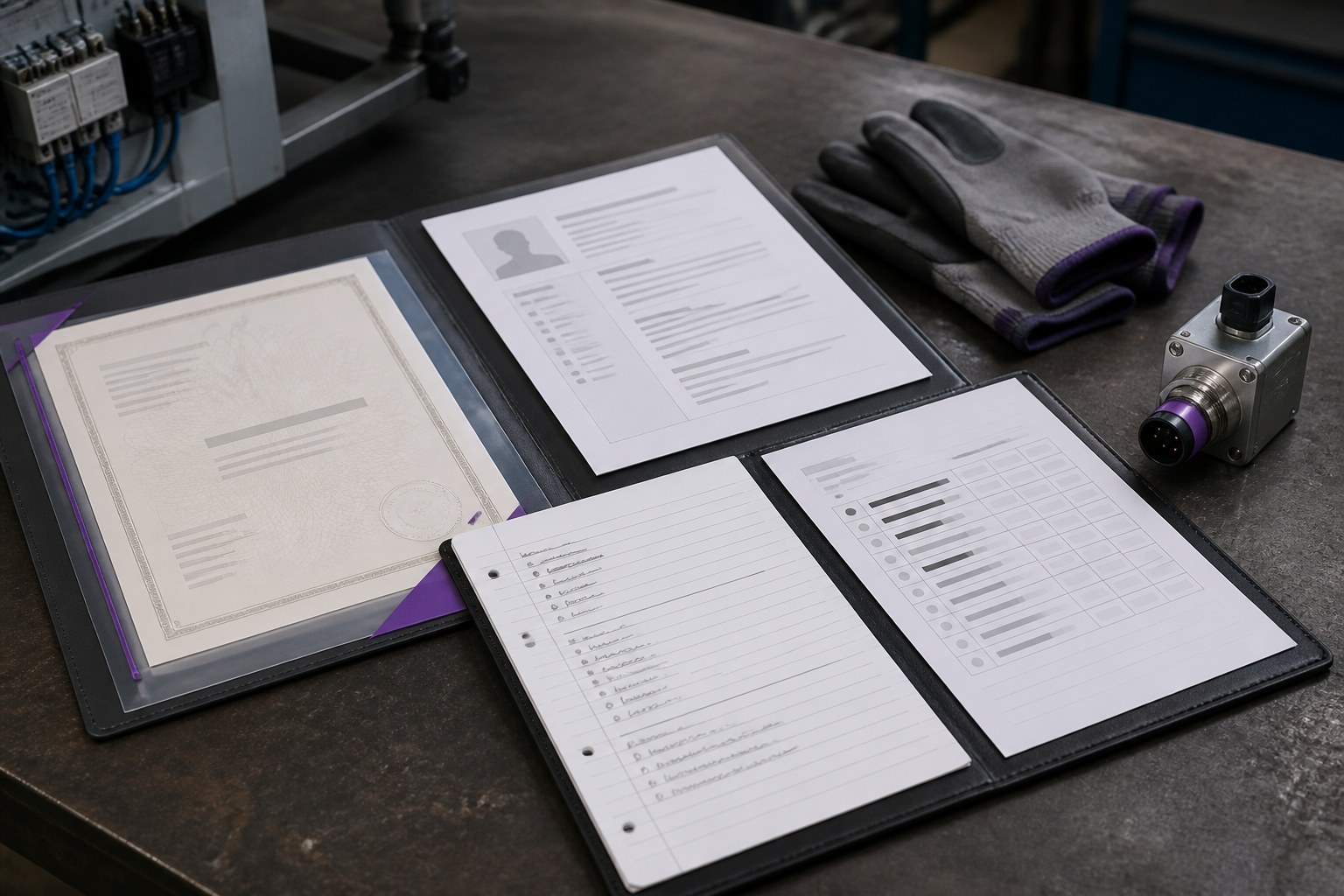
Begin with a clear CV in English or German. Present your contact details, vocational training, employment history, technical skills and language knowledge in a chronological and easy-to-read format. Describe each technical position with the employer, job title, employment period and main responsibilities.
Include vocational certificates and relevant school or higher-education documents. Certificates should be legible, complete and consistent with the information in your CV. Where documents are not in German or English, a translation may be useful or required in a particular procedure. Whether a certified or otherwise formal translation is necessary depends on the procedure and should not be assumed in advance.
Employment evidence should explain the practical content of your work. Useful records identify the equipment, systems, tools and technical responsibilities connected with each position. References or work certificates provide additional evidence when they accurately describe your role.
Add language information and relevant technical records. Examples include training records, maintenance documentation, safety training evidence or certificates for specific technical systems, provided that these documents genuinely relate to your experience. Do not add documents merely to make the file longer.
A professional photograph is not a general requirement. Focus on complete, accurate and relevant information instead of decorative material.
Working Conditions and Contract Details
Before accepting employment, read the employment contract carefully. It should identify the contracting parties, the start of employment, the workplace, the duties, working hours, remuneration, holiday entitlement and notice periods. It should also state whether the employment is fixed-term and whether a probationary period applies.
For a mechatronics technician, the description of duties deserves particular attention. Check whether the work focuses on maintenance, assembly, commissioning, production support, service, repair or several of these areas. The expected balance between electrical, mechanical and control-technology tasks affects whether the position matches your experience.
The stated workplace is also important. Technical work may take place in a production area, maintenance department, workshop or other industrial environment. The contract and accompanying information should make the working location and relevant duties understandable.
Remuneration is normally stated as gross pay. Gross pay is not the same as the amount transferred to your account because taxes and social-security contributions are deducted according to your personal situation. Contractual additions such as premiums or allowances depend on the specific employment relationship or applicable rules.
Working-time arrangements, holiday and notice periods must be understood from the contract and any applicable collective agreement or works agreement. Do not base your decision on a gross figure alone. Consider the complete contractual conditions and the practical requirements of the technical role.
How to Prepare for Jobs Throughout Germany
Applicants should present their profile for employment opportunities throughout Germany rather than limiting their application to one city. Industrial production, maintenance and technical services exist in different parts of the country, and openness to different locations gives your professional profile broader relevance.
Geographic flexibility does not replace professional clarity. State which types of technical work you prefer, but also identify related duties that match your skills. For example, a candidate with industrial maintenance experience should describe whether assembly, commissioning, fault diagnosis or production support is also suitable.
Prepare practical information about relocation before the application progresses. Housing, travel, daily costs and distance from the workplace affect the financial and personal consequences of moving. A realistic decision requires more than comparing gross remuneration.
Keep your documents available in a consistent digital format and make sure dates, job titles and qualification names match throughout your application. If your availability or geographic flexibility changes, update the information promptly.
Application Steps for Mechatronics Technician Jobs
Start by preparing your candidate profile. Record your vocational qualification, technical experience, main equipment, maintenance activities, language skills and geographic availability. This profile should describe your actual professional background rather than copy general technical terms.
Submit the completed information and supporting documents through the application form. A complete file helps the qualification and experience review focus on the relevant facts. Include a structured CV, certificates, evidence of technical work and language information.
Support the review by answering questions about your training and previous employment. Explain technical terms where necessary and provide missing documents when they are requested. Consistent information reduces confusion when qualifications from different education systems are assessed.
Clarify recognition matters separately from residence matters. The assessment of a vocational qualification addresses professional comparability, while residence and employment requirements follow their own rules. Do not treat a recognition result as an automatic decision on another legal issue.
Remain available for suitable employment opportunities throughout Germany. Your application is an initiative for employment in your profession, not an application to one named employer or one fixed location. Clear communication about your skills and mobility supports a realistic assessment of suitable opportunities.
Mechatronics technician jobs require more than a technical job title. A credible profile connects vocational training with practical evidence, specific equipment, troubleshooting experience, safe working practices and technical communication.
Documents make these claims verifiable. A clear CV, certificates and employment evidence show where your knowledge comes from and how you have used it. Language information completes the profile by indicating how you handle instructions, documentation and coordination in a German-speaking workplace.
Applicants who prepare this information carefully make their professional background easier to understand. They also identify gaps earlier, whether those gaps concern documents, technical terminology, qualification assessment or practical experience.
If you are seeking mechatronics technician jobs in Germany, focus on accuracy, completeness and openness to employment opportunities throughout the country. These principles create a reliable basis for the next stage of your application.
Create your profile
Registration with East Talent
Four short steps. A CV is optional and can be provided in your native language.
Step 1 of 4Profession
East Talent
International recruitment with proprietary software
East Talent combines international recruitment with structured digital processes for handling candidate profiles, attracting employers and evaluating job opportunities.