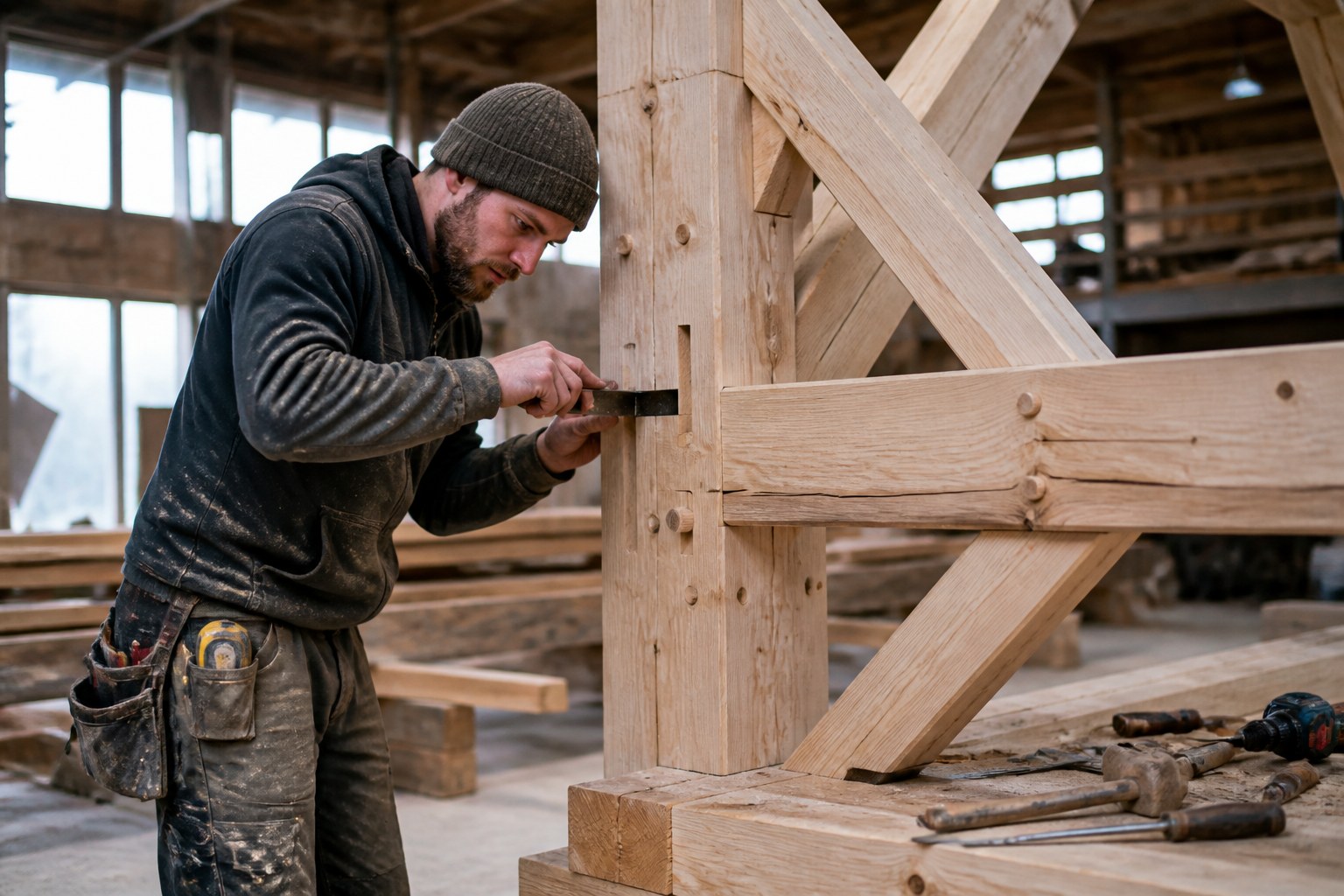
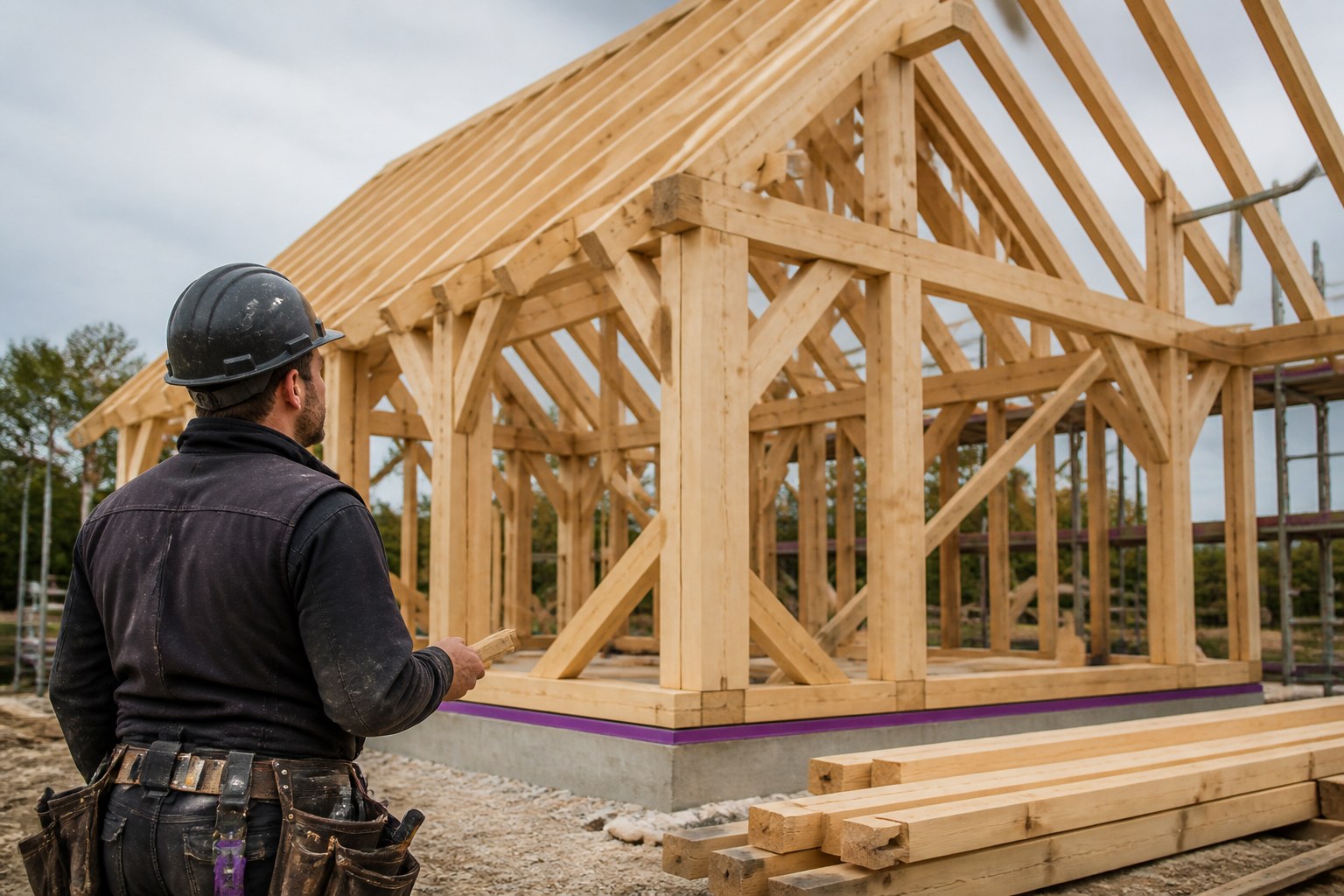
Timber framers work with wooden structural components used in construction. Their work combines practical craftsmanship with accurate measurement, technical understanding and careful assembly. Depending on the project, the work takes place in a workshop, on a construction site or in both environments.
The occupation connects traditional woodworking with modern construction processes. A timber framer must understand how beams, posts, panels, joints and fastening systems form a stable structure. The work therefore requires more than experience with wood as a material: it also requires disciplined preparation, accurate execution and the ability to follow a defined assembly sequence.
Applicants interested in timber framer jobs in Germany should prepare a clear professional profile before applying. Relevant experience, vocational training, construction knowledge, language skills and supporting documents all help explain what you are qualified to do.
Through East Talent, candidates apply for employment in their occupational group rather than for a specific advertised position or named employer. East Talent reviews professional qualifications, work experience, German knowledge and the documents needed for further placement. Suitable candidates are then introduced to companies in Germany. Applicants therefore need to remain open to employment opportunities throughout Germany.
The occupation overlaps with related professional groups such as carpenters, timber construction workers, joiners and other construction specialists. Your profile should show precisely which timber and construction tasks you have performed instead of relying only on a general job title.
This distinction is important because similar job titles describe different types of work. A candidate who mainly produced furniture has a different profile from a candidate who assembled roof structures or installed prefabricated timber walls. Describe your actual tasks, materials and level of responsibility so that your experience is assessed accurately.
Typical Responsibilities of a Timber Framer
A timber framer prepares, fits and assembles wooden structural elements. Typical work includes measuring components, checking dimensions, preparing joints and positioning timber parts accurately. The work requires attention to the relationship between individual components because an error in one part of a frame affects later assembly.
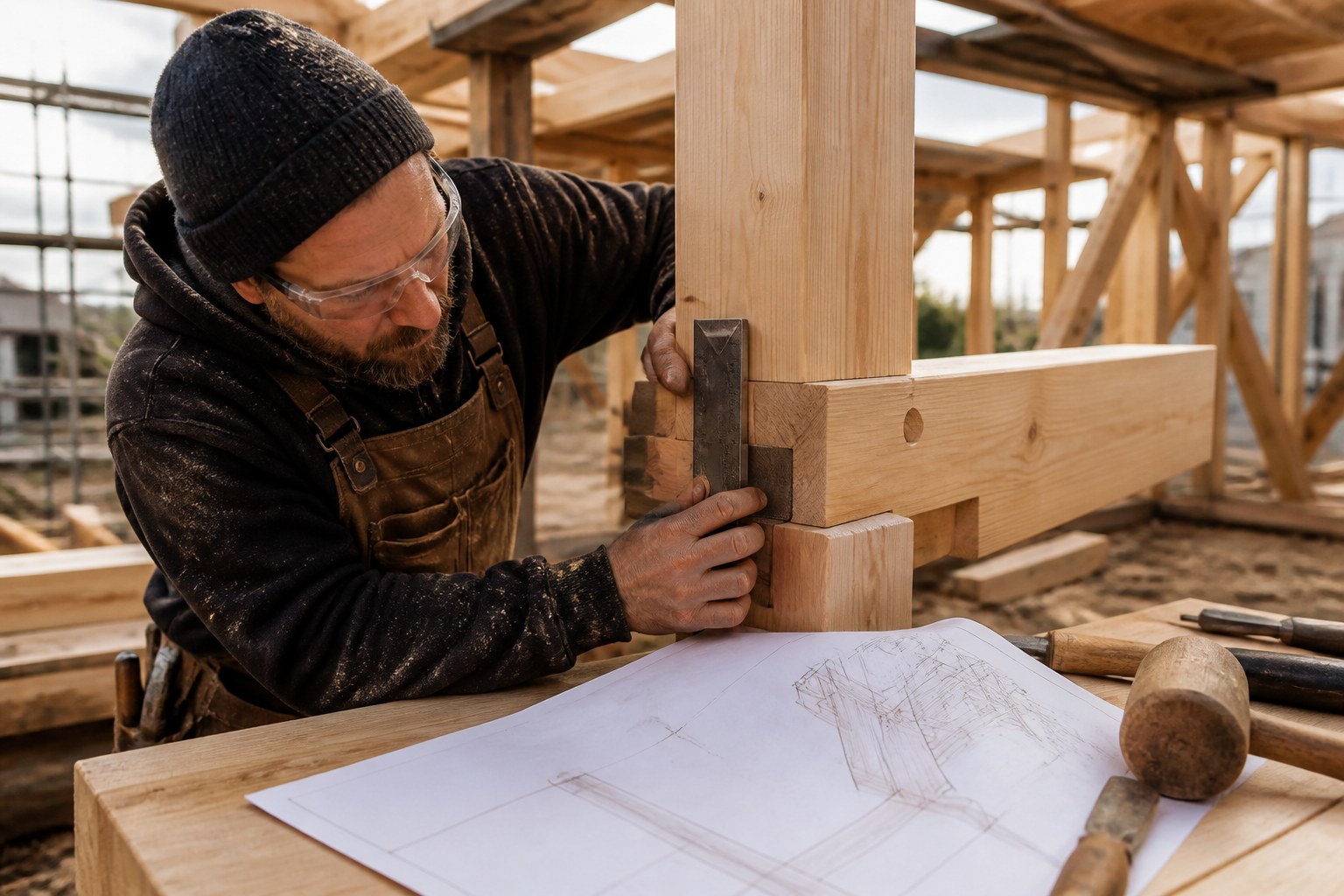
Preparation often begins before the timber reaches its final position. Components may need to be marked, cut, drilled, shaped or checked against drawings. Careful preparation reduces fitting problems during assembly and helps maintain the intended geometry of the structure.
Reading construction plans and technical drawings is an important part of the professional profile. Applicants should describe the types of drawings, measurements or assembly instructions they have used. Practical experience with roof structures, wall elements, structural frames or other timber components is relevant when it is documented accurately.
Timber framing also involves the use of hand tools, power tools and other equipment used for cutting, shaping, drilling, fastening or positioning timber. Your application should distinguish between tools you used independently and equipment with which you have supporting experience.
Construction work requires safe working practices. Applicants should explain their experience with protective equipment, site rules, material handling and coordination with other trades where these activities formed part of their previous work. Safety awareness is not separate from craftsmanship: accurate work and controlled procedures protect both the finished structure and the people working around it.
Coordination is especially important when several workers move or install large components. Clear signals, reliable communication and attention to the work area support safe handling. If you have worked with cranes, lifting equipment, scaffolding or other site equipment, describe that experience only when it is supported by your employment history or training records.
Working conditions vary between workshops and construction sites. The work is practical and frequently involves standing, lifting, moving materials, working at height or working outdoors. Applicants should present their actual experience honestly and avoid claiming tasks they have not performed.
Physical working conditions belong in your preparation because they affect how you describe your previous work. Explain whether your experience involved workshop production, outdoor assembly, installation at height, repetitive tool use or handling large timber components. This gives a more complete picture than a short job title alone.
Skills and Qualifications That Strengthen Your Profile
A strong timber framer profile combines practical construction experience with evidence of technical ability. Relevant vocational training in carpentry, timber construction, joinery or a related field strengthens an application, especially when the certificate and training content are clearly documented.
Practical experience remains important. Your CV should state how long you worked in timber framing or related construction, which materials you handled, which tasks you completed and how much responsibility you held. General statements such as “construction worker” provide less useful evidence than a specific description of timber assembly, joint preparation, plan reading or structural installation.
Accuracy is central to timber construction. Employers need workers who measure carefully, identify inconsistencies and follow technical instructions. Experience with construction drawings, dimensions, angles, joints and assembly sequences shows this ability more effectively than broad claims about being hardworking.
Technical understanding also includes recognising how structural elements fit together and how work at one stage affects the next stage. Experience with quality checks, corrections and coordination with other workers gives your profile additional substance.
Documented qualifications and practical experience are related but not identical. A certificate proves a formal training background, while employment records and detailed task descriptions demonstrate how you applied your knowledge. Include both where available.
Your profile becomes clearer when it separates completed training from skills acquired through employment. For example, list formal vocational education under qualifications and describe plan reading, timber assembly or tool use under professional experience when those abilities were developed through work. This structure helps reviewers distinguish certified knowledge from practical exposure.
Relevant experience also includes the ability to identify defects or irregularities in timber components, follow quality procedures and correct work before final installation. If you performed inspections or reworked components, explain the process briefly. Do not replace evidence with unsupported claims about seniority or responsibility.
German Language Skills and Workplace Communication
German language knowledge belongs in your candidate profile because timber framing involves workplace communication, technical instructions and safety information. Clear communication matters when several workers handle large components, use equipment or coordinate assembly steps.
Applicants should state their German language level honestly. When a recognised assessment is available, describe it using the Common European Framework of Reference for Languages, such as A2, B1, B2 or C1. Do not list a level without explaining whether it comes from a certificate, formal course or personal assessment.
Language skills also include practical communication. Describe whether you understand technical terms, follow spoken instructions, communicate measurements and report problems. These details help distinguish general German knowledge from language used in a construction environment.
You should also document other relevant languages if they support communication in your professional background. The main purpose is to give East Talent a complete and accurate picture of your ability to work safely and collaboratively in Germany.
For a timber framer, useful communication includes confirming dimensions, identifying a component, asking for clarification and reporting a damaged tool or unsafe condition. You do not need to present language ability in general terms only. Give examples of the workplace situations you already understand and handle.
If your German is still developing, keep the information accurate and update it when your level changes. Language courses, certificates and practical experience with German-speaking teams all belong in the profile when they are documented. Clear information is more useful than an exaggerated level that does not match your ability to understand instructions.
Timber Framer Application Preparation
Application area
What to prepare
Why it matters for your profile
Professional experience
Employers, positions, employment periods, timber-framing tasks, construction activities and responsibilities
Shows how your practical experience matches timber construction work
Qualifications and certificates
Vocational training records, education certificates and other relevant professional documents
Documents your formal background and supports qualification assessment
Language and communication
German level, language certificates where available, and experience with technical or safety communication
Shows how you understand instructions and communicate in construction teams
Application documents
Clear CV, work evidence, certificates and translations where the relevant procedure requires them
Gives East Talent a consistent basis for reviewing your profile
Recognition of Foreign Qualifications
Whether formal recognition is required depends on the legal classification of the occupation and on the specific professional reference used for assessment. Timber framing must therefore be assessed through the relevant occupational reference rather than assigned a universal recognition result in advance.
Regulated professions are legally protected. People working in a regulated profession generally need the required recognition or professional licence. Non-regulated professions are not protected in the same way, and many occupations in the dual vocational system belong to this category. In a non-regulated profession, work is fundamentally possible without formal German professional recognition, but this does not automatically remove qualification-document requirements for residence or employment purposes.
Recognition and requirements for working in Germany are separate matters. A recognition decision does not itself determine every requirement connected with entering or working in Germany, and residence rules must be assessed separately for the individual case.
During recognition, the responsible authority examines whether the foreign qualification corresponds to the relevant German reference profession and whether substantial differences exist. For non-regulated professions, documented outcomes include full recognition, partial recognition or no recognition. Where substantial differences exist, an adaptation qualification or another prescribed qualification measure addresses those differences in cases where the applicable procedure provides for it.
Applicants should collect certificates, training records and employment evidence early. Complete documentation supports the assessment, while missing or unclear records make it harder to understand the actual qualification and professional history.
The documents should describe both the formal content of training and the practical work completed afterwards. Course subjects, training duration, examination records and employer evidence each contribute different information. Where documents use occupational titles that do not directly correspond to timber framing, detailed task descriptions help clarify the relationship.
Recognition is an assessment of the submitted qualification evidence; it is not a substitute for a complete professional profile. Continue to record your work experience, German language knowledge and practical abilities even when a recognition procedure is underway. These elements remain relevant to the assessment of your occupational fit.
Documents to Prepare for Your Application
Prepare a clear CV that presents your professional history in chronological order. Each relevant position should identify the employer, your job title, the period of employment and the main tasks. For timber framing, mention the materials, tools, construction elements and types of work that formed part of your experience.
Include certificates for vocational training, school education and other relevant qualifications. Important education and training documents provide evidence for the professional profile and support any later assessment of your qualification.
Employment evidence should be specific. Where available, provide documents that confirm your position, period of work and responsibilities. A brief description of duties is useful when it explains timber assembly, construction-plan interpretation, measuring, cutting, fitting, installation or safety-related work.
Add your German language information and any relevant additional skills. These may include experience with particular tools, technical drawings, quality checks, construction materials or related trades. Present skills accurately and separate professional experience from certificates.
Foreign-language certificates may require translation into German or English depending on the procedure. Whether a certified or otherwise formal translation is required depends on the relevant process. Do not assume that every document needs the same type of translation before the requirement is established.
A cover letter or motivation statement may form part of an application process, but the essential starting point is a complete and consistent evidence file. An application photo is not a general requirement.
Check names, dates and occupational titles across all documents before submission. Differences between the CV and certificates create avoidable questions, particularly when employment periods overlap or when a translated job title uses different terminology. Explain genuine differences instead of silently changing the information.
Keep digital copies of the complete file and use clear filenames for certificates, employment records and language documents. A structured file makes later requests easier to answer and prevents important evidence from being separated from the professional history it supports.
What to Check Before Starting Work in Germany
Before starting employment, read the employment contract carefully. Important contract information includes the parties, the start date, any fixed-term arrangement, a probationary period, the workplace, your duties, remuneration, working time, holiday entitlement and termination rules.
Pay attention to the difference between gross and net pay. Gross pay is the agreed amount before deductions. Taxes and social insurance contributions are deducted according to the individual situation, so the amount paid into your account is not identical to the contractual gross amount. Social insurance includes health, long-term care, pension, unemployment and accident insurance.
Additional payments such as supplements or bonuses depend on the employment relationship and applicable rules. Collective agreements or works agreements may contain additional provisions concerning remuneration, working time or holidays. Review the documents that apply to your employment before relying on a particular payment or condition.
The workplace and duties deserve particular attention for timber framers. Check whether the contract describes workshop work, construction-site work or another arrangement, and confirm that the duties correspond with the professional profile presented during the application.
Applicants must remain open to employment opportunities throughout Germany. Restricting the search to one preferred city limits the range of suitable opportunities. Before relocating, also assess accommodation, deposit requirements, travel costs and other living expenses because these costs affect the amount of money available after relocation.
Relocation preparation also includes planning how you will reach the workplace, obtain essential documents and manage the first period after arrival. Accommodation costs, deposits, transport and daily living expenses require available funds beyond the amount shown as gross remuneration. Prepare a realistic personal budget before making a relocation decision.
Ask for clarification about unclear contract terms before signing. A precise understanding of the workplace, duties, working time and payment structure protects you from relying on informal promises that do not appear in the employment documents. Keep a copy of the signed contract and related written agreements.
How to Present Yourself as a Timber Framer
Start with a precise professional summary. State whether your background is in timber framing, carpentry, joinery, timber construction or a related construction field. Then identify the work you performed rather than presenting only a broad occupational label.
Your strongest evidence usually includes practical timber-frame experience, construction tasks, relevant training, technical accuracy, safety awareness and reliable documentation. Explain the size and type of components you handled when this information is known, but do not add measurements or responsibilities that your records do not support.
Use the same terminology consistently across your CV, certificates and employment evidence. If one document describes you as a carpenter and another describes timber construction tasks, explain the relationship in your application. Consistency makes your professional history easier to assess.
East Talent reviews your professional qualification, experience, German knowledge and required documents before suitable candidates are introduced to companies in Germany. A complete application helps the review focus on your actual skills and occupational fit.
When you apply, submit a clear CV, relevant certificates, evidence of work experience and language information. Keep copies of your documents and update the application when your qualifications, experience or language level changes. A well-prepared profile gives you a stronger basis for pursuing timber framer jobs in Germany.
Before submitting your profile, compare the description in your CV with the evidence in your certificates and employment records. Remove vague claims, explain related occupational titles and identify the tasks you performed independently. This preparation makes your experience easier to understand without overstating your qualification.
Your application should also communicate professional reliability. Accurate dates, complete documents, honest language information and a clear description of safety-related work show that you approach construction responsibilities carefully. These qualities support the technical evidence in your profile and help create a consistent application.
If your documents are incomplete, identify the missing evidence and obtain it where possible. A former employer confirmation, training record or language certificate adds value when it clearly supports the information in your CV. Submit updates when your professional history or language knowledge develops.
Create your profile
Registration with East Talent
Four short steps. A CV is optional and can be provided in your native language.
Step 1 of 4Profession
East Talent
International recruitment with proprietary software
East Talent combines international recruitment with structured digital processes for handling candidate profiles, attracting employers and evaluating job opportunities.