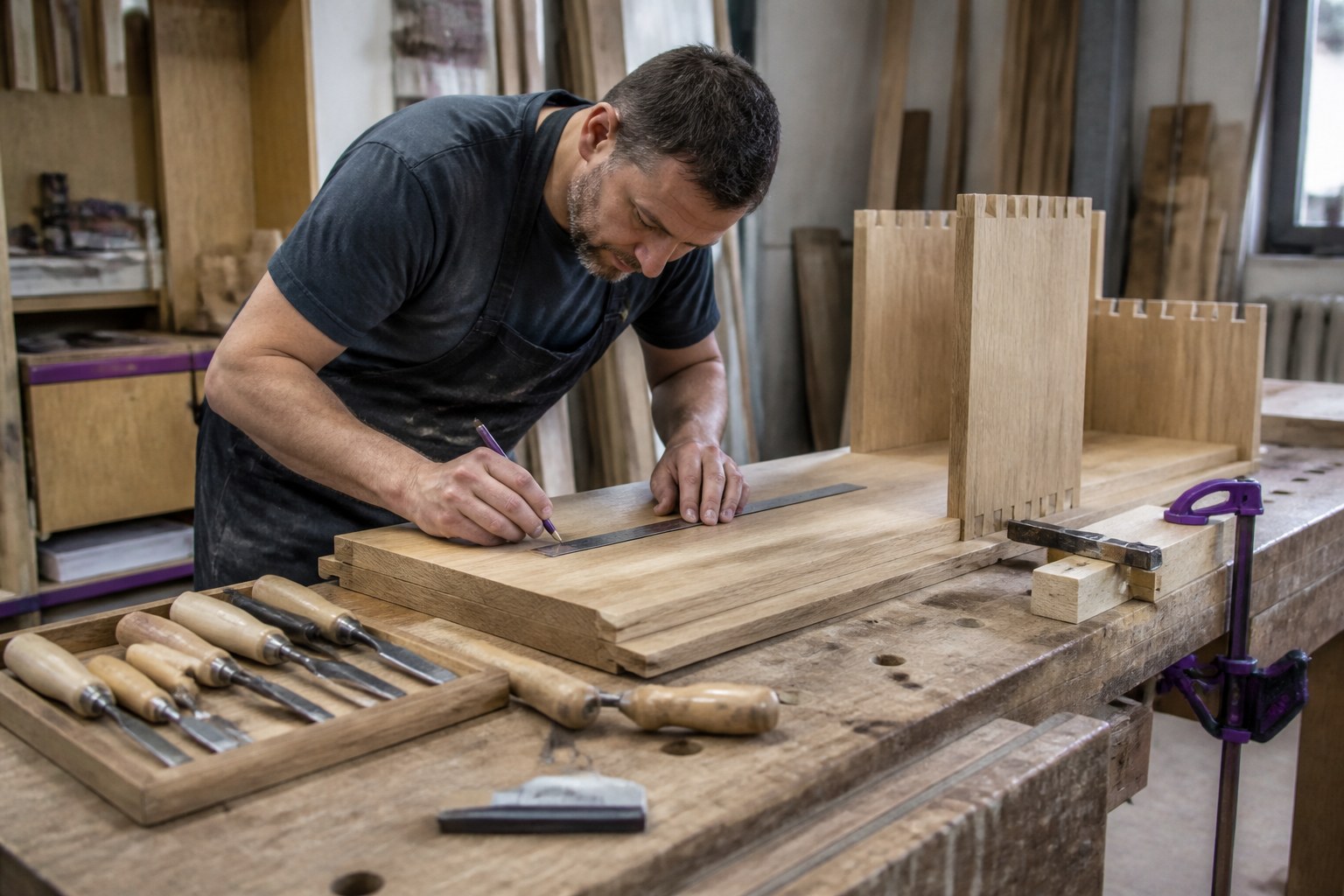
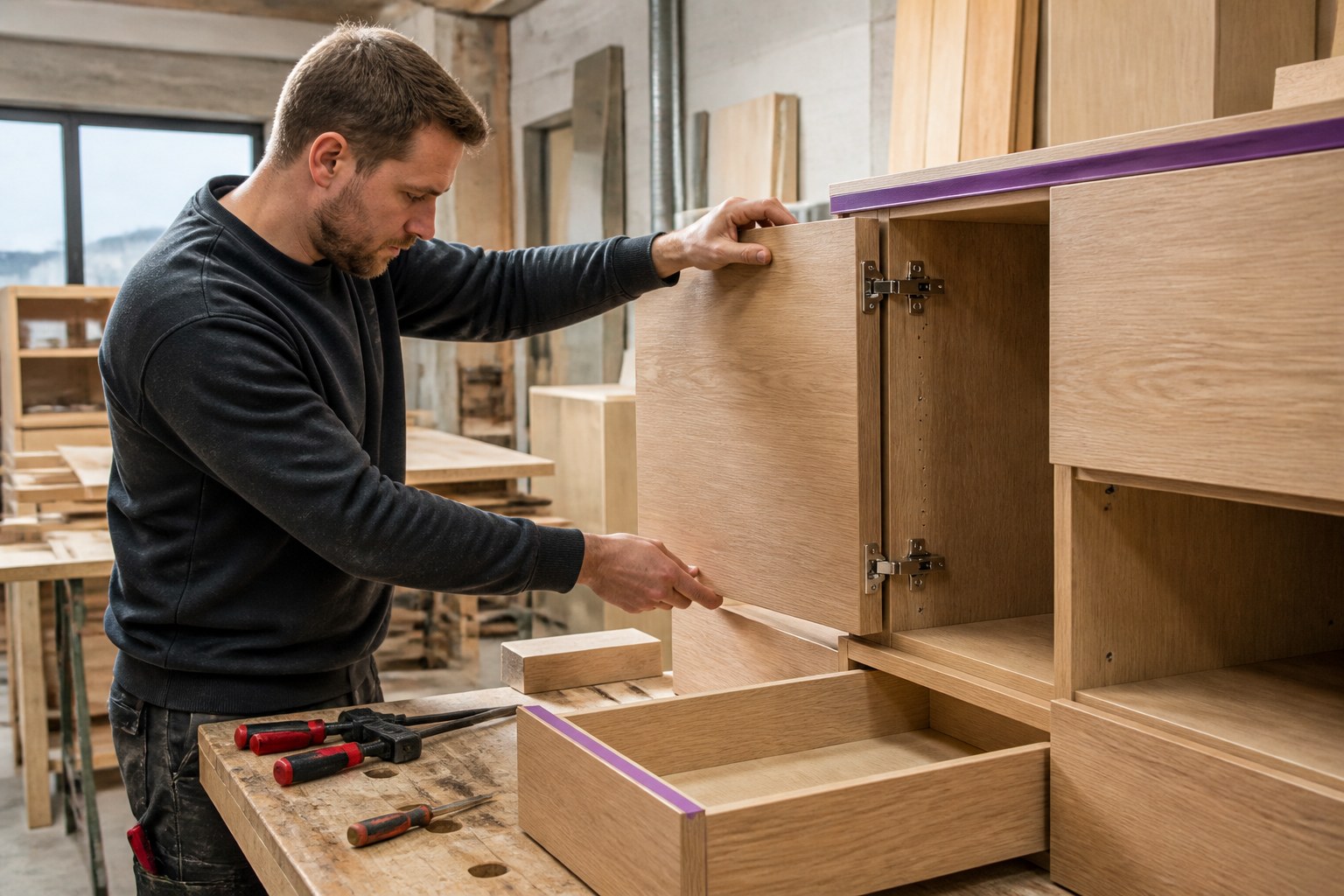
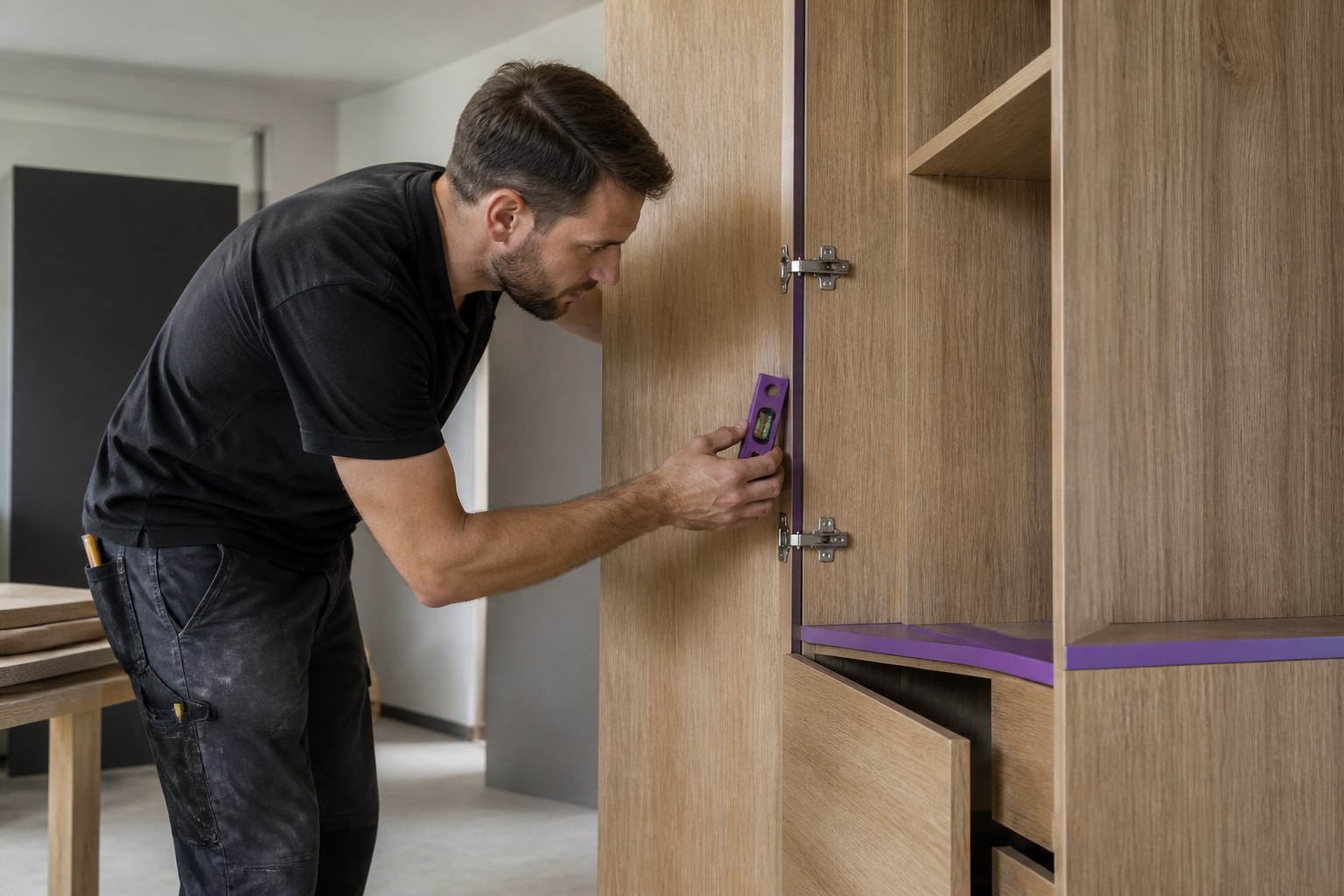
Joiners and cabinetmakers work with wood and wood-based materials to produce, assemble, finish and install furniture, interior components and other fitted elements. Their work combines practical craftsmanship with accurate measuring, material knowledge and attention to detail.
The terms joiner and cabinetmaker overlap in many professional contexts. Joinery often focuses on constructing and fitting components, while cabinetmaking places particular emphasis on furniture, fitted storage, doors, drawers, surfaces and detailed interior work. The actual scope depends on the working environment and assigned tasks.
Applicants should present themselves for employment opportunities throughout Germany rather than focusing on one city or employer. East Talent accepts initiative applications from candidates in this occupational group and reviews their professional profile for suitable employment opportunities.
This occupational group includes workshop-based and installation-focused work. Some professionals produce components from timber, panels or other materials, while others combine production with fitting furniture or interior elements at a separate location. Explain this distinction in your application so your practical background is assessed accurately.
Strong profiles connect craftsmanship with reliability. Measuring correctly, protecting finished surfaces, following technical information and completing work to the required standard matter as much as operating tools. Describe your tasks and level of responsibility instead of relying only on a broad job title.
Typical Tasks and Working Environments
Daily work starts with selecting and preparing materials such as timber, panels, veneers, fittings, adhesives and surface materials. Accurate measurements and markings are essential because small errors affect alignment, stability and appearance.
Typical activities include cutting, drilling, routing, sanding, edge treatment, joining and surface finishing. Depending on the workplace, professionals use hand tools, stationary woodworking equipment and production machinery. Describe the equipment you have used and distinguish independent operation from supervised use or basic familiarity.
Assembly includes fitting doors, drawers, hinges, handles, shelves and other hardware. Professionals check gaps, alignment, surface quality and moving parts. Installation takes place in workshops, production areas and customer or construction sites, where careful handling and coordination with other trades are important.
Quality checks are part of the craft. Explain how you identify dimensional deviations, surface defects, damaged edges, incorrect fittings or installation problems. Safety also matters when handling machinery, sharp tools, dust-producing processes, heavy components and finishing materials.
The environment affects the practical demands. Workshop production requires orderly preparation, repeated accuracy and safe machine operation. Installation requires transport awareness, careful positioning and protection of finished surfaces. Mention experience with solid wood, veneered panels, laminated boards, fittings, adhesives or finishing systems accurately.
Tool maintenance, dust control and workplace organization also support a strong profile. Include responsibility for preparing machines, maintaining tools, keeping the work area safe or checking materials before production.
Qualifications and Experience Relevant to Applicants
A completed vocational qualification in joinery, cabinetmaking, woodworking or a comparable field provides a clear foundation. Candidates without a directly matching qualification should document their practical preparation and explain how their experience covers relevant tasks.
Describe experience through specific products, materials and responsibilities. State whether you produced fitted furniture, interior components, doors, windows, shop fittings or other wooden structures, and identify the stages you handled from measurement and preparation to assembly, finishing and installation.
Relevant technical skills include reading technical information, transferring measurements, selecting materials, using tools safely, assembling components precisely and checking completed work. Include computer-controlled machinery or digital production systems when you have genuine experience with them.
Your level of independence matters. State whether you prepared complete components, worked from instructions, made final adjustments or supported experienced colleagues. Include team supervision, installation coordination or quality checks separately from hands-on production tasks.
Give the product type, material, production stage and tools or machinery involved. A short description of a clearly documented project is more informative than a long list of unexplained technical terms. Explain how different woodworking activities connect while distinguishing transferable experience from tasks you have not performed.
Use the following checklist to collect the information needed for an initiative application.
German Skills for Joinery and Cabinetmaking Work
German belongs in your candidate profile because joinery and cabinetmaking involve practical communication throughout the working day. You need to understand instructions, discuss measurements and materials, coordinate work and report quality or safety issues clearly.
Language is connected with technical accuracy. Misunderstanding a dimension, fitting, surface requirement or installation instruction creates rework and affects the finished product. Communication with colleagues and other trades is therefore part of professional readiness.
There is no profession-specific mandatory German level stated in the available facts for this occupational group. State your current German skills honestly and clearly. If you have certificates, list the level and issuing institution. Also describe whether you use German in technical, workplace or everyday situations.
English and other languages provide additional context, but they do not replace a clear description of your German communication ability. Explain whether you understand workshop instructions, read measurements and technical notes, discuss changes or report defects.
Build vocabulary for tools, materials, measurements, safety instructions, fittings and common workplace actions. Practise short explanations of previous projects. If your German is developing, present the situation factually and separate certified knowledge from communication skills gained through work.
Documents to Prepare for Your Application
Prepare a clear CV covering personal details, education, vocational training, professional experience, language skills and technical abilities. List positions in reverse chronological order and describe responsibilities with concrete woodworking terms.
Include vocational, school or college certificates and other education documents supporting your profile. Employment evidence should show the employer, position, employment period and main duties where available. Project descriptions are useful when they explain the product, materials, tools, machinery and installation work.
Work samples or photographs provide additional context when you are permitted to share them. Remove confidential customer information and do not present another person’s work as your own. Add a factual description of your contribution.
Certificates issued in another language may require translation into German or English depending on the procedure. Whether a certified or formal translation is needed depends on the individual process. Keep originals and translations together, and ensure that names, dates and job titles are consistent.
Organize digital files with clear names and readable, complete scans, including pages with stamps, signatures or supplementary information. Check that your CV, certificates and employment evidence tell the same professional story. Explain genuine differences such as a translated job title or self-employment period.
A simple project portfolio is useful when photographs represent your work accurately. Add the project type, your contribution, materials and production or installation stage. Exclude confidential plans, customer data and unauthorized images.
Applicant Preparation Checklist for Joiner and Cabinetmaker Jobs
Preparation area
What to document
Why it matters for your application
Professional qualification
Vocational training, woodworking education or comparable professional preparation
Shows the foundation of your joinery or cabinetmaking profile
Practical experience
Positions, employment periods, products, materials and main responsibilities
Allows your actual occupational experience to be assessed clearly
Technical skills and work methods
Tools, machinery, measurements, assembly, installation, finishing and quality checks
Connects your experience with the practical demands of woodworking work
German language skills
Current level, certificates and experience with workplace or technical communication
Shows how you understand instructions and coordinate work safely
Application documents
CV, certificates, employment evidence and project descriptions or work samples where available
Creates a complete and consistent basis for an initiative application
Recognition of Foreign Joinery Qualifications
Recognition and requirements for working in Germany are separate questions. An occupation is regulated when access to the occupation or specific professional activities is legally protected. Non-regulated occupations are not protected in the same way, and many occupations in Germany fall into this category. Check the legal classification for the specific professional activity and qualification rather than relying on a job title.
An assessment of a foreign qualification examines whether it corresponds to a German reference occupation and whether substantial differences exist. For non-regulated occupations, possible results include full recognition, partial recognition or no recognition. Where substantial differences exist, an adjustment qualification or another designated measure addresses them in the relevant case.
Recognition does not decide whether a person receives permission to enter or stay in Germany. Residence and employment requirements are assessed separately. Keep qualification documents complete while obtaining current information about rules applying to your individual situation.
Prepare certificates, transcripts or other evidence showing the content and duration of training. Employment evidence documents the practical experience connected with your qualification. Additional courses and technical responsibilities also provide context if differences are identified.
Do not describe recognition as a guarantee of employment. It is a professional assessment forming one part of preparation for work in Germany. Your vocational background, experience, German communication ability and complete documents remain relevant when your candidate profile is reviewed.
Understanding Employment Conditions in Germany
Before accepting employment, review the contract carefully. It should identify the contracting parties and address the start date, any fixed term, probationary arrangements, workplace, duties, pay, working time, leave and notice periods. The exact content depends on the employment relationship and applicable collective or workplace rules.
Pay is normally stated as a gross amount. Gross pay is not the amount transferred to your bank account because taxes and social insurance contributions are deducted according to your individual circumstances. Social insurance includes health, long-term care, pension, unemployment and accident insurance within the applicable system.
Do not calculate personal net income from gross pay alone. Your available amount after deductions depends on your tax and social insurance situation. After relocation, rent, a deposit, transport and other living costs also affect the amount available for everyday expenses.
Read the workplace and duties carefully. A joiner or cabinetmaker may work primarily in a workshop, production area, installation environment or combination of these settings. Physical demands, travel, handling of finished components and coordination with other trades differ between them. Request clarification about unclear terms before signing.
Keep a copy of the signed contract and documents explaining workplace rules or duties. Plan initial accommodation costs, the deposit, transport, tools or personal equipment and everyday expenses separately from gross pay, because these costs arise before the first regular payment.
How to Present Your Joinery Experience
Use your CV and application documents to show what you actually did. Name the position, products, materials, tools and machinery, and explain whether you worked independently, followed technical instructions, checked your work or coordinated with colleagues.
Describe measurement and installation work precisely. Examples include preparing components from drawings or measurements, assembling cabinet carcasses, fitting hinges and drawers, installing worktops or interior elements, adjusting doors and checking surfaces. Include only activities reflecting your real experience.
Project descriptions should focus on your contribution and result. State the project type, production or installation stage and quality checks completed. Explain the technical relevance of unusual materials, complex fittings or challenging site conditions.
Remain open to employment opportunities throughout Germany. A broad geographic profile allows your experience to be considered for suitable opportunities in different parts of the country rather than limiting assessment to one preferred location.
Use action-based descriptions such as “measured and cut panel components,” “assembled cabinet units” or “adjusted doors after installation.” If you supported a task rather than completing it independently, state that distinction. Review technical terms before submission and use German terms only when you know them accurately.
Preparing for Employment and Relocation to Germany
Relocation preparation involves employment, proof of qualifications, possible recognition questions and immigration requirements. Treat these areas separately so that professional assessment is not confused with a residence decision.
Check that your CV, certificates and employment evidence use consistent names, dates, job titles and employment periods. Keep scans readable and retain originals for procedures that require them. Complete professional documents first, then obtain current official information for your personal immigration circumstances.
Relocation also requires practical planning. Consider accommodation, the deposit, transport, everyday expenses and the difference between gross contractual pay and net income. These costs affect your actual budget after moving to Germany.
Keep professional preparation and relocation preparation in separate folders. The first should contain your CV, qualifications, employment evidence, language information and project material. The second should contain personal documents and current information relevant to your situation.
Check names across your passport, certificates, translations and employment records. A spelling variation does not automatically invalidate a document, but it requires an explanation. Do not make travel or financial plans on the assumption that an application will receive a particular result; responsible authorities assess each case individually.
Next Steps for Joiners and Cabinetmakers
Review your experience in joinery, cabinetmaking and related woodworking activities. Identify the products, materials, tools, machinery, measurements, assembly tasks, installations and quality checks you can document truthfully.
Organize your CV, vocational certificates, education documents, employment evidence, language information and project descriptions. Clarify recognition questions separately from immigration questions and keep every document consistent.
Submit an initiative application to East Talent for consideration for employment opportunities in Germany. This is not an application for a specific vacancy or named employer. Applicants should remain open to employment opportunities throughout Germany.
Before submitting, check whether your documents show your qualification, experience, technical skills and current German communication ability. Replace general statements with concrete examples wherever evidence is available. Keep copies of everything submitted and update your candidate information after additional training or improved language skills.
Joinery and cabinetmaking require practical precision, safe working methods and reliable communication. When these elements appear consistently across your CV, documents and project descriptions, your professional background is easier to assess.
Four short steps. A CV is optional and can be provided in your native language.
Step 1 of 4Profession
East Talent
International recruitment with proprietary software
East Talent combines international recruitment with structured digital processes for handling candidate profiles, attracting employers and evaluating job opportunities.