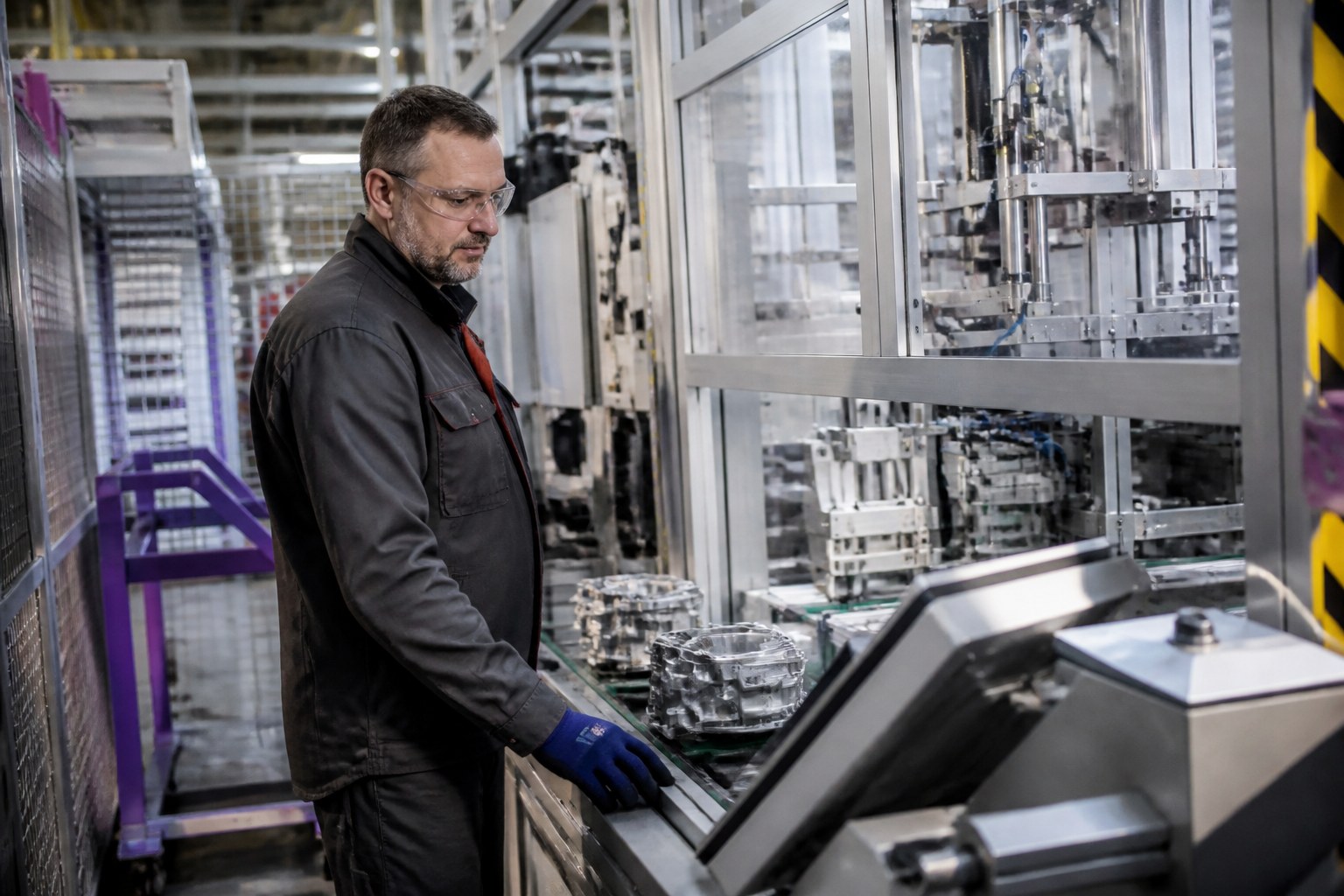
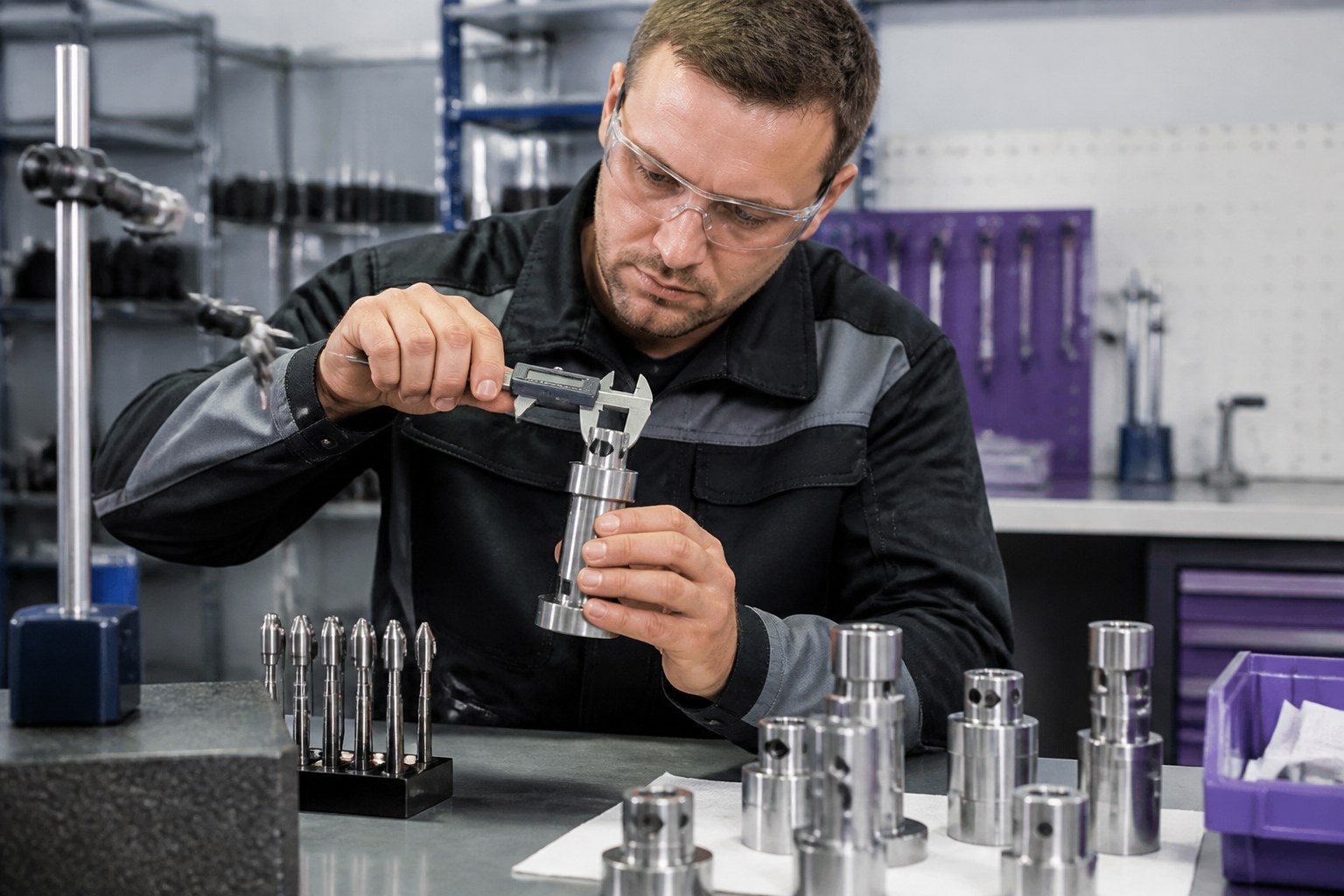
Production workers support manufacturing processes in industrial workplaces. Their tasks depend on the production environment, the products being made and the technical equipment used. Common areas include machine operation, assembly, material handling within the production process, visual inspections and compliance with workplace procedures.
A production worker follows defined process steps and works accurately under practical conditions. This includes preparing materials, operating or monitoring machinery, assembling components and identifying visible deviations in products or processes. Quality checks are part of many production activities because errors at one stage affect later manufacturing steps.
Production work also requires attention to safety instructions. Applicants need to understand how workstations, tools and protective equipment are used. They must communicate relevant information to colleagues and report problems through the applicable workplace process.
The work takes place in a structured industrial environment rather than an office setting. Depending on the production process, the role involves standing, repetitive movements, technical equipment, shift-related organization or close coordination with other production workers. The actual conditions belong in the employment information that you review before accepting work.
Qualifications and Experience That Strengthen Your Profile
Your profile is stronger when it shows practical experience in manufacturing, assembly, machine operation, quality control or a related industrial activity. Experience does not need to be described through general statements such as “worked in production.” State the process, equipment, product type or responsibility that explains what you actually did.
Vocational training in a technical, industrial or production-related field provides useful evidence of structured professional preparation. Certificates from training institutions and previous employers help explain your background. If you have no formal vocational qualification, clearly documented practical experience remains important for an application in the production field.
Technical understanding is relevant because production workers interact with machinery, tools, materials and defined process steps. Accuracy, reliability and concentration affect both product quality and workplace safety. Your application should therefore show how you followed instructions, maintained consistent quality and responded to production problems.
Safe working practices are part of your professional profile. Describe experience with safety procedures, protective clothing, workstation rules and reporting processes when these activities formed part of your previous work. Do not claim experience with equipment or processes that you have not used.
German Language Skills for Production Work
German skills form part of your candidate profile for production work in Germany. They support your ability to understand work instructions, safety information, team communication and production documentation. Language knowledge is therefore relevant even when the main focus of your profile is practical manufacturing experience.
Record your German skills accurately in your CV. You may use the Common European Framework of Reference for Languages, such as A2, B1, B2 or C1, when you know your level or hold suitable evidence. Do not present a language level that you cannot use in practical communication.
Production communication often includes technical terms, short instructions, warnings, measurements, product descriptions and information about deviations. Improving your vocabulary in these areas helps you explain previous experience and follow workplace communication more effectively.
English or another language may also be relevant to your professional background, but German information remains an important part of preparing for work in Germany. Your language section should distinguish between speaking, understanding, reading and writing when those abilities differ.
Recognition of Foreign Qualifications
Recognition questions depend on the occupation and on the qualification you present. Regulated professions are legally protected, so professional recognition or a licence is generally required before practising the profession. Non-regulated professions are not protected in the same way. Many occupations in the dual vocational training system and numerous academic professions are non-regulated.
Production-related work often requires a separate assessment of the applicant’s training, practical experience and documents. The fact that a profession is non-regulated does not automatically mean that qualification evidence is irrelevant for residence purposes. Professional recognition and requirements for working in Germany are separate questions.
During a recognition procedure, the responsible authority checks whether a foreign qualification matches the relevant German reference profession or whether substantial differences exist. Depending on the result, the outcome may include full recognition, partial recognition or no recognition for a non-regulated profession. Further qualification measures address substantial differences in cases where this is provided for.
Prepare complete and consistent documents before starting a recognition procedure. Missing information creates additional work because the authority needs a clear basis for comparing your qualification with the relevant reference profession.
Documents to Prepare Before Applying
A clear CV is the central document for presenting your production profile. Include your contact details, education, vocational training, employment history, language skills and relevant technical abilities. List work experience in reverse chronological order so that your most recent activity is easy to identify.
Add education and training certificates that support your professional background. Important school, vocational and higher-education certificates may form part of the application documents. Keep the original documents available and prepare clear copies or digital files in an organized folder.
Describe previous work with the employer or organization, your position, the period of employment and your main tasks. A concise task description is more useful than a list of job titles without context. Include machinery, production processes, assembly activities, inspections, tools or materials when these details accurately reflect your work.
State language skills and relevant additional abilities. Examples include technical drawing, measurement, documentation, quality-related tasks, maintenance support or experience with production software, provided these skills belong to your actual background. A translation into German or English may be relevant for foreign-language certificates in a particular procedure. Whether a certified or otherwise formal translation is required depends on that procedure.
Production Worker Application Preparation
Preparation area
What to provide
Why it matters for applicants
Work experience
Employers, positions, dates, production tasks, machinery, processes and quality-related responsibilities
Shows what you have actually done and helps reviewers understand your practical production profile
Qualifications and certificates
Vocational training records, education certificates and relevant additional qualifications
Supports the assessment of your professional background and identifies recognition questions
German language skills
Accurate language information, including a CEFR level such as A2, B1, B2 or C1 when supported
Shows your preparation for instructions, safety information, team communication and documentation
Application documents
A clear CV, readable certificates, work-experience evidence and relevant translations where the procedure requires them
Creates a consistent application and reduces uncertainty about your qualifications and experience
How to Present Production Experience in Your CV
Organize each production position around concrete responsibilities. Start with the position, employer, employment period and production context. Then describe the work in clear bullet points that show what you did, what equipment or processes you used and how you contributed to consistent production.
Mention machine operation or monitoring only when you performed those tasks yourself. Describe setup, material feeding, control activities, cleaning or basic checks precisely. If your role focused on assembly, explain the type of components, the sequence of work and the tools used without overstating your responsibility.
Quality-related information should explain how you checked products or processes. You might describe visual inspection, measurements, comparison with specifications or reporting of defects when those activities formed part of your work. This information shows accuracy and process awareness.
Safety awareness belongs in the same section when it is supported by your experience. State that you followed workplace instructions, used required protective equipment or reported unsafe conditions when true. Also include the duration and context of the work, such as full-time employment, vocational training or temporary production experience.
Use factual language and avoid unexplained technical abbreviations. Your CV should allow a reviewer to understand your experience without guessing what a machine, process or responsibility meant in your previous workplace.
Working Conditions to Understand Before Employment
Before employment begins, review the main terms of the employment contract. The contract should identify the parties, the start date, any fixed term, the probationary period, the workplace, the duties, pay, working time, leave and notice periods. These points explain the practical framework of the employment relationship.
Pay is usually stated as a gross amount. Taxes and social-security contributions are deducted according to your personal circumstances, so the net amount paid to you is not identical to the agreed gross amount. Do not calculate your available income from the gross figure alone.
Additional payments such as premiums or supplements depend on the employment relationship and applicable rules. Collective agreements or works agreements also provide additional provisions in some workplaces. Review whether such rules apply and how they affect pay, working time or leave.
Working time and the workplace deserve particular attention in production roles. Ask for clear information about the place of work, the duties, the organization of working time and any relevant workplace procedures. Housing, transport and daily living costs also affect the money available to you after relocation, so include them in your personal planning without assuming a particular salary or location.
Why Flexibility Across Germany Matters
Applicants using the East Talent candidate pathway apply initiatively for employment in their professional group. They do not apply for one named vacancy or one specified employer at this stage. East Talent reviews professional qualifications, experience, German skills and the documents needed for further consideration.
Suitable candidates may subsequently be introduced to matching companies in Germany. This means your profile should describe your production experience broadly enough to support consideration for relevant opportunities in different industrial environments.
You must remain open to employment opportunities throughout Germany. Limiting your expectations to one city or one local area reduces the range of opportunities that match your professional profile. State your practical mobility clearly and consider the effect of relocation, transport, accommodation and living costs when assessing an opportunity.
Flexibility does not replace accurate information. Your qualifications, previous tasks, language skills and documents still determine how your profile is understood. A clear profile supports a more reliable assessment of the production work for which your background is relevant.
A Practical Preparation Checklist
Begin by documenting your production experience. Record employers, positions, employment periods, machinery, processes, assembly tasks, inspection activities and safety responsibilities. Check that the dates and job descriptions in your CV match the documents you hold.
Collect certificates for vocational training, education and relevant additional courses. Organize them together with evidence of work experience and language information. Use clear file names and readable scans if you submit digital documents.
Review recognition questions separately from residence questions. Identify whether your qualification belongs to a regulated profession and whether a comparison with a German reference profession is relevant. Do not treat the absence of formal recognition in a non-regulated occupation as proof that no other qualification evidence is required.
Prepare to explain your German skills in practical terms. Technical vocabulary, safety instructions, team communication and production documentation all belong to the work environment. Accurate information is more valuable than an overstated language level.
Finally, remain ready for opportunities throughout Germany. Your preparation should support an initiative application for your professional group rather than a response to one advertised position.
Applying for Production Worker Jobs in Germany
An application for production worker jobs in Germany should present a complete and truthful professional profile. Include your practical experience, qualifications, German skills and supporting documents. Explain your previous production tasks in enough detail for your experience to be understood beyond the job title.
The East Talent application route is an initiative application for employment in your professional group. It is not an application for a specific advertised position or a named employer. East Talent assesses the information you provide and identifies whether your profile is suitable for further consideration in Germany.
Accuracy matters throughout the process. Do not add machinery, certificates, language levels or production responsibilities that do not belong to your background. If a document is missing, identify the gap instead of replacing it with an unsupported statement.
Production work requires practical reliability as well as technical understanding. A well-organized CV, consistent certificates, realistic language information and openness to opportunities throughout Germany give your application a sound basis.
Four short steps. A CV is optional and can be provided in your native language.
Step 1 of 4Profession
East Talent
International recruitment with proprietary software
East Talent combines international recruitment with structured digital processes for handling candidate profiles, attracting employers and evaluating job opportunities.