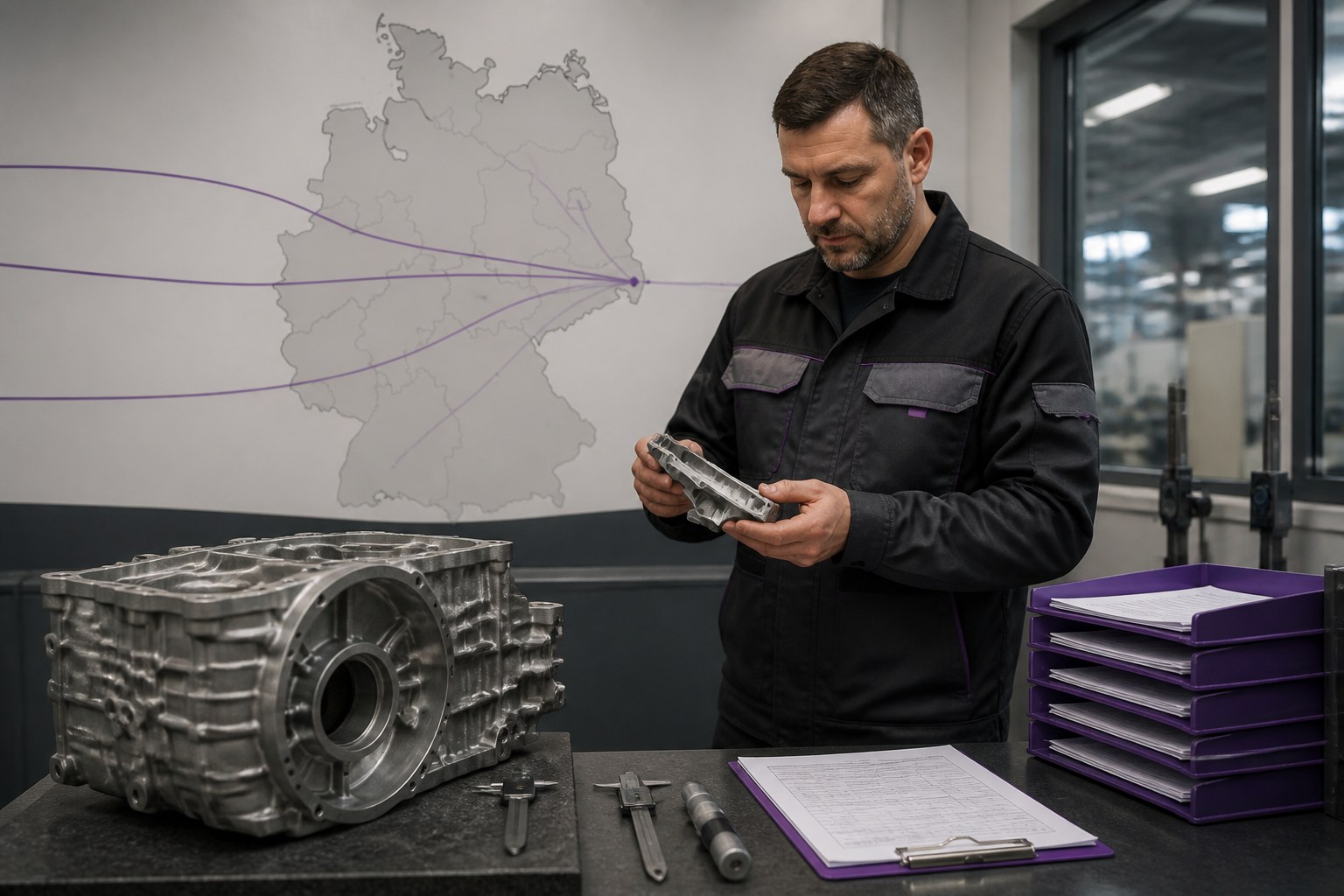
Automotive quality inspectors examine vehicle components, assemblies and production results against technical specifications and quality requirements. Their work connects manufacturing accuracy with reliable documentation. They identify deviations, record inspection results and communicate findings to production and technical teams.
Applicants preparing for automotive quality inspector jobs in Germany need a profile that shows practical inspection experience, technical understanding and disciplined documentation. This article explains preparation for employment opportunities throughout Germany. It does not describe a specific vacancy or employer.
The occupational group includes quality inspection in automotive production and related manufacturing environments. Products, equipment and procedures differ between workplaces, so your application should describe what you actually inspected and which responsibilities you carried out.
Quality inspection involves more than finding visible damage. The role requires understanding the relevant requirement, selecting an appropriate inspection method, comparing the result with the defined tolerance or specification, and creating a record that another person understands.
Your previous environment may have been a vehicle-component factory, mechanical production facility, assembly operation or another industrial setting. Explain the connection between your technical background and controlled inspection work instead of presenting general factory experience without detail.
Typical Tasks in Automotive Quality Inspection
A quality inspector checks whether manufactured parts match defined technical requirements. Visual inspection includes surface damage, incorrect assembly, production defects and other deviations affecting the specified quality of a component.
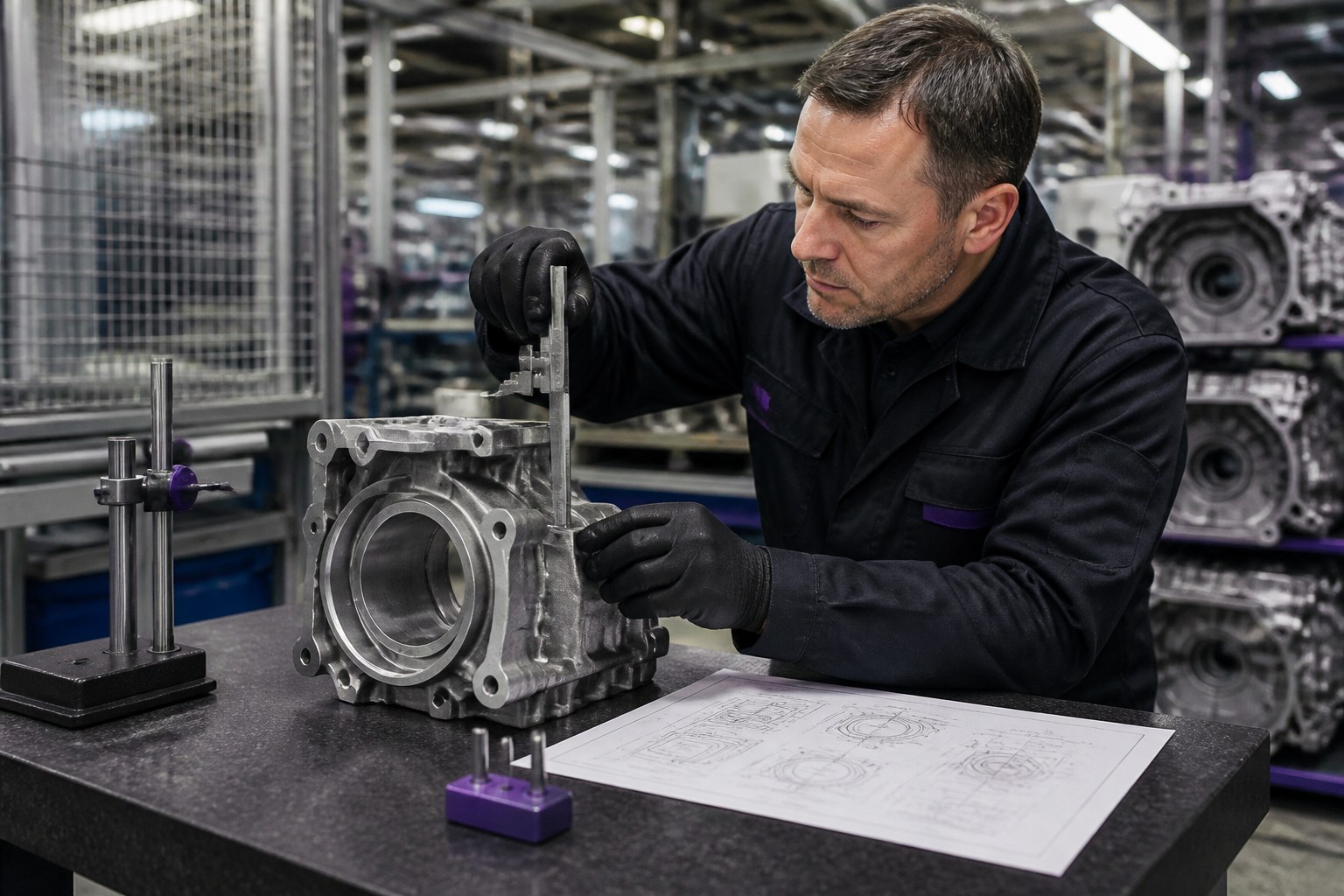
Dimensional checks require suitable measuring equipment and careful handling. Depending on the production environment, this involves checking relevant dimensions, comparing results with technical documentation and recording measured values. An incomplete or incorrect record makes later investigation more difficult.
When an inspector identifies a non-conformity, the result is documented clearly and traceably. The record identifies what was inspected, which deviation was found and which information supports the finding. Inspectors communicate observations to production, quality and technical colleagues so the issue receives appropriate attention.
Consistency is central to the work. Repeating an inspection according to an established procedure, separating acceptable results from deviations and maintaining complete records are core responsibilities. Describe both the products inspected and the method used to ensure reliable results.
Depending on the workplace, inspectors examine incoming materials, parts during production, assembled units or finished components. They check appearance, dimensions, assembly condition, surface quality or other characteristics defined by production documentation. Distinguish these inspection stages in your application.
The role also requires factual communication when a result does not meet the requirement. A useful report identifies the component, characteristic checked, observed result and relevant deviation. This style supports cooperation with production and technical teams.
Qualifications and Experience Employers Look For
A relevant technical or automotive training background strengthens an applicant profile for this occupational group. Useful backgrounds include manufacturing, vehicle components, mechanical production or another technical environment involving defined quality requirements.
Previous inspection work is particularly relevant. Describe whether you checked incoming materials, production parts, finished components or assembled products. State the types of defects identified and explain your responsibility for accepting, rejecting or documenting results where this formed part of your work.
Technical drawings, specifications and inspection instructions are important reference material. Show whether you worked with dimensions, tolerances, product requirements or documented inspection criteria. Do not list knowledge that you have not used in practice.
Quality awareness includes careful handling of deviations, traceable records and cooperation with other teams. Evidence of responsibility is more informative than a general statement such as “quality-focused.” Describe the process, equipment and documentation connected with your actual experience.
A formal technical qualification is valuable, but practical work remains important during profile assessment. If your job combined production and inspection, separate those activities in your CV. State how much of your work involved checking parts, measuring characteristics, recording results or handling non-conformities.
Experience with repetitive inspection processes deserves specific explanation. Consistency, concentration and respect for defined procedures are central to quality work. Mention how you maintained accuracy across repeated checks, without claiming statistical, auditing or management responsibilities that were not part of your role.
Technical Knowledge That Strengthens Your Profile
Technical preparation starts with interpreting relevant drawings, specifications and work instructions. Explain which documents you used and how you translated requirements into practical inspection steps.
Experience with measuring and inspection equipment strengthens the profile when described precisely. Name equipment such as calipers or other relevant measuring tools, and connect each tool with the type of check performed. Distinguish regular hands-on experience from theoretical knowledge.
Recording non-conformities is another important area. Explain how results were entered, checked and communicated. If you supported investigations into recurring defects, describe your contribution without claiming responsibility for technical decisions made by another department.
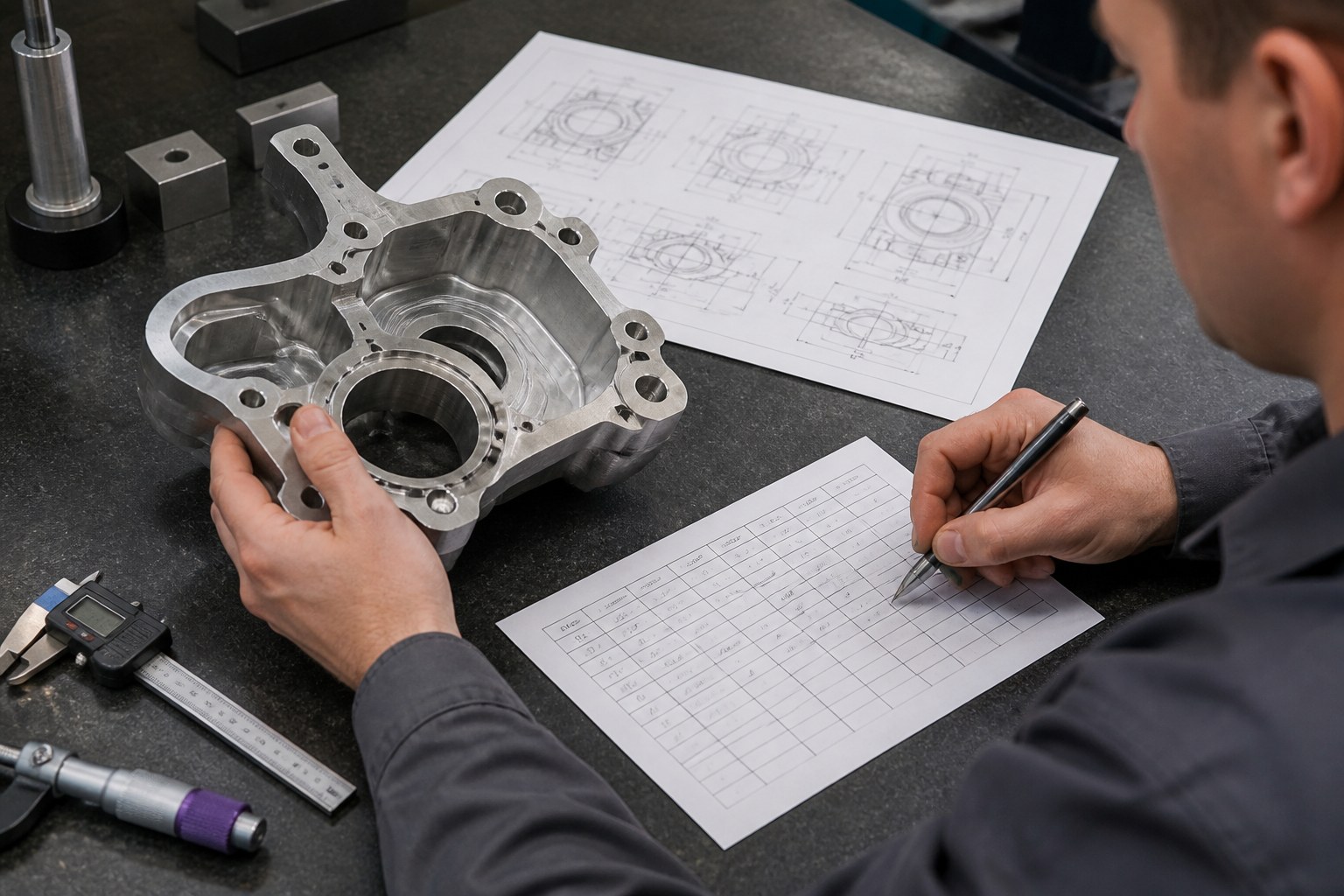
Technical documentation includes inspection sheets, non-conformity reports and traceability records. State whether you completed records manually, entered results in a production system or passed documented findings to another team. Name the method only when it reflects your actual experience.
Quality inspection requires separating observation from interpretation. Your profile should show that you recorded what the measurement or visual check demonstrated and followed the applicable process for further action. This is different from claiming responsibility for root-cause analysis or final process decisions.
If you still need a particular skill, separate planned training from verified experience. This distinction makes the application more credible and gives the reviewing team a clear basis for assessing your profile.
German Language Skills for Quality Inspection Work
German is relevant to an automotive quality inspector’s profile because inspection work involves instructions, technical terms, safety information and discussions about deviations. Clear communication supports accurate understanding of what must be checked and how a result must be recorded.
Your language information should be honest and specific. State your German level using a recognised framework when you have an assessed level, and explain how you use German in technical or workplace situations. Separate formal certification from practical communication experience.
Review vocabulary connected with dimensions, surfaces, defects, tolerances, components, measurements and documentation. Language preparation becomes more useful when it relates directly to the inspection tasks you have performed.
Communication includes reporting an issue clearly. Explain how you describe a deviation, ask for clarification and pass information to production or quality colleagues. Listening is equally important because inspectors receive instructions, answer questions about measurements and discuss findings.
Written communication matters as well. Inspection records, deviation descriptions and short internal messages must be understandable to the next person reviewing the result. Include German experience with technical records or workplace reporting separately from general conversational ability.
Do not replace language evidence with a certificate title alone. A certificate documents an assessed result, while workplace examples show how you use German in practice. Present both forms accurately and identify professional vocabulary you are still developing.
Technical or automotive training, completed courses and relevant certificates
Shows the foundation of your professional profile
Inspection experience
Products or components inspected, inspection stage and responsibilities
Makes your practical experience specific and verifiable
Measurement and documentation
Measuring equipment, checked characteristics, results and non-conformity records
Demonstrates accuracy and traceable working methods
German language skills
Honest language level and technical communication experience
Shows how you understand instructions and report deviations
Application documents
CV, certificates, employment evidence and relevant technical qualifications
Allows a complete assessment of your qualification and experience
Documents to Prepare Before Applying
Prepare a clear CV that presents your technical history in a traceable order. For every relevant position, name the employer, position, employment period and main responsibilities. Explain the products or components inspected, the production environment and the equipment used.
Include education and training certificates documenting your technical background. Relevant employment records, references and certificates should support the statements in your CV. List German and other language skills accurately, together with inspection, measurement or quality-related courses you actually completed.
Foreign-language certificates may require translation into German or English in a specific application or administrative process. Whether a certified or otherwise formal translation is required depends on that process. There is no universal certification rule for every document.
Keep digital copies organised and use consistent job titles and dates throughout the CV and supporting documents. Put relevant inspection duties close to each position and explain gaps or changes in occupational focus when this prevents confusion.
Do not copy generic descriptions from another profile because they often introduce equipment or responsibilities you have not used. If a document uses a local occupational title, add a concise English explanation rather than replacing the original information with an inaccurate equivalent.
Prepare a short explanation of your strongest inspection example. Cover the component, requirement, inspection method, result and way you documented or communicated a deviation. This connects your certificates with your actual working ability.
Recognition and Employment Preparation
Professional recognition and related to working in Germany requirements are separate questions. Automotive quality inspection is not automatically treated like a regulated profession simply because it involves technical responsibility. Non-regulated professions are not legally protected in the same way as regulated professions.
For a non-regulated profession, German professional recognition is not required in the same way as a licence for a regulated profession. Qualification evidence still matters for employment assessment and may matter in a related to working in Germany procedure. These questions must be examined separately for the individual applicant and circumstances.
If recognition of an international professional qualification is relevant, the responsible authority compares it with the applicable German reference profession and examines the submitted documents. The result depends on the qualification and procedure. Possible outcomes include full recognition, partial recognition or no recognition for non-regulated professions.
Where substantial differences are identified, an adjustment qualification or another prescribed qualification measure addresses those differences in cases where that route applies. Collect complete certificates, training records and employment evidence before seeking an assessment.
Identify exactly which qualification you want assessed. A general description such as “automotive worker” does not replace certificates, training records and evidence of professional experience. Documents should show the content and duration of training as well as the work performed after training.
Keep qualification assessment separate from the description of your inspection ability. Recognition documents support formal review, while the CV and employment evidence explain how you worked with components, drawings, measuring tools and quality records. Consistent dates, job titles and translations prevent avoidable questions.
What to Check About the Employment Relationship
Before accepting a future employment relationship, review the written contract carefully. Important points include the contracting parties, start date, fixed term, probationary period, workplace, duties, pay, working time, holiday entitlement and notice periods.
The contract should make your quality inspection responsibilities understandable. Check whether the stated duties correspond with the experience presented during the application process. Clarify the workplace and production environment before making relocation or travel arrangements.
Pay is normally stated as a gross amount. Taxes and social security contributions are deducted according to the individual situation, so the net amount paid out is not identical to the contractual gross amount. Additional payments, premiums or supplements depend on the employment relationship and applicable rules.
A move to Germany involves personal financial planning. Rent, a deposit, transport and other living costs reduce the amount available after deductions. Calculate these costs against expected net income rather than assessing an opportunity from the gross figure alone.
For quality inspection work, ask how daily duties are organised. Relevant points include whether the role focuses on incoming goods, production stages, final inspection or several areas, and which teams receive inspection results. Manufacturing inspection also involves standing, repeated measurements, shift-based production or protective clothing in some environments.
Contractual terms may be supplemented by collective agreements or works agreements. Read the documents that apply to the employment relationship and ask for clarification when a term, duty or payment component is unclear.
How to Present Automotive Quality Experience Clearly
Start with the products or components you inspected. Examples include machined metal parts, assemblies or other vehicle-related components, but your CV should name only products you actually handled. Explain whether the work took place during incoming, production or final inspection.
Next, describe measurement and documentation responsibilities. State which tools you used, which characteristics you checked and how you recorded results. If you compared measurements with drawings or specifications, include that connection.
Identify the quality procedures you followed, such as inspection instructions, non-conformity records, traceability requirements or internal reporting processes. Do not claim experience with a quality system merely because you have heard its name.
Describe the production environment and the teams with which you worked. Cooperation with production, technical staff or quality colleagues demonstrates how you communicated findings and supported the response to deviations.
Use action-based descriptions in your CV. “Checked dimensions against technical drawings and recorded deviations” communicates more than “responsible for quality.” State whether you worked independently, followed a team inspection plan, released results for the next process step or escalated findings.
Prepare to explain one difficult inspection situation in sequence: the requirement, observation, record created and communication that followed. Avoid presenting yourself as responsible for corrective action when your role ended with identification and reporting of the deviation.
Finally, separate completed experience from planned training. A clear profile helps East Talent assess your qualification, practical experience, German skills and documents for automotive quality inspector employment opportunities. Applicants must remain open to suitable opportunities throughout Germany rather than limiting preparation to one preferred city or region.
Your Next Steps as an Applicant
Review your technical experience and identify the inspection duties that demonstrate accuracy, measurement knowledge and reliable documentation. Organise your CV, certificates, employment evidence and language information in a consistent application file.
Check whether questions about recognition apply to your individual qualification. Gather complete documents before seeking an assessment, and keep recognition questions separate from related to working in Germany requirements.
Prepare to explain what you inspected, which equipment you used, how you documented results and how you communicated deviations. Compare every CV statement with the supporting documents, including dates, job titles, technical terms and language information.
Use the preparation process to identify missing evidence. If an inspection responsibility appears in your CV but no certificate or employment record supports it, prepare a factual explanation of where and how you performed the work. If a certificate exists but practical experience is unclear, connect it with a specific task.
Keep your application focused on automotive quality inspection. General manufacturing experience remains relevant when it demonstrates measurement, technical documentation and controlled handling of deviations. Remove unrelated detail that hides these core qualifications.
Apply for jobs in Germany through our application form. East Talent reviews applicants for employment opportunities in their professional group, and suitable candidates may later be introduced to companies in Germany. The application concerns employment opportunities rather than a specific vacancy or named employer.
A well-organised file does not guarantee a particular employment result, but it gives the assessment team a reliable basis for reviewing your profile. Accurate information, complete documents, realistic language details and openness to opportunities throughout Germany support the next stage of your professional preparation.
Create your profile
Registration with East Talent
Four short steps. A CV is optional and can be provided in your native language.
Step 1 of 4Profession
East Talent
International recruitment with proprietary software
East Talent combines international recruitment with structured digital processes for handling candidate profiles, attracting employers and evaluating job opportunities.