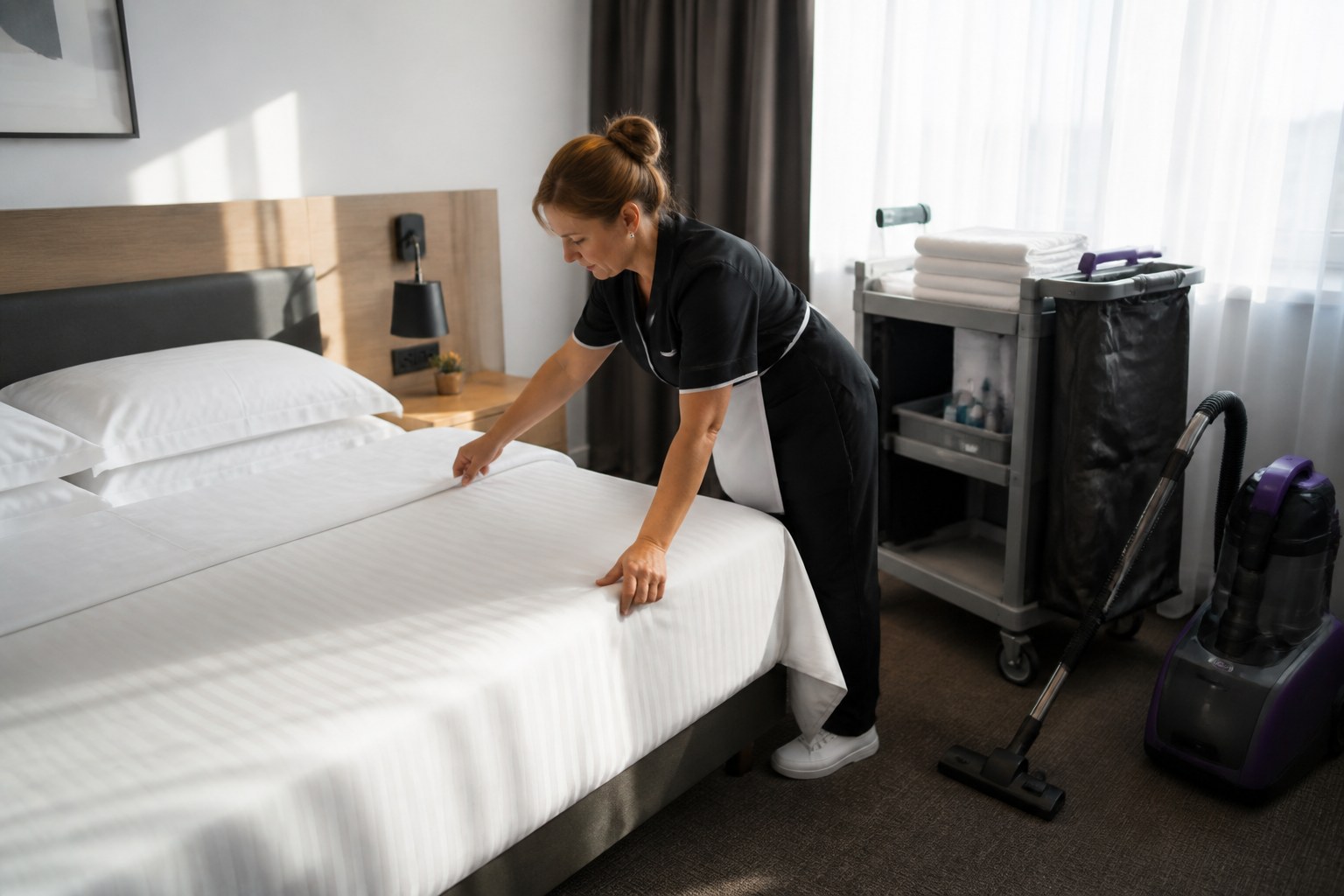
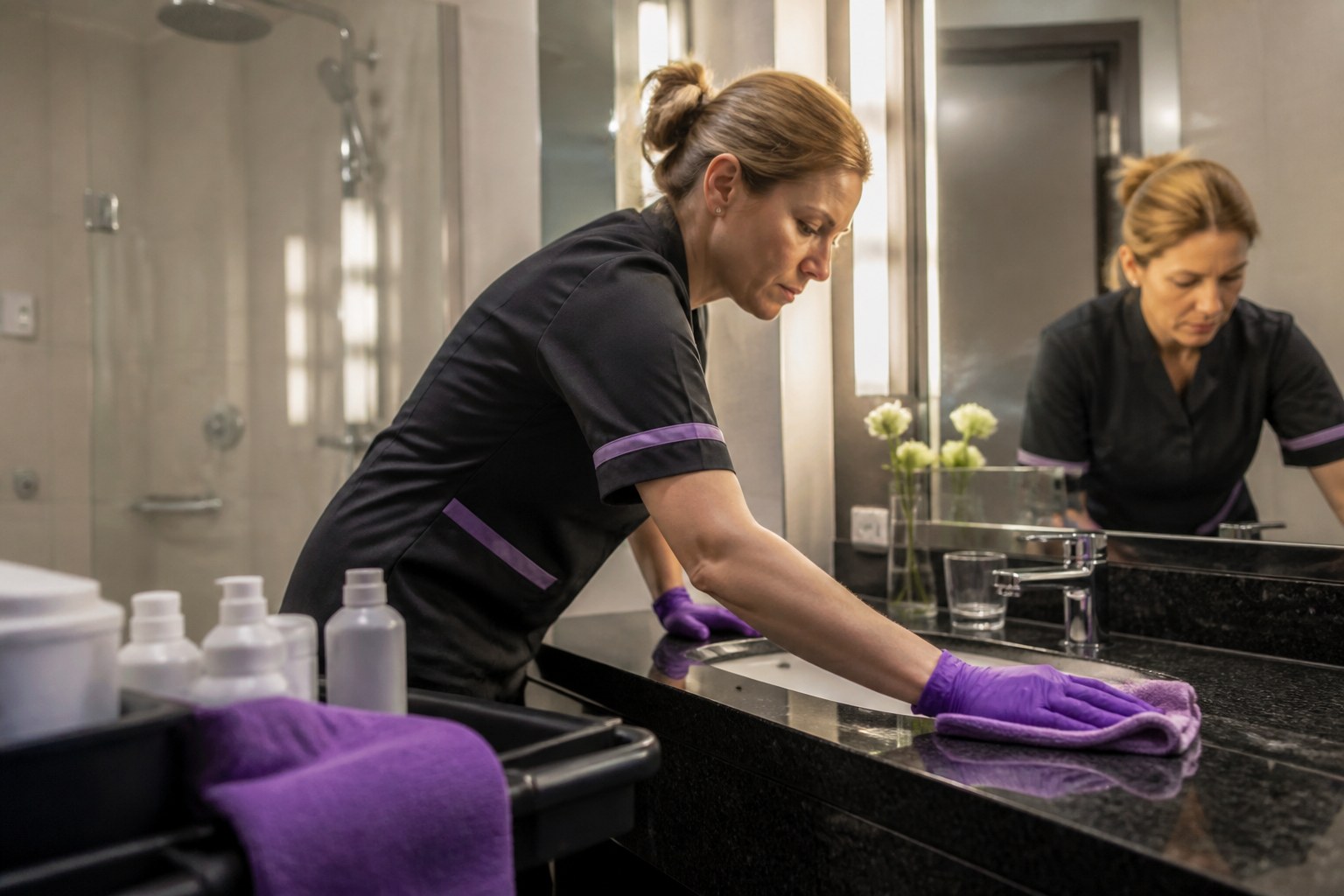
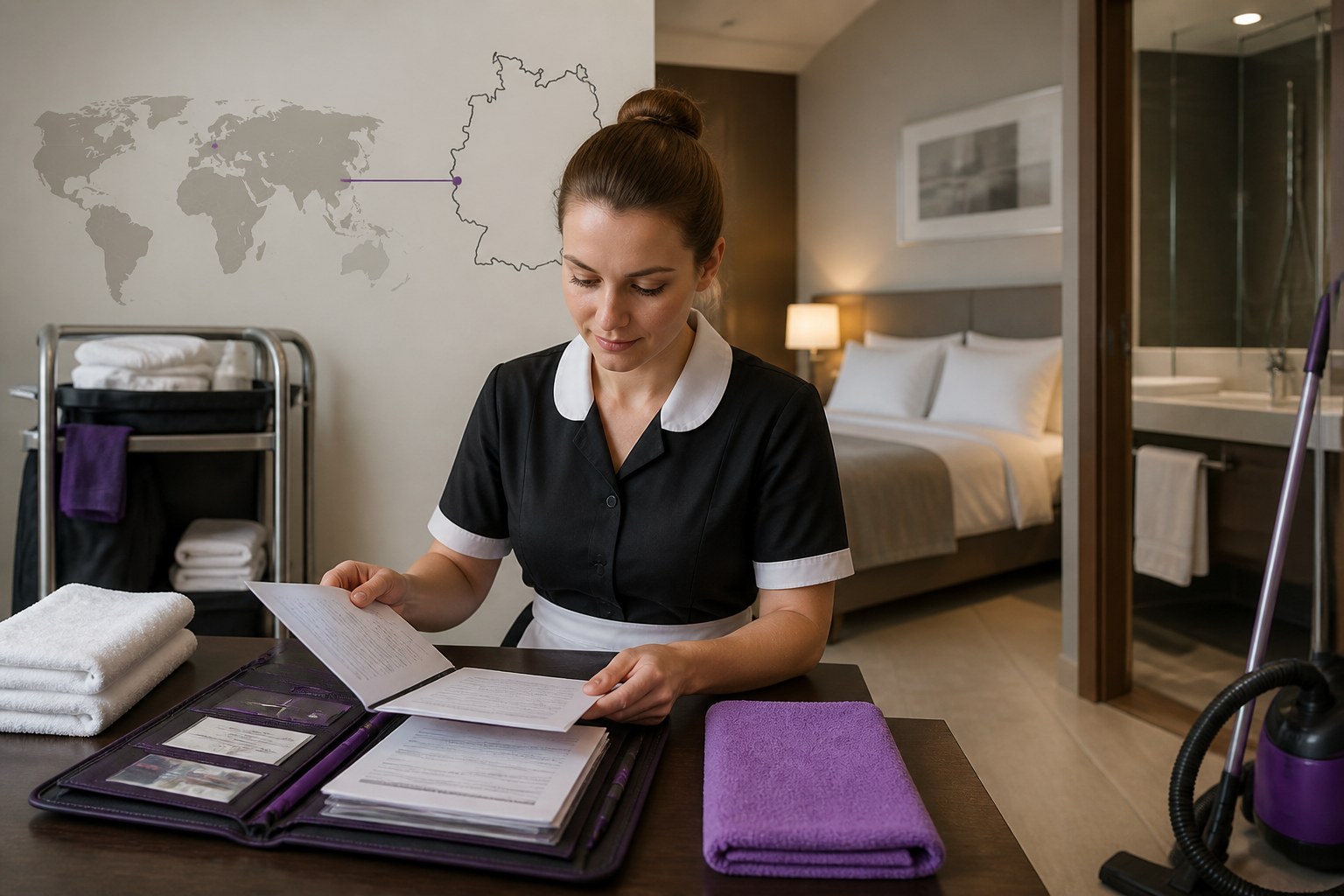
Housekeeping specialists maintain clean, orderly and hygienic accommodation areas. Their work includes cleaning guest rooms, bathrooms, corridors and shared areas, preparing rooms for use and checking whether each area meets the required quality standard.
Daily tasks include changing bed linen, cleaning and disinfecting surfaces, replenishing room supplies, removing waste and using vacuum cleaners, mops and other equipment. Housekeeping specialists also identify missing items, damage or maintenance problems and report them through the appropriate workplace process.
The work combines practical cleaning with careful checking. Bathroom hygiene, bed preparation, floor condition and the availability of required items all require attention. Depending on the workplace, housekeeping specialists coordinate with reception, maintenance, laundry or other operational teams.
Housekeeping work is active. Standing, walking, bending, lifting cleaning materials and completing rooms within planned periods are typical physical aspects. The order of tasks also matters: prepare materials, follow the assigned workflow and check the result before leaving the room or facility.
Safe handling of products, careful treatment of furniture, correct waste removal and timely reporting of defects are part of the professional standard. The workplace may involve contact with guests, residents, patients, colleagues or supervisors. Professional conduct includes respecting privacy, working quietly where required and communicating clearly about access, tasks and problems.
Which Qualifications and Experience Matter
The strongest candidate profile combines practical cleaning experience with reliability and a clear understanding of hygiene procedures. Previous work in hotels, hospitals, care facilities, offices or other structured cleaning environments provides relevant evidence when the responsibilities are described precisely.
Your application should show which areas you cleaned, which products and equipment you used, how you followed cleaning schedules and how you checked your work. Explain whether you prepared rooms, cleaned bathrooms, handled linen, disinfected surfaces, removed waste or reported defects instead of writing only “cleaning duties.”
Relevant working habits include punctuality, attention to detail, physical resilience, careful use of cleaning products and the ability to follow instructions. Quality procedures matter because incomplete cleaning affects hygiene and the next stage of daily operations.
If your previous job had a different title, explain the transferable tasks. Experience as a cleaner, room attendant, hospital service worker, care-facility assistant or facilities worker remains relevant when it involved structured cleaning and hygiene responsibilities. Include the employer, position, employment period and main duties.
Formal training supports your profile when it exists, especially in cleaning, hygiene, hospitality, facility services, laundry or safe equipment use. Practical responsibilities still need to be explained. Guest rooms require room preparation and attention to supplies; medical or care environments emphasize hygiene routines; office and facility cleaning involves shared spaces, sanitary areas and equipment.
Housekeeping also requires dependable cooperation. Your profile should show that you follow procedures, ask for clarification when instructions are unclear and report problems instead of making unsupported assumptions.
German Skills for Housekeeping Work
German supports safe and reliable communication at work. Housekeeping specialists need to understand instructions, coordinate with colleagues, report damaged equipment or maintenance issues and respond appropriately when guests ask questions. Clear communication prevents mistakes involving cleaning products, room status and hygiene procedures.
Present German as part of your complete candidate profile rather than as an isolated certificate. State your actual level and distinguish between everyday communication, workplace instructions and job-specific vocabulary. If you completed a language course, include the course and any available certificate.
Applicants still learning German should build vocabulary connected with rooms, surfaces, equipment, safety instructions, cleaning products and reporting problems. English supports communication in some workplaces, but your application should make your German skills transparent. Do not claim a level that you cannot use in practical workplace situations.
Communication in housekeeping is brief and practical. You need to understand where to work, which area has priority, whether a room is ready and which problem requires reporting. You also need to describe completed and unfinished work when tasks are interrupted or transferred to another colleague.
When guests or other users ask questions, polite and simple communication is important. Know when to provide a basic response and when to direct the person to a supervisor or another department. Continue developing vocabulary for linen, towels, bathrooms, floors, surfaces, waste, equipment, damage and safety instructions.
How to Prepare Your Housekeeping Candidate Profile
A clear candidate profile helps assess your practical suitability for housekeeping employment throughout Germany. Organize your information around the work you performed, the methods you know and the documents supporting your experience.
Begin with a chronological employment history. For every relevant position, name the employer, job title, employment period and principal tasks. Explain the environment, such as guest rooms, medical facilities, offices or residential care, and mention hygiene, room preparation, laundry, waste handling, equipment or reporting responsibilities.
Describe work methods in concrete language. Relevant information includes safe handling of cleaning products, protective equipment, separation of clean and used materials, attention to high-contact surfaces and final quality checks. Include only methods you genuinely used or understand.
State your education, training, certificates and German language skills. If you have no formal housekeeping qualification, practical experience remains important when your responsibilities are documented clearly. Applicants must remain open to employment opportunities throughout Germany; the initial application is not tied to one named vacancy or guaranteed location.
Connect each claim with evidence. Identify the types of rooms cleaned, procedures followed and equipment used. Check dates and job titles before submitting the application. The CV, certificates and employment confirmations should show the same employment history. State practical availability honestly, including limits affecting travel, accommodation or personal responsibilities.
Do You Need Recognition of Your Qualification?
Recognition depends on the qualification you hold and the relevant legal or residence context. Regulated professions are legally protected, so professional recognition or a licence is generally required for practice. Non-regulated professions are not protected in the same way, and work in such an occupation is generally possible without formal German professional recognition.
This distinction does not automatically remove the need for qualification documents in an immigration or employment procedure. Recognition requirements and requirements for working in Germany are separate questions. Your personal situation, qualification and intended employment context determine which documents and procedures apply.
When a recognition application is submitted with complete documents, the responsible authority assesses whether the foreign qualification is equivalent to the relevant German reference profession or whether substantial differences exist. For non-regulated professions, the result may be full recognition, partial recognition or no recognition. Where substantial differences exist, an adaptation qualification or another prescribed measure addresses them, depending on the case.
Keep original certificates and supporting records available. For housekeeping applicants, the relevance of recognition depends on the qualification presented and the procedure connected with the intended employment context. Do not assume that a job title alone determines the result. Provide accurate information about the training institution, subjects, duration and practical experience.
Documents should be complete and consistent. If a certificate uses a different spelling of your name from your passport or CV, prepare an explanation or supporting record where necessary. Recognition assesses documents and professional background; it does not replace an honest work history or accurate language information.
Housekeeping Specialist Application Preparation
Application area
What to prepare
What to explain clearly
Professional experience
Employment history with employers, positions, dates and housekeeping duties
Rooms or facilities cleaned, hygiene tasks, room preparation and reporting responsibilities
Cleaning knowledge and work methods
Information about products, equipment, protective methods and quality checks
Safe handling, attention to detail, following instructions and completing tasks reliably
German language skills
Actual language level, courses and certificates where available
Ability to understand instructions, coordinate with colleagues and report problems
Education and certificates
School, vocational, training and language records
Which documents support housekeeping, cleaning, hygiene or hospitality experience
Mobility for employment in Germany
Accurate information about availability and practical mobility
Openness to employment opportunities throughout Germany rather than one guaranteed location
Documents to Prepare for Your Application
Prepare a clear CV in English or German with your contact details, employment history, education, training, language skills and relevant practical abilities. Describe housekeeping experience with employers, positions, dates and duties rather than using general statements.
Collect school, vocational and training certificates, language certificates and other evidence connected with cleaning, hygiene, hospitality or facility services. References and employment confirmations are useful when they document your duties and periods of work.
Foreign-language certificates may require translation for a particular procedure. Whether a certified or otherwise formal translation is necessary depends on that procedure, so do not assume that every document requires the same form. Keep the original and translation available when relevant.
A photograph is not a general application requirement. Focus on accurate employment information, readable documents and a realistic description of your language skills and professional experience. Use clear file names, arrange pages logically and ensure scans are readable.
Before submission, compare the CV with certificates and references. Employer names, dates and positions should not contradict one another. If a document is unavailable, state that fact honestly instead of presenting reconstructed information as documented evidence.
What to Check Before Accepting Employment
Once an employment relationship is offered, read the employment information carefully. An employment contract should identify the contracting parties, start date, any fixed-term arrangement, probationary period, workplace, duties, pay, working time, leave and notice periods.
Check that the described duties match your understanding of housekeeping. The role involves standing, repeated movement, room preparation under time pressure, carrying cleaning materials and careful use of cleaning products. Understand these demands before accepting employment.
Pay attention to the difference between gross and net pay. Gross pay is the contractual amount before deductions. Taxes and social-security contributions reduce the amount paid to you, and net pay depends on your individual circumstances. Additional payments, supplements or bonuses depend on the employment relationship and applicable rules.
Working time, leave and other conditions may also be affected by the employment contract, a collective agreement or a works agreement. Ask for unclear terms to be explained before signing and retain a copy of the documents.
The workplace address and travel arrangements affect your daily routine. Clarify locations, early starts, changing work areas and transport planning. Accommodation, a deposit, travel to work and everyday living costs reduce the amount available for other expenses, so compare these costs with actual net pay and working time.
Do not pay for unclear services or sign documents you do not understand. Request explanations of unfamiliar terms and keep copies of the contract, written information and relevant correspondence.
Be Open to Housekeeping Jobs Throughout Germany
Applicants using the East Talent application process are not applying for one named vacancy or guaranteed city. The initial application is an initiative application for employment opportunities in the professional group, so openness to jobs throughout Germany is part of the application context.
Provide complete information about your experience, German skills, documents and mobility. Accurate information allows your profile to be considered for suitable housekeeping employment without creating expectations about a particular employer or location.
Before relocation, consider accommodation, travel to work and everyday living costs. Do not make decisions based only on a job title. When an employment offer exists, review the actual contract, workplace and working conditions.
State mobility information clearly. Explain whether you are prepared to relocate and whether practical restrictions concern travel, accommodation or personal responsibilities. Honest information prevents unsuitable assumptions during the assessment.
Being open to opportunities throughout Germany does not remove the need to review each offer carefully. Examine the workplace, duties, working time, pay and relocation costs. The initial application expresses professional interest but does not replace the later review of contractual conditions.
Prepare important documents and consider how you will access accommodation information and travel to work. These preparations support an informed decision when suitable employment is presented.
How to Apply for Housekeeping Employment in Germany
Prepare your application in a clear sequence: document practical housekeeping experience, write a structured CV, collect certificates and employment evidence, describe German skills accurately and organize translations where a procedure requires them.
East Talent reviews the candidate profile, including professional experience, qualifications, German skills and relevant documents. Suitable candidates may then be presented to companies in Germany. The initial application is not submitted for a specific employer or vacancy.
Submit complete and truthful information through the approved application form. Include the housekeeping tasks you have performed and remain open to employment opportunities throughout Germany.
Before sending the form, confirm that contact details are current, employment dates are accurate and documents support the experience described in the CV. Explain practical cleaning responsibilities instead of relying on a job title alone.
A strong application shows which areas you cleaned, which equipment and products you used, how you followed hygiene procedures, how you checked quality and how you communicated problems. It also presents German skills and mobility information honestly.
The assessment focuses on your complete professional profile. Relevant experience, understandable documents, realistic language information and openness to employment throughout Germany make the application easier to evaluate. Keep your records available so questions about qualifications or employment history receive precise answers.
Four short steps. A CV is optional and can be provided in your native language.
Step 1 of 4Profession
East Talent
International recruitment with proprietary software
East Talent combines international recruitment with structured digital processes for handling candidate profiles, attracting employers and evaluating job opportunities.