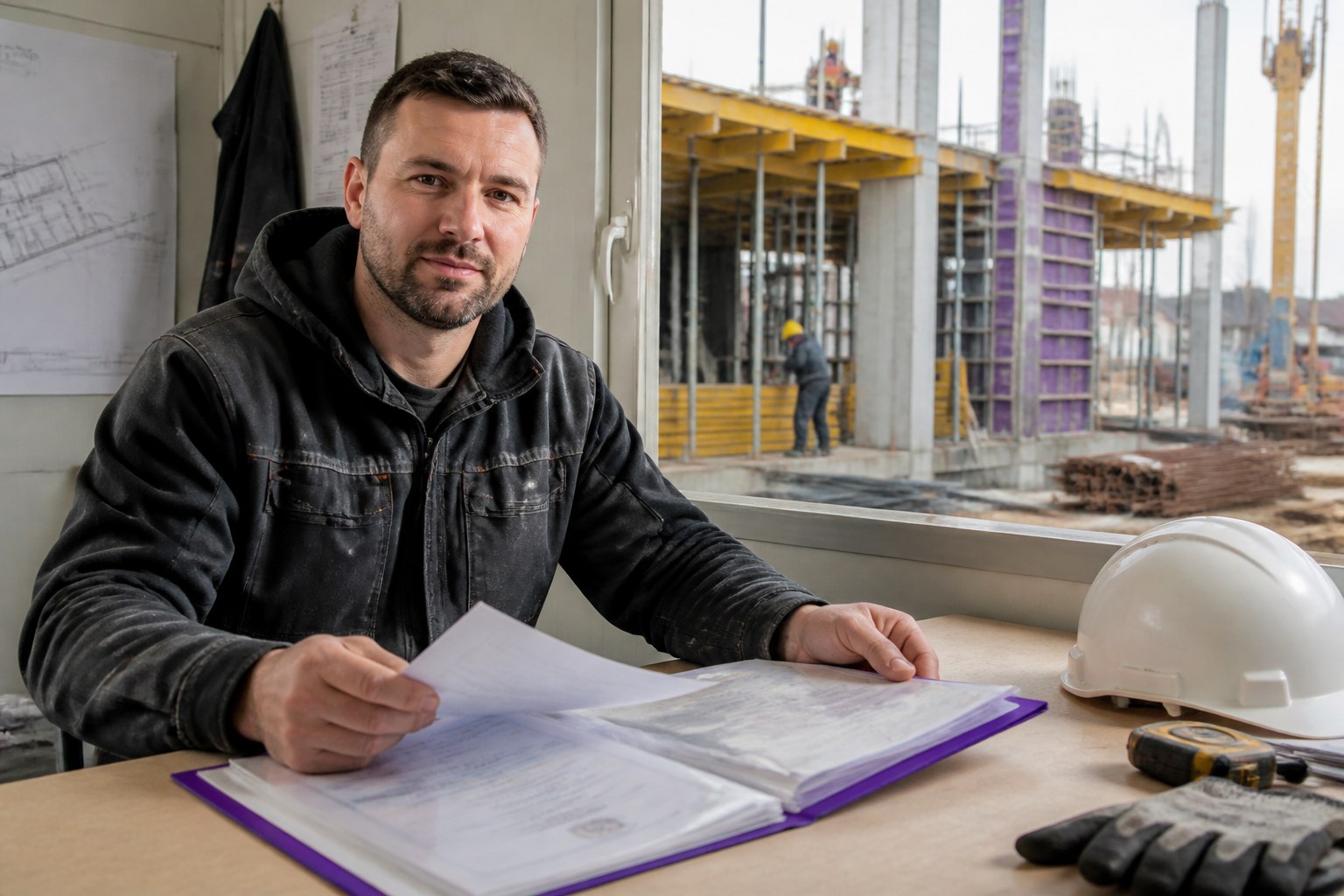
Concrete worker jobs in Germany are practical construction positions focused on work with concrete structures and related site activities. Applicants need a profile that shows technical understanding, reliable practical performance and the ability to work safely and accurately in a construction environment.
Typical work in this occupational field involves preparing construction areas, handling materials, working with formwork and reinforcement, placing or finishing concrete, and checking the quality and condition of completed work when these tasks form part of the worker’s actual responsibilities. The exact combination depends on the candidate’s previous training and experience. Applicants should therefore describe the work they have genuinely performed instead of presenting every construction task as concrete work.
This guide explains how to prepare for employment opportunities in this occupational field across Germany. It does not describe one named vacancy or promise a specific employer, location or employment condition. Candidates applying through East Talent are considered for suitable opportunities in their professional group and therefore need to remain open to jobs throughout Germany.
Concrete work requires more than physical effort. Employers assess whether an applicant understands construction tasks, follows instructions, works carefully with tools and equipment, and presents previous experience in a clear and verifiable way. Your application should make these aspects easy to assess.
The occupation also requires concentration throughout the working day. Measurements, alignment, material handling and communication with other workers affect the quality and safety of the finished structure. A candidate who explains both practical ability and responsible working habits presents a more complete profile than someone who lists only a job title.
The Profile Employers Look for in Concrete Work
A strong concrete worker profile combines relevant vocational training, practical experience and dependable work performance. Applicants should describe the construction tasks they have performed rather than relying only on a general job title. A clear description gives reviewers a better basis for assessing whether the candidate’s background matches concrete work in Germany.
Relevant experience includes work involving concrete-related construction activities, preparation, formwork, reinforcement or finishing where these tasks form part of the applicant’s actual professional history. The application must not claim tasks that the candidate has not performed. Employers value accurate information because construction work depends on coordination, technical precision and reliable execution.
Technical understanding is also important. Candidates should explain the equipment, materials and working methods they know from previous employment or vocational training. The description should remain factual and specific. It should identify the candidate’s role, the type of work performed and the level of responsibility held. Mention whether you worked independently, followed instructions from a supervisor, or coordinated parts of a task with other workers.
Experience with measurements, preparation and inspection deserves clear attention. A candidate should explain how they prepared a work area, checked dimensions, handled materials or identified problems when those activities were part of their work. These details show practical understanding more effectively than broad statements such as “experienced construction worker.”
Reliable work performance includes punctuality, careful execution, cooperation with colleagues and respect for workplace instructions. Construction sites involve several trades working in sequence. A concrete worker therefore needs to communicate clearly, follow agreed procedures and report problems instead of concealing them. The ability to maintain orderly work practices is especially important when several tasks take place in the same area.
Applicants should also be prepared to explain their physical and practical experience without making unsupported claims. The application should focus on work actually completed, tools genuinely used and responsibilities genuinely held. Honest detail supports a professional assessment and avoids problems when documents or experience are reviewed later.
Qualifications, Experience and Recognition
Applicants should present completed vocational training, construction-related education and practical experience in a structured way. Include the name of the qualification, the training period, the institution or training provider and the main technical content where this information is available. Certificates and other evidence support the professional assessment of your profile.
Professional experience should identify each employer, position, period of employment and main tasks. A short list of concrete responsibilities is more useful than an unexplained statement such as “worked in construction.” If you held different roles, describe how your responsibilities developed over time. Explain changes in responsibility, supervision or technical focus where the information helps clarify your professional development.
Recognition depends on whether the intended profession is regulated or non-regulated. Regulated professions are legally protected. Anyone intending to work in a regulated profession in Germany generally needs the required professional recognition or licence. Health professions and other legally protected occupations include regulated areas. The recognition status of the intended occupation must therefore be considered separately from the general quality of a candidate’s work history.
Non-regulated professions are not protected in the same way. Dual-system training occupations and many academic professions belong to this category. Work in a non-regulated profession is therefore not subject to the same professional recognition requirement. This does not automatically remove qualification requirements connected with residence or employment. Recognition law and rules for working in Germany are separate matters.
Where a recognition procedure applies, the responsible authority examines whether the foreign qualification corresponds to the relevant German reference profession or whether substantial differences exist. With complete documents, the authority generally examines the submission within about three to four months. Possible outcomes for non-regulated professions include full recognition, partial recognition or no recognition. Substantial differences may require adaptation training or another prescribed qualification measure.
For a concrete worker applicant, the important preparation step is to establish what training was completed and what evidence exists. Keep original certificates, transcripts and evidence of professional experience available. Do not describe recognition as completed unless an official decision confirms it. If recognition is relevant to your intended professional activity, identify the status accurately and provide the documents requested for the applicable procedure.
A clear record of training is especially useful when the original qualification has a different title from the professional description used in Germany. The assessment focuses on the content and level of the qualification, not only on the translated job title. Course content, practical training and employment evidence help explain what the candidate learned and performed.
Why German Skills Matter on the Candidate Profile
German skills form part of the candidate profile for concrete worker jobs in Germany. Construction work involves instructions, coordination with other workers and communication about tools, materials, sequence and site conditions. Safety-related information must also be understood accurately and communicated without confusion.
Applicants should state their German skills honestly and identify the level using recognised Common European Framework of Reference categories where applicable, such as A2, B1, B2 or C1. Do not claim a higher level than you possess. A precise description gives reviewers a realistic basis for assessing communication in the workplace.
Language information should cover both formal learning and practical use. State completed language courses, certificates and relevant workplace experience. If you regularly used German in a professional environment, explain the situations in which you communicated, received instructions or coordinated tasks.
Workplace communication includes more than general conversation. A concrete worker needs to understand explanations about sequence, measurements, equipment and site organisation. The candidate profile should therefore mention practical communication experience when it exists. If German was not used at work before, state the learning situation clearly instead of suggesting professional fluency.
German skills do not replace technical qualifications or experience. They complement them. A candidate with clear evidence of concrete work, accurate documents and transparent language information presents a more complete professional profile than a candidate who lists only a job title.
Language learning should continue during professional preparation. Keep records of completed courses and update the CV when your level changes. Consistent information across the CV, certificates and conversations creates a reliable impression and makes later assessment more efficient.
Documents to Prepare Before Applying
Prepare a clear CV before submitting your application. The CV should present personal details, education, vocational training, professional experience, language skills and relevant technical abilities in a readable order. Use consistent dates and explain gaps where this information is relevant to understanding your professional history.
For every important period of employment, identify the employer, position, start and end dates and the main tasks. Concrete descriptions help reviewers distinguish experience with concrete work from unrelated construction activities. Include the tools, materials and responsibilities that you actually know, without exaggeration.
Collect vocational certificates, school or university certificates where relevant, employment references and other documents that support your qualifications. Keep copies in a clear digital folder and retain the original documents. If a document is not available, state this rather than submitting incomplete or misleading information.
Language certificates and course records belong in the application package when available. The CV should also contain a concise summary of your German skills. A language level expressed through a recognised framework is easier to understand than a vague statement such as “good German.”
Translations depend on the relevant procedure. A foreign-language certificate may require translation into German or English, while the exact form of translation depends on the process. A certified or otherwise formalised translation is not a universal requirement. Check the applicable process before paying for a translation or submitting documents.
A professional photograph is not a general legal requirement. Concentrate on complete and accurate information: qualifications, work history, certificates, language skills and documents that support your professional profile.
File names and document order also improve the quality of an application. Use clear file names, keep dates consistent and separate certificates from employment evidence. If several documents relate to one qualification, store them together. This preparation reduces repeated questions and helps reviewers understand the relationship between training, work history and technical skills.
Before submission, compare the dates in your CV with the dates on certificates and employment records. Correct inconsistencies and explain genuine differences. A short, factual explanation is stronger than leaving conflicting information unexplained.
Concrete Worker Application Preparation Overview
Preparation area
What to provide
Why it matters for applicants
Vocational qualification
Relevant certificates, training details and completed education
Shows the professional foundation of the candidate profile and supports a recognition review where applicable
Professional experience
Employers, positions, employment periods and concrete tasks
Allows the practical background to be assessed clearly and consistently
German skills
Language certificates, course records and an accurate CEFR-based description where applicable
Shows the communication profile needed for workplace coordination and safety-related understanding
Application documents
CV, certificates, experience evidence and relevant translations where the applicable procedure requires them
Supports application review and further document processing
Working Conditions to Understand in Germany
Before starting employment, candidates should understand the main contents of an employment contract. The contract should identify the parties, the beginning of the employment relationship, the workplace, the position or duties, working time, pay, leave and notice periods. It should also state whether the employment is fixed-term and whether a probationary period applies.
The workplace and duties deserve particular attention because construction employment involves practical work at a defined site or at changing sites. Read the contractual description carefully and keep a copy of the signed agreement. Do not rely only on verbal statements about duties, pay or working time.
Pay is usually stated as a gross amount. Gross pay is not the same as the amount transferred to your bank account. Taxes and social-security contributions are deducted according to your individual circumstances, producing the net amount paid out. The exact net amount therefore cannot be calculated from gross pay alone.
Social insurance in Germany includes health insurance, long-term care insurance, pension insurance, accident insurance and unemployment insurance. For employment subject to social insurance contributions, registration is generally handled through the employer. The applicable details depend on the employment relationship and the individual situation.
Working-time rules also matter. Under the Working Time Act, daily working time generally must not exceed eight hours. It is extendable to up to ten hours when the average does not exceed eight hours per working day within the stated reference period. This statutory limit is different from the regular weekly working time agreed in a contract.
Collective agreements and works agreements may add provisions concerning pay, working time or leave. Candidates should distinguish statutory rights from terms created by the individual contract or applicable collective rules.
Construction work also requires attention to protective equipment, site instructions and the division of responsibilities. Applicants should understand which duties belong to their position and which instructions apply to the work environment. Safety information is not a formality: it affects how tools, materials and work areas are handled.
Relocation planning should use confirmed contract information rather than assumptions. Gross pay, working time, travel distance and accommodation costs influence the practical value of an employment arrangement. Keeping written contract documents allows the candidate to review these points accurately.
Preparing for Work Anywhere in Germany
Applicants using East Talent’s candidate service must remain open to employment opportunities throughout Germany. The application is not directed at one named vacancy or one guaranteed city. Nationwide mobility gives the candidate profile a broader geographic scope and avoids limiting consideration to a single preferred location.
Relocation requires practical preparation. Consider housing, deposit payments, transport, daily living costs and the distance between accommodation and the workplace. These costs affect the amount of money available after moving and should form part of your personal planning. Do not make relocation decisions based on an assumed salary, workplace or accommodation arrangement that has not been confirmed.
Before applying, check that your CV uses consistent job titles and dates, your certificates are readable, your work history explains concrete tasks and your German skills are stated accurately. Make a separate list of documents that are still missing. This preparation reduces confusion during later assessment and keeps your professional information consistent.
Candidates should also prepare a short explanation of their professional strengths. Focus on actual concrete work, technical skills, reliability, teamwork and communication. Avoid general claims that cannot be supported by certificates or work history.
Mobility also requires realistic planning for daily routines. The distance between accommodation and a construction site affects transport time and personal expenses. When several opportunities are considered, candidates should communicate their geographic availability clearly and explain any practical limits honestly. Openness to work throughout Germany does not remove the need for organised relocation planning.
Keep digital and paper copies of important documents during the preparation period. Store certificates, employment evidence, identification documents and language records separately but in an organised system. A complete file allows the professional profile to remain consistent when information is requested at different stages.
How to Present Yourself as a Concrete Worker Candidate
A convincing concrete worker application presents a complete and consistent professional profile. Start with relevant vocational qualifications and explain the practical experience that supports them. Identify previous employers, positions, periods and tasks so that your background is easy to assess.
Add accurate German-language information and include certificates or other evidence where available. If professional recognition is relevant, separate the recognition status from any related to working in Germany qualification issue and avoid claiming an official result that you have not received.
Finally, remain open to employment opportunities throughout Germany and prepare for the practical consequences of relocation. A nationwide perspective, complete documents and an honest description of your experience create a stronger basis for consideration.
Review the complete application before submitting it. Check that your contact details are current, employment periods are consistent, technical tasks are described clearly and the documents support the statements in your CV. A well-organised application does not replace qualifications or experience, but it presents them in a form that supports a careful assessment.
Four short steps. A CV is optional and can be provided in your native language.
Step 1 of 4Profession
East Talent
International recruitment with proprietary software
East Talent combines international recruitment with structured digital processes for handling candidate profiles, attracting employers and evaluating job opportunities.