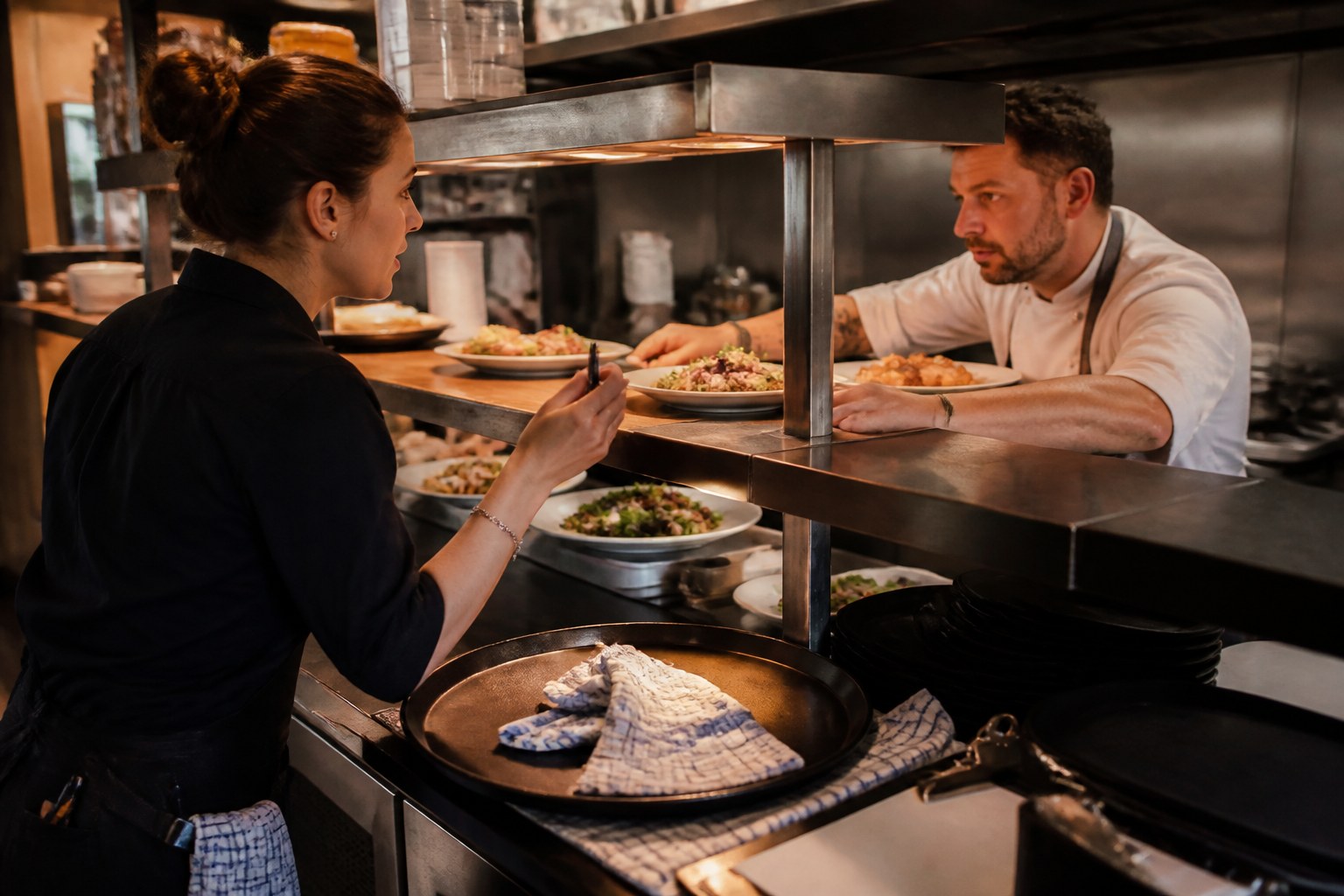
Restaurant service specialists create the guest experience from the first welcome to the final payment. Their work combines hospitality, communication, accuracy and practical organization. Typical duties include welcoming guests, presenting menus, answering questions and recording food and drink orders correctly.
During service, you coordinate with kitchen and service colleagues, deliver meals and beverages, monitor tables and respond to guest requests. You also help maintain a professional atmosphere by observing service standards, keeping the dining area orderly and communicating clearly when problems arise.
The role requires more than friendly interaction. You must remember information, follow service sequences and react appropriately when several tables need attention at the same time. Guests judge the complete experience, including the accuracy of the order, the speed of communication, the condition of the table and the way concerns are handled.
This role suits candidates who enjoy direct contact with people and remain attentive during busy periods. Employers in restaurant service look for dependable people who treat guests respectfully, work accurately and contribute to an organized team. Candidates applying through East Talent are considered for employment opportunities throughout Germany rather than for one named vacancy or one specific city.
A strong candidate profile therefore combines practical restaurant experience with evidence of reliability, communication and professional conduct. Your documents should make clear which parts of the service process you already understand and which responsibilities you performed independently or with team support.
Typical Responsibilities in Restaurant Service
Restaurant service includes recurring front-of-house responsibilities. Before service, you may prepare tables, arrange cutlery and glasses, check menus and ensure that the dining area is ready. During service, you welcome guests, explain available dishes, take orders and pass accurate information to the kitchen or bar.
Preparation also includes checking whether service materials are available and reporting problems before guests are seated. A missing menu, unsuitable table setting or unavailable item creates avoidable delays. Careful preparation gives the team a reliable starting point for the service period.
Order accuracy is important because an incorrect order affects preparation, timing and guest satisfaction. You need to record special requests clearly and communicate relevant information to colleagues. Knowledge of food and beverages helps you explain menu items and provide useful answers without making unsupported claims about ingredients or preparation.
Questions about ingredients, allergies or dietary preferences require particular attention. When you do not have sufficient information, you should ask the responsible colleague rather than guess. Clear communication protects the guest and prevents misunderstandings between the dining room and the kitchen.
Payment handling is another practical part of the work. Depending on the workplace, you may use a cash register or electronic payment system, issue receipts and check that the payment has been completed correctly. You also clear and reset tables, keep service areas clean and follow workplace hygiene instructions.
Restaurant service is collaborative. Front-of-house staff, kitchen teams and supervisors depend on clear communication, particularly when many guests arrive at the same time. A professional service specialist remains calm, prioritizes tasks and informs colleagues promptly when delays, changes or guest concerns require attention.
The work also involves closing or handover tasks. These include restoring tables, organizing service materials, communicating outstanding matters and leaving the area ready for the next team. Describe such responsibilities in your profile when you performed them. They demonstrate practical understanding beyond direct guest contact.
Skills and Experience Relevant to Your Candidate Profile
Your candidate profile should show practical experience that relates directly to restaurant service. Relevant experience includes guest reception, order taking, table service, beverage service, payment handling, table preparation and cooperation with kitchen staff. Describe the type of restaurant or hospitality setting in which you worked and the responsibilities you performed.
Customer orientation is central to the role. Guests expect respectful communication, attentive service and accurate responses. Reliability matters because restaurant teams depend on colleagues arriving prepared and completing agreed tasks. Attention to detail supports correct orders, clean tables and consistent service.
Stress management is also important. Busy service periods require you to remain focused while handling several requests. The ability to prioritize, ask colleagues for support and communicate problems early contributes to safe and efficient work. Physical stamina supports duties that involve standing, walking, carrying service items and repeated movement throughout a shift.
If you have worked with cash registers, card terminals, reservation systems or other restaurant technology, describe that experience accurately. Food and beverage knowledge, hygiene training and additional languages also belong in your profile when they reflect your actual skills. Do not overstate responsibilities or claim certificates that you do not hold.
Your experience becomes easier to assess when you use concrete examples. Explain whether you served individual tables, worked behind a counter, supported events, prepared beverages or handled payment processes. State the level of responsibility you held and identify the tasks you completed regularly rather than using broad descriptions such as “responsible for all restaurant duties.”
Professional conduct is equally relevant. Restaurant service involves punctuality, appropriate appearance, respectful language and careful handling of workplace materials. Previous experience with different guest groups, busy dining periods or changing service priorities adds useful context when it is described truthfully.
Why German Matters in Restaurant Service
German is an important part of a restaurant service candidate profile because much of the work depends on immediate spoken communication. You need to understand guest orders, clarify questions and explain menu items. You also need to communicate with colleagues during active service, when information must be brief and accurate.
Language skills matter when guests report an incorrect order, ask about ingredients or raise a complaint. A service specialist must understand the concern, respond professionally and involve the appropriate colleague when a decision exceeds their responsibility. German also supports understanding workplace instructions, hygiene information and safety-related communication.
Restaurant conversations often require more than memorized greetings. You need vocabulary for table numbers, quantities, ingredients, cooking methods, beverages, payment and timing. Listening is important because guests do not always speak slowly or use the same words as training materials. Regular practice with realistic service dialogues improves your readiness.
State your language skills honestly in your CV. You may describe your level using the Common European Framework of Reference, such as A2, B1, B2 or C1, when you have a reliable basis for doing so. Additional languages are relevant when they improve communication with guests or colleagues, but they do not replace the need to describe your German ability clearly.
Include examples of how you used German or another language in professional situations. Describing menu items, confirming a special request, responding to a complaint and completing a payment conversation are more informative than simply listing a language without context.
Qualifications and Recognition of Foreign Training
Present vocational certificates, hospitality training records, school documents and evidence of professional experience as part of your candidate profile. These documents help explain what you learned and which responsibilities you have already performed. Employment references or other records should identify your role, period of work and main duties where available.
Restaurant service work must not automatically be described as requiring formal German recognition. Regulated professions are legally protected and require the relevant professional recognition or licence. Non-regulated professions are not protected in the same way, and many occupations in the dual vocational system belong to this category. The specific classification and procedure must be checked for the professional activity concerned.
Recognition and requirements for working in Germany are separate matters. The fact that a profession is not regulated does not automatically mean that no qualification documents are needed for an immigration or employment procedure. Keep your certificates and professional records available so that the relevant procedure can assess them.
Where a recognition procedure applies, the responsible authority examines whether a foreign qualification corresponds to a German reference profession and whether substantial differences exist. With complete documents, the authority generally reviews an application within about three to four months. The result may include full recognition, partial recognition or no recognition for a non-regulated profession. Where substantial differences exist, an adjustment qualification or another prescribed measure may address them, depending on the case.
The documents should show both formal learning and practical development. A certificate alone does not explain how you worked with guests, orders or payment systems. Combine certificates with employment evidence that describes your actual duties. If your documents use different job titles, explain the relationship between the title and the work performed.
Keep copies of original documents and make sure names, dates and qualifications are consistent across your records. Missing or unclear information should be identified honestly. Accurate documentation gives the qualification review a dependable basis and prevents confusion during later preparation.
Restaurant Service Candidate Preparation Checklist
Preparation area
What to provide
Why it matters for your application
Professional experience
Restaurant type, position, employment dates and specific duties such as table service, order taking, payment handling or kitchen coordination
Shows the practical service responsibilities you have already performed
Qualifications and certificates
Vocational certificates, hospitality training records, language certificates and relevant course documents
Supports your stated training and helps clarify your professional background
German and other language skills
Honest language levels and examples of guest or workplace communication
Shows how you communicate with guests and colleagues during service
Application documents
Clear CV, experience records, references and translations where required by the relevant procedure
Allows your qualifications and professional history to be reviewed consistently
Documents to Prepare for Your Application
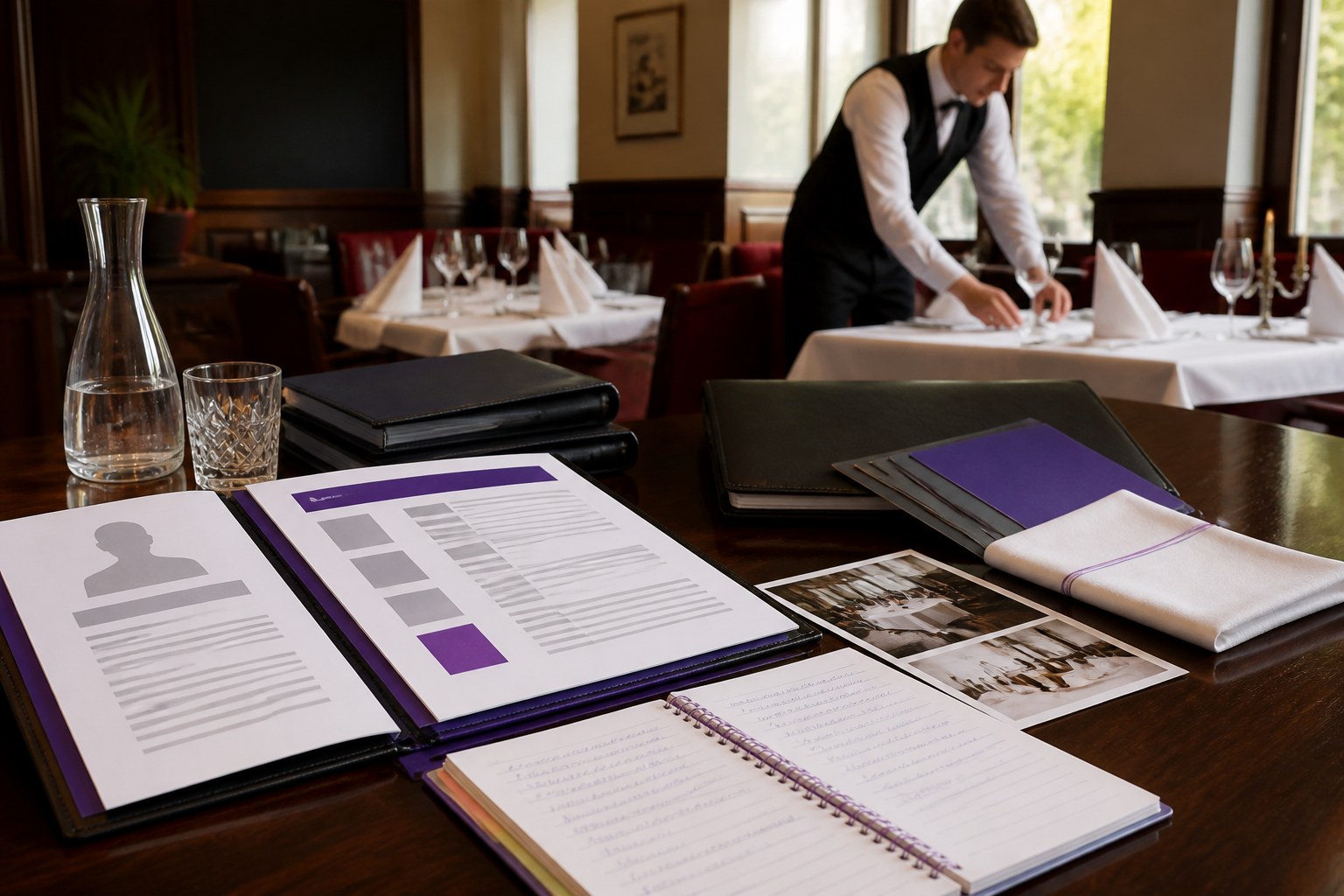
Prepare a clear CV that presents your personal details, education, restaurant experience, language skills and relevant abilities. List each position in a way that makes your professional development understandable. Include the restaurant or hospitality setting, your role, the period of employment and the duties you performed.
Collect certificates and training records that support your profile. These may include vocational qualifications, hospitality courses, food and beverage training, hygiene-related records and language certificates when available. Employment references, service records or other evidence of experience provide additional context for your practical background.
Foreign-language documents may require translation into German or English for a particular procedure. Whether a certified or otherwise formal translation is needed depends on the relevant process, so do not assume that every document requires the same form. Keep original documents and translations organized together.
A cover letter or motivation statement may be useful in an application process, but the most important information is consistency. Your CV, certificates and experience records should describe the same professional history. A professional application photo is not a general requirement.
Organize digital files with clear names that identify the document and its date or purpose. Scan pages completely and check that text remains readable. A simple folder structure for identity documents, qualifications, employment evidence and language records makes review more efficient.
If you have gaps in employment or incomplete records, explain them briefly and accurately. Do not fill missing periods with invented duties or unsupported certificates. A transparent explanation is more reliable than an apparently complete but inconsistent application.
Working Conditions You Should Understand
Restaurant service is active, guest-facing work. You spend substantial parts of a shift standing, walking and moving between tables, service areas and the kitchen. Carrying trays, plates or beverages requires attention to balance, safe movement and coordination with colleagues.
The pace changes during service. Busy periods involve several guest requests, order updates and coordination tasks at the same time. You need to maintain polite communication while continuing to work accurately. Teamwork is not optional: delays, special requests and changes must reach the right colleague quickly.
Hygiene responsibilities are part of professional restaurant work. You must follow workplace instructions for handling food, cleaning service areas, storing items and maintaining an orderly environment. The exact duties depend on the workplace and your responsibilities.
Working time arrangements, pay, breaks, duties, the workplace and other conditions belong in the employment contract. German employment information distinguishes gross pay from net pay: taxes and social insurance contributions are deducted from gross pay according to the individual situation. Review the contract carefully before accepting an offer and check the stated role, working time, compensation, holiday entitlement and notice provisions.
The physical environment also requires awareness. Floors may become wet, service areas may be narrow and hot items move between the kitchen and dining room. Following instructions, communicating movement and using equipment correctly support a safe working routine. Your previous experience with these situations is relevant when you describe it accurately.
Relocation planning belongs to the wider employment decision. Housing costs, deposits, transport and everyday living expenses affect the amount of money available after arrival. Consider these costs together with gross and net pay, working hours, contract conditions and the location of the employment opportunity.
Preparing for Employment in Germany
Start by organizing your documents in a consistent digital and physical file. Use clear file names, keep certificates readable and prepare a concise overview of your restaurant experience. This reduces confusion when your qualifications and professional history are reviewed.
Improve German that you use directly at work. Practice welcoming guests, confirming orders, describing common menu information, asking about allergies or special requests, handling payment and responding to complaints. These situations require practical vocabulary as well as listening skills.
Present your experience in a way that allows another person to understand your actual contribution. State whether you served tables, worked at a bar, handled payments, supported preparation, coordinated with the kitchen or trained colleagues. Accurate detail is more valuable than broad claims such as “responsible for everything.”
Remain open to suitable employment opportunities throughout Germany. A candidate profile directed only toward one preferred city does not reflect the geographic scope of the application model. Consider the role, duties, contract conditions and overall relocation requirements together when evaluating an opportunity.
Prepare for questions about your working methods. You should explain how you check an order, handle a dissatisfied guest, communicate an allergy question or manage several tables. These examples show practical judgment and give your experience more value than a list of generic personal qualities.
Review your readiness in stages: documents first, language practice next, then a clear explanation of your experience. This approach makes it easier to identify missing evidence and improve your profile before submission.
How to Present Yourself as a Restaurant Service Candidate
Describe your experience using concrete service tasks. Mention the restaurant type, the number and nature of your responsibilities, the degree of guest contact and the part of the service process you handled. Explain whether you worked independently, as part of a team or under supervision.
Include food and beverage knowledge that you actually possess. Examples include menu presentation, beverage service, basic product explanations, order coordination and awareness of dietary or ingredient-related questions. If you used a payment system, reservation tool or point-of-sale system, identify it without claiming advanced knowledge you did not use.
Language information should be precise. List German and other languages separately and state your level honestly. Explain how you used each language in guest service, workplace communication or previous hospitality work when this strengthens your profile.
Review your application for consistency before submitting it. Dates, job titles, certificates and responsibilities should match across your CV and supporting documents. If a document is missing, explain the situation rather than replacing it with an unsupported claim. Clear and accurate information gives your professional profile credibility.
Your application should also communicate your professional direction. Explain which restaurant-service activities you prefer, which duties you already know and which areas you are prepared to develop. Remain open to opportunities throughout Germany because the application concerns your professional group rather than one named employer or one specific location.
When you discuss availability, describe your situation accurately and avoid promises that your documents or circumstances do not support. A realistic profile helps the qualification and document review proceed on a reliable basis.
Your Next Steps as a Restaurant Service Specialist
Your preparation should focus on four priorities: document your restaurant experience, provide relevant qualifications, describe your German skills honestly and organize translations where the relevant procedure requires them. Add practical details about guest service, order accuracy, payments, teamwork and hygiene responsibilities.
Keep your expectations realistic and remain open to employment opportunities throughout Germany. East Talent’s candidate application is an initiative application for restaurant service employment, not an application to a named vacancy or a specific employer. Suitable candidates may later be introduced to appropriate companies in Germany after their profile and documents have been reviewed.
Before submitting, check that your CV is readable, your dates are consistent and your certificates support the experience you describe. Prepare to discuss your service tasks, language ability, availability and professional goals clearly.
Use the preparation process to strengthen the parts of your profile that employers evaluate in day-to-day restaurant work: dependable attendance, respectful guest communication, accurate orders, safe movement, hygiene awareness and cooperation with colleagues. These qualities become credible when your examples and documents support them.
Your next step is to submit a complete and truthful candidate profile. Keep your records available for qualification review and remain ready to explain your experience clearly. A well-organized application gives your restaurant service background the best possible presentation.
Four short steps. A CV is optional and can be provided in your native language.
Step 1 of 4Profession
East Talent
International recruitment with proprietary software
East Talent combines international recruitment with structured digital processes for handling candidate profiles, attracting employers and evaluating job opportunities.