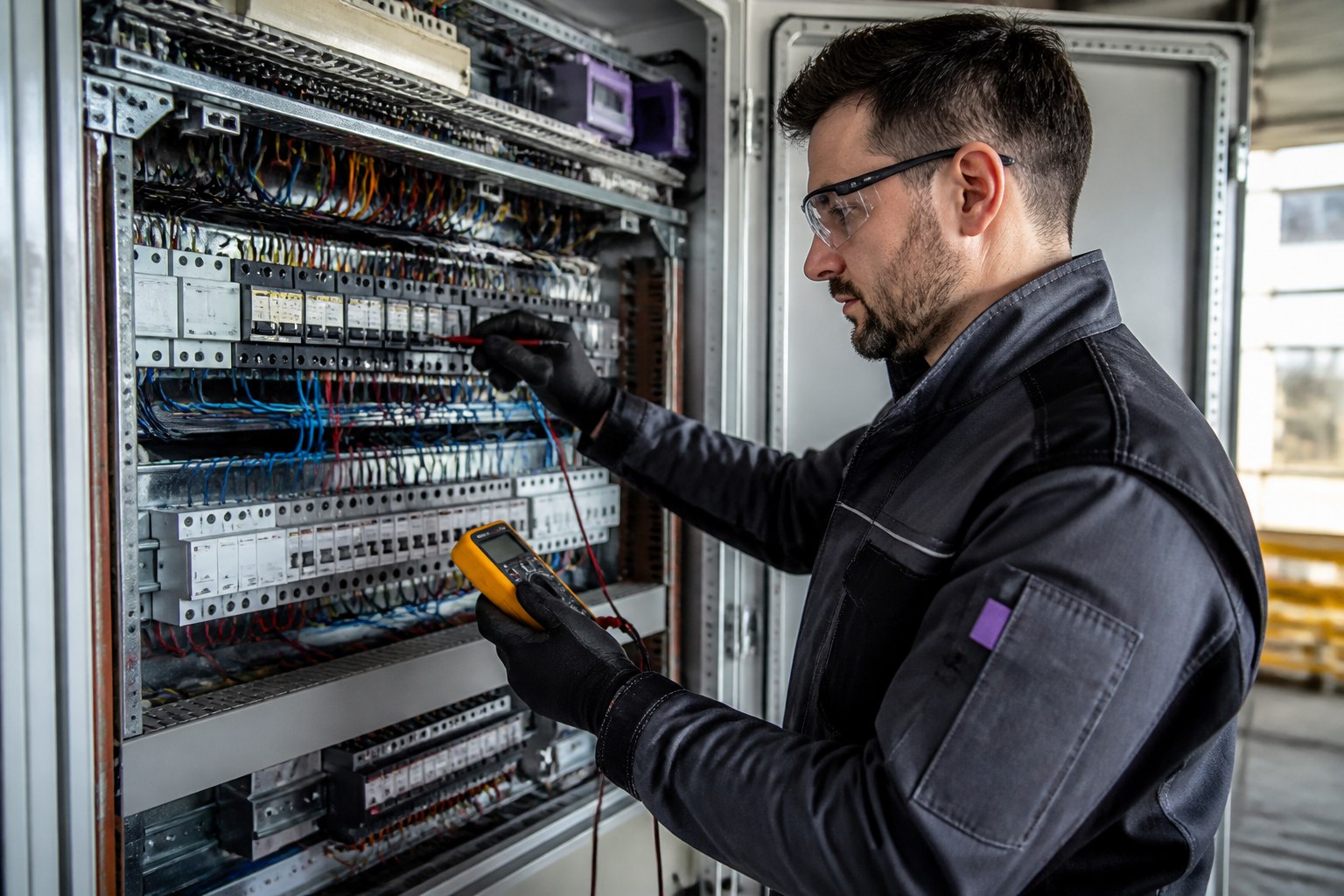
Electricians in Germany work with electrical systems, installations and equipment in residential, commercial, industrial and infrastructure environments. Their professional tasks focus on installing, connecting, maintaining, testing and repairing electrical components. The exact responsibilities depend on the professional area and the employment relationship, but safe and technically accurate work remains central in every setting.
Typical activities include preparing electrical installations, routing and connecting cables, fitting components, checking circuits and identifying faults. Electricians also read technical plans, use measuring equipment and document completed work. Maintenance work involves inspecting systems, replacing defective parts and confirming that equipment operates safely.
Troubleshooting requires a structured approach. An electrician must understand the system, isolate the fault, use suitable testing methods and complete the repair without creating additional risks. Safety instructions, protective equipment and careful work procedures are therefore essential parts of the profession.
Applicants should describe the areas in which they have worked rather than presenting themselves only with a general job title. Installation, maintenance, industrial controls, building services, repair work and testing represent different practical backgrounds. A precise description helps reviewers understand the applicant's actual experience.
Qualifications and Professional Experience
A completed vocational qualification in electrical work provides an important foundation for employment as an electrician in Germany. Applicants should state the exact qualification, the training institution, the completion date and the main technical content. Foreign certificates should be submitted together with the other documents needed to assess the professional background.
Practical experience is equally important. A strong profile explains where the applicant worked, which position they held, how long they worked there and which electrical responsibilities they performed. Statements such as “worked as an electrician” are less informative than a clear description of installation, maintenance, testing, fault diagnosis or repair activities.
Technical knowledge should be presented accurately. Applicants should mention electrical systems, equipment, tools or work processes only when they have genuinely used them. The same principle applies to safety training, specialist certificates and experience with particular sectors. Accurate information protects the applicant from misunderstandings during later discussions.
Experience records should also show increasing responsibility where this applies. Supervising work, checking installations, coordinating tasks or training colleagues are relevant details, but they belong in the profile only when the applicant actually performed these duties. Employment references, certificates and other evidence strengthen the credibility of the information.
Recognition of Foreign Electrician Qualifications
Applicants with electrical training from outside Germany should distinguish between professional recognition and related to working in Germany qualification requirements. These are separate issues. Whether recognition is legally required depends on the professional classification and the relevant procedure. The fact that a profession is not regulated does not automatically remove every qualification requirement connected with residence or employment.
Regulated professions are legally protected. People who want to work in a regulated profession generally need the required recognition or professional licence. Dual-system training occupations and many other occupations are not regulated in the same way. In a non-regulated occupation, work is generally possible without formal German professional recognition, while other authorities or procedures may still request qualification evidence.
During a recognition procedure, the responsible authority assesses whether the foreign qualification matches the corresponding German reference occupation or whether substantial differences exist. The result depends on the submitted qualification and the assessment. Possible outcomes for non-regulated occupations include full recognition, partial recognition or no recognition.
If substantial differences are identified, an adjustment qualification or another prescribed qualification measure addresses those differences in suitable cases. Complete applications are generally reviewed within approximately three to four months. This period relates to the assessment of complete documents and does not replace the need to clarify the applicant's individual procedure.
Applicants should collect certificates, training records, employment evidence and translations where the relevant procedure requires them. Recognition should not be described as an automatic decision. The competent authority makes the assessment on the basis of the documents and the applicable rules.
German Language Skills for Electrical Work
German is an important part of an electrician's candidate profile. Electrical work involves safety instructions, technical explanations, coordination with colleagues and communication about faults or completed tasks. Misunderstandings in these areas affect both work quality and safety.
Applicants should state their current German level clearly. When available, a language certificate provides structured evidence. Language skills are commonly described using the Common European Framework of Reference for Languages, with levels such as A2, B1, B2 or C1. A certificate is useful, but practical communication experience should also be explained honestly.
The relevant communication skills include understanding instructions, asking precise questions, describing technical problems and recording work. Candidates should mention German-language work experience, technical courses or safety training if these are part of their background. They should not claim a language level that they cannot demonstrate in professional communication.
There is no universal language threshold for every electrician role. The applicant's language information therefore belongs in the professional profile and should be presented together with qualifications, experience and supporting documents.
Documents to Prepare Before Applying
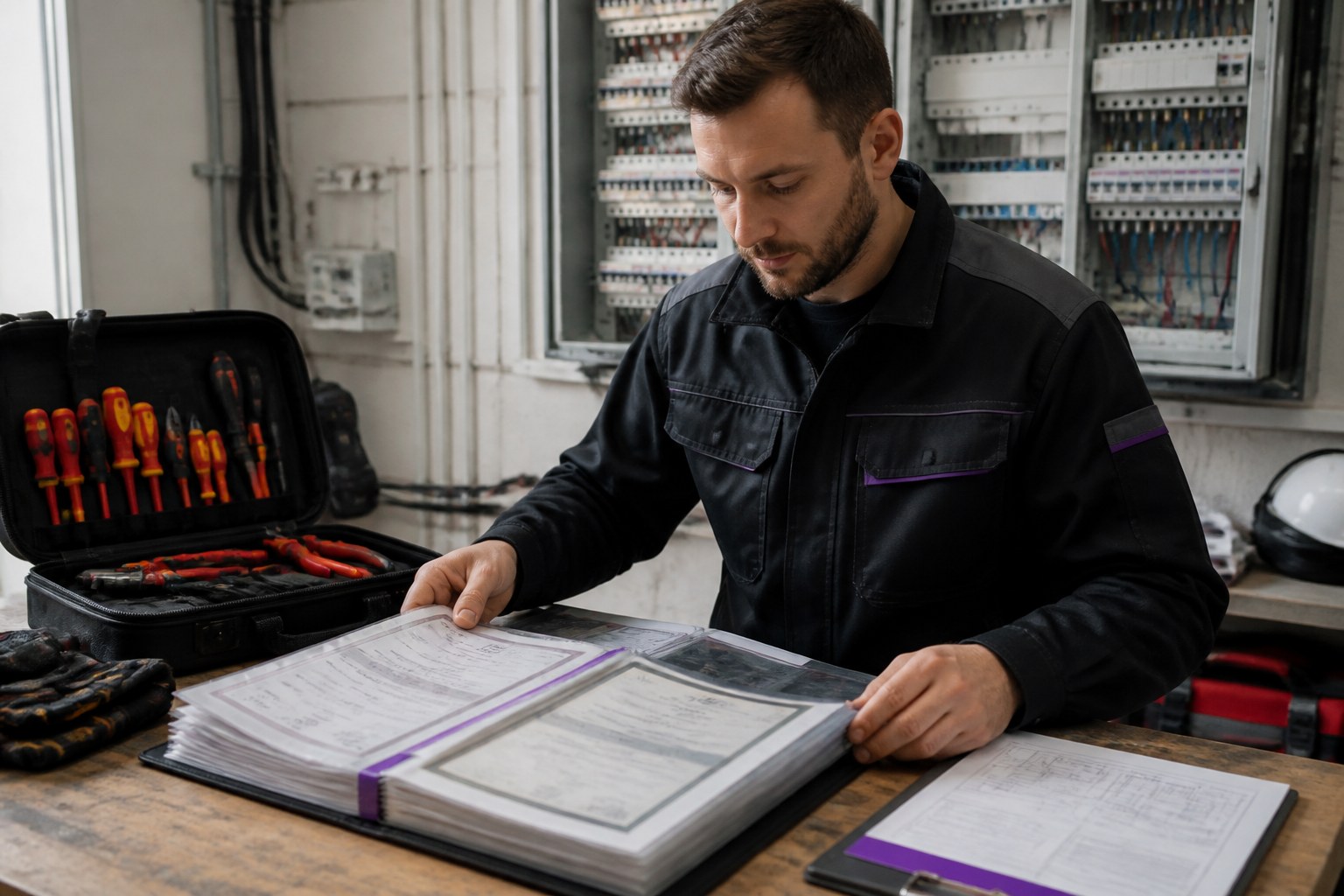
A complete application profile begins with a clear CV. The CV should contain contact details, education, vocational qualifications, employment history, language skills and relevant technical abilities. Each period of employment should identify the employer, position, dates and main responsibilities.
Applicants should organise vocational certificates and important school or higher-education records where these documents support the professional profile. Employment references, work records or other evidence of practical experience provide additional information about the applicant's background.
Language certificates should be included when available. Documents in another language may require translation into German or English depending on the relevant application or recognition procedure. Whether a certified or otherwise formalised translation is necessary depends on that procedure, so applicants should not assume that one translation rule applies in every case.
The documents should be readable, complete and consistent. Dates in the CV should match the certificates and employment evidence. If a document is missing, the applicant should explain the situation rather than replacing it with an unsupported statement.
Electrician Application Preparation Checklist
Application area
What to prepare
Why it matters for applicants
Professional qualification
Vocational certificate or evidence of completed electrical training
Shows formal electrical training and supports assessment of the professional background
Work experience
Employers, positions, dates and clearly described electrical tasks
Allows practical experience and technical responsibilities to be assessed
German language skills
Current language level, certificate where available and relevant workplace communication experience
Shows the applicant's ability to understand instructions and communicate at work
Supporting documents
CV, certificates, relevant school or higher-education records and translations where the procedure requires them
Creates a complete and reviewable candidate profile
Working Conditions Electricians Should Understand
Before accepting employment in Germany, applicants should understand the main terms of the employment relationship. An employment contract should identify the parties, the start date, any fixed term, the probationary period, the workplace, the duties, the remuneration, working time, holidays and notice periods.
Remuneration is normally stated as gross pay. Taxes and social-security contributions are deducted according to the individual's circumstances, so the net amount paid out is not identical to the agreed gross amount. Health, nursing-care, pension, accident and unemployment insurance form part of the German social-security system. In a social-insurance-covered employment relationship, registration is generally handled through the employer.
Working time must be distinguished from the statutory maximum working day. Under the Working Time Act, daily working time generally must not exceed eight hours. It is extendable to up to ten hours when the average does not exceed eight hours per working day within the required reference period. The legally defined limit is not the same as the regular weekly hours stated in a contract.
The statutory minimum holiday entitlement is 24 working days under the legal six-day-week calculation. For a five-day working week, this corresponds to 20 paid working days per calendar year. An employment contract or collective agreement may provide more holiday.
Collective agreements and works agreements may add provisions on pay, working time, holidays or other conditions. Applicants should read the employment terms carefully and distinguish guaranteed contractual elements from possible bonuses, supplements or other variable payments.
How the Application Process Works for Candidates
When applying through East Talent, candidates submit their professional profile for employment opportunities in their occupational group. They do not apply to an invented specific vacancy or to a named employer at this stage. The profile should therefore represent the applicant's qualifications, practical experience, German skills and available documents accurately.
East Talent reviews the information relevant to potential placement, including professional qualifications, work experience, German-language skills and supporting documentation. Suitable candidates may subsequently be introduced to matching companies in Germany. This later introduction depends on the fit between the candidate profile and the available employment need.
Applicants must remain open to employment opportunities throughout Germany. A fixed preference for one city or region restricts the range of suitable opportunities. Candidates should communicate important personal limitations honestly, while understanding that the application is intended for employment possibilities across the country.
Preparation before submission saves time. Applicants should check that the CV is complete, certificates are readable, employment dates are consistent and language information is current. Technical claims should describe real experience rather than copied terminology.
How to Present Your Electrician Experience
The experience section of an electrician CV should make practical work visible. List every relevant position with the employer, employment period and job title. Then describe the main tasks in clear action-oriented language. The description should show what the applicant did, not merely name a department or industry.
Useful details include electrical installation, cable routing, connection work, maintenance, testing, fault diagnosis, repairs, inspection routines and technical documentation when these tasks belong to the applicant's experience. Mention the equipment, systems or work environments handled, but avoid listing technologies that the applicant has not used.
Safety-related responsibilities deserve particular attention. Applicants should describe work with protective equipment, safety checks, isolation procedures or compliance documentation only when they have performed these activities. Technical accuracy is more valuable than an extended list of keywords.
Training should appear near the relevant experience. A short course, safety certificate or specialist qualification belongs in a separate training section or next to the position where it was applied. Dates and issuing organisations should be included when the information is available.
A good CV remains easy to review. Use consistent dates, short task descriptions and a logical order. Explain career breaks if they affect the understanding of the professional history. The goal is a reliable account of the applicant's electrical work and not a generic description of the profession.
Preparing for Employment in Germany
Preparation has several connected parts. First, applicants should verify their vocational qualification and organise the documents that prove training and experience. Second, they should write a precise record of electrical tasks, technical environments and safety responsibilities. Third, they should assess their German communication honestly and continue improving the language needed for daily work.
Applicants should also understand the difference between gross and net pay before reviewing employment terms. The net amount depends on individual tax and social-security circumstances, while rent, deposits, travel and other living costs affect the amount that remains available after moving to Germany. These costs are separate from the gross remuneration stated in an employment contract.
Once a suitable employment relationship is presented, candidates should review the workplace, duties, working time, holidays, probationary period, remuneration and notice provisions. They should also check whether collective agreements or works agreements add relevant rules. This review protects the applicant from relying on assumptions about conditions that are not written into the applicable terms.
A complete profile helps East Talent assess the applicant's professional background and identify suitable employment opportunities. Accuracy, openness about qualifications and readiness to work throughout Germany strengthen the preparation for the next stage.
Apply for Electrician Jobs in Germany
Applicants interested in Electrician Jobs in Germany should submit a professional profile rather than apply to an invented specific vacancy. The profile should include the completed electrical qualification, documented work experience, German-language information and relevant certificates. Every statement should reflect the applicant's actual skills and responsibilities.
Before submitting the application, check the CV for complete dates, clear job descriptions and consistent information. Add vocational certificates, relevant education records, employment evidence and language certificates where available. Organise translations when the relevant procedure requires them, without assuming that every document needs the same formal treatment.
Electricians who are ready to consider employment opportunities throughout Germany should present their full professional background through East Talent's application form. A careful application gives the review process a reliable basis and makes later discussions about qualifications, experience and employment terms more productive.
Four short steps. A CV is optional and can be provided in your native language.
Step 1 of 4Profession
East Talent
International recruitment with proprietary software
East Talent combines international recruitment with structured digital processes for handling candidate profiles, attracting employers and evaluating job opportunities.