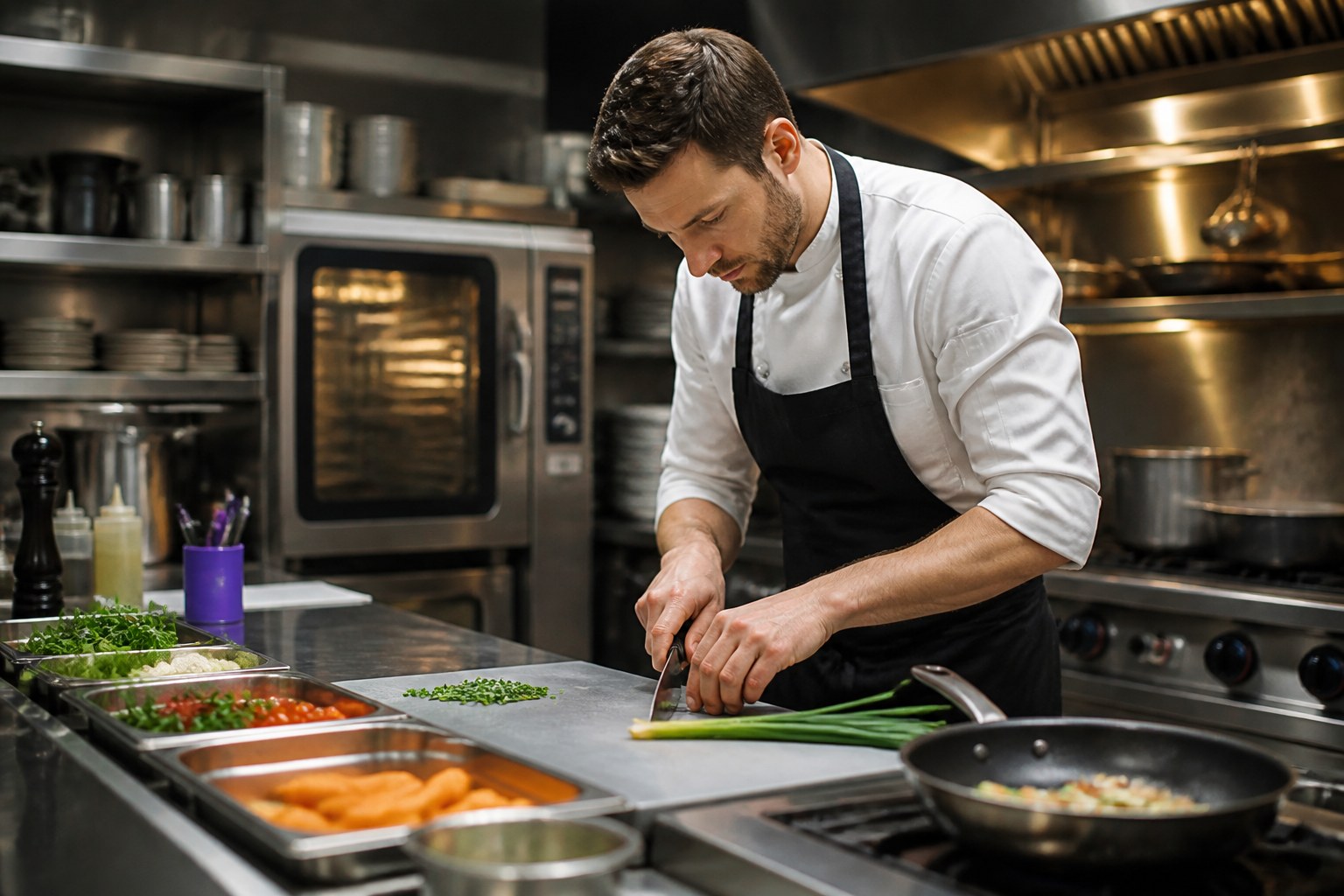
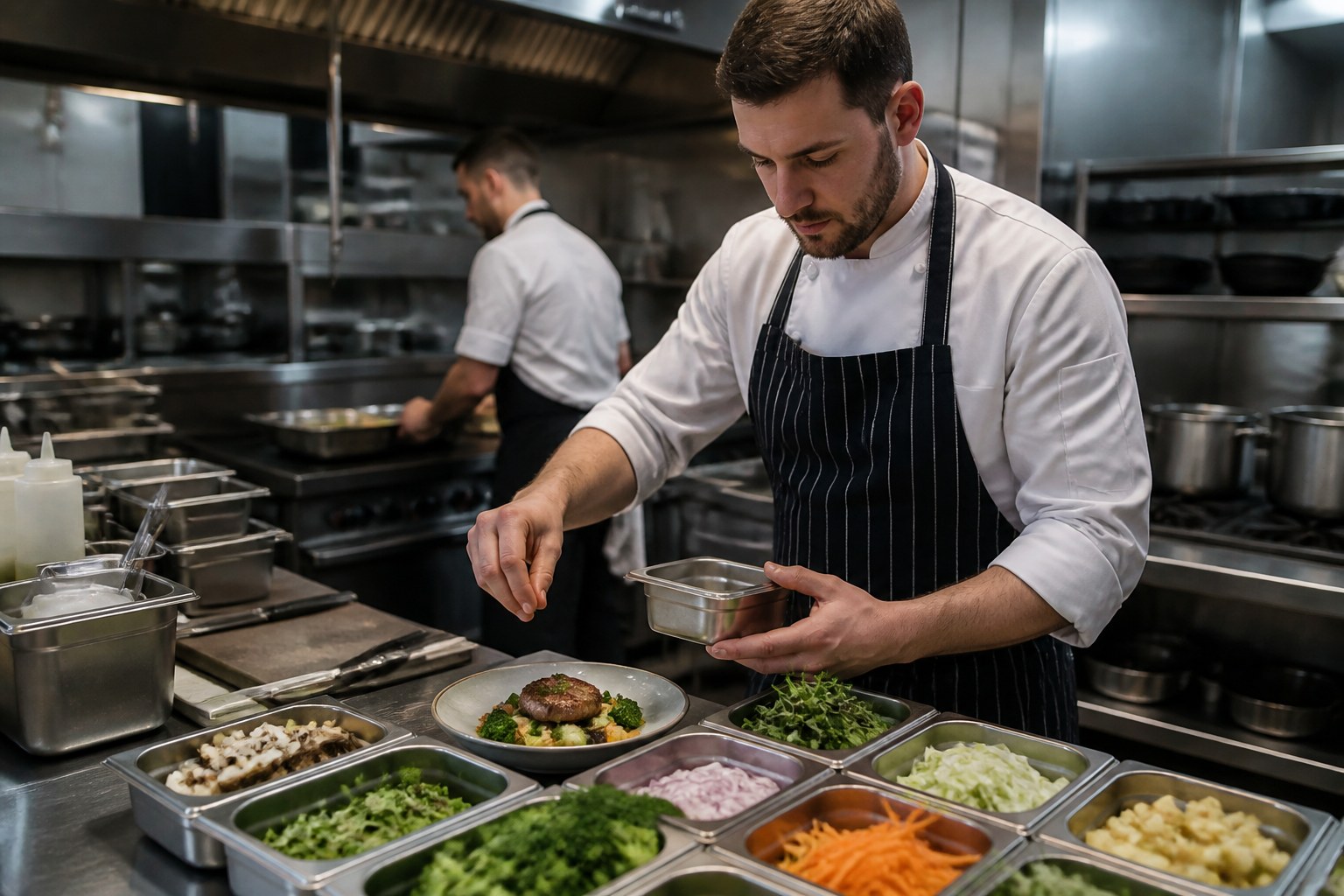
Chef and cook jobs in Germany focus on preparing food safely, consistently and efficiently. Depending on the professional setting, your work includes preparing ingredients, cooking dishes, arranging plates, monitoring quality and keeping the kitchen organised throughout service.
Kitchen work requires coordination. You communicate with colleagues, follow preparation plans, manage several tasks in sequence and keep your workstation ready for the next production step. Hygiene, correct food handling and careful cleaning are part of professional kitchen work rather than separate optional tasks.
Your responsibilities depend on your experience and professional focus. Some candidates specialise in hot food, cold food, baking, pastry, sauces, meat, fish, vegetarian cuisine or specific international cuisines. Others work across several kitchen stations and take responsibility for broader meal production.
The professional environment is active and time-sensitive. You work with cooking equipment, knives, refrigeration, preparation surfaces and storage areas. A strong candidate profile therefore combines culinary knowledge with reliability, physical readiness, attention to detail and effective teamwork.
The daily workflow often begins before service starts. Ingredients must be checked, prepared and stored correctly, equipment must be ready and the station must be organised for the planned production. During service, you follow preparation sequences, maintain consistent portions and respond to instructions from colleagues. After service, cleaning, stock organisation and equipment care remain part of the working process.
Your professional profile becomes clearer when you distinguish between routine tasks and responsibilities that required independent judgement. Preparing ingredients under supervision, managing a station, coordinating several dishes and supporting service demonstrate different levels of experience. Describe these differences accurately so your practical background is understood.
Qualifications and Experience That Strengthen Your Profile
Culinary training provides an important foundation for chef and cook jobs in Germany. Include your completed vocational education, culinary school, specialist courses and other relevant qualifications in your application. State the qualification title, institution and completion details accurately.
Practical experience is equally important. Your profile should show where you worked, which position you held and which responsibilities you performed. Describe your kitchen stations, cuisine types, preparation methods, equipment and level of responsibility instead of listing only job titles.
Experience with mise en place, recipe-based production, portion control, food presentation, stock handling and kitchen organisation gives applicants a clearer professional profile. Specialist experience in pastry, bakery, international cuisine, large-scale food production or dietary preparation also deserves specific description when it is documented.
Formal qualifications and professional experience are not identical. A candidate with culinary training should document it clearly, while a candidate whose main strength is practical experience should explain the work in detail. Accurate evidence is more useful than broad claims about being an expert.
Explain the scale and context of your previous work where the information is available. A kitchen serving individual plated dishes involves different preparation routines from a large-volume production kitchen. Experience with menus, batch preparation, specialised dietary requirements or several stations gives assessors useful information when it is described factually.
Your employment history should also show continuity and development. List positions in a logical order and explain changes in responsibility, such as moving from preparation duties to station work or supervisory support. Do not hide short periods or create responsibilities that were not part of your work; consistency between your CV and supporting documents strengthens the assessment.
German Language Skills for Kitchen Work
German language skills belong in your candidate profile because kitchen work depends on clear communication. You need to understand instructions, coordinate preparation steps, respond to changes during service and communicate about ingredients, equipment and hygiene.
Language skills also support workplace safety. Instructions concerning hot surfaces, sharp tools, cleaning products, storage and emergency procedures must be understood correctly. Communication with colleagues reduces avoidable mistakes and supports an orderly kitchen workflow.
Guest contact is relevant when the role includes service interaction, explanations about dishes or communication about allergens and special requests. Even when your main work takes place in the kitchen, language skills influence how effectively you work with the wider team.
State your German skills honestly in your CV. You may describe your level using the Common European Framework of Reference, such as A2, B1, B2 or C1, when that classification reflects your actual ability. Also mention other languages that support communication with colleagues or guests.
Describe how you use German in practical situations rather than recording only a level. Understanding kitchen instructions, discussing preparation sequences, reporting a shortage of ingredients and responding to hygiene directions are relevant examples. If you have used German in previous professional or training environments, include that information.
Language development remains part of professional preparation. Vocabulary for ingredients, cooking methods, equipment, cleaning and workplace safety helps you participate more reliably in the kitchen. Your application should present your current ability accurately while showing the professional situations in which you already communicate.
Recognition of Foreign Culinary Qualifications
Recognition rules depend on whether a profession is regulated. Regulated professions require the relevant professional recognition or authorisation before the profession may be practised in Germany. Non-regulated professions are not legally protected in the same way.
Chef and cook work belongs to a professional field in which formal German recognition is not automatically required in the same way as for regulated professions. This does not make qualification documents irrelevant. Training certificates, employment evidence and descriptions of professional responsibilities help organisations assess your profile.
Recognition of a foreign qualification and related to working in Germany requirements are separate matters. A qualification may be assessed for professional purposes, while immigration authorities apply separate rules to employment and residence. Do not treat the absence of an automatic recognition requirement as proof that no other documents are needed.
Where you use an official recognition procedure, the responsible authority examines whether your foreign qualification corresponds to the German reference profession and whether substantial differences exist. The result depends on the documents and qualification review. Additional qualification measures may address identified differences.
Prepare qualification documents in a form that allows the relevant organisation to understand what you studied and what practical training you completed. Course records, certificates and employment evidence provide a more complete picture than a translated job title alone. The assessment focuses on the evidence submitted, so missing or inconsistent information creates avoidable delays and questions.
Recognition is therefore part of a broader professional preparation process. Keep the information in your CV, certificates and work records consistent. If an assessment identifies differences, follow the information provided by the responsible authority and document any additional measures or qualifications completed afterward.
Documents to Prepare Before Applying
Prepare a clear CV that presents your culinary background in a logical order. Include personal contact details, education, professional experience, language skills and relevant technical abilities. Describe each position with the employer, job title, employment period and main responsibilities.
Collect certificates from culinary training, vocational education, specialist courses and other relevant programmes. Add employment references or other evidence of professional experience when available. Documents should support the statements in your CV and use consistent names, dates and job titles.
Your application file should also explain practical skills. Mention cuisine types, kitchen stations, preparation techniques, equipment, food safety practice and responsibilities for preparation or service. A precise description helps assess your experience more effectively than general statements such as “experienced cook.”
Foreign-language certificates may require translation into German or English in a specific procedure. Whether a certified or otherwise formalised translation is required depends on that procedure. Do not assume that one translation rule applies to every application.
A professional photograph is not a general requirement. Focus first on accurate professional information, readable formatting and complete supporting documents.
Check every document before submitting it. Names, dates, qualification titles and employment periods should correspond across your CV, certificates and evidence of work. If a document uses a different spelling or date format, explain the difference rather than leaving the discrepancy unexplained.
A useful file structure separates identity and contact information, qualifications, employment evidence, language information and any recognition documents. This organisation makes it easier to identify missing records and update the file when you complete further training or receive an official assessment.
Do not replace missing evidence with unsupported claims. When an employer reference is unavailable, describe the experience accurately and identify the documents that do exist. A complete and transparent file provides a stronger basis for professional review than an impressive but inconsistent application.
Chef and Cook Application Preparation Overview
Preparation area
What to document
Why it matters for applicants
Culinary qualification
Vocational training, culinary education, specialist courses and certificates
Shows your formal professional foundation and supports qualification assessment
Kitchen experience
Employers, positions, dates, kitchen stations, cuisine types and responsibilities
Makes your practical ability and level of responsibility clear
German language skills
Language level and workplace communication experience
Supports instructions, safety, teamwork and guest interaction where applicable
Application documents
Structured CV, certificates, employment evidence and required translations
Creates a consistent file for professional and administrative review
Work preferences and mobility
Availability, culinary focus and openness to opportunities throughout Germany
Helps present a realistic profile without limiting consideration to one location
Kitchen Working Conditions to Understand
Kitchen work involves extended periods of standing, repeated preparation movements, lifting or carrying kitchen items and working in a physically active environment. Heat, noise, fast task changes and close teamwork are part of many professional kitchens.
Preparation and service follow a schedule. Ingredients must be ready at the right time, stations must remain organised and dishes must meet agreed quality standards. This requires concentration under time pressure and reliable coordination with colleagues.
Hygiene responsibilities affect every stage of the work. You handle ingredients, surfaces, utensils, storage areas and cooking equipment in a way that supports safe food preparation. Careful cleaning and orderly storage are part of professional performance.
Before accepting an employment contract, review the essential terms carefully. An employment contract should address the parties, start date, any fixed term, probationary period, workplace, duties, pay, working time, leave and notice periods.
Pay is normally stated as a gross amount. Taxes and social insurance contributions reduce the amount paid out as net pay, and the final net amount depends on personal circumstances. Contractual additions such as premiums or supplements depend on the employment relationship and applicable rules.
The physical and organisational demands require realistic self-assessment. Consider your experience with prolonged standing, hot working areas, repetitive preparation and coordinated service. Your application should present relevant strengths, while your decision about employment should reflect the actual conditions described in the contract and workplace information.
Kitchen conditions also affect how you plan your daily routine. Clothing, footwear, transport, meal arrangements and recovery after physically demanding work form part of practical preparation. These matters do not replace the contractual review, but they help you understand whether the working environment matches your experience and expectations.
Employment and Immigration Preparation
Preparing for employment in Germany involves several separate document areas. Your culinary qualification, professional experience, language information, employment documents and related to working in Germany requirements must remain consistent with one another.
Check names, dates, job titles and qualification details across your CV, certificates and employment evidence. Differences between documents create avoidable questions and make professional assessment more difficult.
related to working in Germany requirements are not determined solely by your job title. They depend on the applicable legal situation and your personal circumstances. Obtain current information from the responsible official sources before making travel or relocation decisions.
East Talent reviews candidates for employment opportunities in their professional field. The application is not an application for a named vacancy or a specific employer. You should therefore present a complete profile that supports consideration for suitable opportunities throughout Germany.
Do not submit documents that exaggerate your experience or suggest qualifications you have not completed. Accurate information supports a more reliable assessment of your professional suitability and your preparation for the next administrative steps.
Administrative preparation works best when you treat each document as part of one coherent profile. The occupation named in your records, the duties described in your employment evidence and the qualification stated in your certificates should tell the same professional story. This consistency helps separate genuine questions from avoidable document errors.
Keep copies of submitted documents and record which version was provided. Updated language certificates, additional work evidence or recognition documents should be added to the same organised file. Before making travel or relocation arrangements, wait until the relevant authorities and organisations have provided the information required for your personal situation.
How to Present Your Culinary Experience
Begin with the type of kitchen experience you have. Identify the cuisines, dishes and production methods you know best. If you worked with regional, international, vegetarian, pastry or large-volume food production, describe that experience clearly and factually.
Name the kitchen stations you handled, such as preparation, hot kitchen, cold kitchen, pastry or plating. Explain the tasks connected with each station, including ingredient preparation, cooking, portioning, presentation, cleaning and coordination.
Describe your equipment knowledge where it is relevant. This includes professional ovens, cooking surfaces, refrigeration, mixers, food processors and other equipment you used in practice. Never claim experience with equipment you have not operated safely.
Team responsibility also deserves precise wording. State whether you worked independently, supported a senior chef, coordinated a station, trained colleagues or helped organise preparation. Use documented examples rather than inflated descriptions.
Food safety practice should be visible in your profile. Mention safe ingredient handling, storage, cleaning routines and attention to hygiene when these activities formed part of your work. If you have certificates related to food safety, include them with your other qualifications.
Use concrete examples to show the quality of your work. Describe how you prepared a dish or production sequence, maintained a station during service, managed ingredients or coordinated with another station. These examples show both technical ability and the way you work under operational pressure.
Your profile should distinguish skills you use independently from skills you have encountered only briefly. This distinction gives a more accurate picture of your readiness and prevents misunderstandings during professional assessment. Clear wording also makes it easier to identify the type of kitchen environment that matches your documented experience.
Preparing for Opportunities Across Germany
Applicants for chef and cook jobs should remain open to employment opportunities throughout Germany. A nationwide perspective gives your professional profile a broader context and avoids presenting one preferred location as the only acceptable outcome.
Mobility does not remove the need to assess employment terms carefully. Before accepting a contract, review the workplace, duties, working hours, pay structure, leave, accommodation arrangements if mentioned in the contract and other relevant conditions.
Communicate your availability clearly. Explain your culinary focus, experience, German skills, document status and mobility. A consistent profile allows your qualifications to be assessed without relying on assumptions.
Relocation also requires practical planning. Travel, housing, deposits and daily living costs affect the amount of money available after relocation. Review the financial and contractual information carefully before making binding decisions.
Openness to opportunities throughout Germany does not mean ignoring practical constraints. State relevant information about your availability, family situation or mobility honestly so that your profile remains realistic. At the same time, avoid presenting one city or region as the only acceptable destination when your objective is employment in Germany.
Prepare a relocation budget based on the information available to you. Include travel, initial housing costs, deposits, transport and everyday living expenses. The gross amount in a contract does not show the full amount available after deductions and relocation costs, so financial planning requires a careful review of both contractual and personal circumstances.
Final Checklist for Chef and Cook Applicants
Before applying, check that your CV identifies your culinary qualifications, kitchen positions, employers, employment periods and responsibilities. Explain your cuisine experience, stations, preparation methods, equipment knowledge and food safety practice with accurate details.
Organise your training certificates, employment evidence and language information. Keep names and dates consistent across all documents. Prepare translations when a specific procedure requires them, and verify whether any formal translation standard applies.
Record your German skills honestly and explain how you use them at work. Communication, safety instructions, kitchen coordination and guest interaction all belong to the professional profile.
Review working conditions before accepting employment. Distinguish gross pay from net pay and read the contract sections covering duties, workplace, working time, leave, probation, term and notice periods.
Finally, remain open to employment opportunities throughout Germany. A complete, accurate application gives your culinary training and practical experience the clearest possible presentation.
Use a final document check before submission. Confirm that contact details work, dates are complete, files are readable and certificates correspond to the statements in your CV. Remove unsupported claims and ensure that your description of German skills reflects your actual ability.
Your strongest application presents a consistent professional profile: documented culinary preparation, clearly described kitchen experience, honest language information, organised evidence and realistic mobility. This preparation supports the qualification review and makes your experience easier to understand.
Create your profile
Registration with East Talent
Four short steps. A CV is optional and can be provided in your native language.
Step 1 of 4Profession
East Talent
International recruitment with proprietary software
East Talent combines international recruitment with structured digital processes for handling candidate profiles, attracting employers and evaluating job opportunities.