Medical equipment technicians work at the interface between technical systems and medical practice. Their work focuses on installing, testing, maintaining, repairing and documenting equipment used in medical environments. The role requires technical accuracy because equipment must operate reliably and safely for the people who use it.
Typical responsibilities include checking equipment after installation, carrying out functional tests, identifying technical faults and performing preventive maintenance. Technicians also follow service procedures, record measurements and document completed work. The exact equipment varies between workplaces, so a strong professional profile combines broad technical understanding with the ability to learn specific systems.
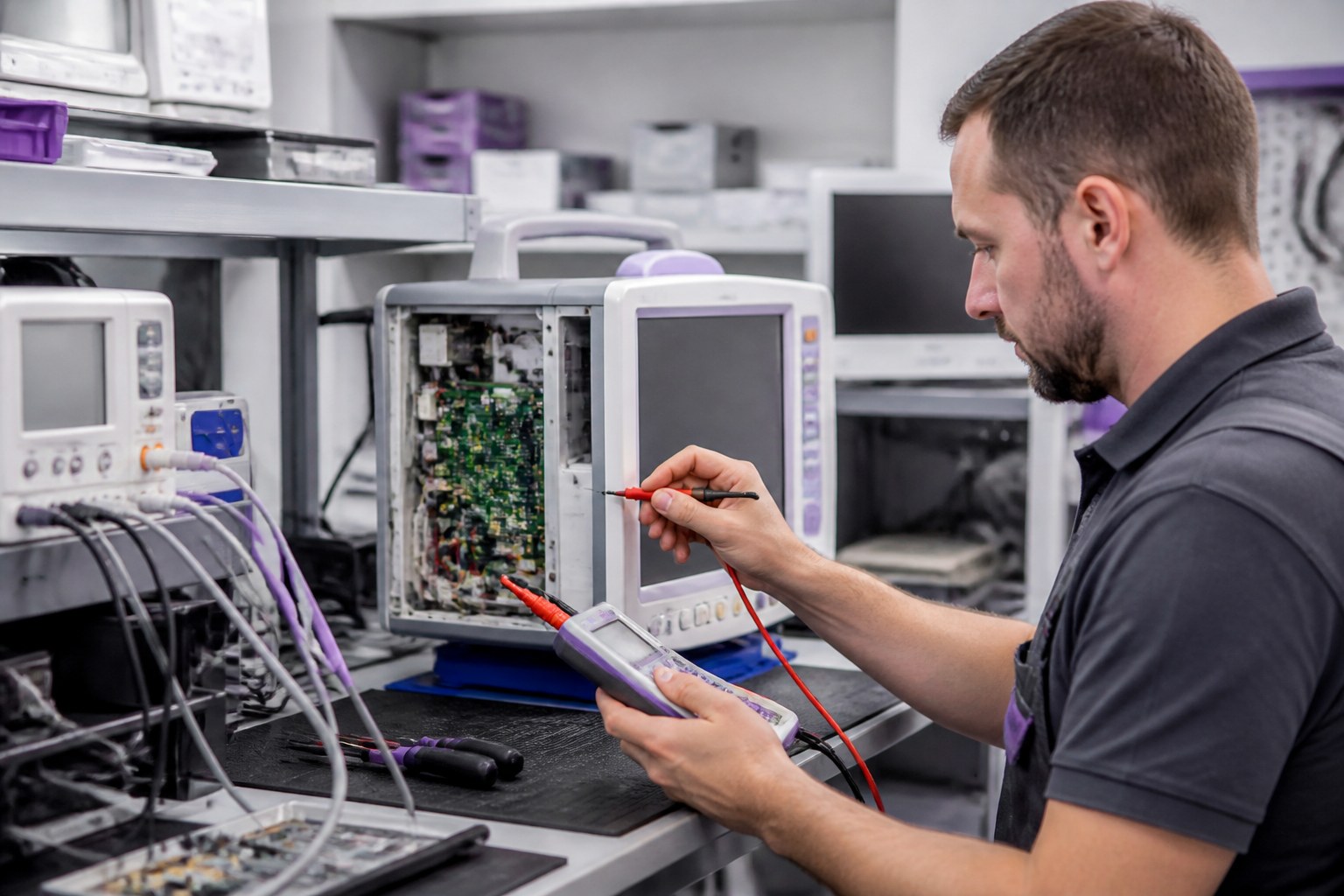
Troubleshooting is an important part of the job. A technician examines symptoms, separates electrical, electronic, mechanical and software-related causes, and applies a structured method to locate the fault. After a repair or adjustment, the equipment is tested again and the result is recorded.
Medical environments require careful coordination. Technicians communicate with technical colleagues and medical teams, explain the status of equipment and follow safety-related instructions. They therefore need practical skills as well as a disciplined approach to documentation and communication.
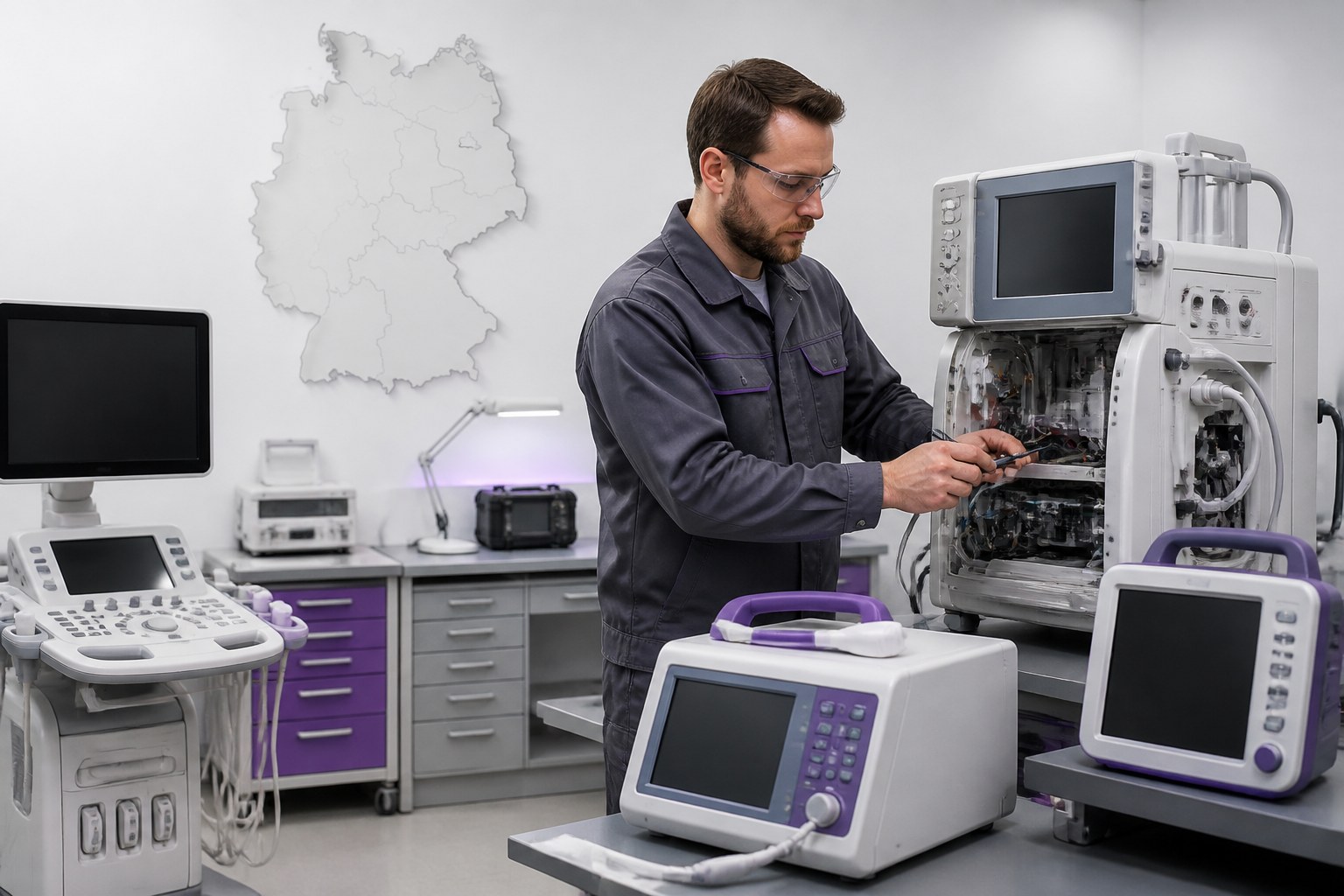
The equipment environment includes devices used for patient monitoring, laboratory work, diagnostics, treatment and other clinical processes. Your experience does not need to cover every type of medical technology. It does need to show that you understand technical reliability, controlled testing and the consequences of returning equipment to service without adequate verification.
The work also involves prioritisation. A technician assesses the reported problem, determines which checks are necessary and records the technical findings in a way that another qualified person understands. This structured approach is important when several service activities are planned or when a fault affects the continued use of equipment.
Core Qualifications and Technical Experience
A relevant technical education provides the foundation for medical equipment technician work. Useful backgrounds include electronics, electrical engineering, mechanics, mechatronics or another closely related technical field. Your application should make the connection between your education and your practical service experience clear.
Employers and recruiting partners assess the substance of your technical experience. Describe the systems you worked with, the type of maintenance you performed and the extent of your responsibility. Experience with installation, inspection, repair, calibration-related checks or technical service gives your profile practical depth when it is documented precisely.
Diagnostic ability is particularly important. Strong candidates explain how they analyse faults, use measuring instruments, follow circuit diagrams or technical instructions and verify the result of a repair. Preventive maintenance experience also demonstrates that you understand how regular inspections reduce failures and support reliable operation.
Safety awareness forms part of professional technical work in medical environments. Your profile should show that you follow procedures, work carefully with electrical and mechanical systems and record relevant findings. Do not describe responsibilities in general terms only; connect each responsibility with a concrete task, system or result from your professional experience.
Training alone does not demonstrate the full scope of your ability. Explain how your education became practical experience: for example, through service work, maintenance assignments, technical projects or responsibility for testing and repair. Include the level of independence you had and the type of supervision provided.
If your experience covers several technical disciplines, organise it clearly. Separate electrical work, mechanical work, software-related checks and documentation duties instead of placing every activity in one general list. This helps reviewers identify the areas in which your background matches medical equipment service.
Skills That Strengthen Your Candidate Profile
Technical competence becomes more convincing when your application shows how you apply it in daily work. Mention the maintenance procedures you perform, the tests you carry out and the documents you complete. A clear description helps reviewers understand whether your experience is practical, recent and relevant to medical equipment service.
Useful evidence includes maintenance records, inspection reports, repair documentation and structured fault analyses. Explain how you record readings, identify deviations, escalate unresolved problems and confirm that equipment is ready for further use. Experience with digital maintenance systems or other technical documentation systems also belongs in your CV when it is relevant.
Cooperation is another important part of the profile. Medical equipment technicians often coordinate technical work with people who use equipment in medical environments. Describe situations in which you explained a technical issue, arranged a service activity, reported a safety concern or worked with other technical specialists.
Present your responsibilities honestly and at the right level. Distinguish between tasks you performed independently, tasks you carried out under supervision and systems you only observed. This gives your application greater credibility than a long list of technical terms without context.
Accuracy in documentation is itself a professional skill. State whether you used checklists, service protocols, digital records, measurement logs or equipment histories. Describe how you handled incomplete information and how you communicated a result after completing a technical intervention.
Problem-solving also includes knowing when a fault requires additional expertise. A reliable technician does not hide an unresolved issue. Your profile becomes stronger when it shows that you identified limits, protected equipment and users, documented the situation and involved the appropriate technical colleagues.
Recognition of Foreign Qualifications
Recognition depends on the profession and the responsible authority. Regulated professions require the relevant professional recognition or authorisation for professional practice. Non-regulated professions are not protected in the same way, and work in such a profession is generally possible without formal German professional recognition. This does not automatically remove qualification requirements connected with residence or employment.
Medical equipment technician work should not be assigned to a regulated or non-regulated category without checking the relevant German reference profession and the duties involved. The responsible authority examines whether your foreign qualification matches that reference profession and whether substantial differences exist.
For a complete application, the authority generally examines the documents within about three to four months. For non-regulated professions, the result may be full recognition, partial recognition or no recognition. Where substantial differences exist, an adaptation qualification or another prescribed qualification measure addresses the identified gaps, depending on the case.
Recognition is separate from residence and employment requirements. An assessment of your qualification does not by itself establish the outcome of an immigration or residence procedure. Those conditions require an individual review by the appropriate official authorities.
Prepare for the recognition review by identifying the qualification you completed, the subjects or training content it covered and the practical experience that followed. Training certificates alone do not always explain the full scope of a technical profile, so employment evidence and detailed descriptions of duties are important supporting material.
Keep copies of every document submitted and record which documents were translated. If an authority requests additional information, respond with consistent dates, job titles and descriptions. Differences between your CV, certificates and employment references make the comparison more difficult and delay the assessment of your professional background.
German Language Skills for Technical Work
German is part of your candidate profile because technical work in medical environments depends on accurate communication. You need to understand safety instructions, maintenance procedures, technical documentation and workplace coordination. Misunderstood information creates practical risks during testing, servicing and fault reporting.
Language skills also affect cooperation. You may need to explain a technical problem, ask for operational information, report an equipment condition or document a completed service activity. Clear German supports safe cooperation with technical colleagues and medical teams.
Do not state a language level that you cannot demonstrate. If you hold a language certificate, identify the level using the Common European Framework of Reference, such as A2, B1, B2 or C1. Also describe practical language use, including technical reading, spoken workplace communication and written documentation.
There is no invented universal language level for this professional group in the available facts. The strength of your profile comes from transparent information about your actual German skills and your experience using language in technical situations.
Technical vocabulary deserves separate attention. List the areas you understand in German, such as equipment components, measurements, maintenance activities, warnings and fault descriptions. Explain whether you have used German in training, service work, workplace conversations or written records.
Improving German is not limited to general conversation. Read technical instructions, practise explaining a fault in clear steps and learn the terms used for tools, components, safety measures and documentation. These activities make your existing technical experience easier to communicate and evaluate.
Medical Equipment Technician Application Preparation Checklist
Preparation area
What to document
Why it matters for your application
Technical qualification
Vocational training, technical education and relevant further qualifications
Shows the technical foundation of your professional profile
Practical experience
Employers, positions, dates and specific maintenance, repair or service duties
Allows reviewers to assess the depth and relevance of your hands-on experience
Equipment and maintenance work
Equipment handled, testing procedures, preventive maintenance and fault-finding methods
Demonstrates practical competence instead of relying on general job titles
German language skills
Current language level, certificates where available and technical communication experience
Explains how you understand instructions and communicate in technical environments
Certificates and supporting documents
Training certificates, employment evidence, technical records and suitable translations
Supports the review of your qualifications and helps identify missing information
Documents to Prepare Before Applying
Prepare a clear CV before submitting an initiative application to East Talent. The CV should show your personal details, education, technical training, employment history, language skills and relevant abilities. For every important position, state the employer, job title, dates and main responsibilities in a way that makes your progression easy to follow.
Collect certificates for vocational training, further education and other relevant technical qualifications. Add employment references or other evidence of practical experience where available. Documents that confirm maintenance, service, testing or repair responsibilities help reviewers understand the technical substance of your background.
Language certificates belong in the application when you have them. You should also prepare relevant technical documentation, such as descriptions of equipment handled, maintenance procedures followed or systems used for service records. Do not submit confidential information belonging to a former employer.
Foreign-language certificates may require translation into German or English. Whether a certified or otherwise formal translation is needed depends on the procedure. Avoid assuming that one translation format applies to every document or authority.
A professional photograph is not a general requirement for an application. Concentrate on accurate information, readable formatting and evidence that directly supports your technical experience.
Use consistent dates throughout the CV, certificates and employment evidence. If a document uses a different job title from the title in your CV, explain the relationship through the listed duties. This prevents a formal difference from obscuring the actual technical work you performed.
Review scans before submission. Every page should be readable, complete and assigned to the correct document category. A short file name and a logical order make the material easier to review than a collection of unidentified files.
How to Present Your Experience in the Application
An initiative application should present your professional profile rather than refer to a specific vacancy. Start with a short summary of your technical background, the type of equipment and systems you have handled, and the service responsibilities you performed.
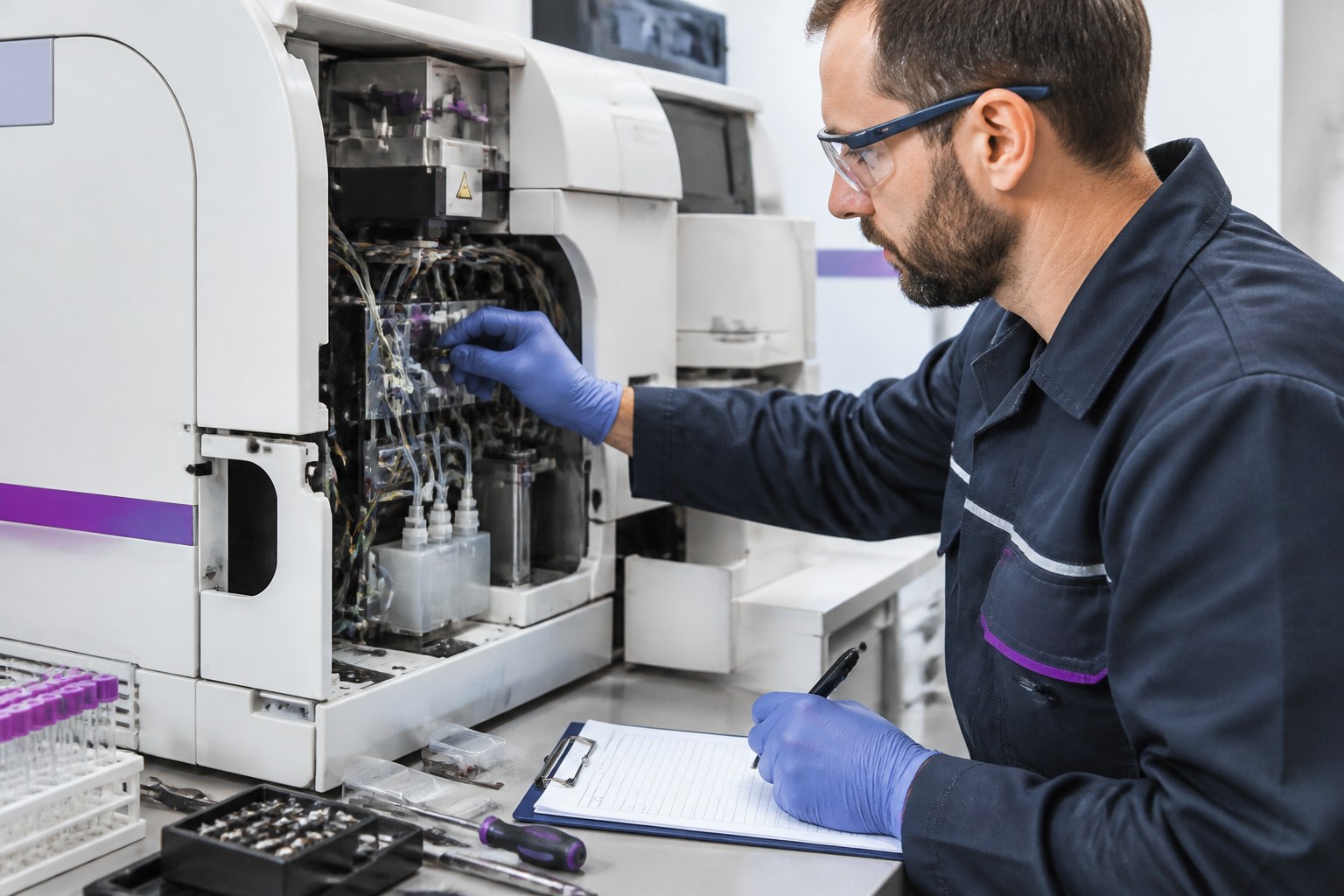
Then describe your experience in clear categories. Explain the equipment you installed, inspected or repaired; the preventive maintenance activities you completed; the tests and measurements you performed; and the methods you used to locate faults. Include the tools, software or documentation systems that formed part of your work.
Safety-related duties deserve specific attention. State how you followed technical procedures, documented results, isolated faults or escalated risks. If you worked in a clinical, laboratory, service or manufacturing environment, identify the environment without revealing confidential information.
Your application should also state the level of responsibility you held. Distinguish independent work from supervised tasks and give concrete examples of cooperation with technical or medical teams. This makes your profile easier to assess for suitable employment opportunities.
Applicants must remain open to employment opportunities throughout Germany. A nationwide search gives your technical profile access to opportunities in different regions and prevents the application from being limited to one preferred location.
Use action-focused descriptions rather than copying a generic job title. “Performed preventive inspections on laboratory analysers, recorded measurements and reported deviations” provides more useful information than “responsible for equipment maintenance.” Include the frequency or scale of work only when you can document it accurately.
Your summary should also show the type of working environment you understand. Service activities inside a clinical area, laboratory, workshop or production-related setting involve different routines and forms of coordination. Naming the environment helps reviewers interpret your technical experience without exposing confidential details.
Working Conditions to Clarify Before Employment
Before accepting future employment, read the employment contract carefully. It should identify the contracting parties and provide information about the start date, any fixed term, probationary period, work location, duties, remuneration, working time, leave and notice periods.
The contract should make your technical responsibilities understandable. Check whether the described duties match the experience you presented and whether the stated work location and working-time arrangements are clear. Technical service work also requires you to understand how maintenance, testing and documentation duties are organised.
Pay attention to the difference between gross and net pay. Gross remuneration is the agreed amount before deductions. Taxes and social insurance contributions reduce the amount paid out, and the exact net amount depends on your personal circumstances. Additional payments, allowances or bonuses depend on the employment relationship and applicable arrangements.
A contract, collective agreement or works agreement may contain additional rules about remuneration, working time or leave. Review the documents that apply to your future employment and ask for clarification before signing any agreement you do not understand.
Also clarify how travel, tools, protective equipment, training and technical documentation are handled when these matters form part of the work. The written terms should give you a realistic picture of the daily technical responsibilities and the practical organisation of service activities.
If the work involves different sites or changing assignments, make sure the contract or accompanying information explains how the work location is defined. This matters for planning travel, accommodation and daily costs. Do not rely on an informal explanation when an important condition is absent from the documents.
Preparing for Employment in Germany
Preparation begins with a precise record of your technical education and practical experience. Build your CV around real duties, equipment, maintenance activities, testing procedures and fault-finding methods. Add certificates, evidence of experience and language information in a consistent format.
Next, clarify whether recognition of your foreign qualification is relevant to your professional situation. The recognition question concerns the comparison of your qualification with a German reference profession. Residence and employment conditions are separate matters and require an individual official assessment.
Review your documents for completeness before submitting them. Inconsistent job dates, unexplained gaps, missing certificates or vague descriptions of responsibilities make technical experience more difficult to evaluate. Translations should follow the requirements of the procedure in which you use them.
Finally, submit an initiative application that explains the type of medical equipment technician work you seek and the locations throughout Germany for which you are available. Your application should give East Talent enough information to review your qualification, experience, German skills and supporting documents.
Create a preparation folder with the final CV, certificates, employment evidence, language documents and translations. Use the same spelling of your name and the same dates across all files. This simple organisation supports a consistent review and makes later requests for information easier to answer.
Think about relocation as a practical part of preparation. Employment in Germany involves housing, transport and everyday costs, so review your personal budget and documentation needs before making arrangements. This planning does not replace the official assessment of your qualification or other requirements, but it reduces avoidable uncertainty.
Who Should Apply for Medical Equipment Technician Opportunities?
This professional field suits candidates with technical education and practical experience in maintenance, service, testing, repair or fault diagnosis. A strong candidate profile connects training with hands-on responsibility and shows careful work with technical systems.
You should also be prepared to document your experience clearly. Reliable records of employers, positions, dates, equipment, responsibilities and technical procedures give reviewers a sound basis for assessing your profile. German language information, certificates and other supporting documents complete the application picture.
East Talent reviews professional qualifications, experience, German skills and the documents required for the application. Suitable candidates may subsequently be introduced to matching companies in Germany. This initial application is not an application for a specific job or a specific employer.
Applicants must be open to employment opportunities throughout Germany. If your profile combines technical competence, structured documentation and a realistic description of your language skills, you are prepared to apply for medical equipment technician opportunities through the candidate process.
A suitable applicant does not need to claim experience with every medical device. The important point is a credible connection between technical training, practical service work, safe working methods and the ability to learn equipment-specific procedures. Describe what you know accurately and identify the areas in which you are ready to develop further.
Before submitting your application, check that your documents answer four basic questions: What did you study? What equipment and systems did you handle? Which tasks did you perform independently? How do you communicate and document technical work in German? Clear answers to these questions give your profile a useful professional structure.
### Apply now
Apply for jobs in Germany through our application form.
Create your profile
Registration with East Talent
Four short steps. A CV is optional and can be provided in your native language.
Step 1 of 4Profession
East Talent
International recruitment with proprietary software
East Talent combines international recruitment with structured digital processes for handling candidate profiles, attracting employers and evaluating job opportunities.