Recycling And Waste Management Specialist Jobs In Germany
What Recycling and Waste Management Specialists Do
Recycling and waste management specialists work with the collection, sorting, processing, recovery and controlled handling of materials. The exact responsibilities differ between professional profiles, so your application must describe the work you have actually performed rather than assigning the same duties to every role.
Relevant experience includes work with recyclable materials, industrial recycling equipment, waste separation, material inspection, recovery processes, documentation, quality control or operational safety. Some candidates come from vocational training, while others have academic education or practical experience in environmental technology, production, logistics or a related technical field.
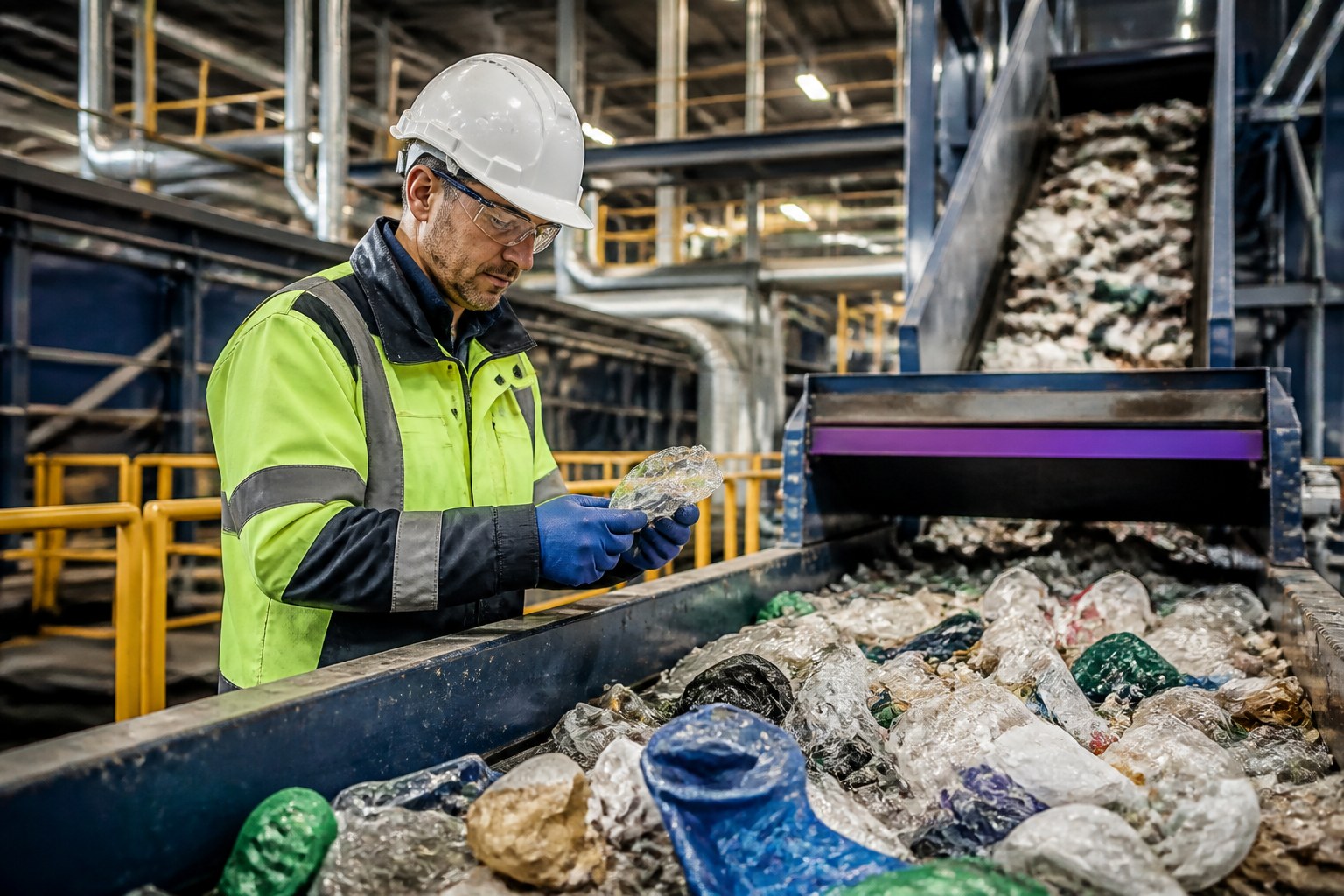
The professional field includes both hands-on operational duties and supporting technical or administrative tasks. Depending on your background, your experience may involve monitoring conveyor systems, checking incoming materials, separating material streams, preparing recyclable substances for further processing, recording quantities or supporting maintenance and cleaning procedures. Describe only the areas in which you have genuine experience.
Safety is an important part of this work. Recycling environments include moving machinery, vehicles, material streams and substances that require controlled handling. Explain the safety instructions, protective equipment, workplace procedures and reporting routines that you followed. This information gives a more useful picture of your professional readiness than a general statement that you are hardworking or technically interested.
When you prepare your profile for jobs in Germany, explain the materials, equipment, procedures and responsibilities connected with your previous work. State whether you worked independently, followed defined operating procedures, monitored processes, recorded results or coordinated tasks with other employees. Accurate technical detail gives East Talent a clearer basis for assessing your professional background.
Which Qualifications and Experience Matter
A relevant vocational qualification, technical education or academic degree provides an important foundation for recycling and waste management work. Your documents should show the official name of the qualification, the training institution, the period of study and the final certificate or degree. If your education is not specifically titled recycling or waste management, explain the technical content that relates to the professional field.
Practical experience is equally important. Describe each position with the employer, job title, employment period and main duties. Focus on tasks connected with material handling, sorting, recycling operations, environmental procedures, equipment use, maintenance support, quality checks, process documentation and workplace safety when those tasks formed part of your work.
Technical knowledge should be presented precisely. Include relevant machinery, production or recycling processes, software, documentation systems, safety procedures and quality standards that you have genuinely used. Do not add equipment or responsibilities simply because they appear common in the sector.
Experience with industrial routines deserves a clear explanation. Mention whether you worked with fixed production targets, shift handovers, inspection records, contamination checks, weighing systems, loading procedures or controlled storage. These details show how you worked within an operational environment and how you responded to established procedures.
Certificates, training records and evidence of employment strengthen your profile. Where possible, organise documents so that the connection between your qualification, professional experience and intended occupational field is easy to understand. If your experience developed through several related jobs, explain how the responsibilities progressed from basic operational work to more independent technical duties.
Your professional history does not need to use the same job title as a German occupational profile. The content of your training and actual duties remains the essential information. A clear explanation of transferable technical experience helps distinguish relevant work from unrelated employment.
How to Present Your Professional Profile
Your CV should give a clear chronological overview of your education and employment history. Include personal contact details, professional experience, education, certificates, language skills and relevant technical abilities. Use consistent dates and explain any longer periods outside employment or education when this information is relevant to understanding your professional history.
For every relevant position, identify the employer, your position and the principal tasks. Statements such as “worked in recycling” provide little detail. A stronger description identifies the material flows, machinery, inspection duties, records or safety procedures involved. Only include duties that reflect your actual experience.
Use short, factual descriptions rather than long lists of generic qualities. For example, identify the type of material handled, the part of the process you supported, the equipment you operated and the records you maintained. If you supervised colleagues, coordinated a work area or trained new employees, state this clearly and distinguish it from ordinary team participation.
Certificates should be listed with their correct titles and dates. Add technical courses, occupational safety training, environmental training and equipment-related qualifications when they are documented and relevant. If a certificate is available in another language, keep the original document and prepare information about its content for the relevant application procedure.
An application photo is not a general requirement. Your professional evidence remains the central part of the profile. A concise, accurate CV is more useful than a document filled with unsupported claims or broad descriptions.
Before submitting information, compare the dates and job titles in your CV with your certificates and employment evidence. Differences in spelling, dates or translated titles create avoidable questions. Use one consistent version of your name and explain an authentic difference only when the underlying documents require it.
German Skills for Your Candidate Profile
German skills belong clearly in your candidate profile because communication affects workplace safety, instructions, documentation and cooperation. State your current level honestly and identify whether it comes from formal learning, work experience, school education or another recognised form of language training.
You can describe language skills using the Common European Framework of Reference for Languages, including levels such as A2, B1, B2 or C1. If your speaking, listening, reading and writing abilities differ, explain the difference instead of presenting one level as if it described every skill equally.
There is no single universal German-language requirement for every recycling and waste management position. The relevant information is your actual level and your ability to use German in professional situations. Do not claim a certificate that you have not obtained, and do not leave the language section blank.
Professional communication includes understanding instructions, identifying hazards, asking questions, reporting equipment problems and documenting operational information. Vocabulary related to materials, contamination, storage, machinery, protective equipment and emergency procedures is particularly useful for this occupational field.
Continue improving technical vocabulary alongside general German. Terms connected with equipment, materials, hazards, instructions and reporting help you present your experience more effectively and prepare for communication in a German workplace. If your German is still developing, describe your current learning activities without presenting future progress as an existing qualification.
Recognition of Foreign Qualifications
Recognition depends on the legal classification of the profession and on the qualification being assessed. Regulated professions are occupations in which professional practice or specific activities are legally protected. These professions require the relevant recognition or professional authorisation before the regulated work is performed.
Many occupations from Germany’s dual vocational training system and numerous academic professions are not regulated. In a non-regulated profession, German professional recognition is not required in the same way as it is for a regulated profession. This does not automatically remove qualification-document requirements connected with residence or employment matters.
During a recognition procedure, the responsible authority compares the foreign qualification with the corresponding German reference profession and examines whether substantial differences exist. For non-regulated professions, the result may include full recognition, partial recognition or no recognition. Where substantial differences exist, an adaptation qualification or another prescribed qualification measure addresses those differences in the relevant case.
The assessment focuses on the content and level of the qualification, not only on its title. Training subjects, duration, practical components and documented professional experience provide important context. Submit complete and authentic information so that the responsible assessment has a reliable basis.
Recognition law and rules for working in Germany are separate issues. A recognition result does not by itself establish every condition connected with residence or employment in Germany. Keep both questions separate when organising your documents and preparing your professional profile.
Do not describe an application as recognised before an official decision exists. If the procedure has started, state the stage accurately and keep confirmation letters, requests for additional documents and decisions in the same document file. This prevents an unresolved matter from being presented as completed.
Candidate Preparation Overview
Preparation area
What to provide
Why it matters
Professional qualifications
Vocational certificates, academic degrees and relevant technical training
Shows the education and technical foundation behind your professional profile
Work experience
Employers, positions, dates, materials, equipment and actual responsibilities
Allows your practical recycling and waste management experience to be assessed accurately
Language skills
German level using CEFR descriptions such as A2, B1, B2 or C1
Makes your communication profile transparent without claiming a universal job-specific requirement
Recognition and supporting documents
Certificates, employment evidence, translations where required and recognition information
Separates qualification assessment from other procedures and reduces missing-document questions
Documents to Prepare Before Applying
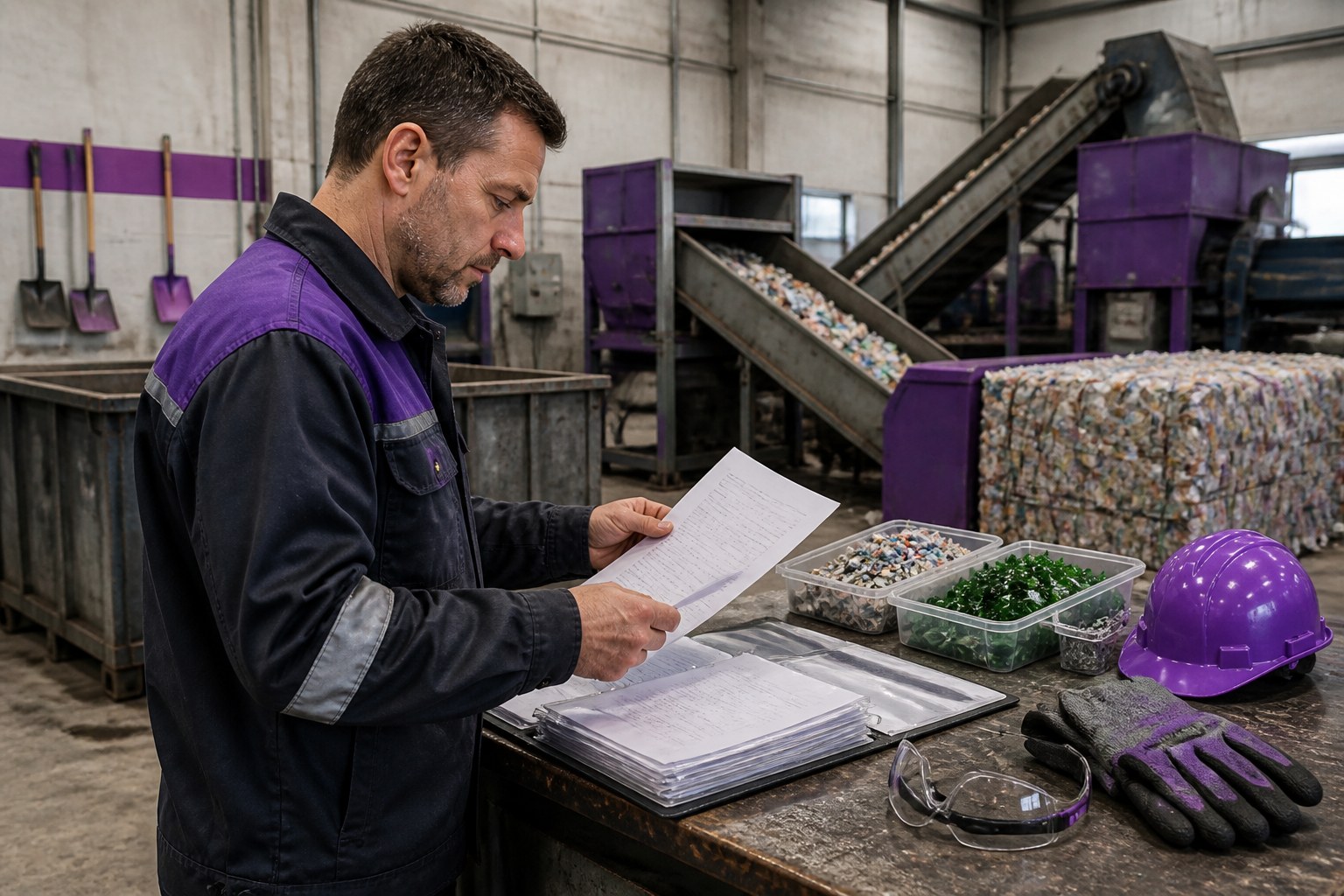
Prepare a complete document file before submitting your application. The core material includes an accurate CV, vocational or academic certificates, relevant training records, evidence of professional experience and a clear description of your German skills.
Employment evidence should make your practical background understandable. Employment certificates, reference letters or other official records are useful when they identify the employer, position, employment period and main responsibilities. If a document does not describe your duties in detail, add a separate factual explanation without changing the wording of the original evidence.
Keep important school, vocational and university certificates together with other professional documents. Foreign-language documents may require translation into German or English, and a formal or certified translation depends on the relevant procedure. Do not assume that one translation format applies to every process.
Scan documents clearly, use consistent file names and check that names and dates match across your CV and certificates. Missing pages, unclear scans and inconsistent employment dates create avoidable questions during profile assessment.
A useful file structure separates identity information, education, employment evidence, technical certificates, language evidence and recognition documents. Use descriptive file names that identify the document without replacing the original title. Keep the original files and submit copies or scans as requested.
Check that certificates include all pages, including pages containing stamps, signatures, grades or descriptions of practical training. Do not edit an original document to improve its appearance. If information is unclear, provide a separate explanation and retain the original version.
Working Conditions to Understand in Germany
Before accepting employment, read the employment contract carefully. It should address the contracting parties, start date, any fixed term, probationary period, place of work, duties, remuneration, working time, annual leave and notice periods. Collective agreements or works agreements may add provisions on pay, working time or leave.
Recycling and waste management work often takes place in operational environments rather than conventional office settings. Your duties may involve standing, walking, protective clothing, machinery, vehicles, material handling and defined safety procedures. The physical and technical conditions should be clear before you begin employment.
German remuneration is normally stated as gross pay. Taxes and social insurance contributions are deducted according to the individual situation, so the net amount paid into your account is not identical to the contractual gross amount. Do not assess an offer from a gross figure alone; understand which deductions and additional payment components apply to your situation.
The German social insurance system includes health, long-term care, pension, unemployment and accident insurance. For employment subject to social insurance contributions, registration is generally handled through the employer. The exact financial result still depends on your personal circumstances.
The statutory minimum annual leave is 24 working days under a six-day working week, equivalent to 20 working days under a five-day working week. An employment contract or collective agreement may provide more leave. Working-time rules also set statutory limits; the contractual regular weekly schedule is not the same as the statutory maximum for daily working time.
When assessing your financial situation, include regular living costs connected with a move to Germany. Rent, a deposit, transport and other living expenses affect the amount that remains available after deductions. Compare the complete employment conditions rather than focusing on one figure in isolation.
Applying Through East Talent
East Talent’s candidate application is an expression of interest in employment opportunities in your professional group in Germany. You do not apply at this stage for a named vacancy or a particular employer. The purpose is to present your professional qualifications, experience, German skills and relevant documents in a structured form.
East Talent reviews the information you provide and assesses whether your profile fits the professional requirements for future employment opportunities. Suitable candidates are subsequently presented to appropriate companies in Germany. This process makes accuracy important: your profile must reflect your real qualifications, tasks, certificates and language ability.
A proactive application should therefore explain your professional direction without inventing a specific position. Identify the recycling or waste management work you seek, describe the technical areas in which you have experience and state your geographic flexibility. Keep your documents ready so that questions about education, employment history or language skills receive clear answers.
Use the application form to submit complete and consistent information. If a recognition question remains unresolved, identify it separately instead of presenting an unverified recognition result as a fact.
Your application is stronger when it explains both your technical profile and your practical expectations. Mention the types of operational environments in which you have worked, the equipment you know and the level of responsibility you held. Also state whether you are prepared for work throughout Germany and whether any genuine mobility limitation affects your availability.
Avoid copying broad descriptions from the internet or adding machinery that you have never operated. A precise profile supports an accurate assessment and prevents later misunderstandings about your qualifications, language ability or professional experience.
Be Open to Opportunities Throughout Germany
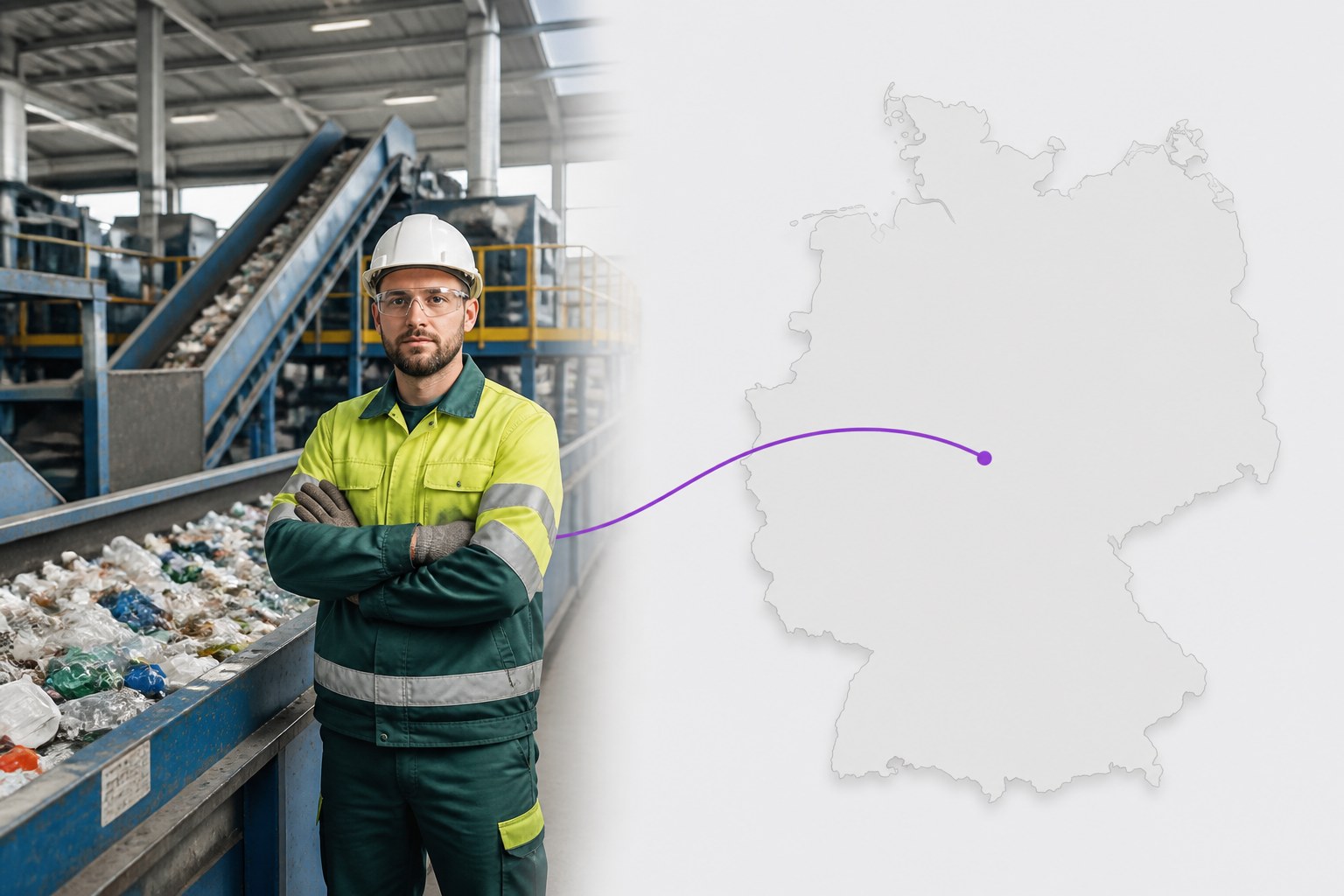
Applicants must be open to jobs throughout Germany. Recycling and waste management work exists across different industrial and operational environments, so limiting your profile to one city or region reduces the range of employment opportunities considered for your background.
State your mobility clearly and distinguish genuine restrictions from personal preferences. If you have a professional reason for a geographic limitation, explain it accurately. Do not present one preferred location as a condition for consideration when you intend to pursue employment opportunities across Germany.
Geographic flexibility should accompany professional flexibility. Review your experience across material handling, plant operations, sorting, technical inspection, documentation and environmental procedures, then identify the areas in which you offer the strongest evidence. A complete profile helps the assessment focus on your qualifications rather than on missing information.
Think about the practical consequences of nationwide mobility before applying. A move affects accommodation, transport, daily expenses and your personal organisation. You do not need to name a preferred destination in your professional profile when your objective is employment in your occupational field across Germany.
Explain your mobility honestly. If you need time to arrange a move, state this as a practical planning matter rather than promising immediate availability that you cannot maintain. Clear information supports realistic communication during the assessment and later introduction to suitable companies.
Your Preparation Checklist
Before submitting your application, check that your CV contains consistent dates, accurate job titles and specific descriptions of your responsibilities. Add your vocational or academic qualifications, certificates, employment evidence, technical knowledge and German-language information.
Organise original documents and clear copies. Treat recognition of qualifications and related to working in Germany matters as separate questions, and avoid stating that either process has a particular result unless you have official evidence. If translations are needed, identify the requirements of the relevant procedure before ordering a formal translation.
Review every technical statement in your CV. Confirm that the machinery, materials, procedures, software and safety responsibilities listed there match your actual experience. Remove vague claims and replace them with factual descriptions of tasks, responsibilities and documented training.
Check the language section separately. Include certificates that you actually hold, describe your practical communication ability and identify differences between speaking, listening, reading and writing when they are relevant. German skills are part of your candidate profile and deserve the same accuracy as your work history.
Finally, confirm that your profile reflects openness to opportunities throughout Germany. A clear professional history, honest language information and complete supporting documents provide the strongest basis for consideration.
Four short steps. A CV is optional and can be provided in your native language.
Step 1 of 4Profession
East Talent
International recruitment with proprietary software
East Talent combines international recruitment with structured digital processes for handling candidate profiles, attracting employers and evaluating job opportunities.