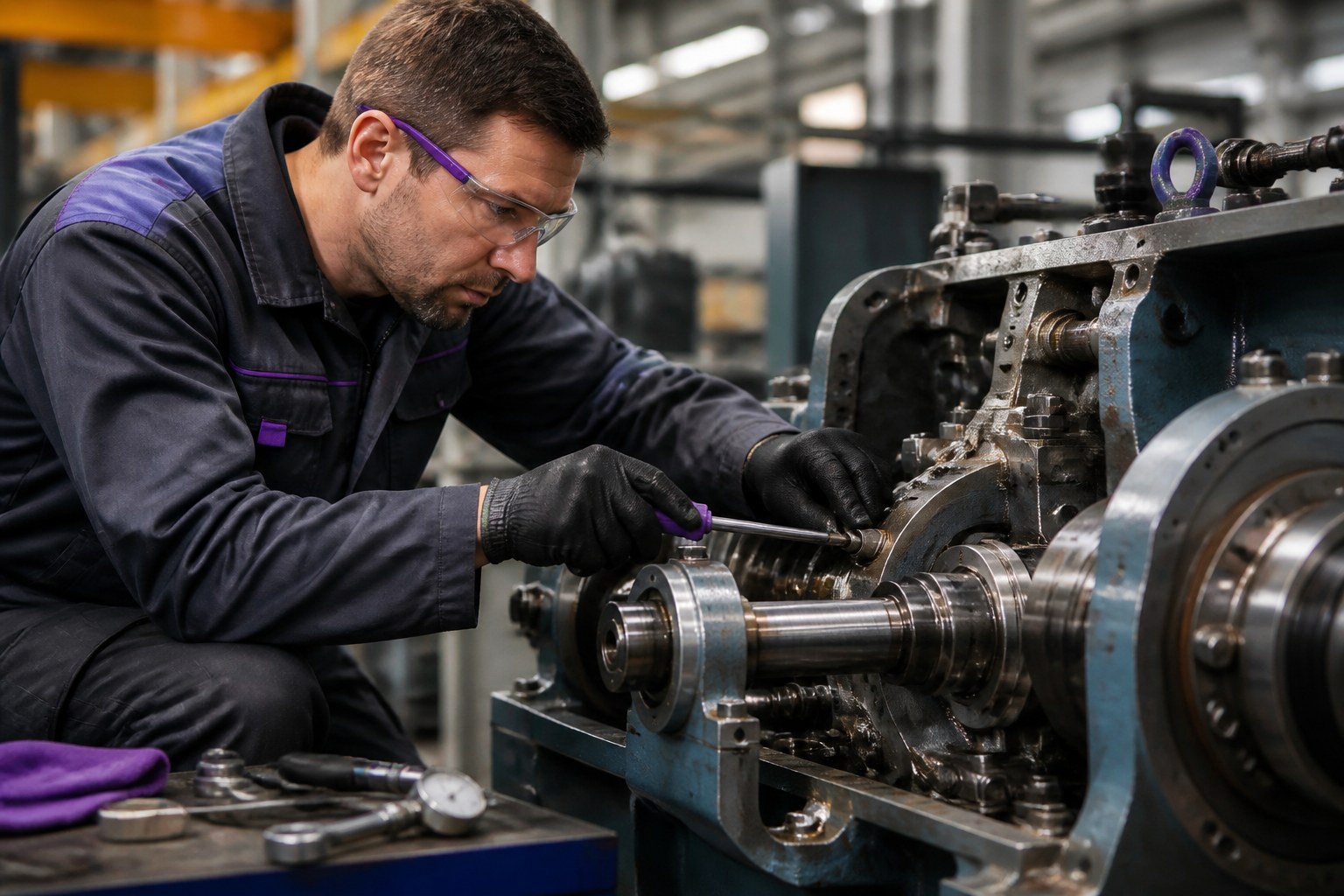
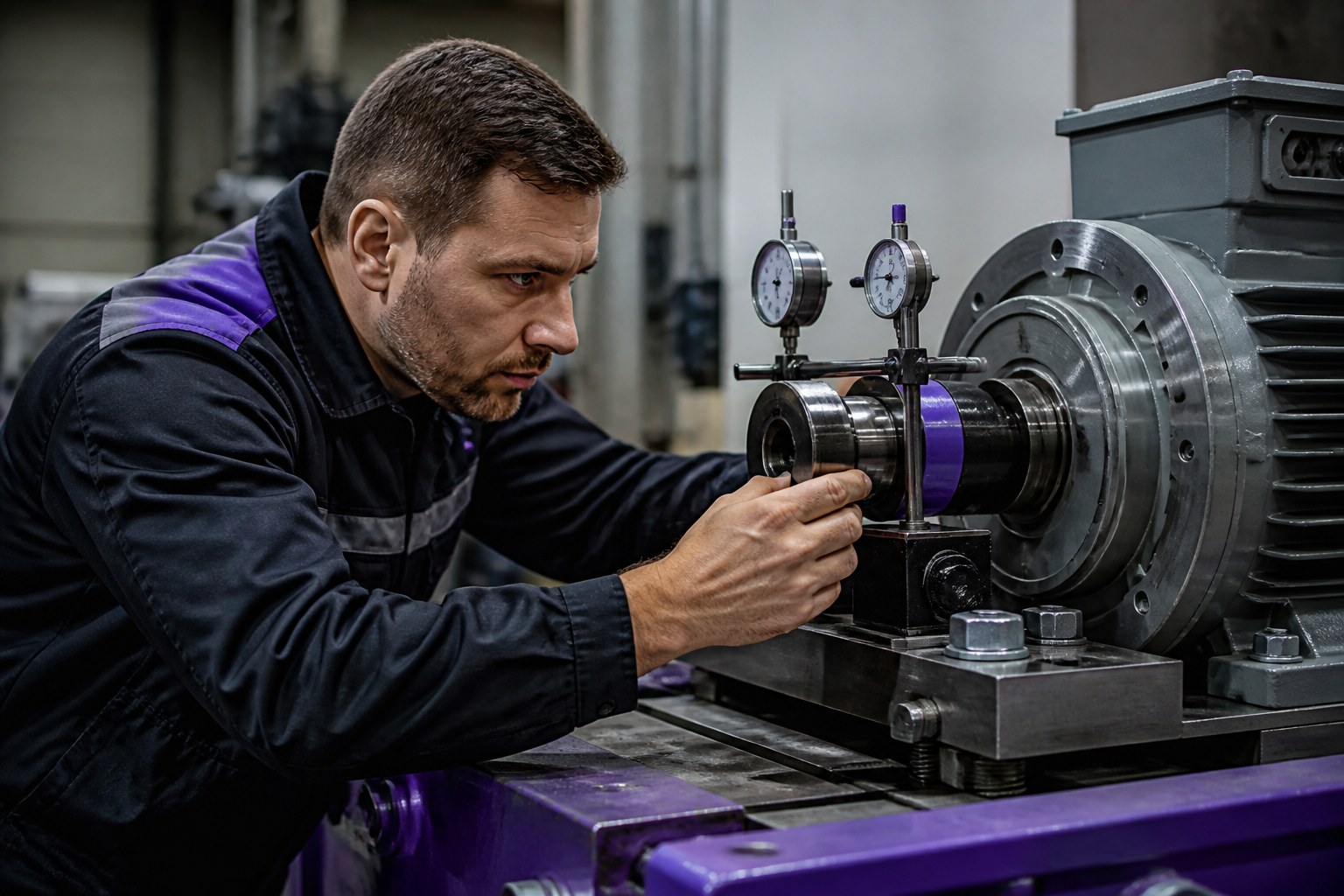
Industrial mechanics work with machines, production equipment and technical systems. Their practical responsibilities focus on keeping mechanical equipment functional, identifying technical problems and supporting reliable industrial operations. Depending on the professional environment, their work includes assembling components, inspecting machinery, carrying out maintenance tasks and repairing mechanical faults.
The profession combines manual work with technical analysis. You need to understand how mechanical components interact and how equipment should operate. Your work also requires careful observation because unusual noise, vibration, wear or visible damage may indicate a technical problem. A fault often becomes visible through several connected symptoms, so your ability to compare normal machine operation with abnormal behaviour is important.
Industrial mechanics work directly with equipment rather than performing only administrative tasks. Tools, measuring equipment, machine components and technical documentation form part of the working environment. Safe working methods are essential when inspecting or working on industrial machinery. Before starting a task, you need to understand the work instructions, identify the relevant components and use tools in a controlled way.
Typical activities include preparing parts for assembly, fitting mechanical components, checking connections, measuring dimensions and inspecting equipment after maintenance. Troubleshooting involves locating the source of a fault rather than simply replacing a visible part. Repair work also includes checking whether the machine operates correctly after the intervention. The exact combination of tasks depends on your professional background and the equipment you have handled.
Your previous experience should therefore show more than a job title. A useful profile describes the types of machines and systems you worked with and connects each position to specific activities such as assembly, inspection, maintenance or repair. This gives a clearer picture of your practical ability than a short statement such as “worked as an industrial mechanic.”
When describing your experience, distinguish between tasks you performed independently and tasks completed under supervision or as part of a team. Mention the type of production or technical environment where this information is relevant, but avoid vague claims about machinery that you did not personally operate or maintain. Precise descriptions help reviewers understand the depth and relevance of your experience.
Technical Skills and Professional Experience Employers Assess
A strong applicant profile combines completed vocational training or comparable professional preparation with practical experience. Your documents and CV should make your technical background easy to understand. State the qualification you completed, the period of training and the areas in which you gained professional experience.
Relevant experience includes work with industrial equipment, mechanical assemblies and technical systems. Describe the equipment clearly where possible, without using unexplained abbreviations. Explain whether your work involved assembling components, inspecting machines, maintaining equipment, locating faults or completing repairs.
Technical understanding is important because industrial mechanics must connect symptoms with possible mechanical causes. Your experience should demonstrate attention to detail, a structured approach to technical tasks and the ability to work with industrial equipment safely. Do not describe responsibilities that you did not personally perform.
Safe working methods also belong in your professional profile. Explain how you prepared technical work, followed instructions and coordinated tasks with colleagues. Safety information and work instructions are part of industrial communication, so your profile should show that you take these requirements seriously.
The depth of your experience matters as much as the number of years shown in a CV. A reviewer needs to see what you learned and applied during that time. For example, a description that names maintenance without identifying the equipment or type of work provides less useful information than a description that explains preventive checks, component replacement, fault location or post-repair testing.
Include technical abilities only when they reflect real practice. Relevant details include familiarity with hand tools, measuring equipment, mechanical components, technical drawings or maintenance documentation when these formed part of your work. Your profile should remain understandable to a reader who does not know the abbreviations or internal terminology used by a former employer.
The following overview helps you prepare the central parts of your application:
German Language Skills for Industrial Mechanic Applicants
German is an important part of your candidate profile because industrial mechanic work involves technical communication. You need to understand work instructions, safety information and descriptions of technical problems. Communication also supports coordination with colleagues during inspections, assembly work, maintenance and repairs.
Your language information should be accurate and easy to verify. If you have a language certificate, include its level and the date of issue in your application documents. Language skills can be described using the Common European Framework of Reference for Languages, for example A2, B1, B2 or C1. Do not claim a level that you have not reached.
There is no single mandatory German level stated in the available information for every industrial mechanic applicant. The relevant point is that your language ability forms part of the overall profile reviewed for employment opportunities. Technical knowledge and language skills should therefore be presented together rather than treated as unrelated topics.
If your German is still developing, describe your current level honestly and continue improving technical vocabulary. Terms connected with tools, components, measurements, faults, maintenance and safety are particularly relevant to your professional communication.
Your ability to communicate technical information includes more than everyday conversation. You should develop the vocabulary needed to describe a fault, ask for clarification, understand an instruction and report the result of a repair. Listening comprehension is especially relevant when colleagues explain a task in a noisy workshop or production environment. Written understanding also matters when you read safety notices, work instructions or maintenance records.
Do not replace documented language information with general claims such as “excellent communication.” State how you learned German, identify a certificate where one exists and describe relevant technical language experience. This gives your application a more reliable basis and allows your professional knowledge to be assessed together with your communication skills.
Qualifications and Recognition of Foreign Training
If you completed your industrial mechanic training outside Germany, prepare clear evidence of your qualification. This includes certificates, training records and documents that explain the content and duration of your professional preparation. Your employment evidence adds important context by showing how you used that training in practice.
Professional recognition and related to working in Germany requirements are separate matters. Recognition examines whether a foreign professional qualification corresponds to a German reference profession and whether substantial differences exist. requirements for working in Germany must be assessed separately for the individual situation; the absence of a formal recognition requirement for a particular occupation does not automatically remove every requirement for employment or residence.
Industrial mechanic work is connected to vocational training and practical technical skills. However, the legal classification and the documents required for an individual process depend on the relevant procedure. Do not assume that your foreign qualification receives automatic recognition.
Where the competent authority identifies substantial differences, an adaptation qualification or another designated qualification measure may address those differences, depending on the case. For non-regulated occupations, the result of a recognition procedure may be full recognition, partial recognition or no recognition.
Submit complete and consistent information. Differences between your CV, certificates and employment evidence create unnecessary questions. If documents are not in German or English, a translation may be useful or required in the relevant procedure. Whether a certified or otherwise formal translation is needed depends on that procedure and should not be assumed in advance.
Start by collecting the documents that explain both your formal training and your practical development. A certificate alone often gives less context than a certificate accompanied by training records, subject information and employment evidence. If your job title differs from the title used in Germany, the content of your training and your actual tasks provide important context for the assessment.
Keep the names, dates and qualification details consistent throughout your file. If a document uses a different spelling of your name, an unexplained gap or a different job title, add a clear explanation rather than changing the original information. Transparent documentation supports a more efficient review of your professional background.
Training certificate, vocational records or comparable professional preparation
Shows the basis of your technical knowledge and supports assessment of your qualification
Practical experience
Employers, positions, dates, equipment and mechanical tasks
Makes your assembly, inspection, maintenance and repair experience traceable
Language and communication
German level, language certificate where available and relevant technical communication experience
Shows how you understand instructions, safety information and coordination with colleagues
Supporting documents
CV, certificates, employment evidence and translations where the relevant procedure requires them
Allows your professional history and qualifications to be reviewed consistently
Documents to Prepare for Your Application
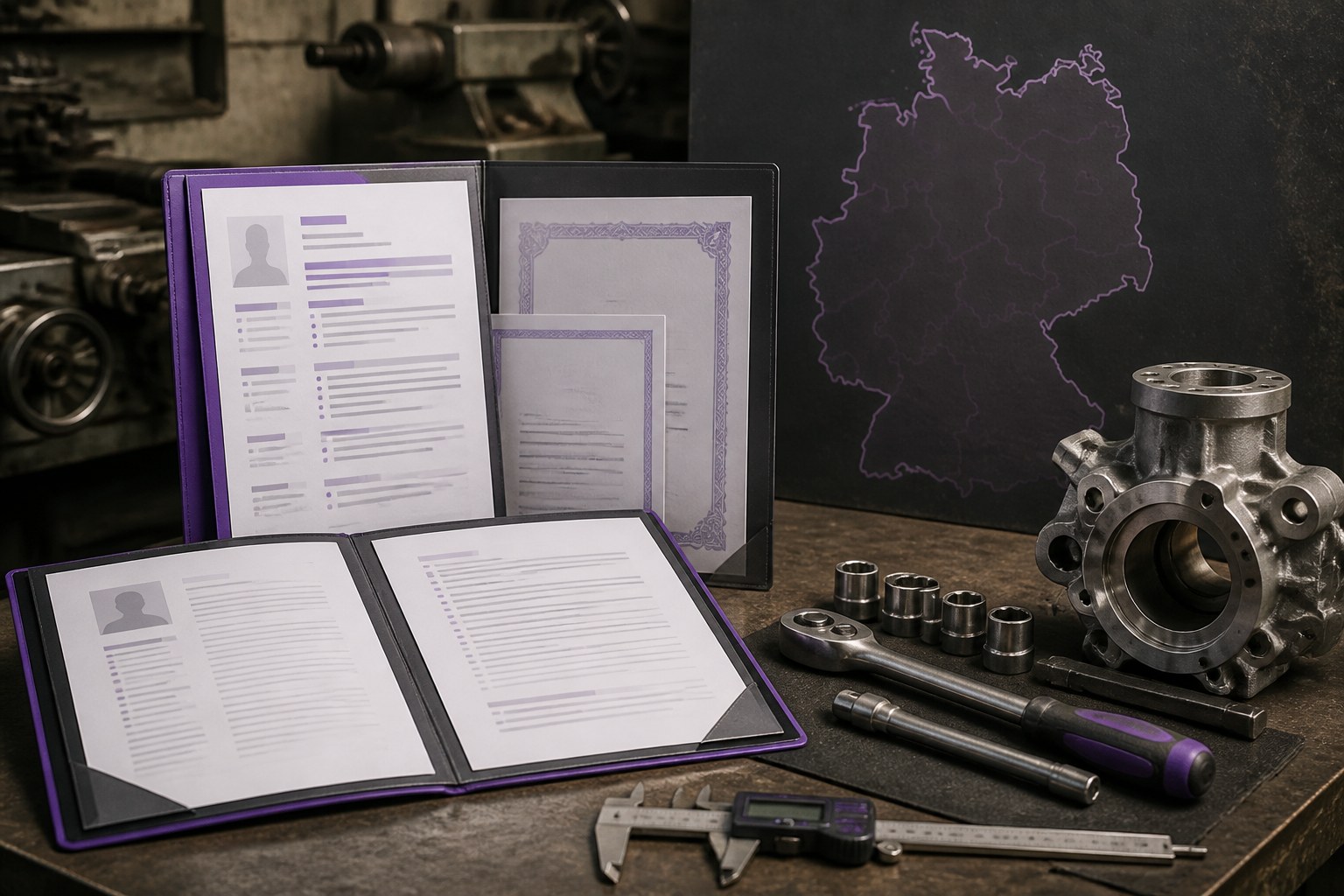
Your initial application profile should present your professional history in a traceable form. Start with a clear CV that lists your personal details, education, professional experience, language skills and relevant technical abilities.
For every industrial mechanic position, identify the employer, your job title, the employment period and your main tasks. Connect the position with the equipment or systems involved. For example, explain whether you carried out assembly, mechanical inspection, maintenance, troubleshooting or repairs. This level of detail helps reviewers understand your actual experience.
Training certificates and relevant school or higher-education documents should be included where they support your professional profile. Add employment evidence when available, particularly when it confirms the duration and nature of your practical work. Language certificates also belong in the application file if you have them.
Foreign-language certificates may require translation for a particular procedure. The required format depends on the process, so do not label every translation as certified unless that status is actually documented or requested. Keep original documents and translations clearly assigned to one another.
A professional application file does not depend on a photograph. An application photo is not a general requirement. More important elements are accurate dates, consistent job descriptions, readable documents and a clear explanation of your technical experience.
Use a logical order so that the reviewer identifies your most important information quickly. Place your professional summary, qualification, practical experience and language skills where they are easy to find. Name digital files clearly and check that scans are complete, readable and assigned to the correct document. Blurred pages, missing backs of certificates or unexplained gaps make the review more difficult.
Your CV should also distinguish training from employment. List the period of vocational preparation separately from later professional experience, then explain how the qualification was used in practice. Employment references, contracts or other evidence should support the dates and tasks shown in the CV when such documents are available.
Keep a complete copy of the submitted file. Future requests for clarification often refer to an earlier document, so retaining the exact version helps you answer accurately. Do not submit altered certificates or unsupported statements about machinery, qualifications or language ability.
Understanding Working Conditions and Pay Information
Before accepting an employment relationship, read the employment contract carefully. It should identify the contracting parties and provide information about the start of employment, any fixed term, the probationary period, the workplace, your duties, remuneration, working time, holiday entitlement and notice periods.
The contract gives you the basis for understanding what you are agreeing to do. Check that the described duties correspond with your professional profile and that the workplace and working-time information are clear. Industrial mechanic work is practical and equipment-based, so the description of duties should be understandable rather than limited to a general job title.
Pay is normally stated as a gross amount. Gross pay is not the same as the net amount transferred to your bank account. Taxes and social-security contributions are deducted according to your personal circumstances. The exact net amount therefore cannot be calculated from a gross figure alone.
Possible additional payments, such as supplements or bonuses, depend on the employment relationship and applicable rules. Collective agreements or works agreements may also contain provisions on remuneration, working time or holiday. Treat these as contract-related information that you must read in context rather than as universal conditions for every industrial mechanic.
Your financial planning should use the net amount and account for actual living costs. Rent, deposits, transport and other expenses affect the amount available to you after relocation. Do not make a relocation decision based only on an advertised gross figure.
Pay information should also be read together with the actual working conditions. Clarify how the role describes shifts, overtime, equipment-related responsibilities and the normal place of work when these details appear in the contract or related documents. A clear understanding of working time helps you compare the professional opportunity with your personal obligations.
Keep written information about agreed conditions and read every document before signing. If a term is unclear, ask for an explanation instead of relying on an informal assumption. The contract, applicable agreements and written explanations together provide a more reliable picture than a single gross salary figure.
How to Prepare for Industrial Mechanic Jobs Across Germany
East Talent’s candidate process begins with a proactive application for employment opportunities in your professional group. You are not applying for one specific advertised vacancy or for one named employer at this stage. The initial profile review focuses on your qualifications, professional experience, German skills and the documents required for further consideration.
Your professional flexibility matters. Applicants need to remain open to employment opportunities throughout Germany rather than limiting their application to one preferred city or region. This gives your profile a broader basis for consideration and reflects the nationwide focus of the candidate application.
Prepare your profile before submitting it. A reviewer should be able to identify your qualification, the equipment you worked with, the technical activities you performed and your current German level without reconstructing the information from incomplete documents.
Relevant professional groups include industrial mechanics and other technical occupations with related mechanical, maintenance or production responsibilities. Do not present experience from another occupation as industrial mechanic experience unless the tasks and training genuinely support that description.
No application guarantees a job, a particular employer or a particular location. The purpose of the application is to provide complete information about your professional suitability so that your profile can be assessed for suitable employment opportunities.
Flexibility concerns more than geography. Your willingness to consider different industrial environments, production systems and technical responsibilities gives the assessment a fuller basis. At the same time, your profile must remain truthful: openness to related tasks does not justify presenting unrelated experience as industrial mechanic work.
Before submitting the form, review the connection between your qualification and your practical experience. Explain how your training supports the mechanical tasks listed in your CV, identify your current German level and state which documents are available. A complete profile reduces avoidable follow-up questions and gives your application a clear professional direction.
A Practical Application Checklist for Candidates
Begin by reviewing your professional history. List every relevant position, the equipment and systems involved, and the mechanical tasks you personally performed. Separate routine maintenance, assembly, inspection, fault-finding and repair activities so that your practical experience is precise.
Next, collect your training certificates, employment evidence, language certificates and other relevant documents. Check that names, dates and job titles are consistent across your CV and certificates. Organise translations with the corresponding original documents when foreign-language paperwork is involved.
Record your German skills honestly and include a CEFR level when you have a reliable basis for doing so. Add technical language experience if it reflects real training or work practice. Avoid replacing a language level with vague claims such as “fluent” when your documents use a different assessment.
Prepare your application profile in English or German. Your CV should show your education, professional history, technical tasks, language skills and relevant abilities in a logical order. A concise supporting statement may explain your interest in working in Germany and your readiness to work in your professional field.
Finally, review the complete file before submitting it through the application form. Confirm that the documents are readable, the information is truthful and your profile explains what you actually did as an industrial mechanic. Keep copies of everything you submit and remain open to employment opportunities throughout Germany.
Use this final review to check four connections: qualification to technical tasks, employment dates to supporting evidence, language claims to available certificates and documents to the correct person. Also check that every page belongs to your application and that translations have not been separated from their originals.
Your final application should give a consistent account of your professional identity. It should explain what you trained to do, what machinery you handled, which tasks you completed, how you communicate in German and which documents support these statements. This preparation creates a stronger basis for qualification review and for consideration for suitable employment opportunities in Germany.
Create your profile
Registration with East Talent
Four short steps. A CV is optional and can be provided in your native language.
Step 1 of 4Profession
East Talent
International recruitment with proprietary software
East Talent combines international recruitment with structured digital processes for handling candidate profiles, attracting employers and evaluating job opportunities.