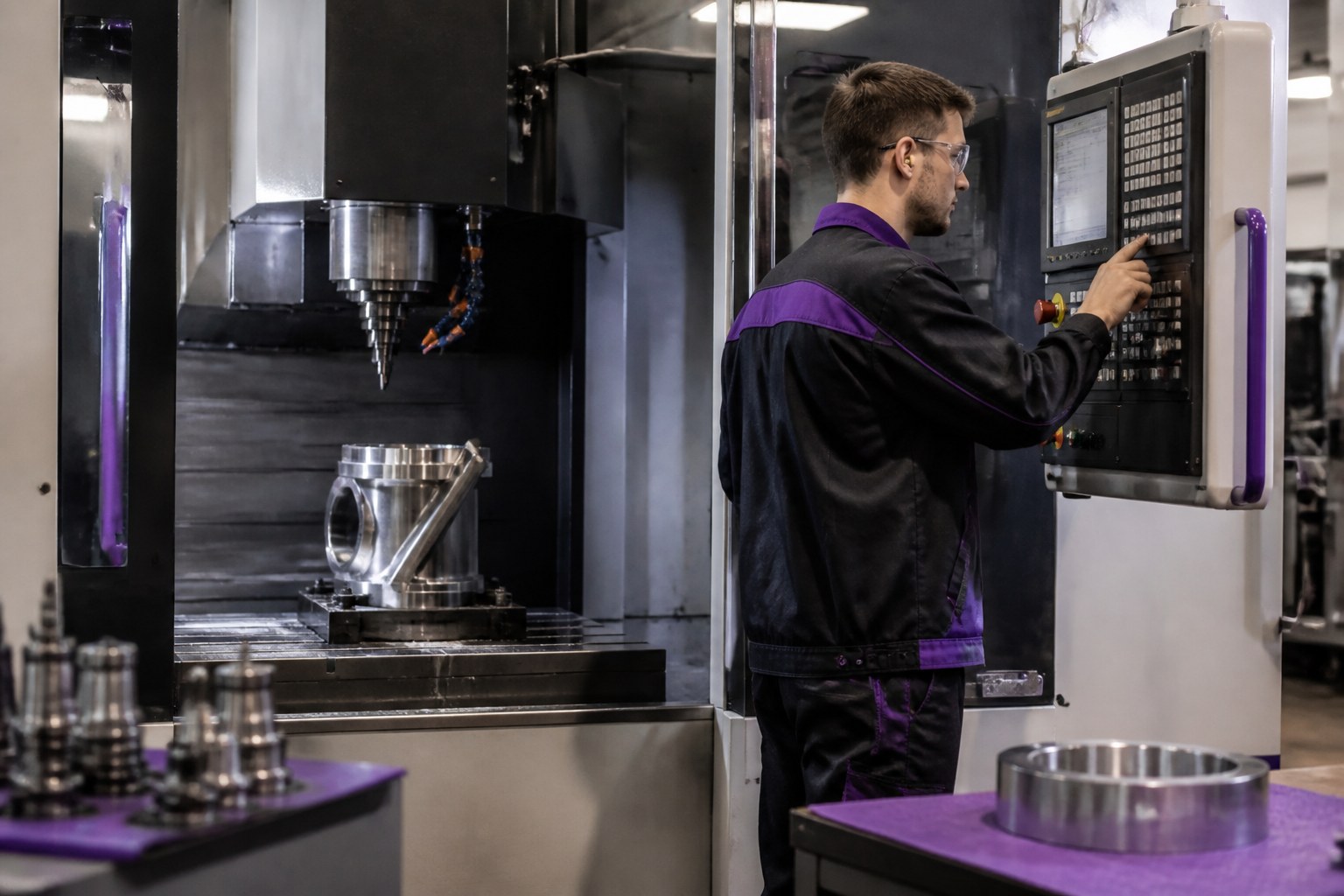
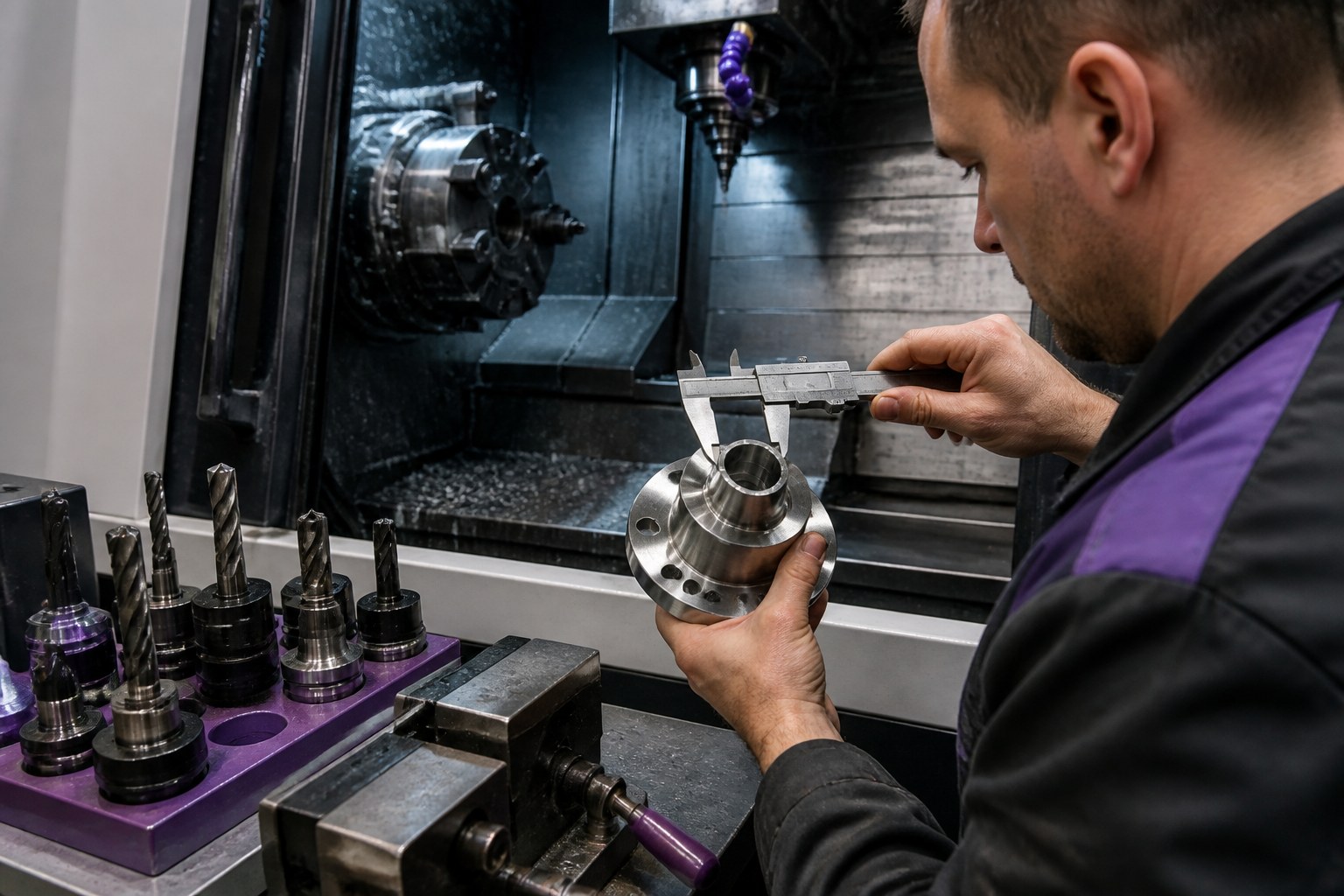
CNC machining technicians set up, operate and monitor computer-controlled machine tools used to manufacture precision components. Their work combines practical machining knowledge with accurate technical execution. Depending on the production environment, the profile includes preparing machines, loading materials, selecting or checking tools, monitoring machining processes and inspecting finished parts.
A CNC technician works from technical information such as drawings, specifications and production instructions. Precision is central to the role because dimensions, tolerances and surface quality determine whether a component meets the required standard. The work also involves identifying deviations, responding to technical problems and communicating relevant information to colleagues.
The professional profile covers several related areas of manufacturing. Candidates with experience on turning or milling centres, machining metals and checking finished components should describe that experience clearly. Employers in Germany assess the practical content of a candidate’s background, not only the job title used in a previous country.
Technical Skills That Strengthen Your Candidate Profile
Your application should show how you work with CNC-controlled equipment in real production conditions. Relevant technical preparation includes machine setup, workpiece positioning, tool changes, process monitoring and the accurate execution of machining instructions. Describe the machines and production tasks you know instead of using only general terms such as “worked in manufacturing.”
Technical drawing knowledge is important because drawings communicate dimensions, tolerances, material information and production requirements. Measurement skills are equally relevant. Your profile should explain which inspection activities you performed, such as checking dimensions, identifying deviations or recording quality results.
Materials and tooling also belong in a technically specific profile. State which materials you machined and which tools or tool-management tasks formed part of your work. Safe working practices, orderly machine operation and attention to production instructions demonstrate professional reliability. Do not add certificates or software systems to your profile unless you actually hold or use them.
A strong CNC profile connects technical knowledge with production accuracy. It explains not only which machine you operated, but also how you prepared the process, controlled quality and responded when the result did not meet the required specification.
Qualifications and Professional Experience
Vocational training in machining, metalworking or a related technical field supports an application for CNC machining work. Technical education and documented practical experience also provide important evidence of suitability. The relevance of your background depends on the actual content of your training and employment, so your documents should make that content easy to understand.
Professional experience becomes more valuable when it shows increasing responsibility. Explain whether you prepared machines, operated production equipment independently, performed measurements, monitored quality or supported troubleshooting. If you trained colleagues, coordinated production steps or took responsibility for machine care, include those duties where they accurately describe your work.
A job title alone does not show your technical level. A clear employment history links each position to the machines, materials, products and responsibilities involved. This information helps reviewers understand whether your experience corresponds to CNC production work in Germany.
Candidates should present their experience consistently across the CV, certificates and employment evidence. Dates, job titles and responsibilities should not contradict one another. Clear documentation strengthens the professional profile and reduces uncertainty during the review of your application.
Recognition of Foreign Qualifications
Professional recognition and the right to work or reside in Germany are separate matters. CNC machining is associated with technical occupations from the vocational training system. Many such occupations are non-regulated, which means formal German recognition is not required in the same way as for a regulated profession. Qualification documents still matter, particularly when qualifications must be assessed for related to working in Germany requirements.
A recognition procedure compares a foreign professional qualification with the relevant German reference occupation. The responsible authority examines the submitted documents and assesses whether the qualification is equivalent or whether substantial differences exist. The result may be full recognition, partial recognition or no recognition.
Partial recognition does not describe your entire professional potential. It identifies differences between the documented qualification and the reference occupation. Depending on the case, an adjustment qualification or another defined qualification measure addresses those differences. The recognition result and any related to working in Germany decision must be treated as separate assessments.
Before applying, collect complete certificates, training records and employment evidence. If documents are not in German or English, translation requirements depend on the relevant procedure. Do not assume that every document needs the same type of translation or certification.
German Language Skills for CNC Work
German belongs in your candidate profile because CNC work requires reliable communication in an industrial environment. Machine instructions, safety information, technical questions and quality discussions must be understood accurately. Communication with supervisors and colleagues also supports coordinated production and a prompt response to technical issues.
The required language ability is not stated here as a single mandatory level. Your practical needs depend on the complexity of the work, the instructions used in the production environment and the responsibilities assigned to you. A candidate profile should therefore state your current German skills honestly and explain any relevant technical communication experience.
Where applicable, document your German level using the Common European Framework of Reference. Include certificates if you hold them and distinguish between certified knowledge and your actual workplace communication ability. Other languages also belong in the profile when they support communication in a technical team.
Language preparation should focus on practical terms used in machining, measurement, tools, materials, safety and quality control. Accurate technical vocabulary makes it easier to understand instructions and explain production problems.
Documents to Prepare Before Applying
Prepare a clear CV, training and education certificates, employment evidence and information about your language skills. Include relevant technical qualifications and other documents that explain your CNC background. A complete profile gives reviewers a reliable basis for assessing your professional experience.
Your CV should show personal details, education, work history, language skills and relevant technical abilities. For every important position, name the employer, position and period of employment. Describe responsibilities such as machine setup, CNC operation, tooling, measurement, quality checks, maintenance-related work and production monitoring.
Certificates should be readable and arranged in a logical order. Foreign-language documents may require translation into German or English depending on the procedure. Whether a translation must be certified or follow another formal requirement depends on the relevant process, so do not apply one rule to every document.
Keep the information consistent. A machine type listed in the CV should correspond to your employment evidence, and the dates should match your certificates where applicable. Accurate documents support both candidate review and any later qualification or related to working in Germany process.
How to Present CNC Experience in Your CV
Replace vague statements with specific technical descriptions. Instead of writing that you “worked with CNC machines,” explain whether you operated turning centres, milling machines or other CNC-controlled equipment. State whether your role involved setup, loading, tool changes, process monitoring or independent production.
Describe the materials and components you worked with when this information is relevant. Mention measurement work, inspection equipment and quality-control responsibilities. If you documented results, corrected deviations or reported non-conforming parts, include those activities accurately.
Maintenance-related tasks should also be precise. There is a difference between cleaning a machine, carrying out routine checks, changing tools and repairing technical faults. Describe only the responsibilities you actually held. This gives the reader a clearer picture of your practical level.
Shift work, team coordination and training responsibilities belong in the CV when they formed part of your employment. Connect each point with a concrete duty. For example, explain how you handed over production information, coordinated with quality staff or supported a team during a shift.
The strongest CV entries show the relationship between the machine, the production task and the result. This approach helps reviewers understand your professional profile without relying on an unfamiliar job title.
Shows the practical scope and technical level of your machining background
Qualifications and certificates
Vocational training, technical education and relevant qualification documents
Provides evidence of your formal preparation and supports qualification assessment
Language and communication
German skills, CEFR information where applicable and relevant language certificates
Shows your ability to understand instructions and communicate in a technical workplace
Employment history
Employers, positions, dates and clearly described responsibilities
Allows reviewers to understand the development and reliability of your professional experience
Working Conditions and Contract Details to Understand
Before accepting employment in Germany, read the employment contract carefully. It should identify the contracting parties and provide information about the start date, any fixed term, the probation period, workplace, duties, remuneration, working time, leave and notice periods.
The contract should make your duties understandable. For CNC machining work, check how the described role relates to machine operation, production, quality responsibilities and the workplace. The actual workplace and duties must be clear before you accept employment.
Pay attention to the difference between gross and net pay. Gross pay is the agreed amount before deductions. Taxes and social insurance contributions affect the amount transferred to your account, so the net amount is not identical to the contractual gross amount. The precise net amount depends on your personal tax and social insurance circumstances.
Additional payments such as premiums or supplements depend on the employment relationship and applicable rules. Collective agreements or works agreements may also contain provisions about remuneration, working time or leave. Review these details as part of the contract information rather than assuming that every CNC position has identical conditions.
Preparing for Employment Across Germany
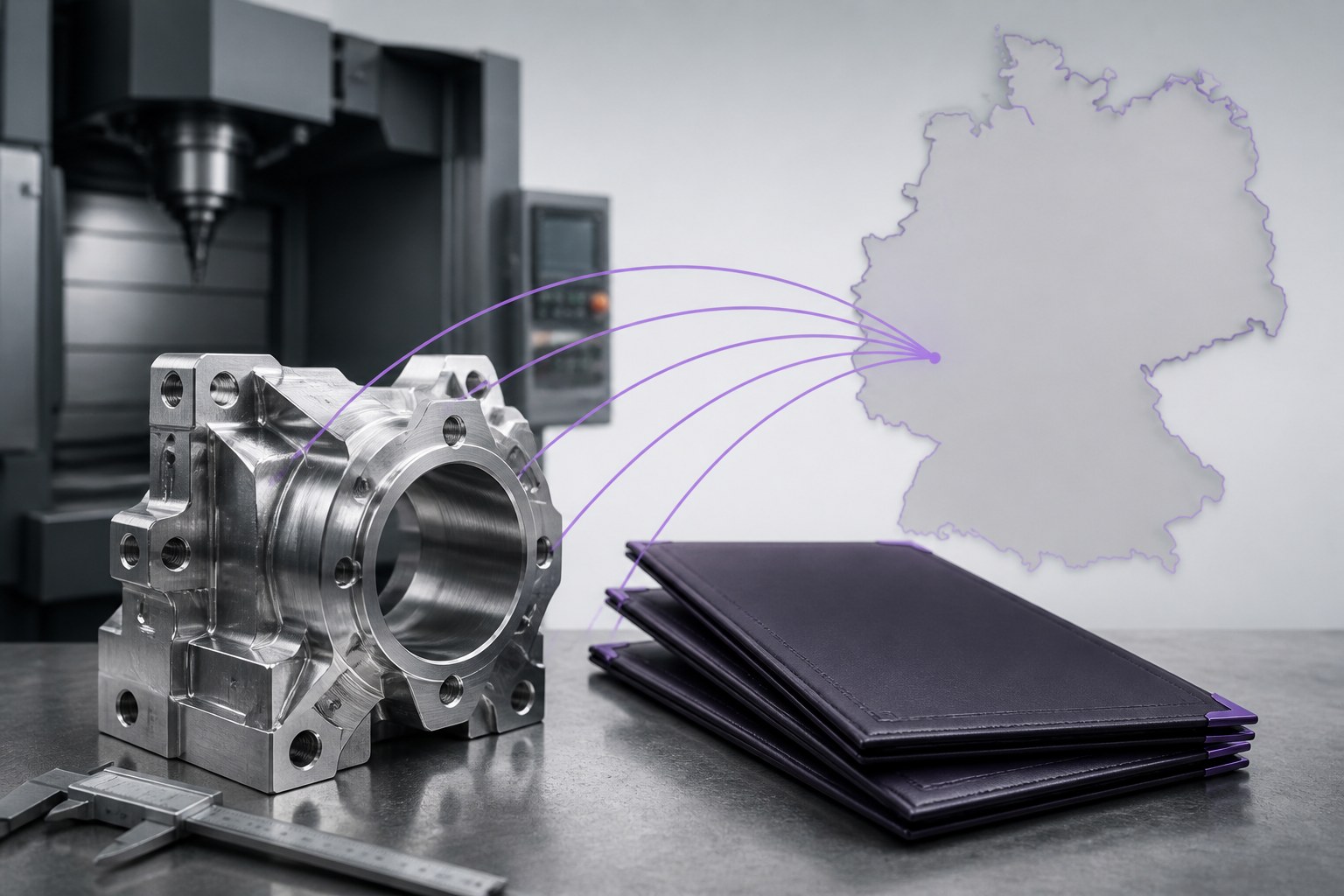
Applicants through East Talent must be open to employment opportunities throughout Germany. Limiting your profile to one preferred city restricts the range of suitable opportunities and does not reflect the nationwide scope of the candidate process.
Geographic flexibility does not remove your responsibility to review an actual opportunity. Before accepting employment, examine the workplace, duties, working time, remuneration and other contract details. You also need to assess relocation costs, accommodation arrangements and travel requirements for your own situation.
Present your location preferences honestly, but distinguish between a preference and a fixed condition. A technically strong profile with nationwide mobility gives the review process more room to identify suitable employment opportunities. The final decision remains yours after you receive verified information about the workplace and contract.
A Practical Application Checklist
Start by organizing your certificates, training records and employment evidence. Use clear file names and arrange documents so that your professional history is easy to follow. Check that dates, employers and job titles are consistent.
Next, write a technically specific CV. List CNC machine types, production responsibilities, materials, measurement activities, quality checks and maintenance-related tasks that accurately describe your experience. Avoid broad claims that do not show what you actually did.
Record your German skills and any relevant language certificates. Collect evidence of practical experience and prepare translations when the relevant procedure requires them. Do not submit documents that contain inconsistent information or unsupported claims.
Finally, review the complete candidate profile before submitting it. A complete application gives East Talent a clear basis for reviewing your qualifications, experience, German skills and relevant documents.
What Happens After You Submit Your Profile
The initial application through East Talent is an application as a CNC machining technician candidate. It is not an application for a named vacancy or a specific employer. No particular job, workplace or employment outcome is promised at this stage.
East Talent reviews the professional information in your profile, including qualifications, practical experience, German skills and relevant documents. Suitable candidates may then be introduced to appropriate companies in Germany. This step depends on the professional fit between the candidate profile and the employment need.
Keep your information current during the review. Notify the team if your language skills, work experience, documents or availability change. Be prepared to explain your technical background and remain open to employment opportunities throughout Germany.
If a company later receives your profile, review the actual duties, workplace and contract information carefully. Accept employment only after you understand the verified conditions that apply to that employment relationship.
Final Checklist for CNC Machining Technician Applicants
A competitive profile demonstrates real CNC experience rather than relying on a general production job title. Describe the machines, materials, tools, measurements, quality checks and responsibilities that define your practical work.
Provide readable qualification documents and employment evidence. Keep all dates and professional details consistent. Explain your German skills clearly and use CEFR information where applicable.
Treat recognition, related to working in Germany requirements and employment conditions as separate matters. Recognition assesses the relationship between a foreign qualification and a German reference occupation; it does not automatically decide your right to work or reside.
Remain open to jobs throughout Germany and evaluate every later opportunity using verified information about the workplace, duties and contract. A complete, accurate and technically detailed candidate profile is the strongest preparation for CNC machining technician jobs in Germany.
Create your profile
Registration with East Talent
Four short steps. A CV is optional and can be provided in your native language.
Step 1 of 4Profession
East Talent
International recruitment with proprietary software
East Talent combines international recruitment with structured digital processes for handling candidate profiles, attracting employers and evaluating job opportunities.