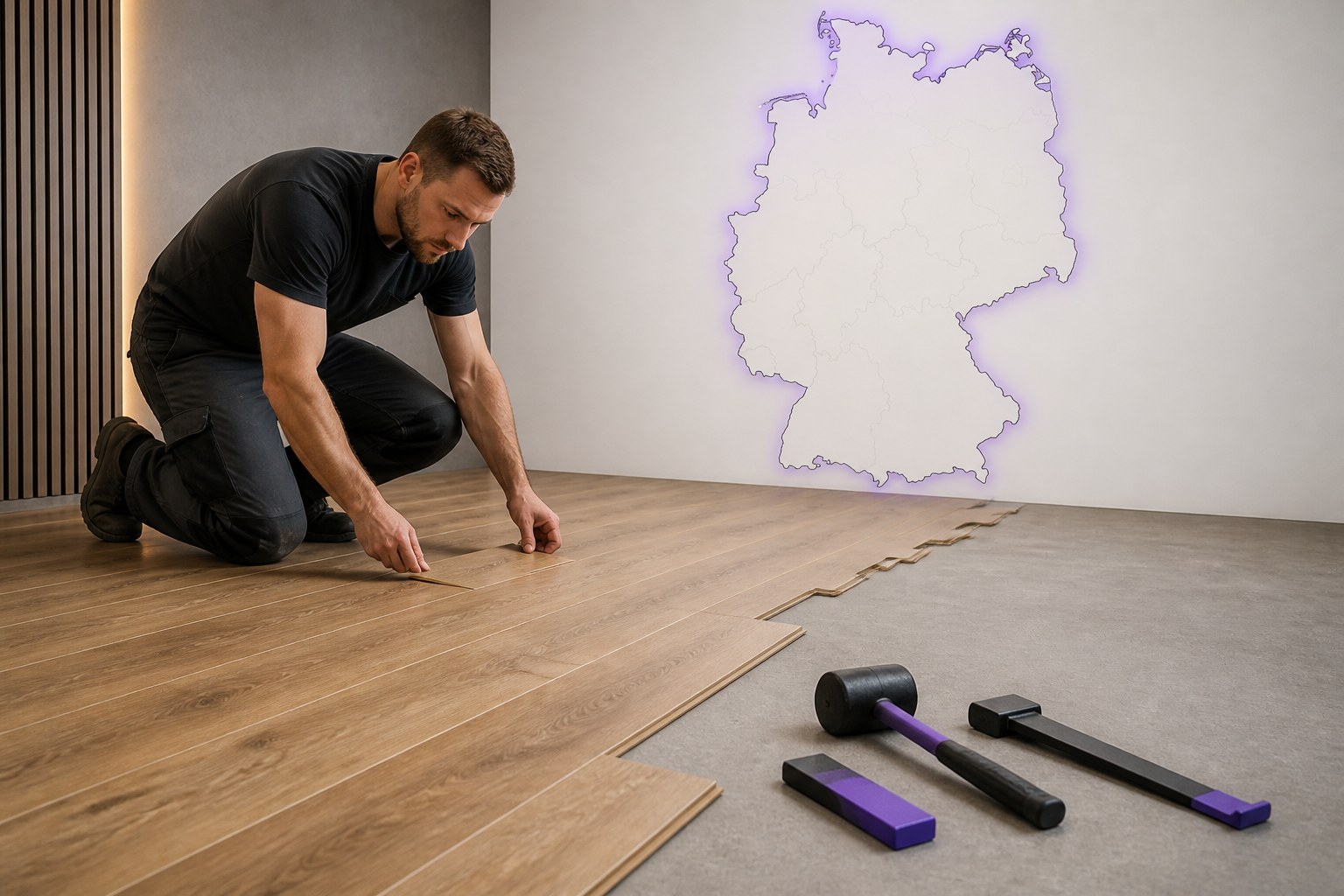
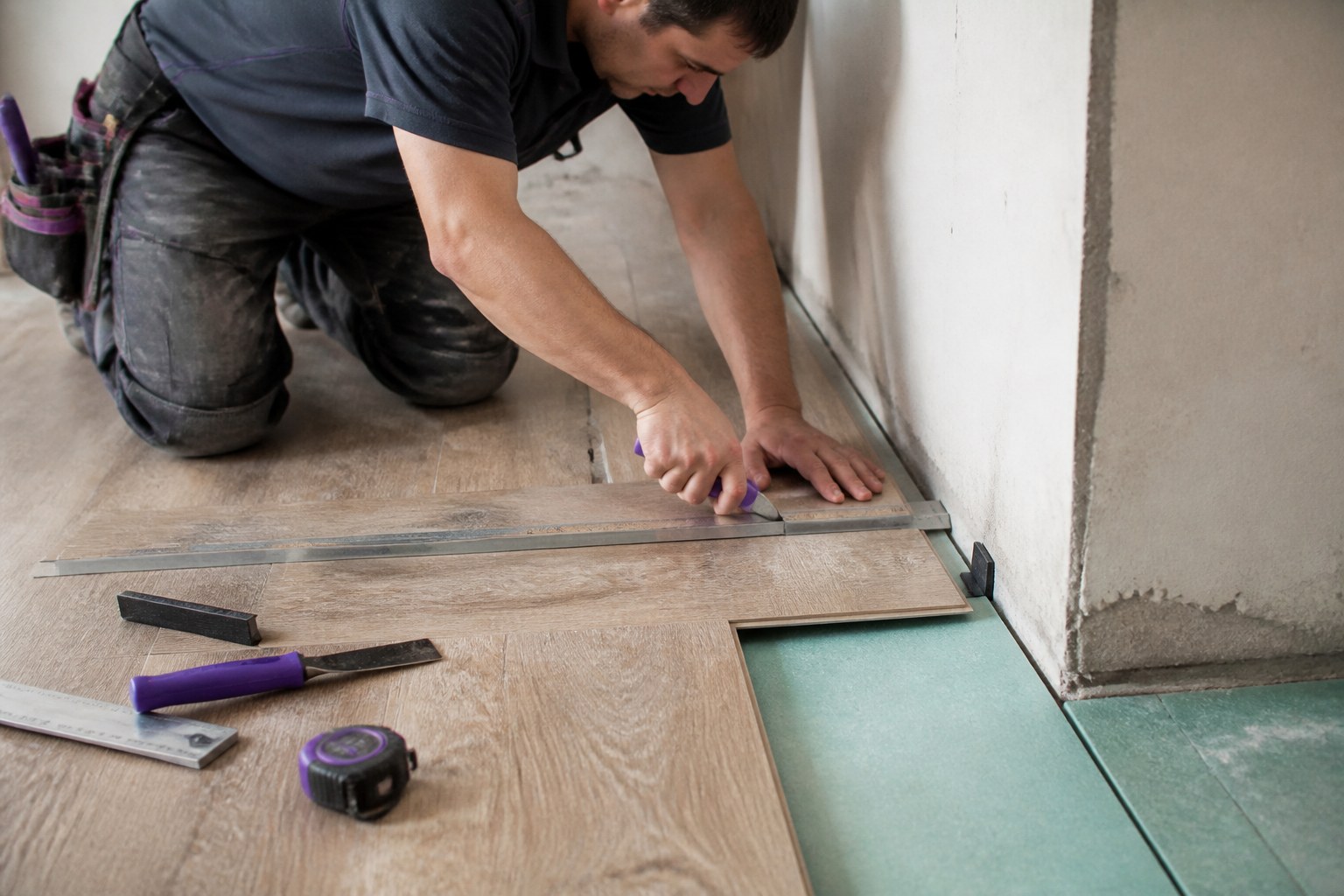
Floor layers prepare surfaces and install flooring materials in residential, commercial and other interior spaces. Their work includes checking the condition of a subfloor, measuring rooms, preparing surfaces, cutting materials and installing floor coverings accurately.
Depending on previous experience, a floor layer may work with different materials and installation methods. The professional profile becomes stronger when an applicant describes the materials handled, the preparation work completed and the finishing tasks performed.
The work is practical and detail-oriented. Measurements, clean edges, level surfaces and careful finishing directly affect the quality of the completed room. Reliability also matters because floor installation is normally coordinated with other work on a construction or renovation project.
Applicants seeking floor layer jobs in Germany must remain open to employment opportunities throughout Germany. East Talent does not publish a specific vacancy on this candidate page; applicants present their professional profile for employment in their occupational group.
Is Floor Layer Work a Suitable Career for You?
Floor layer work suits applicants who prefer practical trade work and enjoy producing a visible result. Previous experience with surface preparation, measuring, cutting, fitting or finishing provides a useful basis for this occupational group.
The work requires concentration because small measuring or cutting errors affect the final appearance. Applicants should also assess their ability to work carefully for extended periods, handle tools responsibly and follow instructions connected with a project’s sequence and quality standards.
Physical work forms part of many floor layer activities. Depending on the task, the work involves kneeling, bending, carrying materials, moving around unfinished rooms and working close to the floor. Applicants should describe the type of practical work they have already performed rather than making broad claims about their abilities.
Reliability is equally important. A complete professional profile shows how an applicant worked with colleagues, followed schedules, maintained clean work areas and responded to technical instructions.
Skills and Experience Relevant to Floor Layer Applicants
Relevant experience starts with the condition of the surface before installation. Applicants should explain whether they prepared subfloors, removed existing coverings, cleaned surfaces, corrected irregularities or completed other preparation activities.
Measuring and planning are also important parts of the profile. State which measuring tasks you performed, how you calculated material requirements and how you planned cuts around walls, corners, doorways or other fixed elements.
Describe installation experience precisely. Useful details include the flooring materials handled, the tools used, the installation steps completed and the finishing work performed. If your experience covers only some materials or tasks, present that information accurately.
A strong profile also includes quality awareness. Explain how you checked alignment, edges, joints, transitions and the final appearance. Practical experience with safe tool use, orderly work and cooperation with other trades adds context to your application.
How to Present Your Floor Layer Qualifications
Your professional profile should connect qualifications with practical responsibilities. List vocational training, trade courses and other relevant education with the institution, subject area and completion information available to you.
Work experience should appear in a clear chronological structure. For each position, provide the employer or project context, your role, the period of work and the tasks you performed. Avoid simply writing that you installed floors; identify the preparation, measuring, cutting, laying and finishing activities included in your work.
Certificates and reference documents support your description. Include relevant vocational certificates, training records and evidence of work experience. If a document covers a broader construction occupation, explain which floor layer activities formed part of your actual responsibilities.
Technical abilities should remain specific and truthful. Applicants with experience in only one material should identify it clearly. Applicants with broader experience should separate the different materials, methods and levels of responsibility instead of presenting an undifferentiated list.
Why German Skills Matter in Floor Layer Work
German is relevant to your candidate profile because floor layer work involves practical instructions, coordination and workplace communication. Understanding information about surfaces, measurements, materials, work sequences and quality checks supports accurate execution.
Communication also matters when several people work in the same building. Floor layers may need to discuss progress, clarify access to a room, report a problem with the surface or coordinate their activities with colleagues and other trades.
Language supports workplace safety as well. Applicants need to understand instructions concerning tools, materials, work areas and hazards. Describe your German skills accurately in your CV and application information. You may use a recognised language-level description such as A2, B1, B2 or C1 when that reflects your actual level.
Do not hide limited language experience, but do not understate established skills either. A precise description gives East Talent a clearer basis for assessing your profile for employment in Germany.
Documents to Prepare for Your Application
Prepare a structured CV that presents your personal details, education, work history, language skills and relevant technical abilities. The document should make your floor layer experience easy to understand without requiring the reader to reconstruct your career from short or vague statements.
Collect vocational certificates, training records, school or higher-education certificates where relevant, and documents that support your work experience. Important certificates help demonstrate the background behind your practical profile.
Include information about previous responsibilities. Employment certificates, reference letters or other work evidence provide useful support when they identify your position, period of work and tasks.
Documents issued in another language may require translation in a specific application or recognition procedure. Whether a certified or otherwise formalised translation is required depends on the procedure. Do not assume that one translation format applies to every document or every process.
Keep digital copies readable and complete. Check names, dates, job titles and periods for consistency across your CV and supporting documents.
Your Floor Layer Application Checklist
Start by recording your full professional history. Include the dates, employers or project contexts, roles and locations of your previous work, then identify the tasks that relate directly to floor installation.
Next, describe your technical experience. Separate surface preparation, measuring, cutting, laying, joining, edging and finishing work where those activities form part of your background. Name the flooring materials you handled and state the level of responsibility you had.
Organise certificates and work evidence in the same order as your professional profile. This makes it easier to connect each qualification or document with the experience it supports.
Add your German skills and any other language information accurately. Check that every file is readable and that the names and dates match the information in your CV.
Finally, confirm your mobility. Applicants must be open to employment opportunities throughout Germany rather than limiting their profile to one preferred city or region.
Floor Layer Application Preparation Overview
Application area
What to prepare
What the information helps show
Professional experience
Employers or project contexts, roles, dates and detailed floor preparation or installation tasks
The scope and practical depth of your floor layer background
Qualifications and certificates
Vocational certificates, training records and relevant education documents
The formal education and technical knowledge supporting your profile
German language skills
An accurate language description, including a recognised level where appropriate
Your ability to communicate about instructions, progress, materials and safety
Supporting documents
Work evidence, readable document copies and translations where a specific procedure requires them
The consistency and verifiability of your professional information
Professional Recognition for Floor Layer Applicants
Recognition questions depend on the occupation, the qualification and the purpose for which the qualification is being assessed. German law distinguishes between regulated and non-regulated professions.
Regulated professions are legally protected. People seeking to work in such professions generally require the relevant recognition or professional authorisation. Non-regulated professions are not protected in the same way, and formal German professional recognition is not automatically required for work in every such occupation.
A floor layer profile should therefore not be classified automatically without reviewing the actual qualification and intended employment context. The status of professional recognition and the qualification requirements connected with residence are separate questions.
Applicants should keep certificates, training records and evidence of practical experience available for an assessment. A foreign qualification is reviewed against a corresponding German reference profession when a recognition procedure applies.
What Happens When Qualification Recognition Is Relevant?
A recognition procedure compares the foreign professional qualification with the relevant German reference profession. The responsible authority examines the submitted documents and identifies whether the qualifications are equivalent or whether substantial differences exist.
The result for a non-regulated profession may be full recognition, partial recognition or no recognition. The result depends on the documents and the assessment of the competent authority; it must not be assumed from a job title alone.
Where substantial differences are identified, an adjustment qualification or another prescribed qualification measure addresses those differences in the relevant case. Regulated professions may also involve additional requirements for professional authorisation.
Complete documentation is therefore important. Missing certificates, unclear employment evidence or inconsistent personal details make it harder to assess the professional background. Recognition remains a formal process separate from the initial presentation of your candidate profile.
Working Conditions to Understand Before Employment
Before employment begins, applicants should understand the main terms of the employment relationship. These include the workplace, duties, working time, remuneration, holiday entitlement and provisions for ending the contract.
German employment documents normally distinguish between gross and net pay. Gross pay is the agreed amount before individual taxes and social-security contributions. Net pay is the amount remaining after the applicable deductions, so it cannot be calculated from the gross figure alone without personal information.
Working time also needs careful attention. The statutory maximum for working time and the regular weekly hours agreed in a contract are not the same concept. The contract should state the working-time arrangements that apply to the employment relationship.
Paid annual leave is a statutory entitlement. The statutory minimum is 24 working days based on a six-day working week, which corresponds to 20 working days with a five-day working week. A contract or collective agreement may provide more leave.
Living costs also affect the amount available after relocation. Rent, deposits, travel and everyday expenses reduce the money available for other purposes, so applicants should assess employment terms together with their expected personal costs.
What to Check in an Employment Contract
Read the employment contract carefully before signing. It should identify the contracting parties and state when the employment begins. Check whether the contract is fixed-term or open-ended and whether it includes a probationary period.
The place of work and the description of duties deserve particular attention for floor layer applicants. The duties should correspond with the professional information discussed during the application process.
Review the remuneration section and distinguish the gross amount from the expected net amount. Check whether additional payments, premiums or supplements are included and under which rules they are paid.
The contract should also state working time, holiday entitlement and notice periods. Collective agreements or workplace agreements may contain additional provisions on pay, hours or leave.
Ask for clarification before signing if a term is unclear. Keep a complete copy of the signed contract and any documents that form part of the employment agreement.
Applying Through East Talent
Through East Talent, you submit an initiative application for employment in your occupational group. You are not applying for a named vacancy or to a specific employer at this stage.
East Talent reviews information relevant to your professional profile, including vocational qualifications, practical experience, German skills and supporting documents. Your application should therefore present the complete floor layer background rather than focus on one assumed job description.
Suitable candidates may subsequently be introduced to companies in Germany whose personnel requirements correspond with their profile. This process does not guarantee a particular employer, location, salary or employment outcome.
Your application should reflect genuine mobility. Applicants must be open to suitable employment opportunities throughout Germany. A clear and complete profile gives the assessment a reliable basis for considering your occupational experience.
How to Strengthen Your Floor Layer Profile
Improve your profile by replacing general descriptions with specific evidence. Explain the condition of the surfaces you prepared, the materials you installed, the tools you used and the finishing work you completed.
Organise certificates and employment evidence before submitting your application. A consistent sequence of dates, positions and responsibilities helps connect your documents with your practical history.
State your German skills honestly and use a recognised level description where it accurately reflects your ability. Also mention experience communicating about instructions, materials, quality or safety when that forms part of your work history.
Review every document for completeness, legibility and consistent personal information. Finally, remain open to employment opportunities throughout Germany and avoid presenting one preferred location as the only acceptable outcome.
Start Your Application for Floor Layer Jobs in Germany
A well-prepared application presents your practical experience, qualifications, documents and German skills in one clear professional profile. It gives East Talent the information needed to assess your suitability for employment in the floor layer occupational group.
Four short steps. A CV is optional and can be provided in your native language.
Step 1 of 4Profession
East Talent
International recruitment with proprietary software
East Talent combines international recruitment with structured digital processes for handling candidate profiles, attracting employers and evaluating job opportunities.