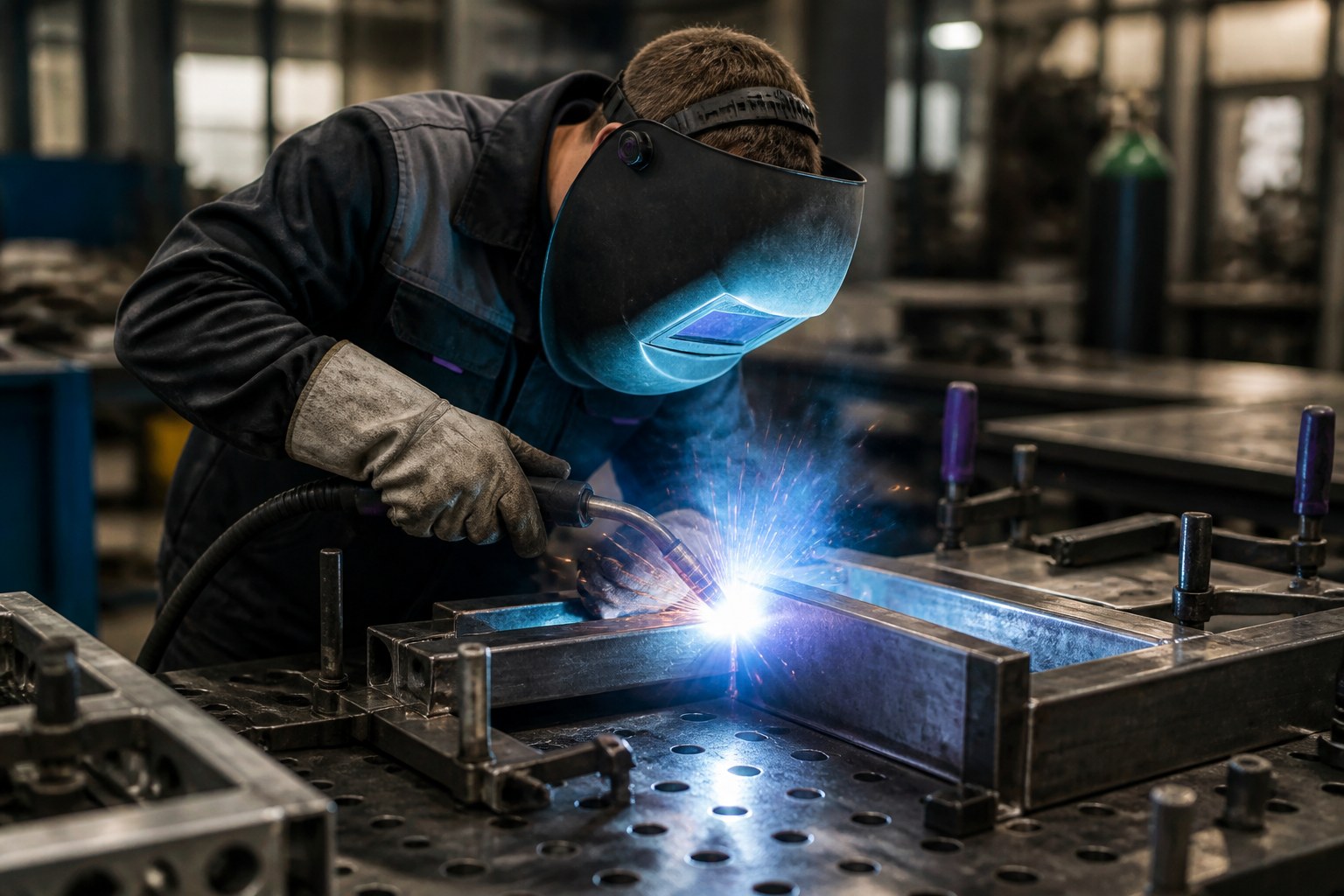
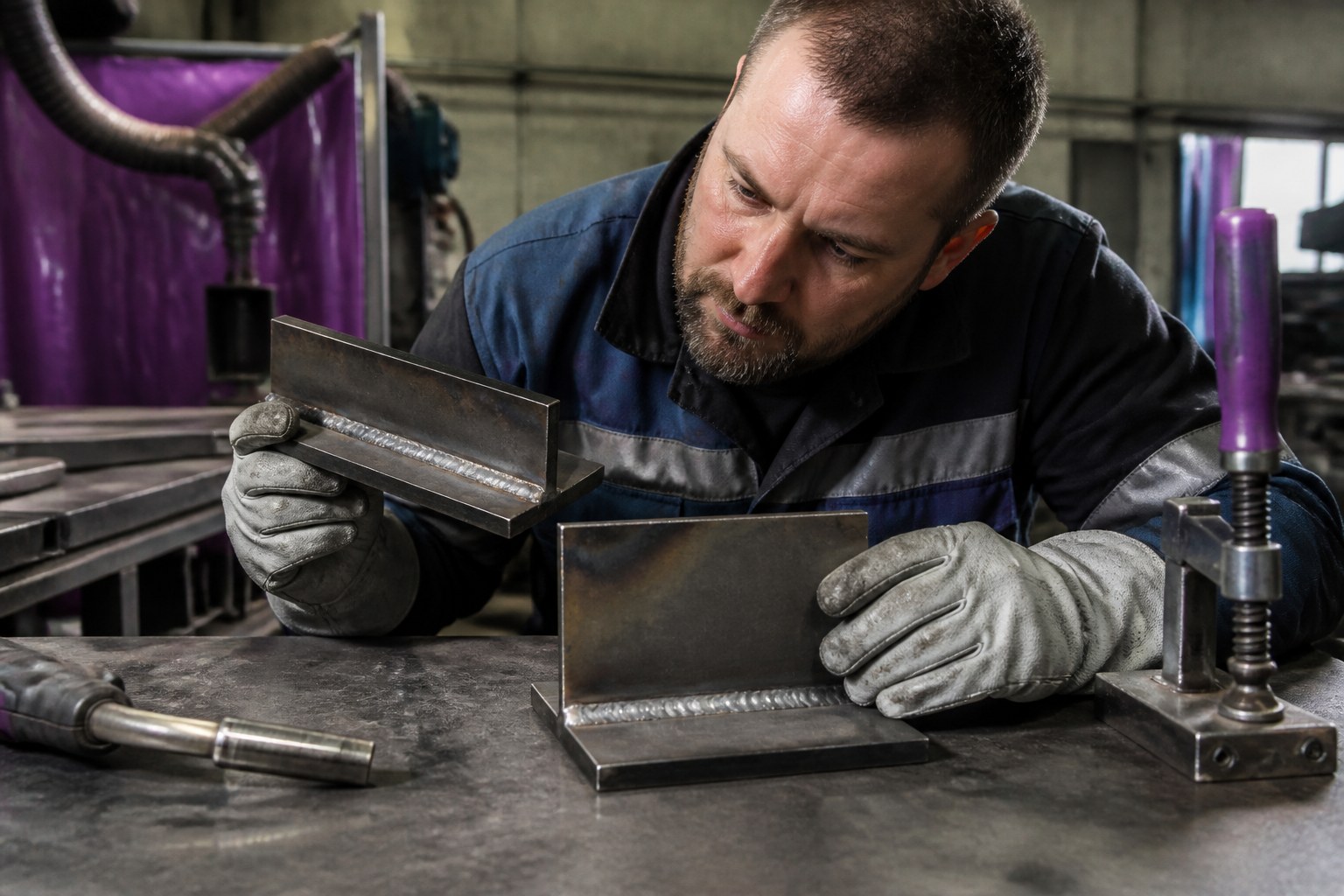
Welder jobs in Germany involve joining, repairing and processing metal components in industrial and metalworking environments. Depending on the professional setting, welding work takes place in fabrication workshops, production facilities, mechanical engineering environments, construction-related metalwork and other technical workplaces. The exact tasks differ between professional settings, so your application should describe the work you have actually performed.
A welder’s daily work requires practical control of the welding process, careful preparation of materials and consistent attention to the finished joint. Relevant activities include preparing metal parts, positioning components, producing welds, checking the result and correcting imperfections where this forms part of the assigned work. Employers also expect workers to follow technical instructions and workplace safety requirements.
The preparation stage is an important part of the occupation. Components must be positioned correctly, surfaces prepared appropriately and workpieces secured before welding begins. Your experience with measurements, alignment, clamps, drawings or work instructions belongs in your profile when these activities formed part of your previous duties. A description of the complete work sequence gives a clearer picture than a list of welding processes alone.
Safety is an essential part of welding work. Protective clothing, eye and face protection, suitable gloves and safe handling of equipment protect you from heat, sparks, fumes and other workplace hazards. Your profile should therefore show that you understand disciplined working methods and the importance of following safety instructions.
The working environment also requires concentration and consistency. Welders often work with heavy components, hot surfaces, power tools and production equipment. Explain how you organised your work, protected the surrounding area and maintained safe practices. This information helps distinguish practical workplace experience from short-term exposure during a course.
Welding is a practical occupation. A clear description of your hands-on experience gives your professional profile more value than a general statement such as “I am a skilled worker.” State which materials, components, tools and work environments you have worked with, but do not claim certificates, processes or responsibilities that your documents and experience do not support.
Qualifications and Experience Relevant to Welding Work
Your welding profile should present three connected areas: vocational preparation, practical experience and technical tasks. A completed vocational qualification in welding or a related metalworking occupation provides important information about your professional background. Training records, certificates and school or vocational documents help explain the level and content of your education.
Practical experience is equally important. Describe each relevant position with the employer, job title, employment period and main duties. Explain whether you worked in production, fabrication, repair, assembly or another technical environment. Mention the types of metal components and workpieces you handled when this information is accurate and documented.
Your application should also identify the welding processes, tools and technical activities that belong to your real experience. Relevant information includes joint preparation, component alignment, welding equipment, visual inspection, rework and quality-related tasks. Only include processes and equipment that you used or studied. Unsupported technical claims weaken trust in your application.
Experience in industrial or metalworking environments demonstrates more than the ability to create a weld. It also shows how you work with measurements, work instructions, production sequences and safety procedures. If your previous work involved shift work, team production or independent responsibility, describe those facts clearly without presenting them as qualifications you did not hold.
Describe the relationship between your training and your employment history. For example, explain which skills you learned during vocational preparation and how you later applied them in production, repair or fabrication work. This connection helps reviewers understand your development and prevents a short course from appearing equivalent to several years of occupational experience.
Applicants with limited professional experience should document their training and practical exercises precisely. Include the subject areas covered by your training and explain the type of workshop or production work you completed. A transparent profile gives East Talent a reliable basis for assessing your suitability for welding opportunities in Germany.
When your experience covers several areas, separate them clearly instead of combining every task under one job title. A profile that distinguishes fabrication, repair, inspection and assembly work shows where your strongest experience lies. It also makes it easier to compare your documented background with the technical needs of future employment opportunities in the profession.
German Language Skills for Welder Applicants
German language skills belong in your candidate profile because welding work involves communication about tasks, materials, equipment and safety. You need to understand workplace instructions and communicate with supervisors and colleagues about the progress or condition of your work. Safety-related information requires particular attention because misunderstandings create direct risks in a workshop or production environment.
There is no single language level that applies automatically to every welding opportunity. Your actual language ability forms part of the assessment of your professional profile. State your level honestly and describe the situations in which you use German, such as everyday communication, technical instructions or workplace conversations.
You may document language knowledge using recognised Common European Framework of Reference for Languages descriptions, including A2, B1, B2 or C1. A certificate provides useful evidence when one exists, but your practical communication ability also matters. Do not list a higher level than you can demonstrate in a professional conversation.
Technical vocabulary deserves focused preparation. Learn the German terms that describe tools, materials, measurements, positions, surfaces, defects, protective equipment and common workshop actions. Understanding these terms supports accurate communication when a colleague explains a task or when a supervisor discusses a correction.
Language skills also affect your ability to ask questions. A responsible worker confirms unclear instructions rather than proceeding with an uncertain interpretation. Include any previous experience communicating in German at work, during training or in technical settings. Everyday fluency and occupational communication are related but not identical parts of your profile.
If you are still learning German, continue building vocabulary for tools, materials, measurements, safety instructions and common workshop activities. This preparation improves your ability to understand work processes and communicate accurately after arrival in Germany.
Recognition of Foreign Welding Qualifications
German law distinguishes between regulated and non-regulated professions. Regulated professions are legally protected, and professional practice requires the relevant recognition or professional authorisation. Many vocational occupations are not regulated in the same way as legally protected professions.
A non-regulated occupation does not automatically require formal German professional recognition before every form of employment. This does not mean that qualification documents are irrelevant. Employers, placement processes and related to working in Germany procedures still examine education, experience and supporting documents. Recognition requirements and requirements for working in Germany are separate matters and must not be treated as the same process.
A recognition procedure examines whether your foreign vocational qualification corresponds to a German reference occupation. The responsible authority reviews the submitted documents and assesses whether the training is equivalent or whether substantial differences exist. The result depends on the qualification and the documents submitted.
Possible outcomes in a non-regulated profession include full recognition, partial recognition or no recognition. Where substantial differences exist, an adaptation qualification or another recognised qualification measure addresses those differences in the relevant case. The responsible authority decides the outcome; applicants should not assume that a foreign certificate automatically receives recognition.
Before starting a procedure, organise your qualification certificates, vocational records and evidence of professional experience. Complete documents make the assessment more transparent. If documents are not available, explain the situation accurately and follow the instructions of the responsible authority or procedure.
Your job title in your home country does not by itself establish the content or level of your vocational qualification in Germany. The authority compares the documented training content and professional evidence with the relevant German reference occupation. This is why detailed records matter more than a title alone.
Keep copies of every document submitted during the process. Record the name of the authority, the documents provided and any further information requested. A well-organised file supports consistent communication and helps you identify missing evidence without changing the facts of your professional history.
Welder Application Preparation Checklist
Profile area
What to prepare
Why it matters
Vocational qualification
Certificates, vocational records and a clear description of the training completed
Shows your formal preparation and supports the assessment of your professional background
Practical welding experience
Employers, positions, dates, work environments, tasks, materials and equipment used
Makes your real workplace experience and technical responsibilities traceable
German language skills
Your actual language level, certificates where available and relevant workplace communication experience
Shows your ability to understand instructions and communicate about work and safety
Application documents
A structured CV, certificates, employment evidence and translations where a particular procedure requires them
Creates a complete and consistent basis for reviewing your application
Documents to Prepare Before Applying
A complete application begins with a clear and traceable CV. List your personal details, vocational training, employment history, welding experience, language skills and relevant technical abilities. Present each position with the employer, job title, employment period and main tasks so that your professional development is easy to understand.
Prepare certificates and vocational records that support your education. Important school, vocational and higher-education certificates may form part of the application documents, depending on your background and the procedure. Include employment evidence that confirms the positions and activities you describe where such evidence is available.
Your documents should distinguish between training and practical work. A certificate proves a course or qualification; an employment record explains how you applied your knowledge in a real workplace. Both forms of evidence help create a reliable welding profile.
Foreign-language certificates may require translation into German or English in a particular procedure. Whether a certified or otherwise formal translation is required depends on the relevant process. Do not arrange or present a translation as officially sufficient without checking the requirements of that process.
Keep digital copies of your documents in a clear folder and use consistent file names. Check that names, dates and job titles are consistent across your CV, certificates and employment records. Explain gaps or differences directly instead of leaving information unclear.
Your CV should make the chronology of your work easy to follow. Use clear month and year information for training and employment periods, and identify overlapping activities when they occurred. If an employer issued a reference or employment confirmation, preserve the document together with the corresponding position in your records.
Prepare readable scans rather than photographs with unclear edges or missing pages. Make sure certificates show all relevant pages, stamps or signatures that form part of the document. Do not edit the content of a certificate or employment record to make it appear more complete.
Organise your files into categories such as identity information, vocational training, employment evidence, language certificates and translations. This structure reduces confusion when several documents refer to the same qualification or period of employment. It also allows reviewers to connect the claims in your CV with supporting evidence.
Application Preparation for Welding Opportunities
East Talent’s candidate model is based on a proactive application for employment opportunities in your professional group. You do not apply at this stage for a named vacancy or a particular employer. You present your welding qualifications, experience, German skills and required documents for assessment.
The quality of your profile influences how clearly your professional background is understood. Submit a CV that explains your actual welding tasks, vocational preparation and employment history. Add certificates and other relevant evidence, and state your German language skills honestly. If a document is missing, identify it rather than replacing it with an unsupported claim.
East Talent reviews information relevant to employment in the welding profession, including professional qualifications, practical experience, German skills and documents required for the placement process. Suitable candidates are introduced to appropriate companies in Germany after this assessment.
You must remain open to employment opportunities throughout Germany. Limiting your search to one city or region reduces the range of opportunities considered for your profile. State your geographic flexibility clearly and prepare for employment locations in different parts of the country.
Your application should communicate professional reliability. A precise CV, complete documents and realistic information about your technical and language skills create a stronger basis for the next steps than broad statements about motivation alone.
Use the application form to explain your strongest areas of welding experience in a structured way. Mention the work environments in which you gained experience, the tasks you performed independently and the tasks completed under supervision. This distinction presents your level of responsibility accurately.
Review the complete application before submission. Check that your contact details are current, that attachments open correctly and that your employment dates match the supporting documents. An accurate application saves clarification time and gives the assessment a dependable factual basis.
Employment Conditions to Check in a German Contract
Before accepting employment in Germany, read the employment contract carefully. It should identify the contracting parties, the start date, the workplace, your duties, working time, remuneration, holiday entitlement and notice periods. It should also state whether the employment relationship is limited for a fixed period and whether a probationary period applies.
Pay close attention to the difference between gross and net pay. Gross pay is the amount agreed before deductions. Taxes and social insurance contributions reduce the amount paid into your bank account, so the net amount is not identical to the contractual gross amount. The exact net amount depends on your personal tax and social insurance circumstances.
The contract should make your duties understandable. For a welding position, check that the described work corresponds with the professional information discussed during the application process. Clarify the workplace, working schedule and responsibilities before signing.
Additional pay components such as supplements or bonuses depend on the employment relationship and applicable rules. Collective agreements or company agreements may contain additional provisions about pay, working time or holidays. Read these references together with the employment contract.
You should also understand practical costs connected with relocating to Germany. Rent, a deposit, transport and other living expenses reduce the amount available after your monthly income is paid. A realistic financial plan therefore uses expected net income and expected living costs rather than gross pay alone.
For welding work, ask how protective equipment, work clothing and required tools are handled. The contract or workplace information should make your responsibilities clear. Do not assume that every item is provided under identical conditions; obtain a clear explanation before employment begins.
Working schedules deserve particular attention in industrial environments. Check the stated working time, shift arrangements and any references to additional hours. Understanding the schedule helps you plan transport, accommodation and daily life before relocating.
Keep a copy of the signed contract and any referenced documents. If a provision is unclear, request an explanation before signing rather than relying on an informal promise. A written understanding of the employment conditions protects both the accuracy of your decision and the consistency of your professional plans.
How to Strengthen Your Profile as a Welder
Start by building a precise record of your welding experience. For every relevant position, note the employer, dates, workplace, main tasks, materials and equipment you used. Describe inspection, repair, preparation and assembly activities only where they formed part of your actual work.
Collect your vocational certificates, training records and employment evidence before submitting your application. Compare the information in these documents with your CV and correct inconsistent dates or job titles. If a procedure requires translations, prepare the relevant documents in the required format.
Present your German language skills honestly and update your profile as your knowledge improves. Technical vocabulary for safety instructions, tools, materials and work processes deserves particular attention because communication forms part of safe welding work.
Keep your geographic options open across Germany. A willingness to consider employment in different regions gives your profile a broader basis for potential opportunities. This does not replace professional suitability, but it prevents an unnecessarily narrow search.
A strong application combines real practical experience, documented qualifications, clear language information and complete documents. Use the application form to present that information accurately and apply for employment opportunities in Germany through East Talent.
Create a short professional summary that connects your qualification, years or periods of experience, strongest welding activities and language skills. Keep the summary factual and support each important statement with a certificate, employment record or clear description of your practical work.
Review your profile whenever you complete additional training, gain new workplace experience or improve your German. Updated information gives the assessment a current picture of your abilities. It also prevents older documents from presenting an incomplete version of your professional background.
Prepare to explain your work clearly in a professional conversation. Describe how you prepared a component, followed instructions, carried out the welding task and checked the result. This practical explanation demonstrates your understanding more effectively than general claims about being motivated or hardworking.
Four short steps. A CV is optional and can be provided in your native language.
Step 1 of 4Profession
East Talent
International recruitment with proprietary software
East Talent combines international recruitment with structured digital processes for handling candidate profiles, attracting employers and evaluating job opportunities.